REVIEW · DUBROVNIK
Dubrovnik Old Town History Walking Tour
Book on Viator →Operated by Dubrovnik Walking Tours · Bookable on Viator
Old Town stories click into place. In about 90 minutes, this Dubrovnik history walking tour ties the rise of Ragusa to the city’s religious mix and the hard chapters of the 1990s, in clear English. I love the fast orientation it gives you across the main sights, without making you bounce around the city on your own.
The second thing I like: the guide’s street-level facts connect buildings to daily life, like aqueduct engineering, church roles, and how power worked in the Rector’s Palace. One possible drawback: Dubrovnik Old Town is step-heavy and often crowded, so the walking pace may feel tight if you need lots of rests or step-free routes.
In This Review
- Key takeaways before you go
- Dubrovnik Old Town in 90 minutes: the tour’s real value
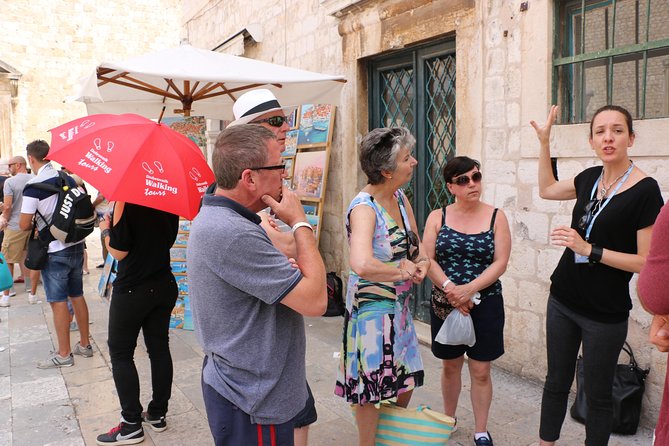
- Meeting at Onofrio’s Large Fountain by Hard Rock Cafe
- Ragusa beginnings at Onofrio’s Fountain and the Holy Savior area
- Franciscan Church and Monastery: the library and the pharmacy
- Stradun (Placa): feasts, trade, and the city split
- Church of the Holy Annunciation: where faith communities intersect
- Gundulić Square and the Monument to Ivan Gundulić
- Rector’s Palace and the Cathedral area: politics and legend close by
- City Harbor, Arsenal, quarantine, and the St. Luke and St. John fortresses
- Orlando Column and Luza Square: St. Blaise, Sponza, and the bell tower
- Price, pace, and what you’re really paying for
- Who this tour suits best (and who should consider another option)
- Tips so your walk feels easy (and not exhausting)
- Should you book this Dubrovnik Old Town history walking tour?
- FAQ
- Where does the Dubrovnik Old Town History Walking Tour meet?
- How long is the walking tour?
- Is the tour offered in English?
- What is the price per person?
- Is hotel pickup or drop-off included?
- How big are the groups?
- Are admission tickets included for the stops?
- What is the cancellation and weather rule?
Key takeaways before you go
- Onofrio’s Large Fountain is your anchor: meet by the Hard Rock Cafe area, next to the Red Umbrella.
- Major landmarks in one loop: you hit Stradun, Franciscan sites, the Cathedral area, and the port/harbor zone.
- Free entry at the listed stops: every stop is marked Admission Ticket Free in the tour flow.
- A small-ish group: up to 30 people, which helps with Q&A and keeping momentum.
- Local, story-driven guiding: guides like Ermina, Ivana, Jelena, Sara, and Joseph show up often in feedback for mixing facts with real local angles.
- Time-flexible departures: pick the departure time that fits your day.
Dubrovnik Old Town in 90 minutes: the tour’s real value
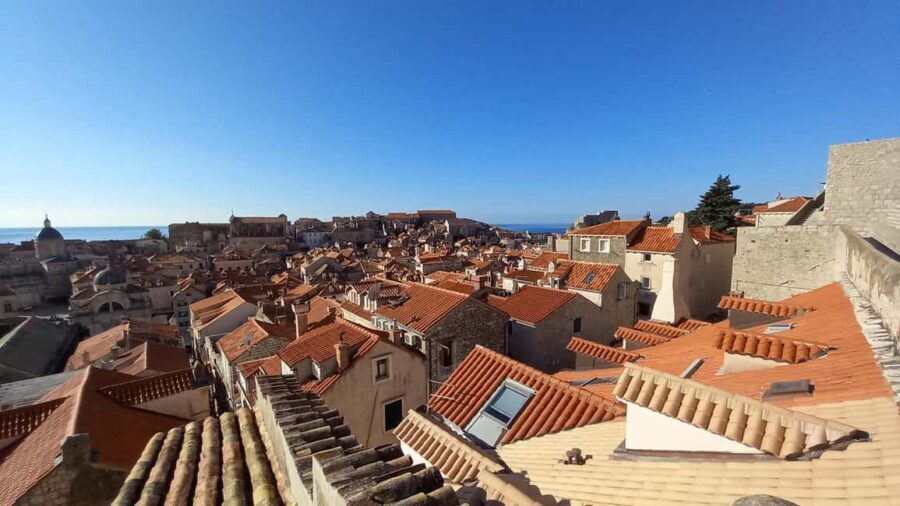
This is built for people who want to understand Dubrovnik quickly, without spending your whole vacation just finding your bearings. At roughly 1 hour 30 minutes, you get a guided path through the heart of Old Town, so you’re not staring at stonework wondering what you’re looking at.
The price—$24.19 per person—makes more sense when you think about what’s included. You’re paying for a local guide plus the organized walking route. And because the tour’s stops are marked as admission-ticket-free, you’re not also stacking entrance fees on top of your sightseeing plan.
If it’s your first visit, you’ll appreciate how the walk sets a timeline in your mind. Instead of memorizing names, you learn what they mean: why the aqueduct mattered, why churches shaped politics, why the port mattered for trade, and why the city’s modern story includes rebuilding after war.
You can also read our reviews of more tours and experiences in Dubrovnik.


Meeting at Onofrio’s Large Fountain by Hard Rock Cafe
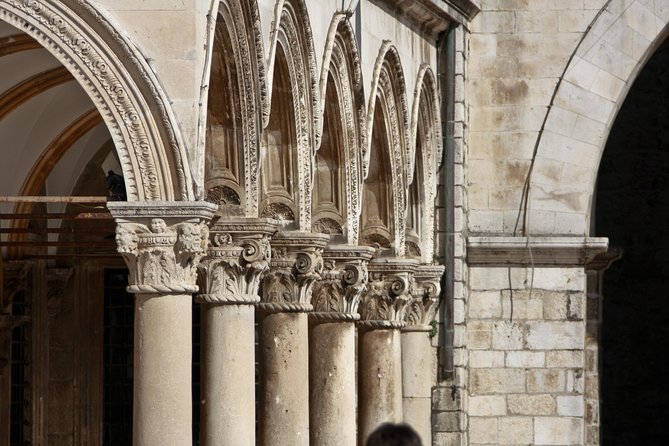
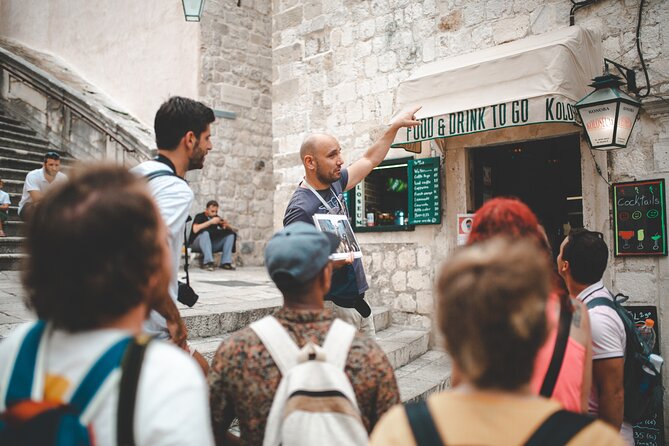
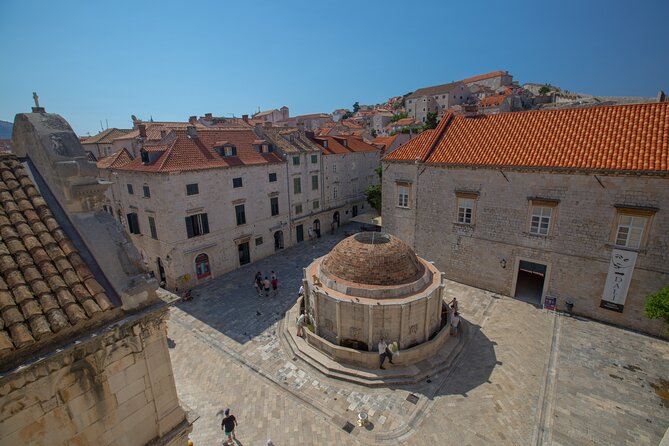
You start at Onofrio’s Large Fountain (Poljana Paska Miličevića 2000), right by the Hard Rock Cafe area—also described as next to the Red Umbrella. It’s a smart meeting choice because it’s central and easy to spot while you’re orienting yourself.
From there, your guide briefly introduces themselves and you head out on the 1.5-hour discover walk. This kind of setup matters in Dubrovnik. Old Town’s streets are narrow and busy, and it’s easy to waste the first hour just trying to get everyone together and moving in the right direction.
Also, the tour starts and ends back at the same meeting point. That’s handy on a day when you’re trying to line up other plans like a city wall walk, a coffee break, or time by the sea.
Ragusa beginnings at Onofrio’s Fountain and the Holy Savior area
The tour opens with a quick history picture from the fountain area. You’re told how Dubrovnik rose from a small maritime trading city-state known as Ragusa, and you get specific context for why Roman-era and medieval engineering still shows up in today’s Old Town experience.
A big detail here is the aqueduct system connection. The Large Onofrio’s Fountain ties into that longer story of water management—one of those unglamorous topics that quietly explains how a city could function and grow.
Then you move onto the main street area, passing by the small votive Church of Holy Savior. It’s not just a stop for a photo. The guide explains why religion mattered so much at the time, and how that shaped the city you see now—meaning streets, institutions, and public life weren’t separated into neat categories. They were all braided together.
Practical note: early in the walk is where you’ll benefit most from listening closely. You’ll start to recognize patterns, and later stops will feel less random.
Franciscan Church and Monastery: the library and the pharmacy
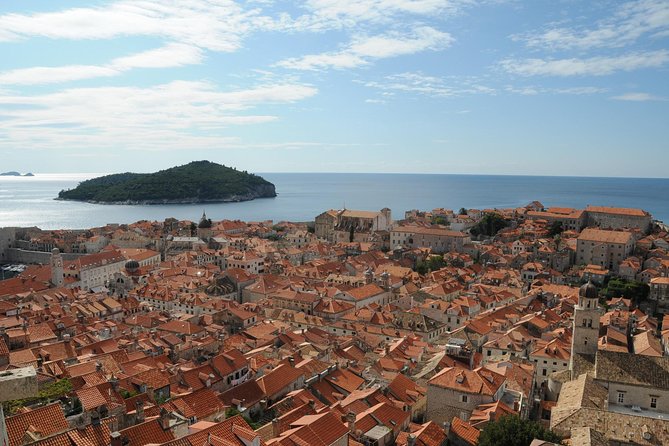
This is one of the most interesting clusters on the route because it’s several functions in one place: monastery, church, library, and pharmacy. If you’re the type who likes learning how people lived day-to-day, this stop gives you that angle.
Key points you’ll hear:
- The earliest monastery was built in the 13th century outside the walls.
- The library was built in the 17th century and is described as holding over 20,000 books, including 1,200 valuable old manuscripts.
- The pharmacy dates from 1317, and it’s described as the third oldest still functioning pharmacy in the world.
That last bit is the kind of fact that changes how you look at the walls and doors. You’re not only seeing religious architecture. You’re seeing a long-running system of knowledge and care.
One small drawback: because this is a complex area, it can feel a bit more “group-focused” than “free-stroll focused.” In other words, you’ll get more out of it if you’re comfortable staying with the group while the guide explains what you’re looking at.
Stradun (Placa): feasts, trade, and the city split
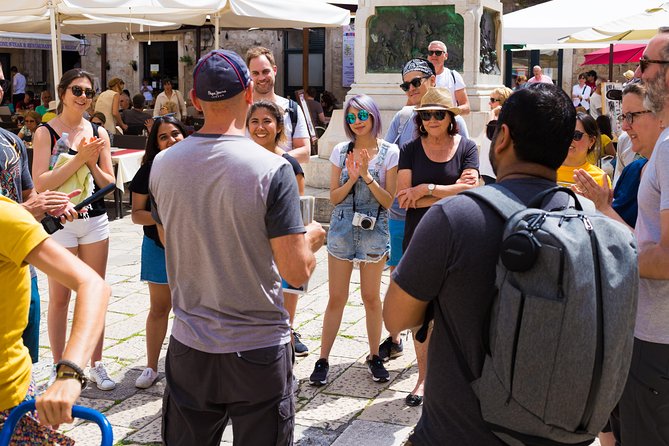
Stradun—also called Placa—is the main promenade and gathering place in Old Town. In real life, it’s also the street where you’ll feel Dubrovnik’s identity most strongly: public life, shopping, ceremony, and people-watching all in one long axis.
Your guide frames it as more than a pretty street. Stradun is described as the venue for public feasts and processions, plus the main business street. You also learn that the street’s width divides the city into northern and southern halves, and from the right viewpoints you can get a better sense of the overall layout.
This is also where the tour brings in the bigger, harder timeline. You’ll hear about the decline of the Ragusa Republic, then how later history led to the Yugoslav period and the Homeland War in the 1990s, including the troubles Dubrovnik endured.
If you want a Dubrovnik where history isn’t just dates in a museum, Stradun is where the tour starts to feel meaningful. The facts stick because you’re standing in the same street the events shaped.

Church of the Holy Annunciation: where faith communities intersect
As the walk moves off the main street toward the Port direction, you stop by the Orthodox Christian Church and learn how other religious communities influenced Dubrovnik’s history—explicitly including Orthodox, Jewish, and Muslim communities.
This is valuable because it helps you read the city as a lived crossroads, not a single-style postcard. Dubrovnik may look unified in stone, but its story includes layers of belief and community presence that changed over centuries.
Practically, this part of the route can feel like a change in rhythm. Narrow inner streets can be slower to navigate in crowds, so be ready for small bottlenecks while the group listens. It’s worth it, though, because this stop fills in context that most quick photo tours skip.
Gundulić Square and the Monument to Ivan Gundulić
Next you reach Gundulić Square, paired with the Monument of Poet Ivan Gundulić, plus a moment to observe the Green Market. This is your chance to see local produce and to hear stories tied to traditions that have lasted across generations.
Even if you’re not planning to buy anything, watching the market flow is a grounding experience. Old Town history can feel heavy. A market stop gives you the lighter reality check: people still live here, still gather here, and food culture still carries meaning.
In the feedback, guides like Ermina and Ivana are repeatedly praised for making stories feel personal rather than scripted. A market-and-monument moment is exactly the kind of place where that approach works, because there’s something to see while the guide explains what it all means.
Rector’s Palace and the Cathedral area: politics and legend close by
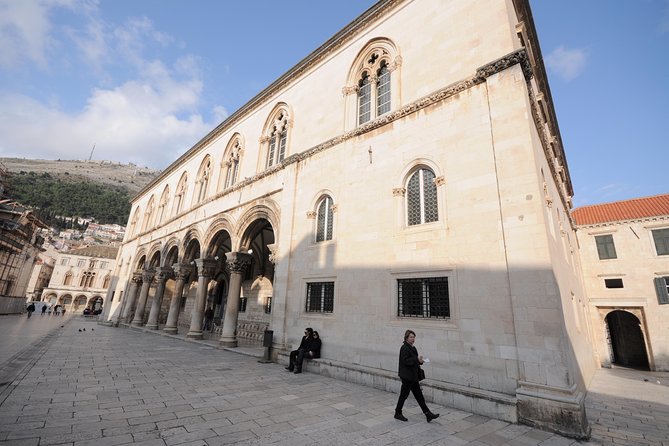
The walk then moves to one of the most important political buildings in Dubrovnik: the Rector’s Palace. This wasn’t just a grand home. It served as the seat of the Rector of the Republic of Ragusa between the 14th century and 1808, and it also housed the Minor Council and state administration.
Your guide also explains practical, slightly darker functions inside the complex:
- armor y
- powder magazine
- watch house
- prison
So when you see a palace, you’re not only seeing power dressed up. You’re seeing how a working government defended itself and enforced order.
From there, you reach the Cathedral of the Assumption of the Virgin Mary, where the tour shares a legend about Richard the Lionheart. The story goes that in 1192, returning from the Crusades, he was shipwrecked in a storm and cast aground on Lokrum Island in front of Dubrovnik.
Even if you treat legends as stories rather than verified history, they matter. They show what Dubrovnik people wanted to connect to their place in the wider medieval world—and that’s exactly the kind of meaning guides bring out in this tour.
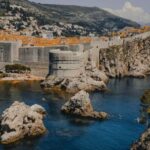
City Harbor, Arsenal, quarantine, and the St. Luke and St. John fortresses
The port/harbor stop is longer—about 15 minutes—because the guide has plenty of material that makes sense right where you’re standing.
You learn that Dubrovnik ships were known throughout the Mediterranean, and galleons from the Republic were found in navies across Europe and beyond. Then the guide brings it back to local industry by talking about how ships were built and loaded in the legendary Arsenal.
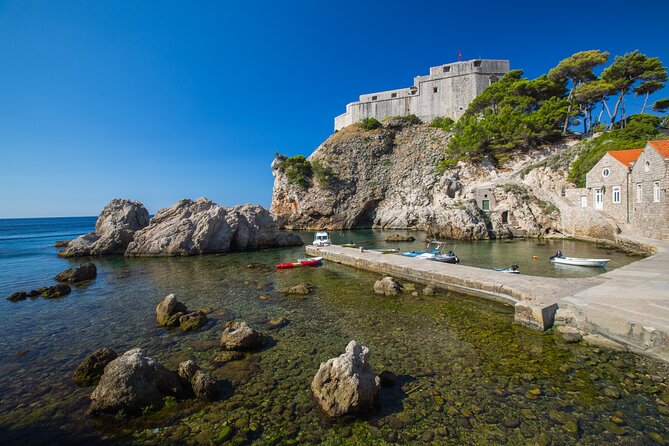
A key theme here is quarantine. Your guide tells the stories tied to the quarantine system and the nearby fortresses of St. Luke and St. John. This is one of those “why this exists” moments. When you connect disease control and military defense to trade, it becomes obvious why ports had to be more than docks.
The best part: even if you’re not a history buff, you’ll probably find this stop clicks because it’s about movement—who came, what risks were managed, and why a maritime city had to plan for danger.
Orlando Column and Luza Square: St. Blaise, Sponza, and the bell tower
Leaving the port area, you end up at the eastern end of Placa (Stradun) by Luza Square, under the City Bell Tower. This is a dense storytelling zone: monuments, church dedication, and multiple landmarks you can connect quickly once your guide sets the framework.
Stops and stories you’ll hear about here include:
- the church dedicated to patron St. Blaise
- the legend of the knight Orlando and his column
- Sponza Palace
- the Small Onofrio’s Fountain
- the high Bell tower
This part of the tour is also where you start to feel the payoff of the route. Earlier you learned about Ragusa’s governance, trade, and faith. Now the guide points out symbols and monuments that represent those ideas in stone.
If you want the easiest next step after the tour, stand around for a moment, then wander back through streets you recognized. You’ll remember why certain buildings matter, not just that they exist.
Price, pace, and what you’re really paying for
At $24.19 per person for about 90 minutes, this tour is priced in the budget-friendly range for Old Town guiding. What makes it feel like good value is the combination of:
- multiple major stops in one loop
- free admission at the listed stops
- a live local guide
- a group size capped at 30
The pace also seems designed for first-time visitors. In feedback, people repeatedly praised guides for keeping the walk engaging and the timing working well, with tours that felt “just enough” to learn and then explore on your own after.
One more value point: because it’s English-led and uses a structured route, you won’t have to build your own mini itinerary. That can save money too—less chance you’ll scramble for extra taxis, last-minute tickets, or second opinions on what’s worth seeing.
Who this tour suits best (and who should consider another option)
This tour fits best if you:
- want a first-day orientation to Old Town
- like history when it’s tied to real places (palaces, churches, port works)
- prefer a guide to organize the story for you
- want to keep sightseeing efficient without feeling rushed
You might consider a different option if:
- you have mobility limits that don’t play well with steps and crowded streets
- you hate group pacing and would rather wander completely free
Old Town is not flat, and it’s not quiet. Even if your route includes step-free portions, you’ll still need to plan around the reality of Dubrovnik streets. One review specifically called out that steps and busy areas can be challenging for less mobile visitors, so it’s worth taking that seriously.
Tips so your walk feels easy (and not exhausting)
Here’s how I’d plan around it, based on the way the route works and what people emphasize in feedback:
- Wear shoes you can trust. You’ll be on stone streets, and the old center can be slick or uneven.
- Pick an earlier departure if you want less crowd pressure. The tour lets you choose a departure time, and the city gets louder as the day goes on.
- Listen for the timeline shifts. Ragusa trading power, religious influence, then later political collapse and the 1990s story—your guide’s thread makes the city easier to read afterward.
- After the tour, use the last half-day like a guided follow-up. You’ll likely spot better photo angles and you’ll know where you are without constantly checking maps.
Also, the tour requires good weather. If weather turns, you’ll be offered a different date or a full refund.
Should you book this Dubrovnik Old Town history walking tour?
If you’re doing Dubrovnik for the first time and you want the clearest path through Old Town’s big themes—Ragusa, religion, politics, and the port—this is a smart booking. The fact that you cover so many landmark areas in about 90 minutes, with admission-free stops and a guide-led storyline, makes it feel like practical sightseeing rather than just a walk.
I’d especially recommend it if you like stories told by locals who connect personal details to the places you’re seeing. Feedback highlights guides like Ermina (including family ties in the Old Town) and Ivana/Jelena/Sara/Joseph/Pero (for mixing engaging anecdotes with clear history). That style matters here, because Dubrovnik’s stones can look similar until someone points out what each one meant.
If your goal is pure wandering with no structure, you might prefer self-guided exploration. But if your goal is understanding fast, get your bearings first—then wander with confidence.
FAQ
Where does the Dubrovnik Old Town History Walking Tour meet?
You meet at Onofrio’s Large Fountain (Poljana Paska Miličevića 2000, Dubrovnik), next to the Hard Rock Cafe area and described as being by the Red Umbrella.
How long is the walking tour?
The duration is listed as about 1 hour 30 minutes.
Is the tour offered in English?
Yes, the tour is offered in English.
What is the price per person?
The price is $24.19 per person.
Is hotel pickup or drop-off included?
No. Hotel pickup and drop-off are not included.
How big are the groups?
The tour has a maximum of 30 travelers.
Are admission tickets included for the stops?
All listed stops are marked as Admission Ticket Free in the tour flow.
What is the cancellation and weather rule?
You can cancel for a full refund up to 24 hours before the experience’s start time. The tour requires good weather, and if it’s canceled due to poor weather, you’ll be offered a different date or a full refund.