REVIEW · SPLIT
Split and Trogir SMALL GROUP Tour with Cruise Ship Drop Off
Book on GetYourGuide →Operated by Split Local Guided Tours · Bookable on GetYourGuide
Two ancient cities in one half-day.
You get the Diocletian’s Palace in Split, plus UNESCO-listed Trogir with a smart walking plan and a guided storyline that keeps the buildings from feeling like random stones. I especially like how the tour mixes major sights (Golden Gate, Cathedral of Saint Domnius) with the more atmospheric parts like the palace’s underground basement halls. One drawback to plan around: it’s mostly walking, and it’s not suitable for wheelchair users.
The pacing is built for cruise days: a set start at the palace’s Golden Gate, guided time in Split, then about a 40–45 minute ride toward Trogir, followed by guided sightseeing and a short block of free time. I also like that the guide is in English and the group is small enough to ask questions without feeling like you’re shouting over 40 people. If you’re traveling with bulky luggage, note that large bags aren’t allowed.
In Trogir, you’re led through the Old Town streets and key landmarks, then you get about 1 hour on your own to wander, grab a drink, and reset. The drop-off is flexible too, with return to Split at Trajektna Luka Split and a drop-off that can be anywhere you want. If you’re the type who prefers museum-style ticket browsing, know that entry tickets aren’t included—most stops are exterior-focused.
In This Review
- Key points at a glance
- Golden Gate to Diocletian’s Palace: where the day starts in Split
- Peristil Square, Vestibul acoustics, and the Cathedral of Saint Domnius
- Basement halls: the Roman underworld portion of Split
- The 40–45 minute transfer to Trogir: cruise-day friendly timing
- UNESCO Old Town Trogir: St. Lawrence and the Romanesque portal
- Kamerlengo Fortress views and your 1-hour Trogir free window
- What $58 gets you: value, guide style, and practical comfort
- Should you book this Split and Trogir tour?
- FAQ
- Where is the meeting point?
- How long is the tour?
- Is the tour guided, and what language is used?
- What’s included in the price?
- Are entry tickets included?
- How much free time do I get in Trogir?
- Is pickup available?
- Where do I get dropped off?
- Is the tour suitable for wheelchair users?
Key points at a glance
- Golden Gate start: meet just below the Gregory of Nin statue near the palace’s northern entrance
- Split’s showpiece sights: Peristil Square, Vestibul, and the Cathedral of Saint Domnius
- Basement halls: one of the standout Roman layers you can’t see from the street
- Easy between-city timing: about a 40–45 minute transfer from Split to Trogir
- UNESCO Old Town walking: St. Lawrence, City Loggia, and the Kamerlengo Fortress views
Golden Gate to Diocletian’s Palace: where the day starts in Split
Your day begins at the Golden Gate—the grand northern entrance to Diocletian’s Palace. The meeting point is just below the Gregory of Nin statue, and you’ll know it’s right because there’s a blue umbrella. It’s a simple start, but it helps a lot with cruise-ship timing since you’re not hunting for your group across a big port area.
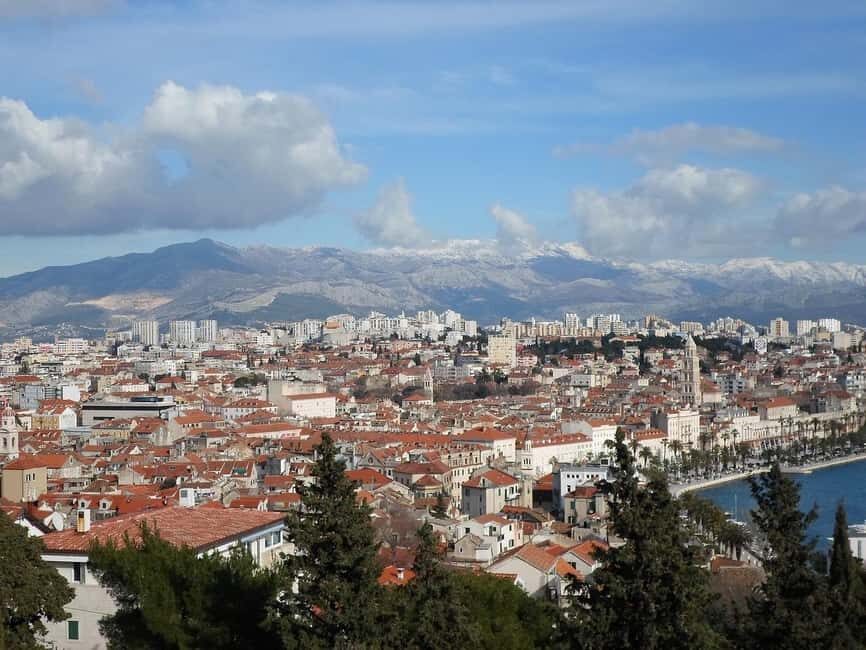
From there, your walking route runs right through the part of Split that feels like it grew in layers: Roman planning first, then centuries of life built on top. You’ll get a guided look at the palace layout, not just a random stroll past important doors. That matters because Diocletian’s Palace can be overwhelming on your own—too many arches, too many passages, and not enough sense of what came first.
I like that the tour keeps its focus on the places you can connect to stories. You’re not stuck only on major squares; you also get guided orientation for the interiors and semi-interiors that define the palace atmosphere. If you’ve ever felt like Split is all monuments and no explanation, this is the kind of tour that gives you names, context, and the reason behind the design.
You can also read our reviews of more boat tours in Split


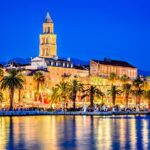
Peristil Square, Vestibul acoustics, and the Cathedral of Saint Domnius
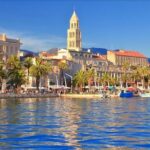
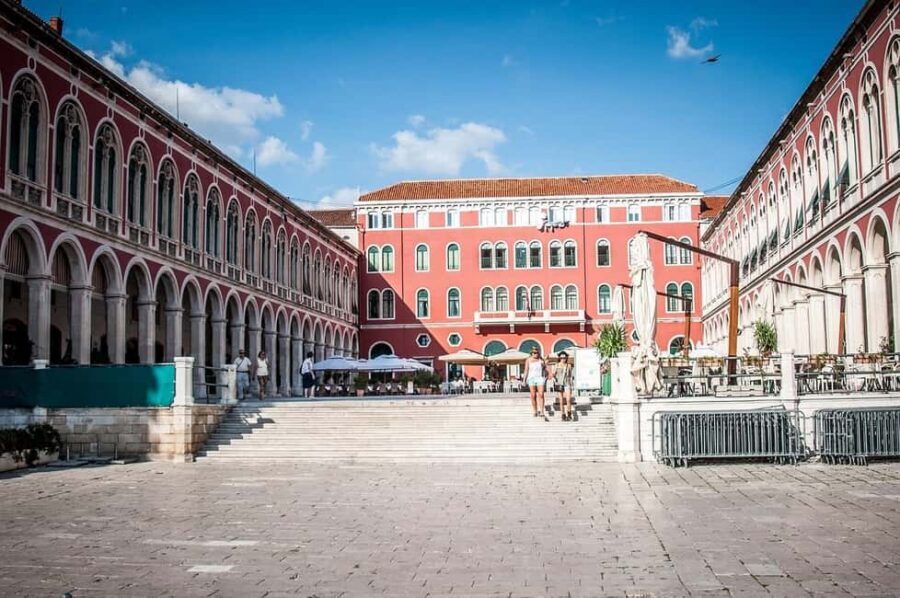
Once you’re inside the palace complex, the tour hits the big visual moments quickly, which is exactly what you want when you only have about five hours total. You’ll see Peristil Square, the palace’s main courtyard. It’s one of those spaces where you can immediately feel why Roman elites built around open air and formal geometry instead of narrow streets.
Next comes the Vestibul, and this is one of those details that you don’t get from a quick photo stop. The description you’ll hear includes the open-dome effect and how the space creates exceptional acoustics. Even if you’re not actively listening for echoes, it helps you understand that this was designed to impress and to control how people moved and spoke within the space.
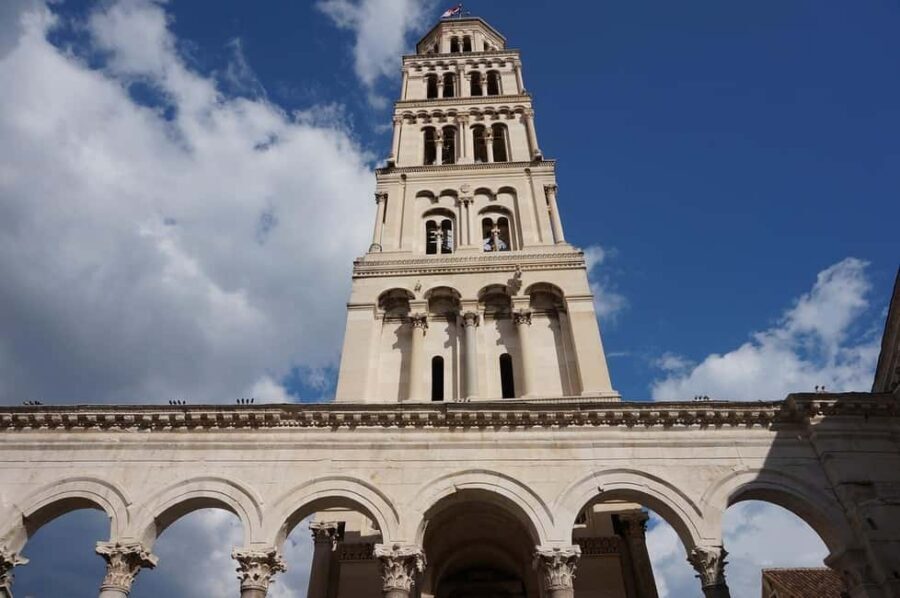
The tour then heads to the Cathedral of Saint Domnius, originally a Roman mausoleum and now a cathedral. This is a smart transition: it shows you how buildings didn’t just get replaced—they often got repurposed. You’ll walk with the guide through what’s preserved and what’s changed, so the cathedral doesn’t feel like a separate attraction. It feels like part of the same long timeline.
A practical note: the tour is mostly about guided sightseeing, and it’s set up for exterior viewing at some stops. That means you should be prepared that entry tickets may not be included for everything you’d like to go inside.
Basement halls: the Roman underworld portion of Split
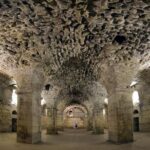
One of the best parts of this tour is the stop that many visitors skip: the Basement halls. These underground spaces are described as among the best preserved Roman sites in the world, and they change the way you think about the palace above ground. Suddenly, you’re not only seeing the elegant public-facing structures. You’re seeing the infrastructure of daily life and how the palace worked as a complex system.
If you like architecture, this is the portion that turns curiosity into understanding. The guide’s storytelling helps connect what you’re looking at—arches, walls, and preserved fragments—to how the palace functioned. Without that, you might simply feel like you’re walking through corridors. With it, you start noticing patterns and the logic behind the layout.
This is also a great contrast to the open spaces like Peristil Square. Up top, light and space dominate. Down here, it’s all texture and shadow, and the guide’s pacing helps you not rush through it. It’s the kind of segment that makes a half-day tour feel like more than a checklist.
Plan to wear comfortable shoes and expect some walking on uneven historic surfaces. The tour is designed for people who can do short bursts of movement, not for anyone who wants a mostly seated experience.
The 40–45 minute transfer to Trogir: cruise-day friendly timing
After the Split portion, you board a comfortable transfer to Trogir. The ride time is around 40 minutes (you’ll also see it described as about 45 in the schedule), which is a practical sweet spot. It gives you enough time to switch locations without turning your day into a long bus slog.
This is where the tour’s structure shines: it prevents the two-city plan from feeling chaotic. Instead of you trying to figure out transport while also trying to keep up with port schedules, the tour controls the rhythm. That’s a big deal if you’re on a cruise ship or if you simply want a stress-free day in two towns.
You’ll arrive in Trogir ready to walk. And the guide’s transitions matter here, too. They don’t treat Trogir like a random add-on. They set you up for what to look for in the streets, squares, and landmark buildings.
If you’re the type who gets tired of constant guiding, you still get a breather in Trogir later with about an hour of free time. And because the ride is included, you don’t need to spend your brainpower on tickets, timetables, or lining up transport.
UNESCO Old Town Trogir: St. Lawrence and the Romanesque portal
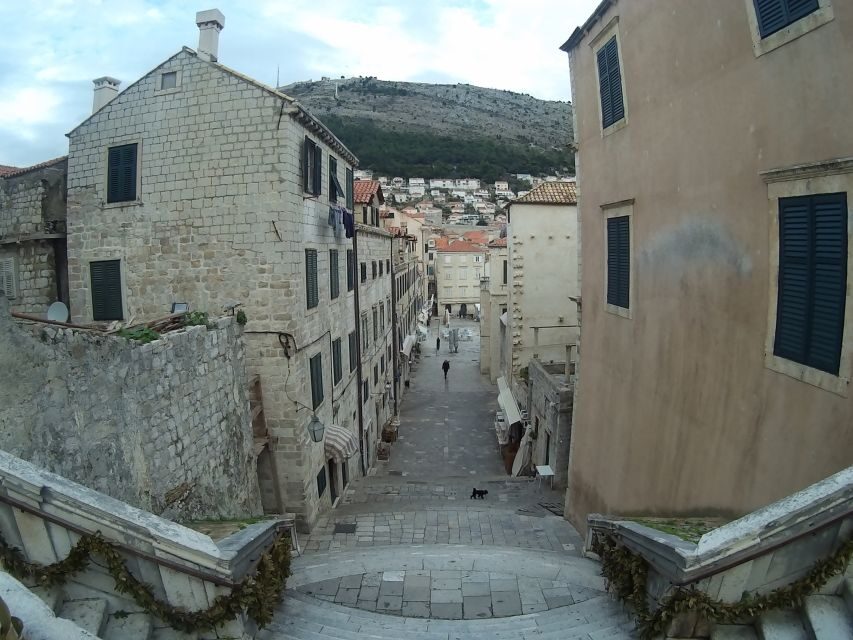
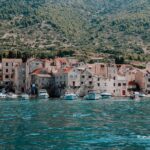
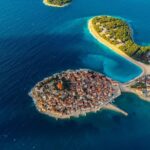
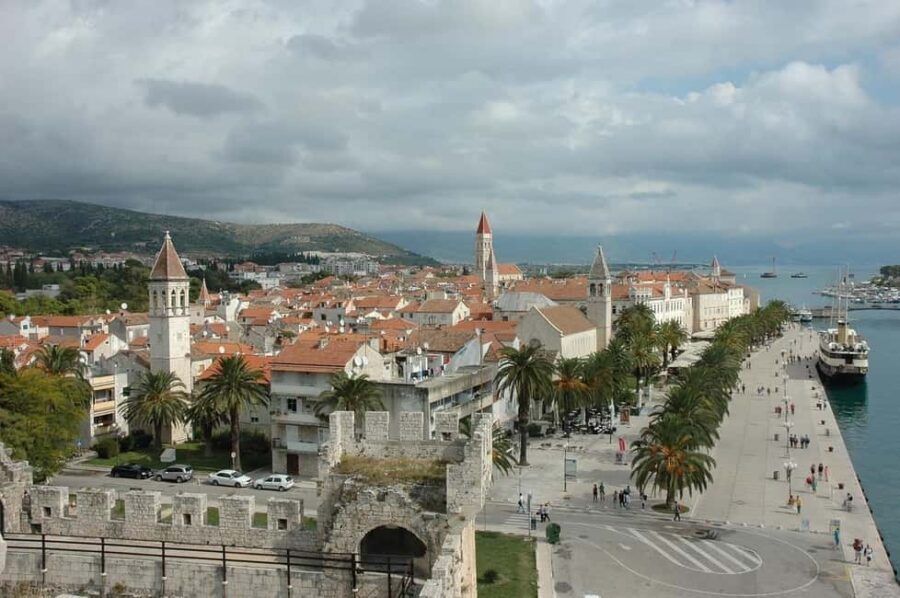
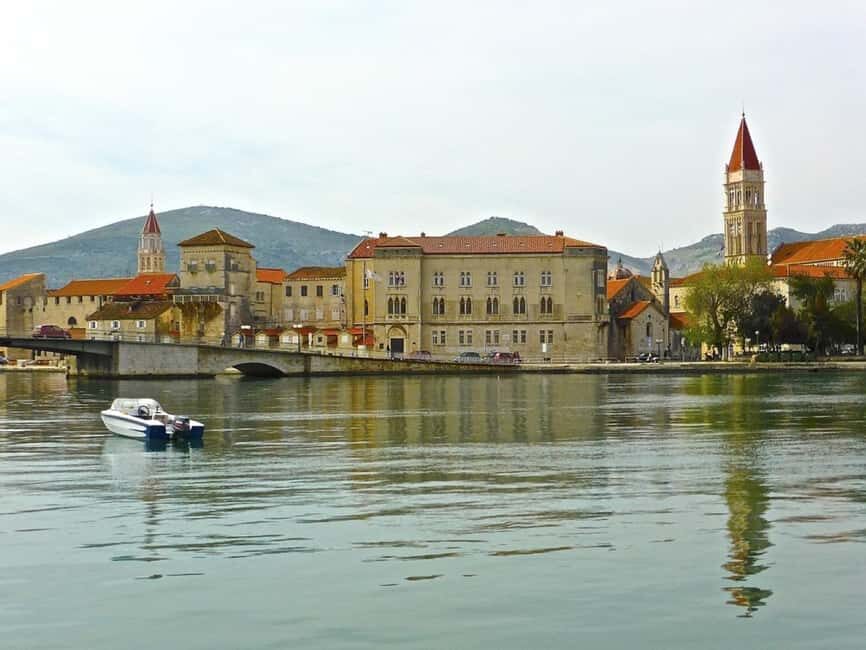
Trogir is often described as Little Venice, and in this tour you’ll see why—especially when you start moving through the narrow, stone-paved streets of the UNESCO-listed Old Town. The guide walks you through Trogir’s preserved urban planning and helps you notice how the layout has stayed remarkably intact over centuries.
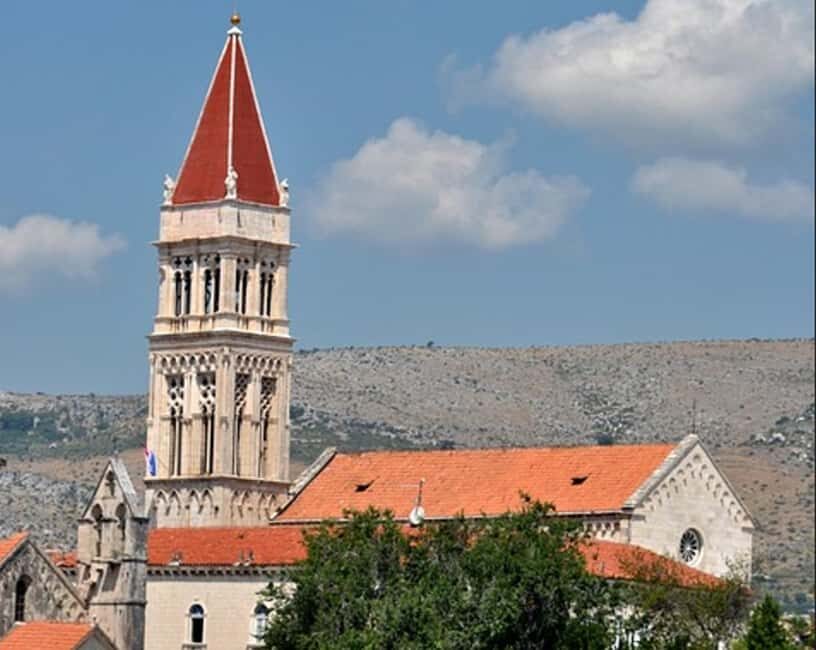
Your route brings you to the lively main square, and from there you’ll focus on major architectural landmarks. One highlight is the Cathedral of St. Lawrence, including its famous Romanesque portal. This is the kind of detail that’s easy to overlook on your own because you’d likely only glance at the big façade. With a guide pointing it out, you start understanding what makes it distinctive.
As you move through the Old Town, you’ll also see the City Loggia. The idea here isn’t just to point out another building—it’s to show how civic and religious life shaped the town’s look and how public spaces worked. Trogir can feel compact, but this is a tour that helps you read the space instead of just passing it.
I’m also glad the tour doesn’t rush you through everything. You get guided attention to key stops, and the route keeps you walking through the actual streets that make Trogir feel like Trogir—not like a theme park version of it.
If you’re hoping to do a lot of independent museum-style exploration, this may not be the best fit. But if you want a strong orientation and a clear hit list of what matters most, it’s a good balance.




Kamerlengo Fortress views and your 1-hour Trogir free window
After the Old Town walking, the tour continues to the Kamerlengo Fortress. This is where you get sweeping views over the Adriatic Sea. It’s also a good moment to catch your breath, because the fortress gives you space to pause and look instead of only moving from one doorway to the next.
The guided portion here is important because viewpoints are more satisfying when you understand what you’re seeing. You’ll hear the town’s story tied to the position and the defensive logic that shaped the way Trogir developed along the coast.
Then comes your favorite part if you like freedom: about 1 hour of free time in Trogir. This is enough time to do practical things without losing momentum. You can stop for lunch, browse shops, or just walk slowly through the streets again while the tour context is fresh in your head.
One smart tip: use this hour to go where the guide didn’t pull you—side lanes, a quieter corner square, or a calmer view spot near the water. The guided route makes the town legible; your free time is how you make it personal.
When your Trogir segment ends, you return to Split by transfer again, with drop-off options that include Trajektna Luka Split, Split and flexible drop-off anywhere you want.
What $58 gets you: value, guide style, and practical comfort
At about $58 per person for a five-hour, two-town plan, the value is in the combination: guided walking + local licensed guide + included transfer. The cost makes sense if you consider what you’d otherwise pay for transport between Split and Trogir plus the time and coordination it takes to plan the day yourself.
Also, you’re getting a guide who can make the sites sound alive. Multiple guides have been praised for mixing solid history with humor and keeping people engaged. Names that have come up include Ivana, Mia, and Slavko, and the common theme is clear: they explain what you’re seeing and keep the pace friendly.
A few practical notes so you’re comfortable:
- Bring comfortable shoes. You’ll walk through old stone surfaces and palace corridors.
- Dress for comfort. The tour asks for comfortable clothes rather than anything formal.
- Keep bags light. Luggage or large bags aren’t allowed, so plan on a day bag or small backpack.
- Entry tickets aren’t included, since visits are described as exterior-only for certain stops.
If you’re someone who wants to do more than just photos—if you like understanding why a square is shaped the way it is, or why a mausoleum became a cathedral—this tour is built for you.
It’s not ideal for wheelchair users, since the route is walking-focused through historic areas. If that’s your situation, you’ll want a different plan with step-free access.
Should you book this Split and Trogir tour?
I’d book it if you want a well-paced half-day that hits the core of Split’s Diocletian’s Palace and then delivers a guided, walkable UNESCO Old Town experience in Trogir—without you wrestling with transport logistics. It’s especially appealing for cruise days because you’re tied to a structured flow and end back in Split with drop-off flexibility.
Don’t book it if you’re looking for a long, slow sightseeing day with lots of optional ticketed interior time. The tour is built around guided walking and key stops, with most emphasis on what you can see and understand during that window.
If you want the fastest path to making Split and Trogir feel connected—Roman layers in Split, medieval and preserved planning in Trogir—this is a strong choice.
FAQ
Where is the meeting point?
You’ll meet in front of the Golden Gate (the grand northern entrance of Diocletian’s palace), just below the Gregory of Nin statue, and you should look for the blue umbrella.
How long is the tour?
The duration is 5 hours.
Is the tour guided, and what language is used?
Yes. The tour includes a local licensed guide, and the live guide language is English.
What’s included in the price?
Included are the walking tours of Split and Trogir, a local licensed guide, and the transfer between the two cities.
Are entry tickets included?
No. Entry tickets aren’t included (the tour mentions exterior visits only).
How much free time do I get in Trogir?
You get about 1 hour of free time in Trogir after the guided portion.
Is pickup available?
Pickup is optional, depending on the selected option, and you can be picked up at your location.
Where do I get dropped off?
There are two drop-off locations, including Trajektna Luka Split, Split, and you can also choose a drop-off location anywhere you want.
Is the tour suitable for wheelchair users?
No. It’s not suitable for wheelchair users.