REVIEW · SPLIT
Split Walking Tour
Book on Viator →Operated by Elena's Walks and Talks · Bookable on Viator
Roman history walks with you in Split. You’ll follow a tight route through Diocletian’s Palace and Split’s older core, where 1,700 years of legends and architecture show up street by street.
I really like two things here: Elena’s storytelling, which mixes clear history with humor and keeps the pace fun, and the way the tour strings together big-name sights without making you hunt for extra entry at every corner.
One possible drawback: the tour includes great viewpoints, but some interiors are not included (like the Temple of Jupiter, seen only from the outside, and the Cathedral of Saint Domnius, which has a separate admission fee).
In This Review
- Key things that make this tour worth your time
- Why Diocletian’s Palace feels different from a typical landmark stop
- Start at Strossmayer Park: a calm warm-up before the Roman world
- Golden Gate: entering like an emperor, with a bit of good-luck folklore
- Peristyle of Diocletian’s Palace: the ceremonial center you can actually feel
- Diocletian’s Palace substructures: why the underground spaces matter
- Vestibulum: the circular chamber that can make voices sound better
- Temple of Jupiter: Christian layers, plus an important access note
- Pjaca and Fruit’s Square: the city’s everyday rhythm
- Riva Harbor finish: where the walk turns into a slow breath
- Price and value: what you’re really paying for
- Who this tour is best for (and who should think twice)
- Practical notes that help the day go smoother
- Should you book this Split walking tour?
- FAQ
- FAQ
- How long is the Split Walking Tour?
- How much does the tour cost?
- Where does the tour start and end?
- How large is the group?
- What is included in the tour price?
- What admissions are not included?
- Is the Temple of Jupiter included inside?
- Do I need to print a ticket?
- Is a private tour available?
- Are service animals allowed and is it near public transportation?
Key things that make this tour worth your time
- Diocletian’s Palace highlights in walking form: Golden Gate, Peristyle Square, and the palace substructures in one smooth arc
- Cellars under the palace: you’ll go beneath the imperial spaces and see how the Romans worked day-to-day
- Vestibulum stop with a reason to listen: the circular chamber’s acoustics matter here, not just the architecture
- Game of Thrones filming locations: you’ll get local-style pointers on where the series was shot in this area
- Small group size (max 15): easier questions, less crowd pressure, better conversation with Elena
Why Diocletian’s Palace feels different from a typical landmark stop
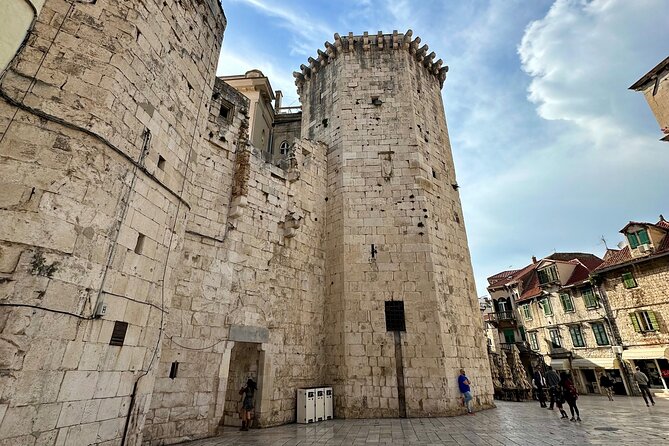
Split can feel like it’s always halfway between Roman times and modern life. That’s exactly what makes this walk work: you’re not just looking at isolated monuments. You’re moving through the living layout of the city’s ancient heart—an imperial palace that still affects where people shop, wander, sing, and gather.
You’ll also see how the “palace” isn’t one single building. It’s gates, courtyards, underground spaces, and rooms that were made for power and ceremony. The best part is that the tour keeps you oriented as you go, so each stop explains the next one instead of feeling like a random checklist.
And because the group is capped at 15 people, you get more of a real conversation. That matters in Split, where everything is close together but easy to get turned around in.
You can also read our reviews of more tours and experiences in Split.


Start at Strossmayer Park: a calm warm-up before the Roman world
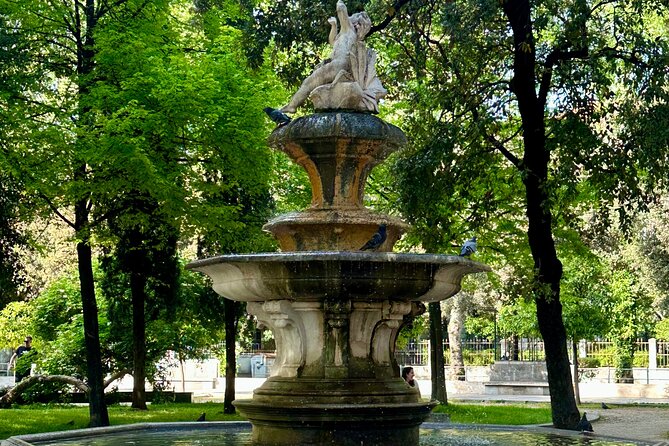
The tour begins in a shaded, quiet pocket outside the palace walls: Strossmayer Park. This first stop is more than a nice view—it’s a reset. You get a moment to settle in, catch your breath, and get your bearings before walking into the tighter, older streets.
It’s short (about 10 minutes), but it sets the tone: this isn’t a rush through stone. It’s a guided story about how the palace shaped the city’s layout, and why the “ancient” here feels close enough to touch.
If you’re arriving by foot from central Split, this start also helps you avoid the feeling that you’ve jumped straight into the busiest sightseeing cluster.
Golden Gate: entering like an emperor, with a bit of good-luck folklore

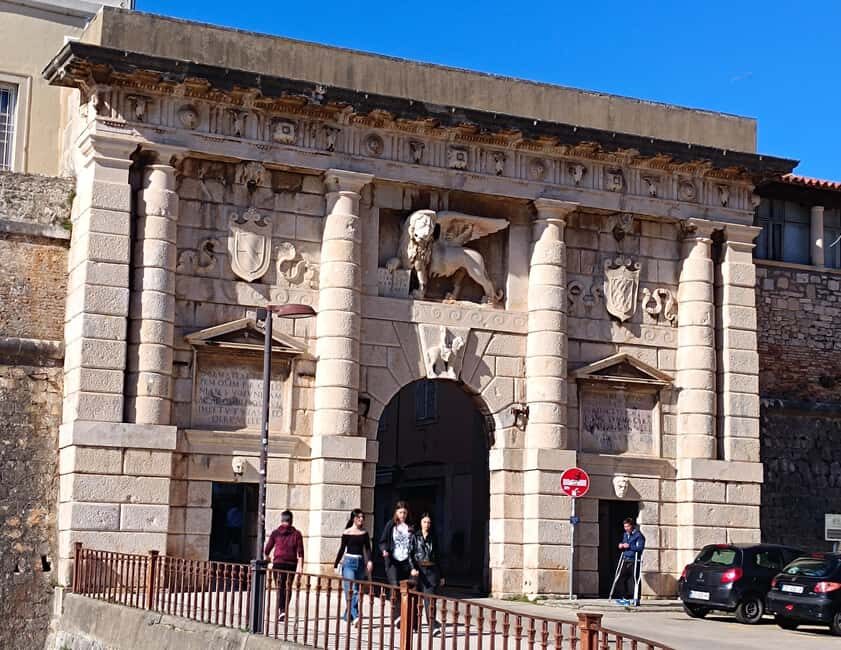
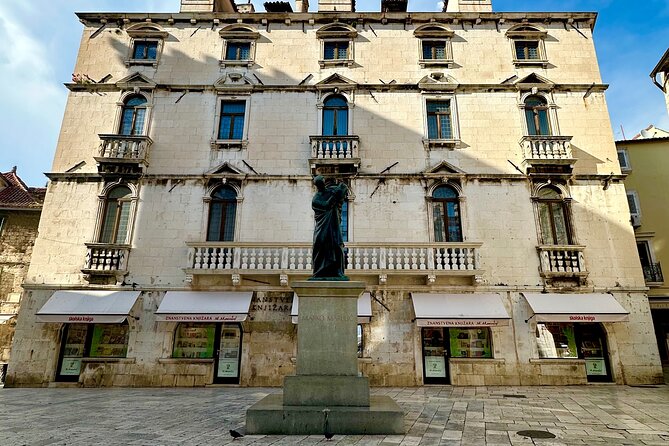
Next you step through the Golden Gate, the northern entrance associated with Diocletian’s Palace. The big idea here is simple: you’re walking into Split the way powerful people once did—right down to the sense of arrival and control that gates create.
Overlooking the passage, you’ll see the statue of Gregory of Nin. There’s a local tradition tied to him: rub his toe for good luck. It’s one of those small rituals that locals treat lightly but visitors remember, and it’s a fun way to break up the more serious Roman details.
This stop is brief (around 10 minutes), but it does an excellent job of “placing” you. After this, Peristyle Square doesn’t feel abstract—it feels like where the story continues.
Peristyle of Diocletian’s Palace: the ceremonial center you can actually feel
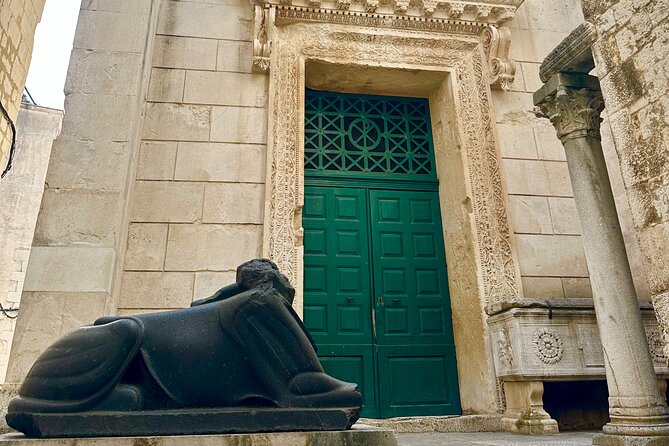
The Peristyle is the palace’s dramatic Roman courtyard—the ceremonial center and the beating heart of Split’s ancient core. Even if you’re not a history nerd, the space makes sense. Courtyards like this are designed to impress: it’s where you’d expect speeches, meetings, and displays of authority.
This is one of the stops where you’ll understand what people mean when they say the palace is a UNESCO World Heritage site and also a living part of the city. You’re standing in a layout that still shapes daily movement.
You’ll spend about 15 minutes here, which is enough time to look, listen, and connect the dots between Roman architecture and the later layers of the city.
Diocletian’s Palace substructures: why the underground spaces matter
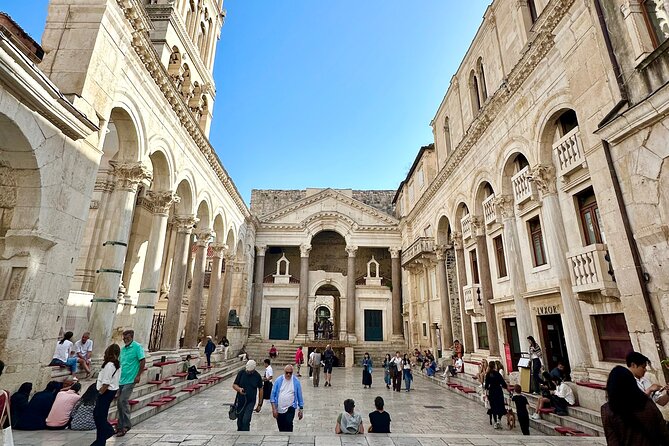
Then comes a very smart shift: you go down into the substructures—the remarkably preserved cellars beneath the palace. People often assume the “important” parts are above ground. These spaces correct that.
These cellars were used for storage, but today they’re home to artisan stalls and you can feel the sense of scale in the stone. The tour frames them as practical Roman design, not just cool old architecture. That’s useful because it helps you stop treating ruins like museum props.
You’ll get about 10 minutes here. It’s long enough to notice the difference between the tightness underground and the openness above, without turning the walk into a slow crawl.




Vestibulum: the circular chamber that can make voices sound better
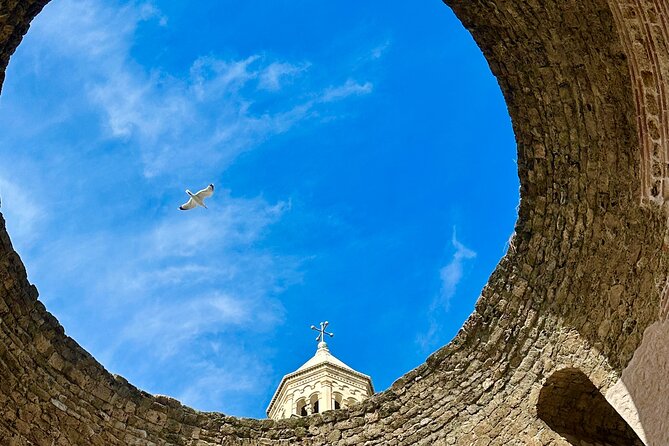
Next is the Vestibulum of Diocletian’s Palace, a circular, open-roofed chamber where an emperor would greet guests. This stop is a great example of why guided tours work: the room becomes more than a shape once someone explains how it was used.
One practical detail is the acoustics. The tour notes that the space often draws traditional Dalmatian singers. Even if you don’t catch a performance, you can still understand why sound behaves differently here. You’re meant to listen for what the architecture creates.
This stop runs about 15 minutes, giving you time to look around slowly and understand why this space fits a ceremonial purpose.
Temple of Jupiter: Christian layers, plus an important access note
The Temple of Jupiter is one of those “time-change” places that gives you a quick lesson in how cultures reuse structures. Roman temple, then Christian baptistery—same walls, new meaning. You’ll see intricate carvings and learn why the site has spiritual significance through the ages.
Here’s the key consideration: your visit is only from the outside. The tour doesn’t include the interior experience, and there’s also a separate admission fee listed for the Temple of Jupiter. So if your priority is to see inside, plan on extra time and tickets beyond this walk.
Spend about 10 minutes here. It’s a short stop, but it lands the idea that Split didn’t just preserve history—it repurposed it.
Pjaca and Fruit’s Square: the city’s everyday rhythm
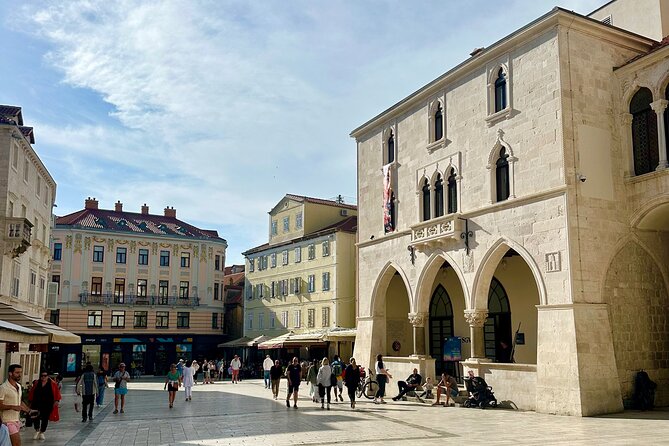
After the palace stops, the walk shifts to squares where modern life meets old stone.
You’ll visit Pjaca, a historic square surrounded by elegant architecture and café culture. It’s a good pause point: you step out of the tight palace geometry and into an open space where the city’s everyday rhythm comes through.
Then it’s on to Fruit’s Square (Trg Brace Radic). This square has a market past, but today it’s a friendly spot to grab coffee and feel the Mediterranean atmosphere. These stops are about more than photos. They help you process what you saw in the palace by giving your brain a break and letting the city feel like a place people actually live in.
Each of these takes about 10 minutes, so you’re not stuck lingering when you still want to finish the route.
Riva Harbor finish: where the walk turns into a slow breath
The tour ends on Riva Harbor, Split’s waterfront promenade. Expect palm-lined views, cafés, and that easy Adriatic breeze that makes you stop walking and just watch the scene.
This final stretch is about 15 minutes, which works well because you don’t want your history tour to end in exhaustion. You want to land in an area where you can keep going—grab a drink, look toward the sea, and get your bearings for whatever you do next.
If you’re planning to continue exploring, this ending point is a smart choice. It’s central to the promenade energy while still letting you step down from “tour mode.”
Price and value: what you’re really paying for
At $17.90 per person for about 1 hour 45 minutes, the value comes from how much ground the guide covers and how efficiently the route connects major sights.
Most stops are free to view during the tour, which reduces the cost shock that can happen with other walking experiences. The exceptions noted are admissions for Cathedral of Saint Domnius and the Temple of Jupiter (and, practically speaking, the Temple of Jupiter is viewed from outside on this walk).
So you’re paying mainly for:
- a local guide with 8 years of experience
- the “how it all fits together” explanation across Roman and later layers
- time efficiency in a dense historic area
- personal recommendations for where to eat local food afterward
If you’re the type who likes a guided structure—especially on your first day in a new city—this pricing makes sense. If you already know you’ll want interiors and extra tickets, you can still do the walk, but budget a bit more for those add-ons.
Who this tour is best for (and who should think twice)
This is a strong fit for:
- first-time visitors who want Split’s big landmarks explained in a logical order
- people who like Roman history but don’t want a stuffy lecture
- anyone who appreciates local pointers, including food recommendations and entertainment nods like the Game of Thrones filming locations
You might want to think twice if:
- your top priority is entering every major site interior (because the tour explicitly notes that the Temple of Jupiter interior is not included)
- you want a longer, slower pace with lots of stop-and-start photo time (this walk is paced to cover a lot in 1 hour 45 minutes)
Practical notes that help the day go smoother
This tour uses a mobile ticket, and you should receive confirmation at booking. The group stays small at up to 15.
It’s also described as being near public transportation, which helps if you’re mixing it with other plans rather than starting your day entirely on foot. And yes, service animals are allowed.
Private tours are available on request, which is useful if you’re traveling as a group that wants more flexibility than a set walking route.
Should you book this Split walking tour?
Yes—if you want a guided, easy-to-follow route through the heart of Split that explains why the palace shaped everything around it. This is the kind of experience that helps you understand the city fast, without feeling like you’re reading a plaque-by-plaque script.
Book it especially if you like stories with personality. Elena’s style comes through in the feedback: fun facts, clear knowledge, and a tone that keeps the walk enjoyable instead of stiff.
Just go in with one expectation set: some interiors are separate—so if you’re itching to go inside the Cathedral of Saint Domnius or the Temple of Jupiter, plan to handle those separately after the tour.
FAQ
FAQ
How long is the Split Walking Tour?
It lasts about 1 hour 45 minutes.
How much does the tour cost?
The price is $17.90 per person.
Where does the tour start and end?
It starts at Strossmayerova Fountain, Ul. kralja Tomislava 12, 21000 Split, and ends on the Split Riva promenade.
How large is the group?
The tour has a maximum of 15 travelers.
What is included in the tour price?
You get a knowledgeable tour guide to share history and culture.
What admissions are not included?
Admission fees are not included for the Cathedral of Saint Domnius and the Temple of Jupiter.
Is the Temple of Jupiter included inside?
No. The Temple of Jupiter is only visited from the outside on this tour.
Do I need to print a ticket?
No. The tour uses a mobile ticket.
Is a private tour available?
Yes, private tours are available on request.
Are service animals allowed and is it near public transportation?
Yes. Service animals are allowed, and the tour is near public transportation.