REVIEW · TROGIR
Trogir 1.5-Hour City Tour
Book on GetYourGuide →Operated by www.south-tours.com · Bookable on GetYourGuide
Trogir’s stone streets have a way of pulling you in fast. In just 90 minutes, this walking tour threads together the UNESCO core of the medieval city on its tiny island setting, with plenty of time to pause and really look at what makes the architecture different from place to place. I love how the route balances viewpoints and close-up details, and I also love that the guide keeps pointing you toward the big artistic moment: the Romanesque portal of Trogir Cathedral and the sculptural relief of Kairos.
One possible drawback to consider: it’s a quick-hit highlights tour, so if you want a tightly connected, chapter-by-chapter story with long stops at each site, the pacing may feel a bit stop-and-go.
In This Review
- Key Things That Make This Trogir Tour Worth Your Time
- Trogir’s Medieval Layout: The Part You Actually Feel Walking
- 90 Minutes on Foot: How the Tour Works in Real Life
- St. Mark’s Fortress: Where the Tour Starts With Defense
- Glorijet maršala Marmonta: A Name-Led Landmark With Story Potential
- Kamerlengo Castle: The Battle Stories Start to Make Sense
- Church of St. Dominic: Religious Architecture as a City Timeline
- Benedictine Monastery of St. Nicholas: Calm Spaces After Big History
- City Loggia: Civic Life and the Art of Public Space
- Chapel of St. Sebastian: A Small Stop With Big Atmosphere
- Knežev dvor: Power Architecture Before the Cathedral Finale
- Cathedral of St. Lawrence: The Romanesque Portal That Earns the Focus
- Trogir North Gate: Ending With the City’s Defensive Shape
- Price and Value: Is $47 for 90 Minutes a Good Deal?
- Who This Tour Suits (and Who Might Want Something Else)
- Should You Book This Trogir 1.5-Hour City Tour?
- FAQ
- How long is the Trogir 1.5-Hour City Tour?
- What is the price per person?
- Where does the tour start?
- Is the tour guide included?
- What language is the tour guide?
- Are entrance fees included?
- Are transfers included?
- What is the cancellation policy?
Key Things That Make This Trogir Tour Worth Your Time
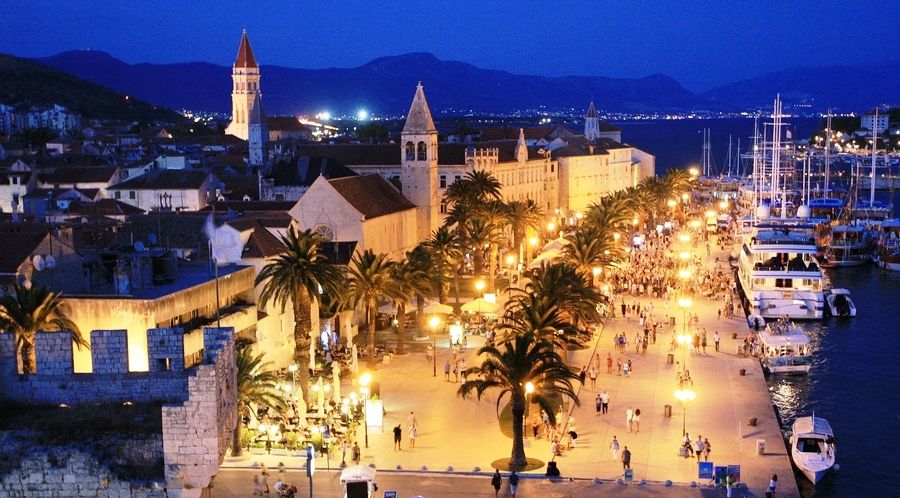
- UNESCO island-city feel: A compact center where medieval lanes still read clearly.
- St. Lawrence Cathedral portal focus: The Romanesque doorway is treated like the main event.
- Fortress-to-gates route: You see how defense shaped how the city grew.
- Venetian-era stories with battle context: History comes with names, motives, and conflict.
- A real guide, not a headset lecture: Live English narration keeps you moving with purpose.
- Guides can flex the pace: I’ve seen praise for guides who extend time when it makes sense, like Sandra reportedly adding about 30 minutes.
Trogir’s Medieval Layout: The Part You Actually Feel Walking
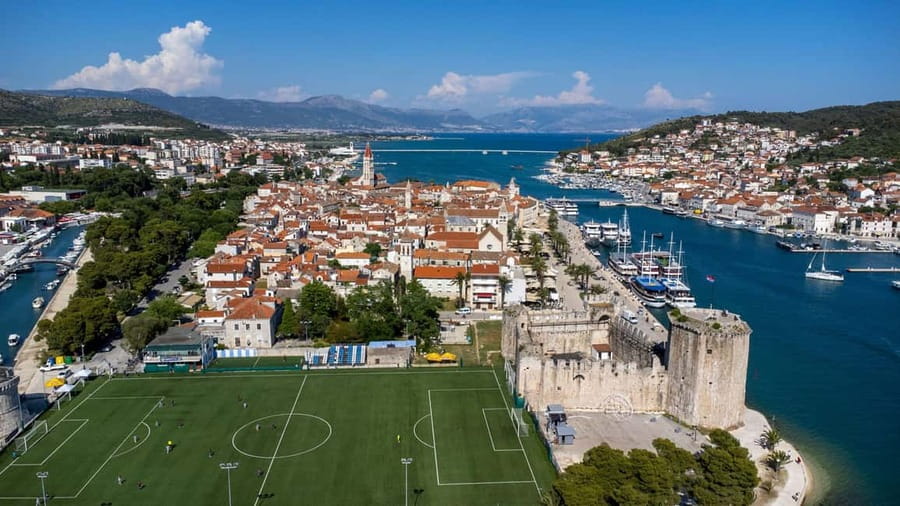
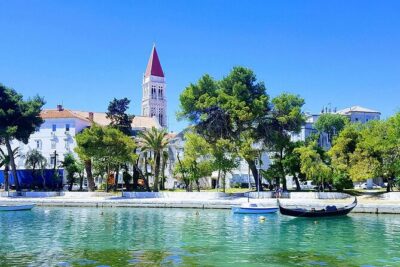
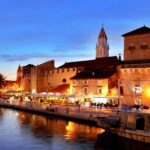
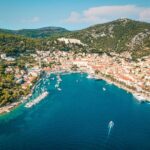
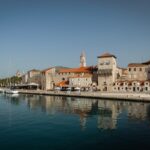
Trogir sits between Croatia’s mainland and the island of Čiovo, and that location matters. Even on foot, you can feel the city’s “island museum” vibe: the streets are tight, the buildings look like they’ve been competing for attention for centuries, and you keep turning corners into new architectural scenes. This is exactly what I like about guided walking tours here. You don’t just pass by landmarks—you pick up the logic behind them.
The city is known for its original architecture and atmospheric streets, with layers you can spot as you go. You’ll hear about Romanesque and Renaissance courtyards, plus how later styles appear in and around the older structures. And because the tour is built around landmark stops, you end up with a mental map instead of a pile of photos.
You can also read our reviews of more tours and experiences in Trogir.


90 Minutes on Foot: How the Tour Works in Real Life
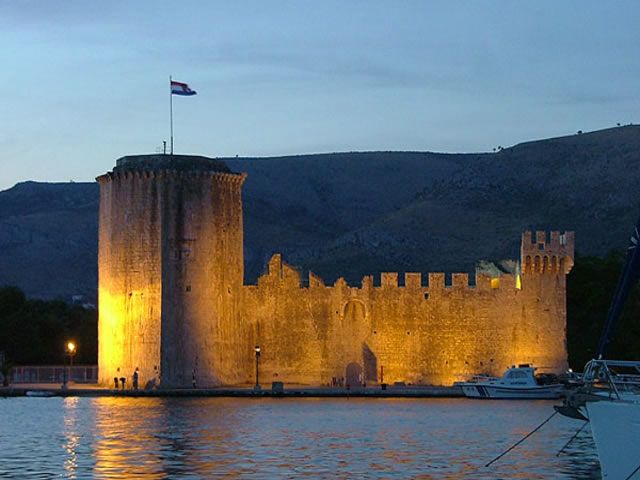
The timing is tight: the tour is listed as 90 minutes, and the stops are consistently short—about 10 minutes at each highlight—so you stay in motion. That’s a plus if you’re short on time or you don’t want to spend half a day in one city center. It also keeps the energy up; you’re never wandering for too long before something meaningful pops up around the next corner.
The tour includes a live guide in English, so you can ask basic questions along the way if the group’s pace allows it. You start at the South Tours Travel Agency office at Hrvatskih Mučenika 28 in Trogir, then you move through the old city in an efficient loop: fortress, castles, churches, civic buildings, cathedral, and finally a gate.
Two practical notes. First, entrance fees are not included, so if you’re planning on paying for any sites beyond what’s covered visually, you’ll want a little extra budget. Second, there are no transfers included, so you’ll need to get yourself to the meeting point on your own.
St. Mark’s Fortress: Where the Tour Starts With Defense
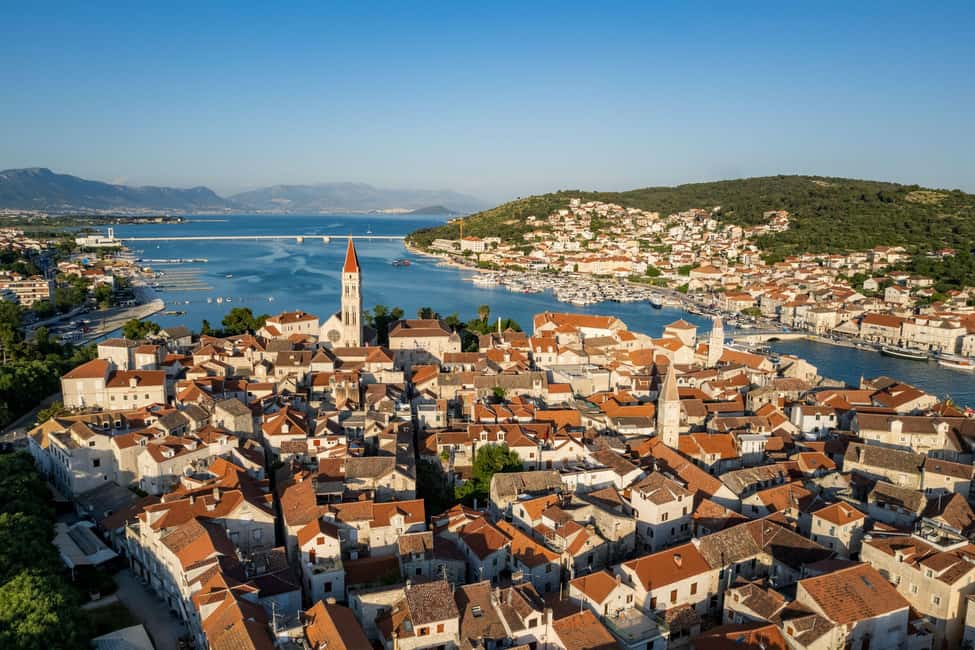
You begin with St. Mark’s Fortress, a solid first stop because it sets the “why” behind the city’s shape. Fortresses don’t just look impressive; they explain how people thought about safety, control, and visibility. From here, you also get early context for the stories your guide will bring up later—historic battles, mysterious characters, and the way conflict helped shape the city’s identity.
This stop is short—around 10 minutes—but it works as a warm-up. You’re primed to notice details like fortification design and strategic positioning. It’s the kind of introduction that makes the later stops (castles and gates) feel connected rather than random.
Glorijet maršala Marmonta: A Name-Led Landmark With Story Potential
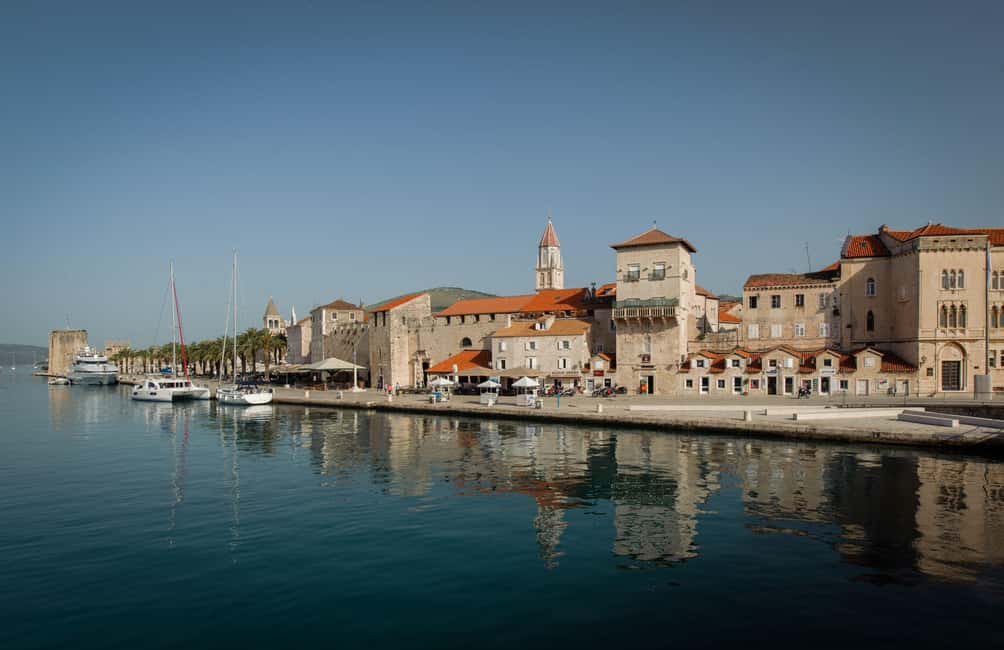
Next up is Glorijet maršala Marmonta. Even if you don’t know anything about Marmont beforehand, the name gives you a clue: this is a named landmark tied to a person’s legacy. A good guide uses that hook and then fills in the local meaning—how the landmark fits into Trogir’s timeline and why it matters in the city’s bigger picture.
Because the tour is only 90 minutes, this stop won’t turn into a long lecture. Instead, it’s designed to keep you looking around: at how the structure sits in the urban fabric, at how it relates to nearby sightlines, and at how the guide connects it back to themes like power and historical change.
Kamerlengo Castle: The Battle Stories Start to Make Sense
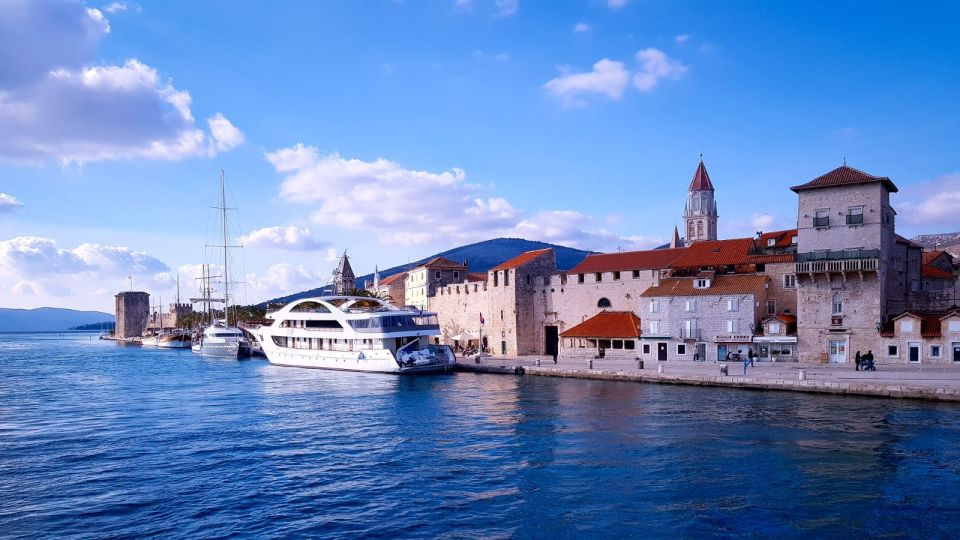
Kamerlengo Castle is a natural turning point in the tour. Castles are built for hard realities—threats, sieges, and control—and your guide uses that logic to bring the “exciting battles” theme into focus. What I like here is that history doesn’t float around abstractly. The architecture does the heavy lifting.
This is also one of the spots where you’re likely to notice how the city’s medieval and early-modern layers coexist. Even though your walking pace stays quick, the guide’s narration is meant to help you connect the dots: who held influence, how conflict affected urban life, and how Venetian rule becomes part of the story you’re hearing.


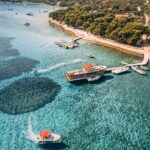



Church of St. Dominic: Religious Architecture as a City Timeline
Then you shift from defensive power to spiritual and community life at the Church of St. Dominic. Churches in places like Trogir often function like markers—each one signals a period, a patron, or a shift in local priorities. With a short guided visit, you won’t get every detail, but you will get the highlights that help you read the façade and interior mood.
The tour approach is built for close looking. Your guide points out features so you’re not just walking past a landmark that looks “pretty.” You’re learning how religious buildings fit into the city’s overall structure, and how that structure reflects broader historical currents.
Benedictine Monastery of St. Nicholas: Calm Spaces After Big History
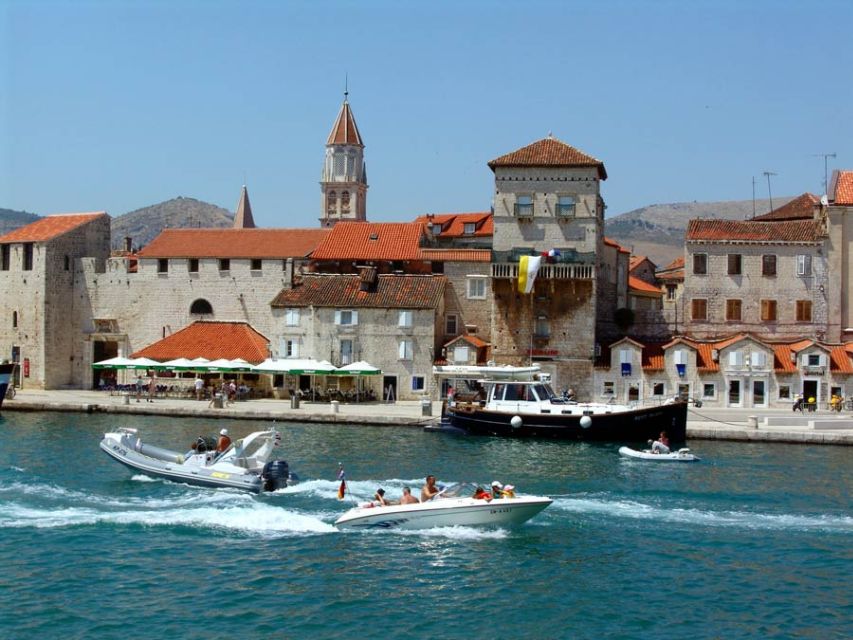
After the church stop, the Benedictine Monastery of St. Nicholas gives you a different tempo. Monasteries tend to create a quieter emotional space even when the city is full of visitors. That contrast matters on a walking tour. It prevents the whole experience from becoming one long sprint through stone and titles.
Here, your guide’s stories are meant to connect the monastery’s role to the city’s lived rhythm. You’ll also get that “romantic buildings” feeling the tour description promises—courtyard-like spaces and historic interiors that make you want to slow down, look up, and check the details in the corners you’d normally miss.
City Loggia: Civic Life and the Art of Public Space
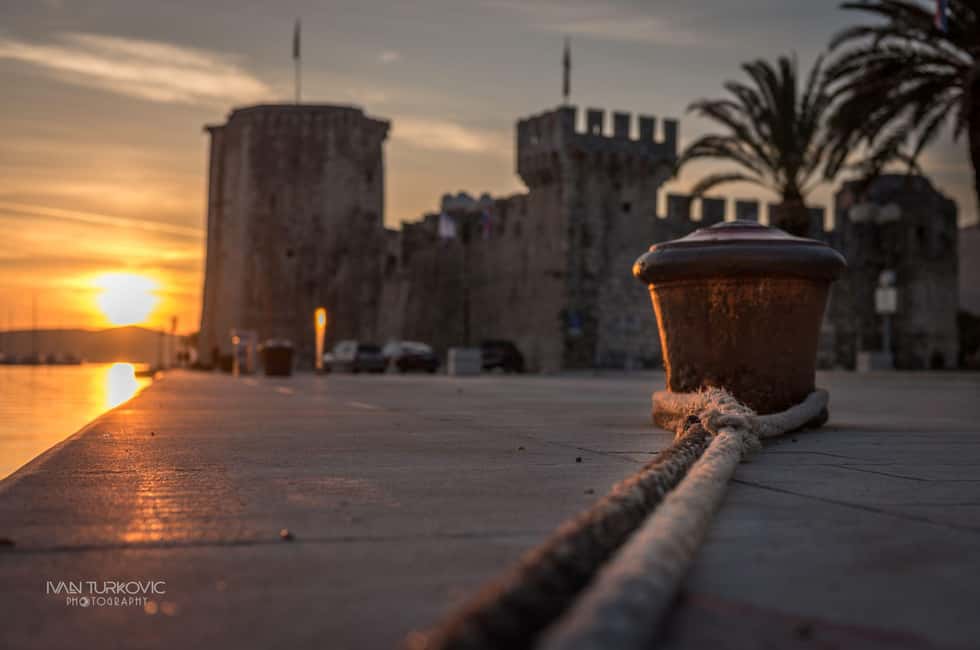
The City Loggia is your bridge into Trogir’s civic world. A loggia isn’t just decorative; it’s functional public space. In a city that experienced changing rulers and pressures, these kinds of buildings mattered for how decisions got discussed and how authority got displayed.
This stop is short, but it’s one of the most useful pauses because it helps you understand that Trogir wasn’t only cathedrals and fortresses. It was also daily governance, community routines, and public moments that shaped what residents saw as the city’s identity.
Chapel of St. Sebastian: A Small Stop With Big Atmosphere
The Chapel of St. Sebastian might sound like a minor detail compared to the fortress or cathedral, but that’s exactly why it can work well on this tour. Small chapels often deliver character fast. They can feel personal, almost like the city is whispering instead of shouting.
Your guide uses this stop to keep variety in the route. You’ll get architectural cues and stories tied to the city’s historic fabric, which helps you remember Trogir as more than a checklist of major monuments.
Knežev dvor: Power Architecture Before the Cathedral Finale
Then you reach Knežev dvor. This is one of those buildings that typically signals authority and administration, and the tour aims to frame it in the wider narrative of control and Venetian influence. Even without a long explanation, the placement in the route matters. It comes right before the cathedral, so it acts like a “prelude” to the greatest artistic highlight.
Think of it as history’s gearshift: you go from gates, defense, and civic presence to the city’s religious masterpiece. Your guide’s stories around battles and mysterious characters are likely to line up with this moment, giving the stop more meaning than just standing in front of old stone.
Cathedral of St. Lawrence: The Romanesque Portal That Earns the Focus
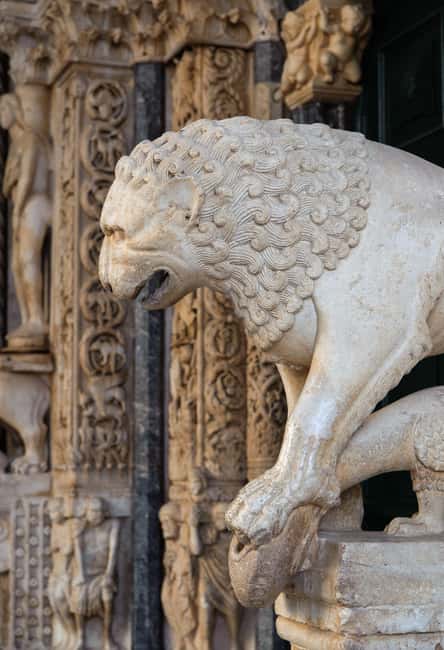
Now we get to the star. The Cathedral of St. Lawrence (St. Lovro) is where the tour’s attention snaps into sharp detail. The headline here is the magnificent Romanesque portal of Trogir Cathedral, created by the Dalmatian architect Radovan.
What makes this part memorable is the storytelling around the artist. There’s almost no information about Radovan’s career—except for this monumental portal. That kind of missing biography makes the work feel even more singular. The guide also highlights the sculptural relief of Kairos, which adds a human, symbolic layer to what you’re seeing. You’re not only looking at old architecture; you’re looking at carved ideas—time, moments, meaning—frozen in stone.
This stop is short, so come ready to look actively. If you’re the type who likes art history, you’ll probably enjoy spending a few extra seconds tracking the portal’s relief work. If you’re not, the guide’s explanation makes it easier to understand why the portal gets talked about so much.
Trogir North Gate: Ending With the City’s Defensive Shape
Finally, the tour ends at Trogir North Gate. Gates are a great finishing point because they leave you with a visual understanding of boundaries. You can feel how the city controlled entry and movement, and you get one last chance to connect the dots between fortresses and the streets you walked through.
This is where the battle stories theme can land cleanly: the city’s architecture isn’t random decoration. It’s built for survival and control, and the gate is part of that logic. It’s also a satisfying endpoint because you finish with structure and direction—something you can “carry” as you continue wandering on your own.
Price and Value: Is $47 for 90 Minutes a Good Deal?
At $47 per person for about 90 minutes, you’re paying for a live guide and a focused routing of the UNESCO core. The value depends on how you plan to explore afterward.
If you want the fast start—learning what to look for, hearing the stories behind the big landmarks, and getting a sensible walking route—then this price is fair. You’re not just buying access. You’re buying interpretation. And because entrance fees aren’t included, you’re also not paying extra for tickets you might not even want.
If you already know a lot about Trogir’s art and architecture and you’re comfortable building your own self-guided route, you may find you can do it for less. But the tour’s strength is in helping you connect the sites in a way that makes the city feel “understandable” instead of only beautiful.
One balanced caution: a short tour like this will naturally skim. It’s designed around multiple landmark stops, each with a brief guided look. If what you need is slow pacing and deep discussion at one or two monuments, you might prefer a longer tour format.
Who This Tour Suits (and Who Might Want Something Else)
This tour is a great fit if you:
- Want an organized way to see Trogir’s highlights without planning everything yourself.
- Enjoy architecture and guided stories that make old buildings feel relevant.
- Are short on time but still want the kind of overview that helps you explore independently afterward.
It may be less ideal if you:
- Hate walking and prefer long seated museum-style visits.
- Need long explanations at each stop. The tour prioritizes coverage and movement.
And one small bonus: the pacing is friendly for mixed groups. A guide named Sandra has been praised for experience and for keeping things engaging—so if you’re traveling with family, or you just want a guide who can hold attention, it’s a good sign.
Should You Book This Trogir 1.5-Hour City Tour?
Yes, I’d book it if you want a smart, time-efficient introduction to Trogir. This is the kind of tour that helps you see why the city is famous: the medieval street layout, the civic and religious landmarks, and especially the Cathedral of St. Lawrence portal by Radovan with its relief of Kairos. For $47 and 90 minutes, you’re buying a guided “map with meaning.”
I’d think twice if you’re the type who wants a slower pace and deeper time at fewer stops. Also, remember entrance fees and transfers aren’t included, so plan those costs and timing yourself.
If you’re arriving in Trogir with only a day to spare, this is a solid way to get your bearings fast—and then wander the lanes with better instincts.
FAQ
How long is the Trogir 1.5-Hour City Tour?
The tour duration is listed as 90 minutes.
What is the price per person?
The price is $47 per person.
Where does the tour start?
The meeting point is at the tour operator’s office, Hrvatskih Mučenika 28, Trogir.
Is the tour guide included?
Yes. A live tour guide is included.
What language is the tour guide?
The tour is available in English.
Are entrance fees included?
No. Entrance fees are not included.
Are transfers included?
No. Transfers are not included.
What is the cancellation policy?
Free cancellation is available up to 24 hours in advance for a full refund.