REVIEW · ZADAR
Zadar City Tour 120min Walk
Book on GetYourGuide →Operated by ZADAR CITY TOUR, Tourist agency · Bookable on GetYourGuide
One city, two sounds, and a lot of walking. This 120-minute Zadar walk turns the waterfront installations and stone monuments into a clear story of how the town became what you see today.
I love that the guide gives detailed, material facts as you move, so stops feel connected instead of like a pile of photos. I also like the flow from modern Zadar to the medieval core, with music from the Sea Organ and then straight into the cathedral-and-forum area.
One thing to consider: it’s a steady stroll with limited stops for ticket entrances and no toilet breaks, so bring comfortable shoes and plan your timing if you’re sensitive to long walking.
In This Review
- Key things that make this tour worth your time
- Why This 120-Minute Walk Makes Zadar Click
- Starting at Greeting to the Sun: Modern Zadar’s Perfect Opening
- Sea Organ Sounds and the Promenade Rhythm
- Cathedral of St. Anastasia: The Stop That Sets the Tone
- Roman Forum and St. Donatus: Where Ancient and Medieval Collide
- Benedictine Monastery, Market Zadar, and the Food-Story Angle
- People’s Square, Five Wells Square, and the Power Walk to Land Gate
- What the Tour Covers Versus What Costs Extra
- Pace, Comfort, and Who This Tour Fits Best
- A Quick Look at the Tour Guide Experience (and What You’ll Learn)
- Should You Book the Zadar City Tour 120min Walk?
- FAQ
- How long is the Zadar City Tour 120min Walk?
- Where does the tour start?
- Is pickup included?
- What is included in the tour price?
- Are entrance tickets to monuments included?
- Are toilet breaks provided?
- Is food or cheese tasting included?
- What languages is the guide available in?
- Is free cancellation available?
Key things that make this tour worth your time
- Sea Organ + Cathedral area in one route: you get the modern waterfront and the big historic sites without hopping around.
- A long story for a short time: the pace is made for cultural-heritage lovers who want explanations, not just directions.
- Optional medieval-church entry and tastings: depending on the day and season, you may get free access or small food/cheese stops.
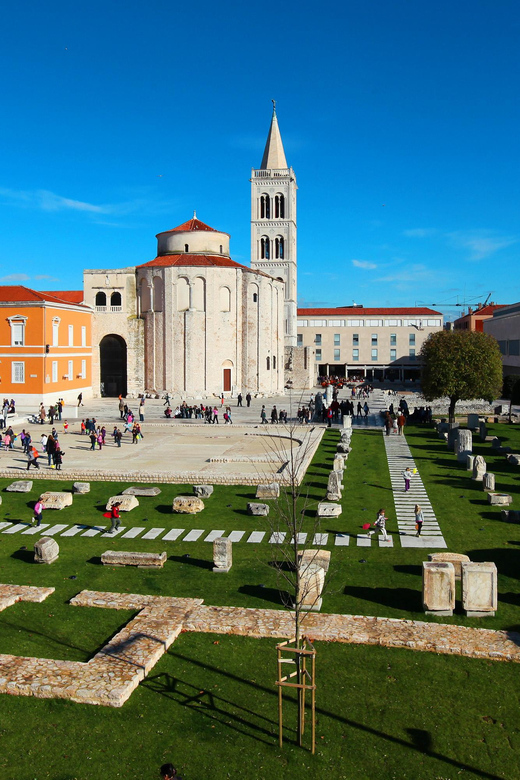
- You see the symbols of Zadar: St. Donatus, the winged lion at the Land Gate, and the city’s meeting squares.
- Guide-led stops even when entrances cost extra: some major monuments are included as guided sightseeing, while paid entry is separate.
Why This 120-Minute Walk Makes Zadar Click
Zadar is one of those places where the shoreline alone can keep you busy. But the real payoff is when you understand how the pieces fit: waterfront religion and power, Roman-era layouts, then medieval statements, all layered in one walkable old town.
This tour is built for exactly that mindset. You start at Greeting to the Sun, then work your way through the Sea Organ promenade, and end around the Land Gate area. Along the way you get a guided narrative that helps you read the city like a map, not like a guessing game.
If you’re the type who likes to know why a building looks the way it does, this works. The tour’s approach is practical: you stand in the right spot, and the guide explains what you’re looking at—Roman Forum areas, the church symbols, and the squares that still shape daily life.
You can also read our reviews of more tours and experiences in Zadar.



Starting at Greeting to the Sun: Modern Zadar’s Perfect Opening

You begin at the Greeting to the Sun installation, with a short guided stop just long enough to orient you. It’s a smart start because it anchors your visit in present-day Zadar, not only centuries-old stone.
From there, the tour keeps moving. That matters because the route is designed to connect the modern waterfront with the historic core. If you begin your trip here, you’re less likely to treat the old town as something separate from the sea.
If you want a quick way to understand the vibe of Zadar today, this first segment does it fast. No waiting around in one place for too long, and you’re immediately set up for the next stop.
Sea Organ Sounds and the Promenade Rhythm
Next comes the Sea Organ (Morske Orgulje). This is one of Zadar’s signature experiences: built into the waterfront, it produces music when the sea moves. The tour includes guided sightseeing here, so you’re not just standing near an interesting feature.
What you should do in this section: listen. The Sea Organ is best when you let it run in the background while you take in the promenade views. It’s also a good moment to reset your legs before the historic-stone part of the walk starts.
It’s also where you’ll understand why Zadar’s identity isn’t purely “old city.” The town uses the sea as a cultural engine—then you carry that idea straight into the centuries that follow.
Cathedral of St. Anastasia: The Stop That Sets the Tone
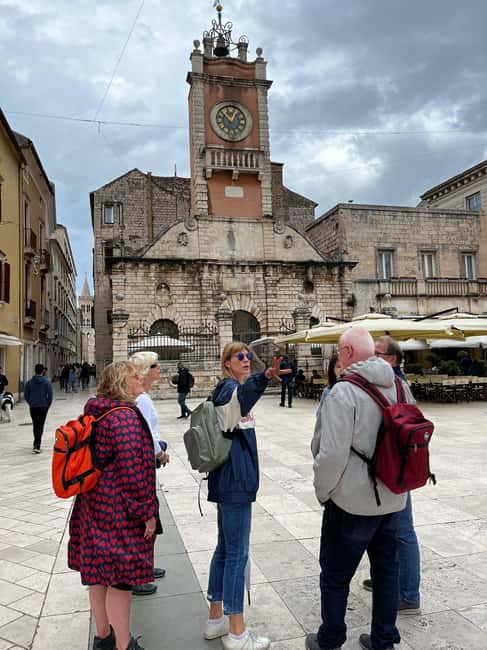
After the promenade, you reach the Cathedral of St. Anastasia area for guided sightseeing. This is the kind of stop where the guide’s explanations make the architecture feel less random.
The tour includes the cathedral as a guided stop, but keep expectations realistic about tickets. The tour data notes that entrances to places that charge a ticket are not included. So if you want to go inside specific ticketed areas, you may pay extra.
Still, even without assuming every interior is included, this is a high-value segment because the guide can frame what you see on the outside and in the approach streets. You learn how Zadar’s major religious landmark fits into the broader old-town layout you’re walking through.
Roman Forum and St. Donatus: Where Ancient and Medieval Collide
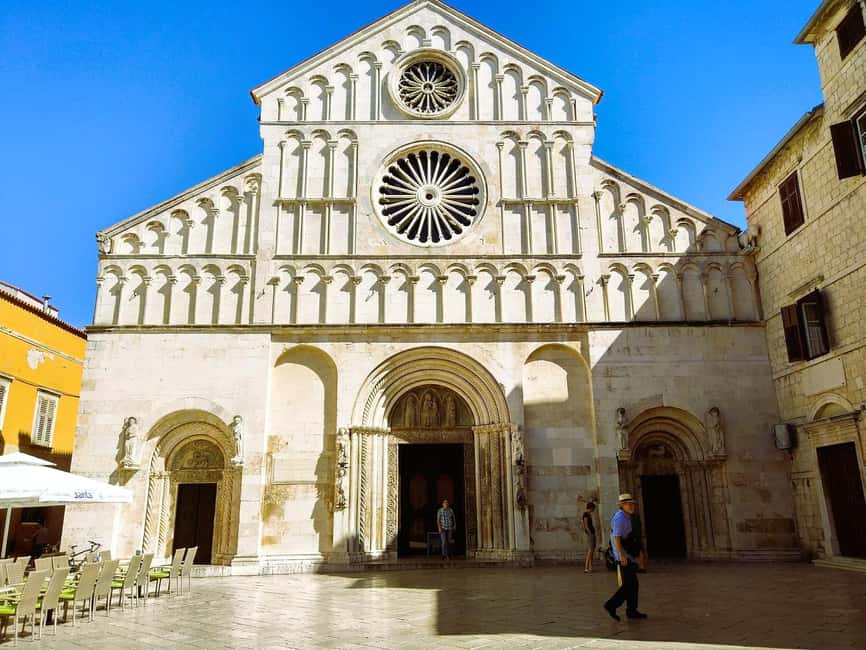
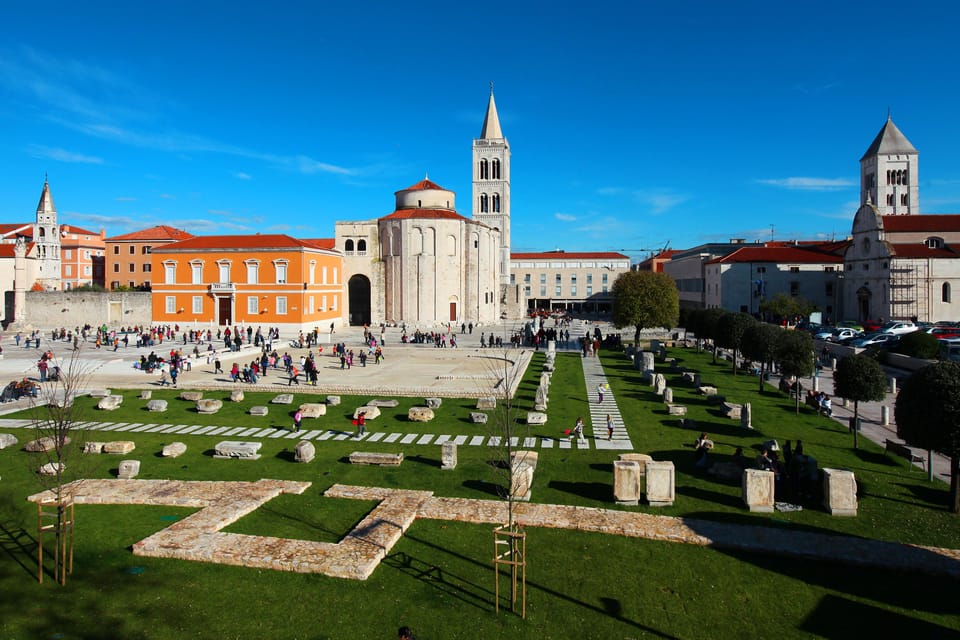
This is the heart of the historic walk: the Roman Forum and then the Church of St. Donatus.
The Roman Forum stop is guided for sightseeing, and it helps you understand the underlying structure of Zadar. Even if you’ve never studied Roman layouts, standing in the right location gives your brain a “this is why the streets and spaces feel the way they do” moment.
Then St. Donatus comes in as the icon. This church isn’t a subtle stop. It’s a power symbol, and the guide’s story makes it easier to understand why Zadar would build something so unmistakable. The tour includes guided sightseeing here too, and it’s listed as no entrance—so again, expect explanations and viewing rather than paying for every interior option.
If you like cities where one monument leads you to another in a logical chain, this sequence is the strongest part of the route.






Benedictine Monastery, Market Zadar, and the Food-Story Angle
Between the big icon stops, the itinerary threads through smaller religious and street segments. You pass the Benedictine Monastery of St. Mary (listed as no entrance) and move along streets that keep the walking feeling like a real local route rather than a theme-park circuit.
Then you reach Market Zadar for an aperitif-style stop that can include a cheese tasting. This segment is especially good for two reasons:
- You get a short food moment that breaks up the monument rhythm.
- You learn how local products and traditions show up in daily life, not just in museum cases.
A practical note: tastings are possible almost every day in high season, but not on national holidays or Sunday afternoons. During low season, tastings are not possible in the afternoon nor on Sundays and national holidays. So if your trip falls into one of those windows, you might miss the tasting portion even though the market stop remains part of the route.
People’s Square, Five Wells Square, and the Power Walk to Land Gate
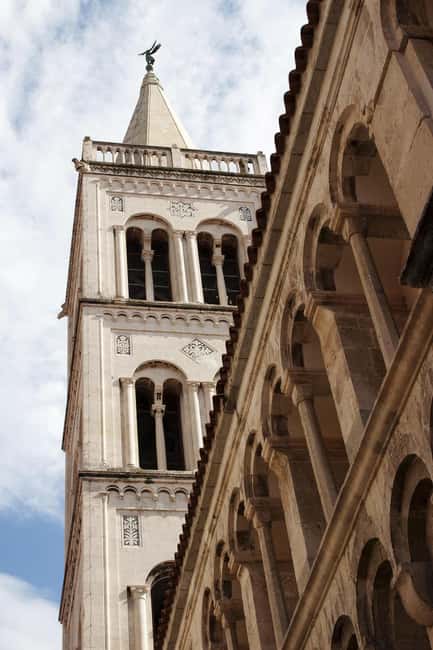
From the market area, you head into the public-life spaces that make Zadar feel alive: People’s Square and the nearby church area of St. Simon (listed as pass by). These stops aren’t just decorative. They’re where people meet or pass through, which is why the guide focuses on meaning, not only architecture.
Then you move toward Five Wells Square, another landmark area that gives you a different kind of story. The tour includes guided sightseeing here, typically around the idea of infrastructure and daily function—how a city supplies itself and how public spaces evolve.
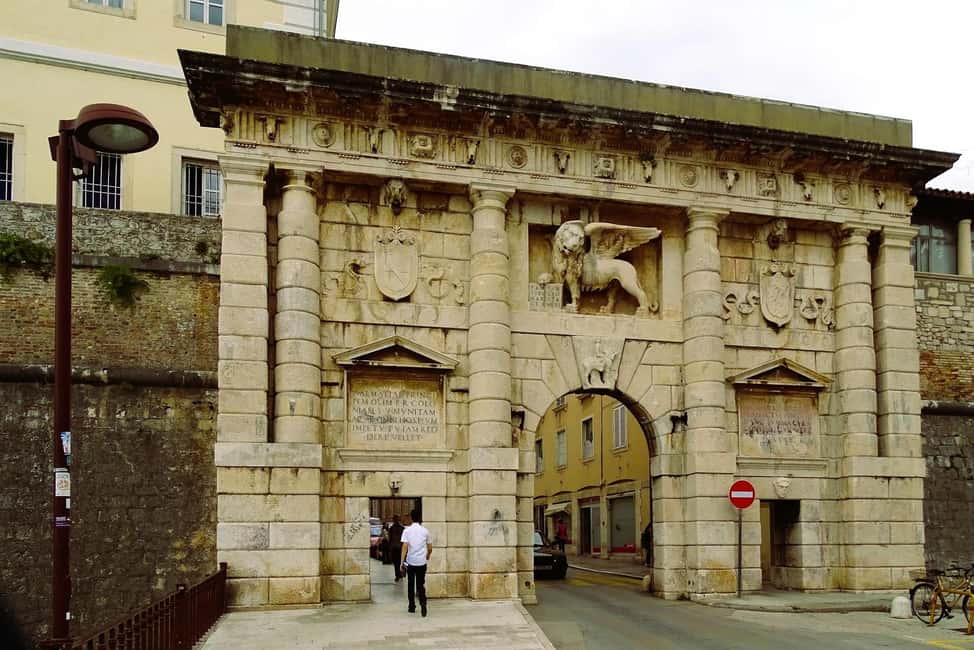
Next: Land Gate (Kopnena vrata), where the winged lion demonstrates power. This end-of-walk segment is one of the most satisfying because it ties the theme together: Zadar as a place where authority is built into stone, and where you can still read that message today.
What the Tour Covers Versus What Costs Extra
Let’s talk value in plain terms.
For $28 per person, you’re paying for a 2-hour to 150-minute guided walking experience that hits a lot of major sights: Greeting to the Sun, Sea Organ, Cathedral of St. Anastasia, Roman Forum, St. Donatus, key squares like People’s Square and Five Wells, plus Land Gate.
Some monuments and gates are included as guided sightseeing without paid entry. Ticketed entrances aren’t included, and the tour data is explicit about that. So if you’re someone who plans to enter every single historic interior, you’ll likely add separate ticket costs on top.
The tour does include the possibility of free entrance to a medieval church and also Maraschino/Cheese tastings depending on the season and day. If you catch those, $28 feels like better than a bargain because the tastings add a local flavor component beyond just walking and viewing.
Pace, Comfort, and Who This Tour Fits Best
This is not a sit-and-smile tour. It’s a guided walk through the old city and around key waterfront-to-historic zones, and the duration is listed as 2 hours to 150 minutes. That means you should wear comfortable shoes and dress for the weather.
Also note what the tour doesn’t include: toilet breaks. That’s not glamorous advice, but it matters.
The tour is guided in multiple languages: English, French, Italian, Croatian. There’s also a private group option if you want the experience without other people’s pace affecting yours.
Who should book:
- You love cultural heritage and want a narrated story.
- You want an efficient first introduction to Zadar’s layout—sea organ to Roman roots to medieval symbols.
- You like food stops when they’re small and local, like a market aperitif moment and cheese tasting when available.
Who should skip or think twice:
- If you have mobility issues or need a wheelchair/mobility scooter, the tour isn’t recommended.
- It’s also not recommended for certain health limitations listed by the operator, including heart problems and serious respiratory issues.
- It’s not suited for children under 13, and it’s not listed as a good match for people over 80 or those who’ve had recent surgeries.
One more practical limit: pets aren’t allowed, and audio recording isn’t permitted—so plan on listening to the guide live.
A Quick Look at the Tour Guide Experience (and What You’ll Learn)
The tour’s strongest pattern is the guidance style: it’s described as enthusiastic, detailed, and informative. In the English-language feedback, the guide name that shows up is Dorja—and the theme is consistent: you get more than quick facts. You get the why behind the sights.
That matters because Zadar can feel confusing if you only look at individual buildings. The guide’s job here is to connect the dots: how older structures shape later ones, why specific churches act like symbols, and why squares remain key meeting points even centuries later.
If you’re the type who likes hearing the stories that make a place feel explainable, this tour does that work for you.
Should You Book the Zadar City Tour 120min Walk?
I’d book it if you want a strong introduction to Zadar that includes both the modern waterfront identity and the historic core in one practical loop. For first-time visitors, this is a fast way to understand the city’s “sea plus stone” personality.
I’d skip or adjust expectations if:
- You want long museum-style interiors and lots of paid entrances (ticketed entry isn’t included).
- You’re uncomfortable with a long walking plan and want frequent breaks (toilet breaks aren’t included).
- Your dates fall on a Sunday afternoon, national holiday, or outside high season if tastings are important to you (tastings have specific limitations).
If you like your sightseeing with clear narration and a good route plan, this walk is a solid use of time in Zadar.
FAQ
How long is the Zadar City Tour 120min Walk?
The duration is listed as 2 hours to 150 minutes. Check availability for exact starting times.
Where does the tour start?
The starting and pickup location depends on the option you choose. If you select pickup, the driver will use a black Peugeot Traveler with a ZADAR CITY TOUR logo.
Is pickup included?
Pickup is optional. If you don’t book an option with pickup, transfer service is not included.
What is included in the tour price?
You get guided sightseeing at multiple key stops, including Greeting to the Sun, Sea Organ, Cathedral of St. Anastasia, the Roman Forum, Church of St. Donatus (no entrance), the Benedictine Monastery of St. Mary (no entrance), key squares, and Land Gate. A medieval church entrance and/or Maraschino/Cheese tastings may be included depending on the day and season.
Are entrance tickets to monuments included?
No. Entrances to places that charge a ticket are not included, even if the tour stops there for guided sightseeing.
Are toilet breaks provided?
No. Toilet breaks are not included.
Is food or cheese tasting included?
Aperitif-style tasting at Market Zadar, including cheese tasting, can happen almost every day in high season, except on national holidays or Sunday afternoons. In low season, tastings are not possible in the afternoon nor on Sundays and national holidays.
What languages is the guide available in?
The live guide is available in English, French, Italian, and Croatian.
Is free cancellation available?
Yes. The tour offers free cancellation up to 24 hours in advance for a full refund.