REVIEW · ZADAR
Zadar Walking Tour sponsored by Gligora Cheese and deli.
Book on Viator →Operated by Elegance Tours · Bookable on Viator
Zadar’s history is closer than you think. This 1 hour 40 minute walk threads through People’s Square and the Roman Forum, with a cheese-sponsored touch from Gligora that keeps it practical, not just academic. You’ll also get local pointers on where to eat and shop while you’re already in the middle of the action.
I love the easy, central meeting point on Narodni trg and the way the guide connects what you see to what came before—like the legend around St Simeon and the very physical defense story behind Five Wells. I also like the food angle, since guides such as Melina, Sara, and Jasmina are repeatedly praised for making the market area feel useful, not random. One heads-up: if it’s warm, you’ll spend stretches in sun between stops, so bring water and plan for a slower pace.
In This Review
- Key Highlights I’d Plan Around
- Getting Your Bearings on Narodni trg (Before You Wander Off)
- People’s Square: From Platea Magenta to the City Guard
- St Lawrence Church: Pre-Romanesque Finds Under a Café
- St Simeon’s Silver Casket: The Mummified Story That Sticks With You
- Five Wells: Venetian Water Engineering for Surviving Turkish Sieges
- Queen Jelena Madijevka Park: A Military Bastion Becomes a Public Garden
- Tržnica Zadar (Market Stop): Food Intel You’ll Actually Use
- St. Chrysogonus (St. Krsevan): A Romanesque Church With a Secret Burial
- Cathedral of St Anastasia: WWII Scars and a View Through the Glass
- Roman Forum and St Donatus: The Circular Church That Feels Like a Time Machine
- Price, Time, and Real Value: What You Get for $18.14
- When to Go and How to Avoid the Common Friction
- Who This Zadar Walk Is For
- Should You Book This Zadar Walking Tour?
- FAQ
- How long is the Zadar Walking Tour?
- Where does the tour start and end?
- Is the tour offered in English?
- What group size should I expect?
- Is the tour ticket mobile-friendly?
- Can I cancel for a full refund?
Key Highlights I’d Plan Around
- Narodni trg setup: Start right where the old city began, then walk outward through layers of Zadar’s past.
- St Simeon’s mummified relic in a silver casket: A stop that’s small in time but big in story.
- Five Wells + Queen Jelena Park: Venetian water engineering turned into a public space on top of fortifications.
- Tržnica market stop with local food guidance: A practical pause that helps you eat well for the rest of your trip.
- Churches and ruins with visible transitions: Roman foundations, Byzantine forms, and medieval church life in one loop.
- Small group energy (max 30): Easier questions, less crowding, and a friendlier pace.
Getting Your Bearings on Narodni trg (Before You Wander Off)
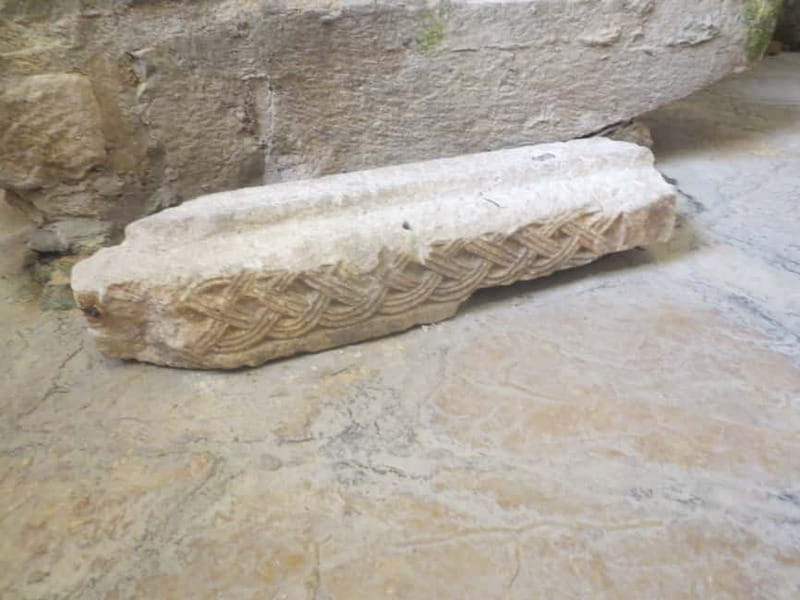
The meeting point is Narodni trg, also called People’s Square, right in the heart of Zadar. That matters more than it sounds. If you’re new to town, it’s the difference between feeling lost after 10 minutes versus knowing exactly where you are and what direction to head when the tour ends.
This is also a good length. At about 1 hour 40 minutes, you cover a stack of major landmarks without burning your whole day. Since it runs in English and uses a mobile ticket, it’s straightforward to show up and go. You’ll be in a group capped at 30, which keeps things moving while still leaving room for questions.
You can choose from three morning or afternoon departures, which is handy if your day is already busy—maybe you’re arriving by ferry, doing the beach in the morning, then choosing a later walk.
You can also read our reviews of more tours and experiences in Zadar.

People’s Square: From Platea Magenta to the City Guard
Your first real time-out point is People’s Square. The square’s roots stretch back to the Middle Ages, when it was formed as Platea Magenta—the center of public life. That’s the big takeaway: this square wasn’t built for scenery. It was built for people to gather, trade ideas, and run civic life.
On the northern side, you’ll see the City Guard (Gradska straža), designed by Venetian architect Michele Sanmicheli and built in 1562. Sanmicheli’s name comes up often in Venetian-era architecture, and here you get a clear example of how Italian influence shows up in Croatian streets.
If you like history, this is a strong opener because it gives you a framework. You’ll look at other buildings later and think: Who built this, and what purpose did it serve?
St Lawrence Church: Pre-Romanesque Finds Under a Café
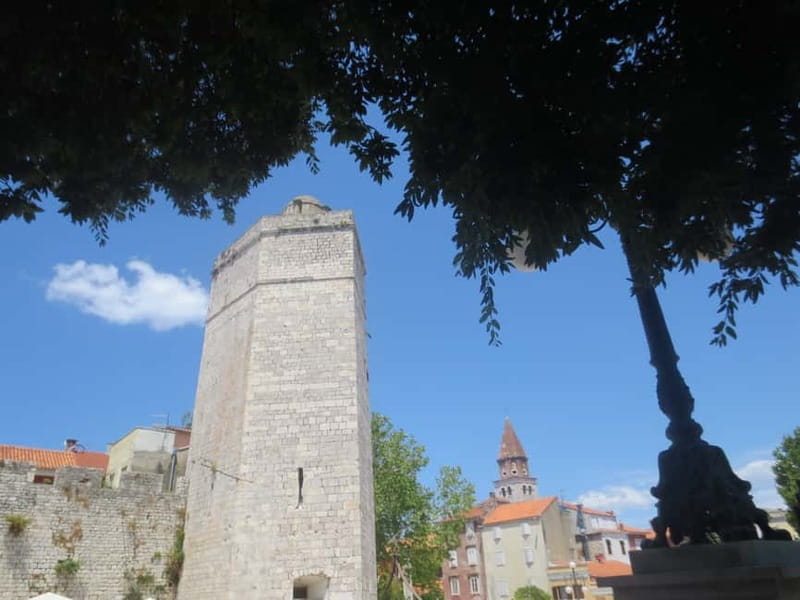
Right on the square, you’ll also find St Lawrence church. The remains are pre-Romanesque and date to the 11th century, making them the oldest part of Narodni trg. Here’s the practical surprise: you reach the remains through the premises of Café Lovro.
That detail is useful for two reasons. First, it reminds you that old Zadar isn’t just behind rope barriers—it’s sometimes tucked inside modern daily life. Second, it trains your eye to notice “in-between” spaces while you’re walking.
St Simeon’s Silver Casket: The Mummified Story That Sticks With You
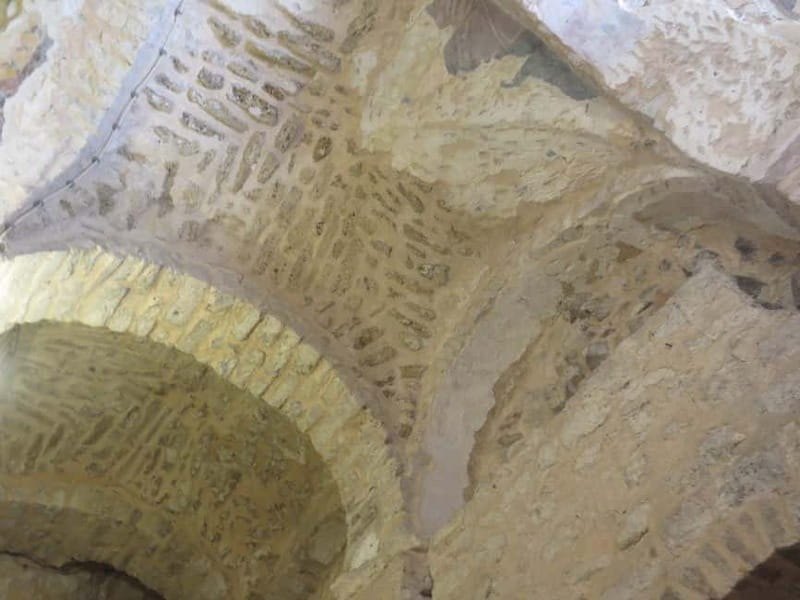
One of the most striking stops is St. Simon’s Church, built around a relic that sounds almost too unreal to be true. Inside, a mummified body of Simeon the God-receiver (Šimun/Šime) is kept in a silver casket of immense artistic value.
The story connects directly to the New Testament Gospel of Luke, where Simeon receives the Child of God in the Jerusalem temple. Over time, Zadar became closely associated with him—especially because Saint Simeon is the city’s patron saint.
Even if you’re not religious, this is a top stop because it explains how faith, art, and city identity can overlap. The silver casket is described as the most valuable work of medieval goldsmith art in Croatia. It’s the kind of fact a guide can turn into a clear, human scene, not a list of dates.
Five Wells: Venetian Water Engineering for Surviving Turkish Sieges

From the square, the walk shifts toward Five Wells. The name is literal: five wells lined up in a row.
Here’s why this matters beyond the cute “five wells” moment. In the Middle Ages, the area sat between medieval city walls, with a defensive ditch below. Then, in the 16th century, Venetians helped Zadar withstand Turkish sieges by building a large water cistern—complete with five ornamental wellheads. So you’re looking at a defensive feature that later became an urban landmark.
When you see this, it’s easier to understand the whole city. Zadar’s old streets don’t just look old—they were shaped by survival needs, and that’s why some parts of town feel like they “bend” for a reason.





Queen Jelena Madijevka Park: A Military Bastion Becomes a Public Garden
Above Five Wells, you reach the Perivoj kraljice Jelene Madijevke—Queen Jelena Madijevka park. It’s built on top of the Grimani bastion, and it’s connected to the fact that this is the oldest park in Croatia, named for the queen.
This part of the walk adds a breathing-space feeling. It was founded in 1829 by Austrian commander Baron Franz Ludwig von Welden, described as a passionate botanist and admirer of Dalmatian flora. Building a garden on top of a military object was a surprising move in 1829, but it’s one Zadar still lives with.
If you’re traveling with kids, this is often where they start paying attention again—because it’s less about narrow streets and more about open-air scenery and a simple story: old defenses turned into a place to relax.
Tržnica Zadar (Market Stop): Food Intel You’ll Actually Use
One of the most practical parts of this walk is Tržnica Zadar, Zadar’s main green market. Even if you’re not in a shopping mood, this is where you learn how people eat locally.
The market sits in the old part of the city on the peninsula, paired with a closed fish market. It’s also described as having the longest uninterrupted history in Zadar. While the main market has been in its current place since 1952, the location traces back to the spacious Roman Forum. So you’re standing on a market site with serious continuity.
The market is presented like a permanent display of everyday local life: locally grown organic food, fruits and vegetables, freshly caught fish, and home-grown meat, plus traditional indigenous products and souvenirs. You’ll also get guidance on what to look for and where to shop afterward.
Since this tour is sponsored by Gligora Cheese and deli, the food angle has extra weight. In feedback, people specifically call out cheese-related moments, including mentions of Pag cheese tasting and stopping at a cheese store. Even when you skip sampling, the guide’s recommendations help you buy something worth carrying home or eating immediately.
St. Chrysogonus (St. Krsevan): A Romanesque Church With a Secret Burial
Next up is the Church of St. Krsevan, known as St. Chrysogonus. This Romanesque church was consecrated in 1175 by Lampridius, Archbishop of Zadar.
The site matters. The church was built at the location of a Roman emporium, replacing the Church of Saint Anthony the Hermit, and it’s the only remaining part of a larger medieval Benedictine abbey. In other words, this stop is a lesson in how one “religious campus” can evolve across centuries until only one piece survives.
The story detail I’d highlight is the secret burial of Elizabeth of Bosnia in 1387. She was the murdered queen dowager of Hungary and Dalmatia, and her body remained in the church for three years before being moved to the Székesfehérvár Basilica.
There’s also a bell tower story: construction began in 1485 but was abandoned in 1546 and never finished. So you see how plans can stop, leaving a visible consequence.
Cathedral of St Anastasia: WWII Scars and a View Through the Glass
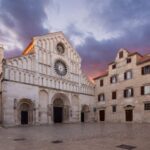
The Cathedral of Saint Anastasia is one of Zadar’s biggest names. It dates to the 12th and 13th centuries, with a richly decorated facade and an impressive three-nave interior. You may also notice remains of frescoes in side apses.
WWII becomes part of the story here. The cathedral was badly bombed and has been reconstructed, which means the building has a visible timeline in its current form. That’s one reason this stop feels different from churches that only reflect medieval life.
Inside, the altar in the left apse has a marble sarcophagus containing relics of St Anastasia. The choir has lavishly carved stalls, which is the kind of detail that makes you slow down.
One helpful point: a glass vestibule lets you peer inside when the cathedral is closed, which is often. So you’re not entirely blocked if the timing doesn’t line up with open hours.
Roman Forum and St Donatus: The Circular Church That Feels Like a Time Machine
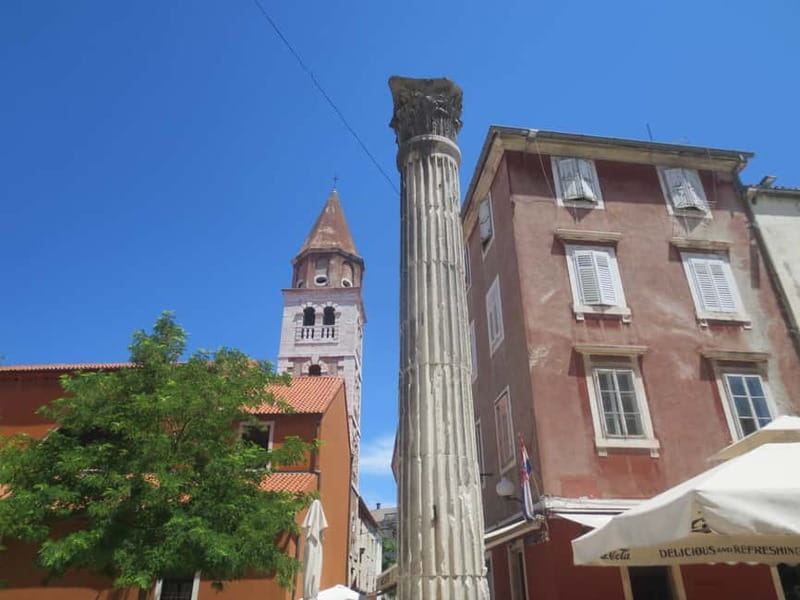
Zadar has Roman ruins that can feel like they appear out of nowhere in the street plan. The Roman Forum site is where that becomes obvious. Here, St Donatus’ Church dominates one side, and the forum is described as being built between the 1st century BC and the 3rd century AD.
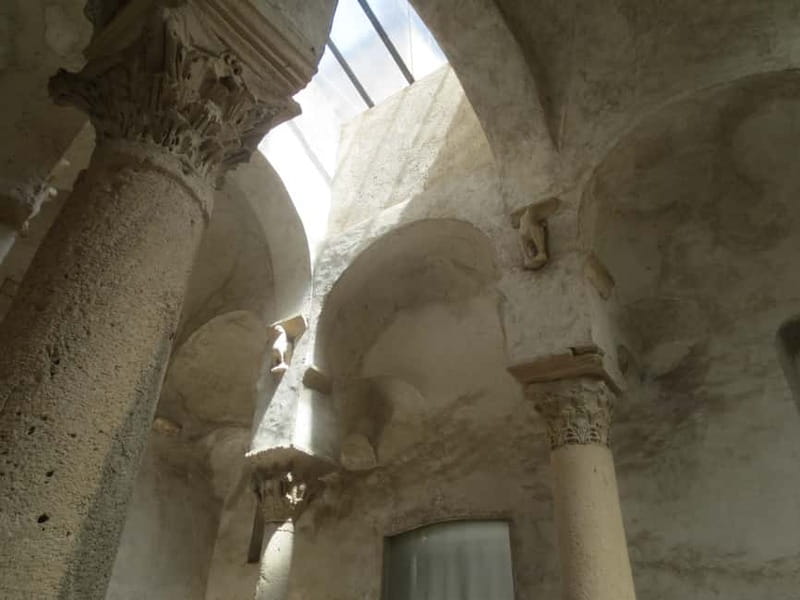
Then the tour zeros in on St Donatus itself. The church dates from the beginning of the 9th century and is Byzantine-style and circular. It’s named after the bishop who commissioned it.
Two facts make this stop extra interesting. First, it survived the Mongol invasion in the 13th century—one of only a handful of buildings from the early Croatian kingdom to do so. Second, the interior is simple, with two complete Roman columns recycled from the Forum. Even the paving slabs were revealed after the original floor was removed.
Services haven’t been held for around 200 years. Today, the church often serves as a concert hall or exhibition space. That gives you a smart mental model: some ancient religious structures don’t just become monuments—they become cultural venues.
Price, Time, and Real Value: What You Get for $18.14
At $18.14 per person for about 1 hour 40 minutes, this tour is priced like a serious entry-level “orientation” in a walkable old town. The value here isn’t that you’re paying for museum tickets. The listed stops are free to access, so you’re paying primarily for interpretation—turning stone and street corners into an understandable story.
The other value lever is guidance. You get direction on where to eat and shop in Zadar, and in practice that can save you money by steering you toward places that fit your interests (and away from tourist trap chaos). Add in the Gligora Cheese and deli sponsorship, and the food angle feels built-in rather than optional.
There’s also a timing advantage. With three morning or afternoon departures, you can fit it between other plans instead of forcing a full day around it.
When to Go and How to Avoid the Common Friction
This walk is mostly outdoors, and even in September you can get uncomfortable if the heat sticks around and there’s little breeze. Wear light layers and bring water.
One other practical consideration: while the meeting point is central and easy to find in theory, directions matter. Show up a few minutes early and be ready to spot the guide at Narodni trg. If you’re arriving from a bus stop or a parking area, give yourself buffer time so you’re not late and flustered.
Who This Zadar Walk Is For
This tour is ideal if you’re:
- Visiting Zadar for the first time and want a clear sense of the old town layout fast.
- A history buff who likes medieval and Roman threads, not just a quick photo loop.
- Interested in churches, relic stories, and how Venetian and Byzantine influences show up in real buildings.
- Someone who wants food tips while still seeing the big landmarks.
Kids can enjoy it too, especially for the market and open spaces, but the pace is still built around old-town storytelling—so plan on listening.
Should You Book This Zadar Walking Tour?
If you want a tight, efficient introduction to Zadar’s old core, I’d book this. The stops hit a smart range: People’s Square, churches with big relic stories, Five Wells and a park on old defenses, the Tržnica market, the cathedral, and the Forum area with St Donatus. It’s also backed by strong satisfaction—an average rating of 4.9 with 98% of people recommending it.
Only skip it if you dislike walking in heat or you want a very quiet, slow museum-style experience. Otherwise, this is a good deal for the money, especially because it helps you see the city and then use that knowledge immediately for where you eat and what you buy.
FAQ
How long is the Zadar Walking Tour?
It runs for about 1 hour 40 minutes.
Where does the tour start and end?
It starts at People’s Square (Narodni trg) in Zadar and ends back at the same meeting point.
Is the tour offered in English?
Yes, it’s offered in English.
What group size should I expect?
The tour has a maximum of 30 travelers.
Is the tour ticket mobile-friendly?
Yes, it uses a mobile ticket.
Can I cancel for a full refund?
Yes. You can cancel up to 24 hours in advance for a full refund. If you cancel less than 24 hours before the start time, the amount you paid won’t be refunded.