REVIEW · DUBROVNIK
Dubrovnik: Ancient City Walls & Wars Walking Tour
Book on Viator →Operated by Dubrovnik Walks · Bookable on Viator
Walls with stories, not just views. This Dubrovnik tour pairs the Old Town streets with a guided circuit along the city walls, so you understand what you’re seeing instead of just snapping photos. I like the way the guide makes the churches, monasteries, and palaces feel connected to real events, and I love the big-history-to-big-views pacing.
One thing to plan for: this is stairs-heavy. If you don’t like climbs (or heights), you may feel it more than you expect.
In This Review
- Key points to know before you go
- Dubrovnik Walls & Wars: what you get for your time (and money)
- Starting near Pile Gate (and why the timing matters)
- The Stari Grad streets before you climb: history you can see
- City Walls: 2 km of views, fort names, and strategy
- Fort Revelin and Minceta Tower (and what to look for)
- Fort Lovrijenac: the fort that doesn’t touch the walls
- The Walls & Wars part: why the guide’s war context matters
- Practical route notes: stairs, heat, shade, and pace
- City Walls entrance fee: budget it or plan to use Dubrovnik Card/Pass
- Ending near the port: what to do next
- Who this tour suits best (and who should skip it)
- Should you book Dubrovnik Ancient City Walls & Wars?
- FAQ
- Is the City Walls entrance fee included in the tour price?
- How much is the City Walls ticket?
- How long is the walking portion and what distance do we cover?
- Is the tour in English, and do we get audio headsets?
- Where do I meet the guide for the Dubrovnik walls tour?
- Are there restroom stops during the tour?
- Can children join, and do kids get free City Walls entry?
- What if the weather is bad or the minimum group size isn’t met?
Key points to know before you go
- Pile Gate start: you begin just outside Pile Gate, then get your bearings in Stari Grad fast
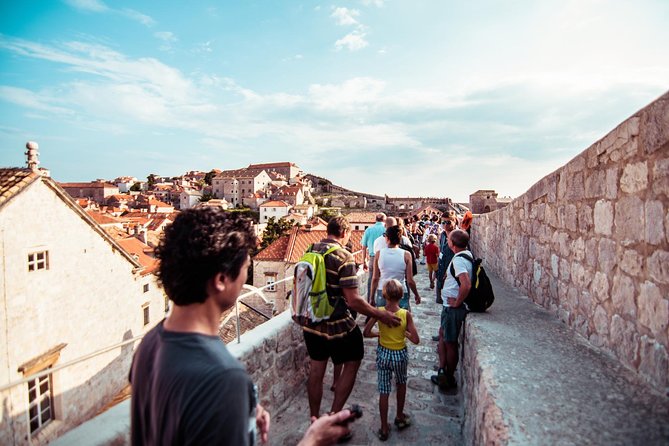
- Guided wall walk: you cover about 2 km (1.2 miles) on the walls with fort stop points
- Real war context: the guide ties defense and politics to what happened to Dubrovnik over centuries
- Fort landmarks included in views: Fort Revelin and Minceta Tower are explained from the wall circuit
- No walls ticket in the price: you’ll need to pay the separate entrance fee at the walls
- Hot-weather reality: summer heat is a factor, and shade stops are limited
Dubrovnik Walls & Wars: what you get for your time (and money)
Dubrovnik can be a lot of walking even when you do nothing special. This tour helps you turn that walking into something smarter. You start in the Old Town area, move through the limestone-paved streets of Stari Grad, and then shift up onto the walls where the sea and the city open up. The difference is the guide’s thread: defenses, politics, and survival stories that make the walls feel less like an attraction and more like infrastructure.
Value-wise, you’re paying for a licensed local guide, plus audio headsets when the group is big enough. The tour price itself is low compared to many guided experiences, but there’s one crucial add-on: the City Walls entrance fee is not included. If you budget for that up front, the whole experience becomes a fair trade—because you’re not paying extra for a second guide once you’re on the walls. You’re getting context continuously, while you’re walking.
My favorite part is how the tour doesn’t treat history like a museum label. It talks about why particular spots mattered: where threats came from, how walls were used, and how diplomacy helped Dubrovnik stay independent for a long stretch. The second big win is that you get views that are hard to recreate on your own, because your route is shaped by the walls themselves and the guide’s way of pointing out what to notice.
You can also read our reviews of more tours and experiences in Dubrovnik.


Starting near Pile Gate (and why the timing matters)
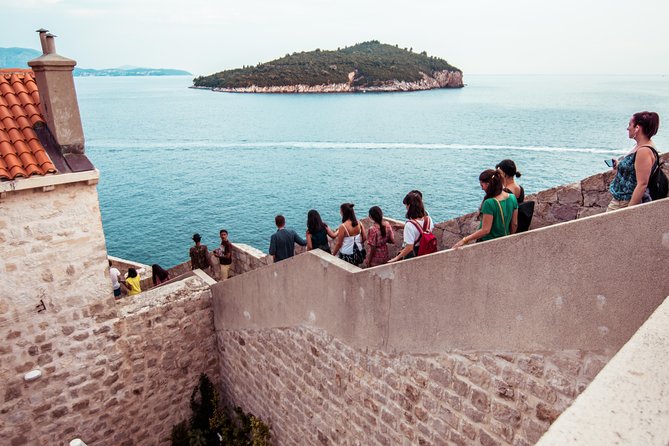
You meet at Dubrovnik Walks with the orange umbrella near Brsalje ul. 8, then the group lines up just outside Pile Gate. That’s helpful because Pile Gate is the main “anchor” for arriving and orienting yourself. If you’re trying to do this on your own later, you’ll quickly realize how easy it is to wander the Old Town without knowing where the best wall sections are.
This tour is designed for a short visit window: about 2 hours total. That means it’s a strong choice if your Dubrovnik day is packed with other plans—boat trips, beach time, or the inevitable Old Town wandering. If you’re traveling during cruise-ship season, the walls can get busy fast, so starting earlier in the day often feels calmer. Even if you don’t control crowds perfectly, the guide’s pacing helps keep photos doable.
Heads-up: the tour uses audio headsets in groups of 4 or more people. It’s one of those “small” logistics details that can make the tour much more comfortable, especially when you’re walking uphill in a crowd. I’d treat them as part of the experience, not an extra.
The Stari Grad streets before you climb: history you can see
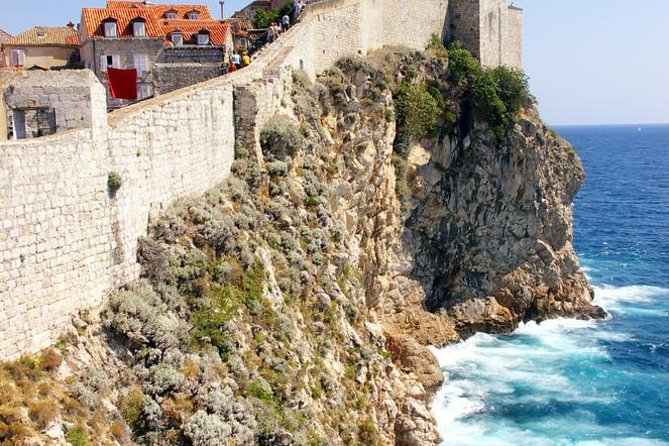
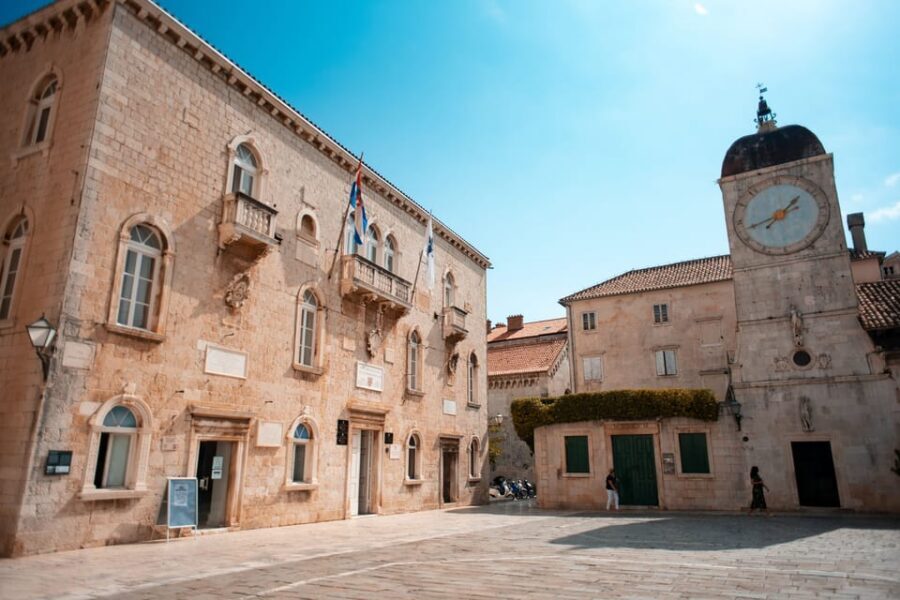
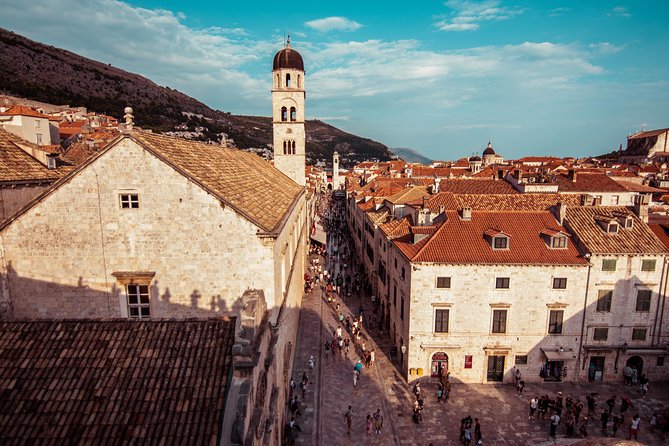
Before you’re up on the walls, you walk through the Old Town streets of Stari Grad, where the guide connects the architecture to the city’s story. This is where you get the “how Dubrovnik became Dubrovnik” framing—especially around churches, monasteries, and palaces. Instead of treating them as pretty buildings you pass by, you learn what they represented to the city and why they mattered politically and socially.
You’ll also hear about a key early change that affected the city’s shape. In the 11th century, a sea channel that separated the settlement from the mainland was filled in with earth. That’s part of the reason the city’s defensive layout made sense as it evolved. Once you know that, the walls feel less random and more like the result of a very practical problem-solving mindset.
This pre-wall walk also helps you build stamina. You’ll get your first dose of “Dubrovnik is vertical,” then transition to the walls where the steps get real.
City Walls: 2 km of views, fort names, and strategy
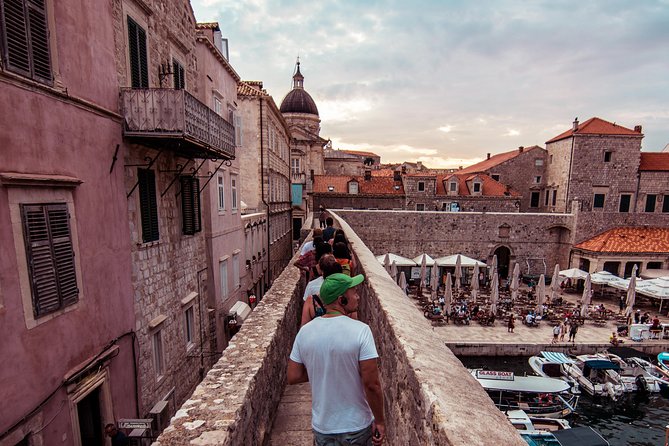
Now comes the main event: the guided wall walk along roughly 2 km (1.2 miles). The walls themselves were first built in the 12th century, and the current circuit has been restored at different times to echo the original appearance. That restoration fact matters. It explains why some sections look “designed for visitors” while still feeling ancient: the walls have been maintained with historical intent.
Expect constant perspective shifts. One moment you’re looking down into the Old Town; the next you’re scanning out toward the port and the shimmer of the Adriatic. If you’ve been to other walled cities, you’ll recognize the feeling—this is the vantage point where the city makes sense as a system. Dubrovnik looks like it was built to control views, movement, and access.
Fort Revelin and Minceta Tower (and what to look for)
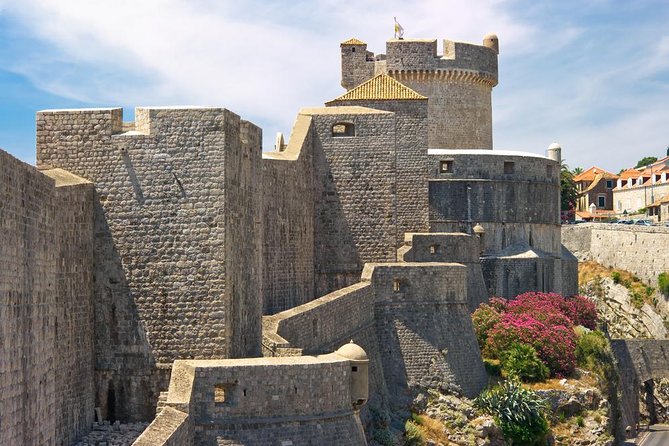
As you walk, your guide points out Fort Revelin and Minceta Tower from within the wall area. These aren’t just trivia facts. The guide frames them as parts of Dubrovnik’s defensive logic—where you position power so threats can’t approach easily and so defenders can respond quickly.
If you like architecture, this is a good match. If you only care about photos, it’s still worth paying attention, because the fort explanations help you see the walls as a planned defense rather than a continuous stone rim.






Fort Lovrijenac: the fort that doesn’t touch the walls
You’ll also see Fort Lovrijenac in the distance. Here’s the interesting detail: it’s the only fort that belongs to the city walls system but is physically separated from them. That matters because it shows Dubrovnik’s strategy wasn’t just “stick everything onto one wall.” It was a layered defense approach—using geography and distance to advantage.
Even if you don’t visit Lovrijenac afterward, the fact you’re being told what makes it different gives you a better mental map. And if you decide you want to visit it later, you’ll know where it sits relative to the wall circuit.
The Walls & Wars part: why the guide’s war context matters
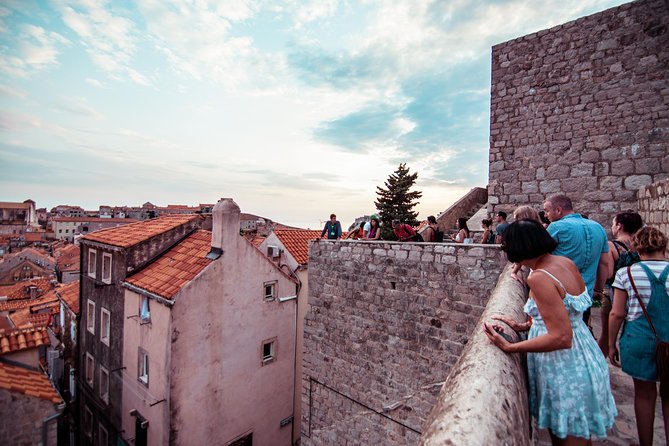
The tour doesn’t stop at medieval postcard history. It includes the long arc of Dubrovnik’s conflicts and how the city managed to remain an autonomous republic for years while balancing pressures from powerful neighbors, including the Ottoman and Venetian Empires.
That “Wars” angle changes how you experience the wall stones. You’re not just looking at defenses as engineering. You’re hearing why leaders needed those defenses and how diplomacy became part of survival. It also helps explain the emotional intensity you’ll see reflected in stories about the city’s past—especially around siege and endurance themes.
The guides really drive this section. I heard names like Davor, Goran, Mara, and Andrea tied to strong tour experiences. The common thread isn’t just facts—it’s delivery. The best guides keep explanations clear while still making you feel the stakes behind the architecture.
Practical route notes: stairs, heat, shade, and pace
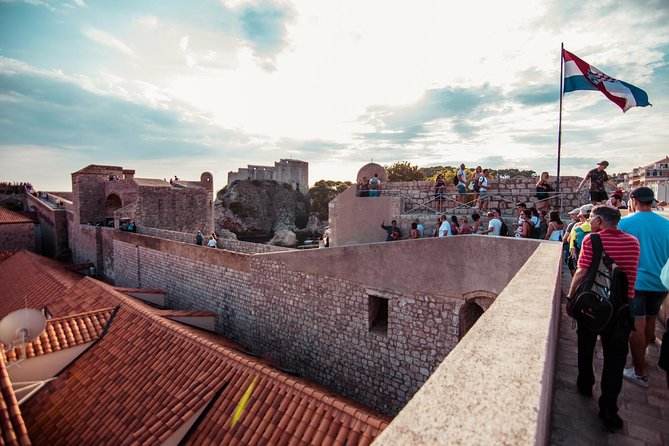
This tour comes with a blunt truth: stairs. Even though the total distance is about 2 km, the elevation changes can feel tougher than the number suggests. The tour info labels it as requiring moderate physical fitness, and it also states it’s not suitable for everyone due to stairs.
Add summer heat and it becomes a real planning item. Dubrovnik has a Mediterranean climate, and the walls can be exposed. Shade options are limited, and the walls are built in a way that offers some cooling relief—but you still need to plan like you’ll be in sun for part of the circuit.
A few practical tips:
- Wear grippy shoes. Stone and limestone can be slick depending on conditions.
- Bring water and use the breaks. The walk is active, and there are no restroom stops.
- If you’re sensitive to heights, reconsider. The wall sections can feel exposed.
- If you’re there in shoulder season, you might get a more comfortable pace—less heat stress helps you enjoy the explanations instead of just enduring them.
City Walls entrance fee: budget it or plan to use Dubrovnik Card/Pass
Here’s the part that can surprise people: the City Walls entrance fee is mandatory and not included in the tour price. You buy tickets when you reach the wall entrance, and then you walk the walls with the guide.
The tour info lists adult pricing as 40€ per adult and 15€ for children ages 7–18, and it also notes that on-site the adult rate can be shown as 35€ per adult. Since the numbers are presented in two different ways, I’d treat this as: confirm the current booth price when you’re there or during booking.
You can also use a Dubrovnik Pass / Dubrovnik Card to cover one visit to the city walls. The catch is you need to purchase and collect in advance, so don’t assume last-minute fixes.
Value angle: once you factor in the wall ticket, the guided part still often feels worth it because you’re buying the “why” behind what you’d otherwise walk past. If you’re the type who reads every sign and enjoys routing, you might do it on your own. If you want the city’s story tied to the route, this is the better way to spend your limited time.
Ending near the port: what to do next
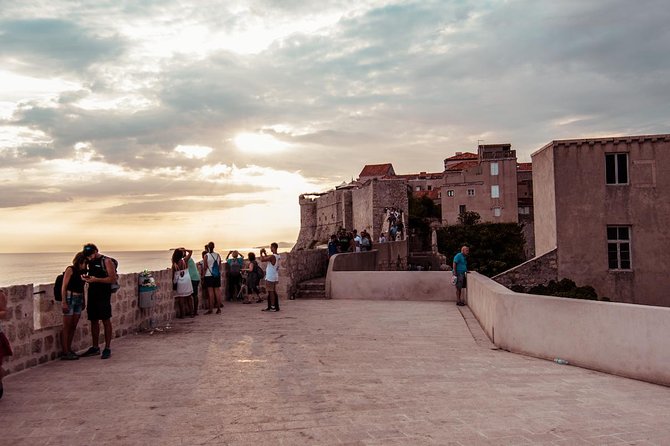
The tour finishes near the old town port. That’s a smart ending point because it puts you close to onward plans—whether you’re taking a boat, grabbing a meal in the harbor area, or continuing your Old Town loop.
If you want to extend your day, this is also where the fort context helps. Since you’ve already seen Fort Lovrijenac from the wall, you’ll know what kind of place it is and why it’s part of the defenses. You might even decide to visit it after you cool down.
Who this tour suits best (and who should skip it)
This is a great fit if you want:
- A guided Dubrovnik city walls tour that explains the fort system and defense strategy
- War-era context connected to the stones you’re walking
- Big views from a route that’s hard to assemble alone in a couple hours
It’s less ideal if:
- You can’t handle lots of stairs
- You strongly dislike exposed areas or height sensations
- You’re hoping for a fully shaded, slow, casual stroll (there’s limited shade, and summer heat can be intense)
If your Dubrovnik trip is short—one full day or even a half day—this is one of the most efficient ways to get both Old Town orientation and a top-tier viewpoint.
Should you book Dubrovnik Ancient City Walls & Wars?
I think you should book it if you care about understanding Dubrovnik beyond the obvious highlights. The guided wall walk plus the war-and-politics framing makes the experience feel purposeful, not repetitive. The price is also attractive, as long as you budget for the City Walls entrance fee.
If you’re on the fence, decide based on one question: Can you handle stairs on a hot stone circuit? If yes, this tour is a high-value way to see the best perspectives while learning why the city looks the way it does.
FAQ
Is the City Walls entrance fee included in the tour price?
No. The tour price does not include the City Walls entrance fee. You’ll buy tickets when you reach the walls, or you can use a Dubrovnik Pass/Card that covers one city walls visit (collected in advance).
How much is the City Walls ticket?
The tour info lists 40€ per adult and 15€ for children ages 7–18. It also includes a note stating the on-spot adult rate as 35€ per adult—so it’s smart to confirm the current booth price when you purchase.
How long is the walking portion and what distance do we cover?
The tour is about 2 hours total, with a walk along the walls of about 1.2 miles (2 km). Be prepared for a lot of steps even though the distance isn’t extremely long.
Is the tour in English, and do we get audio headsets?
Yes. The tour is offered in English, and audio headsets are used in groups of 4 or more.
Where do I meet the guide for the Dubrovnik walls tour?
You meet at Dubrovnik Walks marked by an orange umbrella at Brsalje ul. 8, Dubrovnik. The walking tour then starts just outside Pile Gate.
Are there restroom stops during the tour?
No. The tour has no restroom stops, so plan accordingly before you start.
Can children join, and do kids get free City Walls entry?
Children 0–11 can join the tour for free. For City Walls entry, children ages 0–6 are eligible for free walls entrance, while children ages 7–11 are not eligible for free walls entrance.
What if the weather is bad or the minimum group size isn’t met?
This experience requires good weather. If it’s canceled due to poor weather, you’ll be offered a different date or a full refund. The tour also requires a minimum number of travelers to run (minimum 4 people).