REVIEW · DUBROVNIK
Dubrovnik Old Town Walking Tour
Book on Viator →Operated by Elite Travel Ltd · Bookable on Viator
Dubrovnik’s Old Town is loud with stories. This focused 90-minute walk is the easiest way to get the names, the layout, and the meaning behind the stone.
I especially liked how the guide connects big history to what you can actually see in the street—starting at Pile Gate and working through the core sights without wasting time. I also love the specific stops that feel hands-on, like Onofrio’s Fountain and the Franciscan cloister, where details matter.
The only real drawback is practical: you’re on foot in the center of town, so plan for crowds and sun, and keep close to the guide if hearing is an issue on busy streets.
In This Review
- Key things I’d circle on your Dubrovnik checklist
- Why This Dubrovnik Old Town Walk Works in 90 Minutes
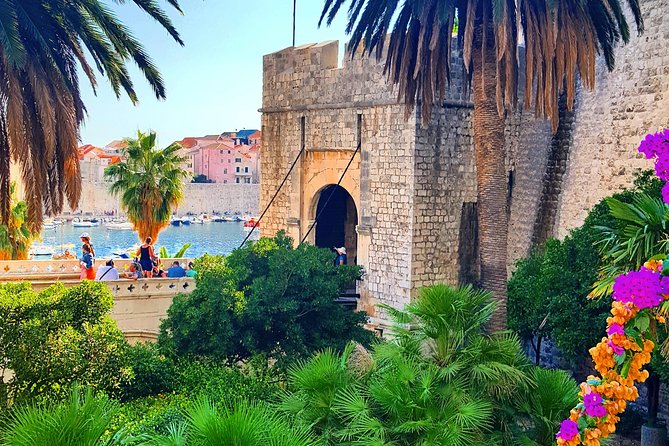
- Start at Pile Gate: Dubrovnik’s West Entrance and Your First Big Clues
- Onofrio’s Fountain: The Aqueduct Story Behind Everyday Drinking Water
- Franciscan Monastery and Church Complex: Gothic Cloister Calm with Real Art
- Stradun to Sponza Palace: The Main Pedestrian Street Meets Renaissance Power
- Orlando Column, Bell Tower, and Rector’s Palace: A Clock, a Power Center, and a Detail You’ll Remember
- St. Blaise and the Cathedral Area: Baroque Beauty Built After an Earthquake
- Pacing, Group Size, and What to Wear on a 90-Minute Old Town Loop
- Guides Make the Difference: How Storytelling Turns Sights into Understanding
- Value for Money: Getting More Than a Walk for $31.46
- Should You Book This Dubrovnik Old Town Walking Tour?
- FAQ
- Where does the Dubrovnik Old Town walking tour start?
- What time does the tour begin?
- How long is the walking tour?
- Is the tour in English?
- Do I get a mobile ticket?
- How big is the group?
- Which sights are included during the walk?
- Are food and drinks included?
- What is the cancellation approach if weather is bad?
- What is the cancellation window for a full refund?
Key things I’d circle on your Dubrovnik checklist
- Pile Gate to Stradun: Get the Old Town’s map in 90 minutes, starting at one of the main entrances
- Onofrio’s Fountain: A multi-faucet drinking fountain tied to a real aqueduct system
- Franciscan Monastery cloister: 14th-century Gothic atmosphere plus art and the restored Pieta sculpture
- Orlando Column timing trick: A clock tower with Arabic and Latin numerals that updates every five minutes
- Cathedral of the Assumption: Baroque splendor shaped by the post-earthquake rebuild
Why This Dubrovnik Old Town Walk Works in 90 Minutes

This tour is built for orientation. You walk the spine of the Old Town and come out with a mental map—where Stradun sits, where the big civic buildings cluster, and why Dubrovnik looks the way it does.
The other win is the format. With a local guide, you get context fast, so the Old Town stops being just pretty walls and starts making sense as a functioning city with major institutions, water systems, and power centers.
You can also read our reviews of more tours and experiences in Dubrovnik.



Start at Pile Gate: Dubrovnik’s West Entrance and Your First Big Clues
You begin at Pile Gate, Dubrovnik’s western doorway into the Old Town (Stari Grad). Even if you’ve seen photos, standing there helps. You immediately grasp the idea that the Old Town isn’t a free-for-all—it’s a walled, organized space with controlled entry.
From here, the guide frames the city with history and street-level explanations, so you know what you’re looking at before you hit the crowd crush. This is also where you learn which streets are the main arteries and which turns are more about atmosphere and older layers.
If you’re prone to getting lost, this first stretch pays off. The tour doesn’t try to cover everything; it gives you the right first thread to follow later on your own.
Onofrio’s Fountain: The Aqueduct Story Behind Everyday Drinking Water
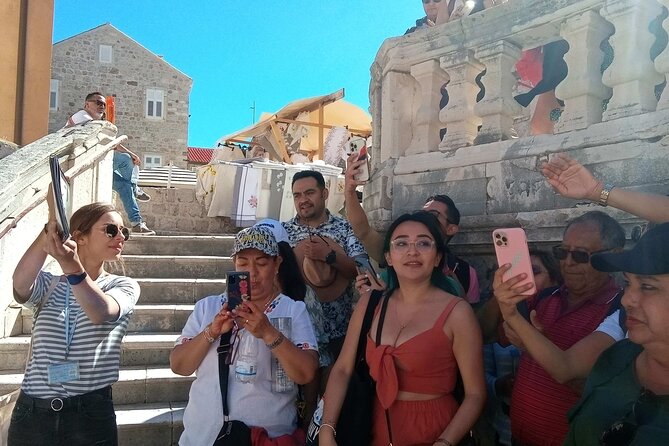
Next up is Onofrio’s Fountain, the famous circular fountain with multiple faucets. The key detail is that it’s not just decorative. It’s connected to an aqueduct bringing drinking water into Dubrovnik for centuries.
You’ll hear what that distance meant in practice: the spring supply is about 7.5 miles (12 km) from town. When you see the fountain in real life, it clicks that Dubrovnik’s survival depended on systems like water—just as much as on defenses.
This stop also gives you a breather. People often rush through fountains elsewhere. Here, the guide slows you down just enough to notice the structure, the function, and why it belongs at the very beginning of your walk.
Franciscan Monastery and Church Complex: Gothic Cloister Calm with Real Art
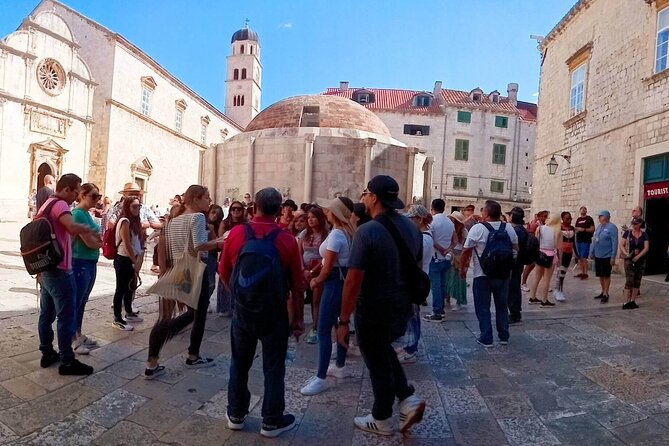
One of the best parts of this tour is how it balances major landmarks with a quieter pocket. The Franciscan monastery and church area includes the cloister, dating back to the 14th century, with a Gothic feel that’s easy to stand in and actually look around.
You’ll also hear about the restored sculpture of the Pieta housed in the monastery. That detail matters because it connects the religious setting to the broader European art tradition, not just to Dubrovnik’s local identity.
In a city where the streets can feel tightly packed, this section can feel like stepping into a gentler rhythm. Even if you only pause briefly, it changes how you experience the rest of the walk.
Stradun to Sponza Palace: The Main Pedestrian Street Meets Renaissance Power

After the monastery, you move onto Stradun, the Old Town’s main pedestrian street with limestone paving. This is where the city’s layout becomes obvious: Stradun is a spine, and many of the institutions you care about line up around it.
You’ll then reach Sponza Palace, a Renaissance highlight now housing the State Archives. It’s one of those buildings that sounds like paperwork until you see it in context. With the guide’s commentary, it becomes a symbol of how Dubrovnik organized records, authority, and civic life.
If you’re the type who likes architecture with purpose, this is a strong stop. The palace isn’t just a pretty façade—it’s tied to how the city remembered itself and administered governance.





Orlando Column, Bell Tower, and Rector’s Palace: A Clock, a Power Center, and a Detail You’ll Remember
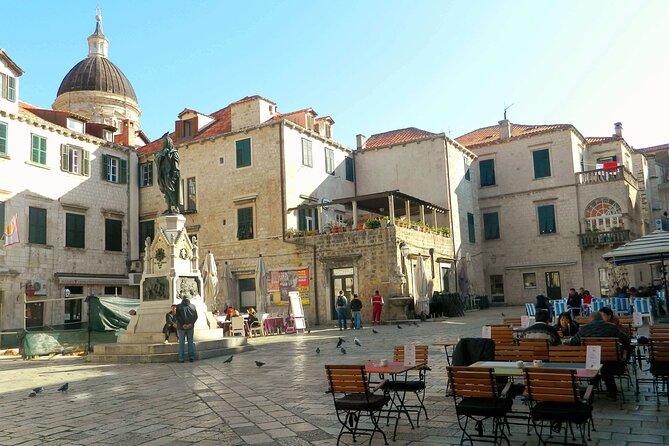
Right around the square, you’ll see Orlando Column (the clock column). It has a quirky claim to fame: the time is shown in Arabic and Latin numerals, and the display changes only every five minutes.
That tiny fact is exactly why guided tours beat random wandering. You’ll stop, look longer, and notice the clock details because the guide tells you what to watch for. Without that, you might glance and keep walking.
From there, the route continues past major power-adjacent landmarks like the Rector’s Palace and the bell tower area. These stops help you understand Dubrovnik as more than a fortress town. It was a city with government, a public face, and institutions that shaped daily life.
St. Blaise and the Cathedral Area: Baroque Beauty Built After an Earthquake
Next, you visit the Church of St Blaise, Dubrovnik’s patron saint. Even if you don’t follow the religious side, it’s still important culturally. Patron saints aren’t just symbols; they’re part of how a city narrates itself.
Then you reach the Cathedral of the Assumption. It’s a Baroque sanctuary built in the 18th century, after an earthquake destroyed the earlier cathedral. That historical detail changes how you look at the building. You start seeing it as a rebuild—an answer to catastrophe, not just a decorative statement.
Your walk also includes the cathedral area, including time around the cathedral treasury. Think of this section as the emotional finish of the tour: the ornate architecture plus the story of resilience.
Pacing, Group Size, and What to Wear on a 90-Minute Old Town Loop
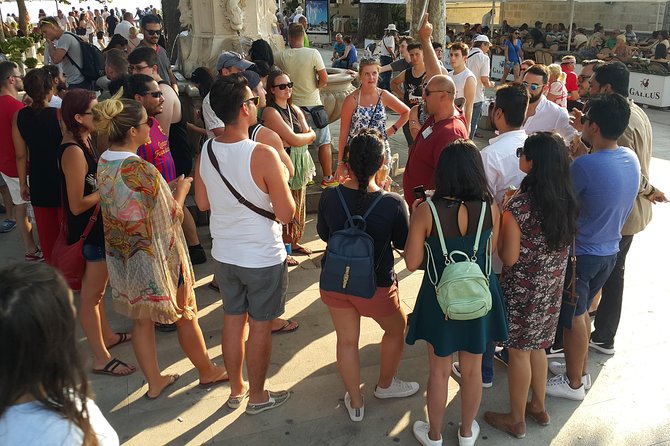
This is a short tour—about 1 hour 30 minutes—so pace matters. The structure is built for covering highlights without turning it into a long slog through every alley.
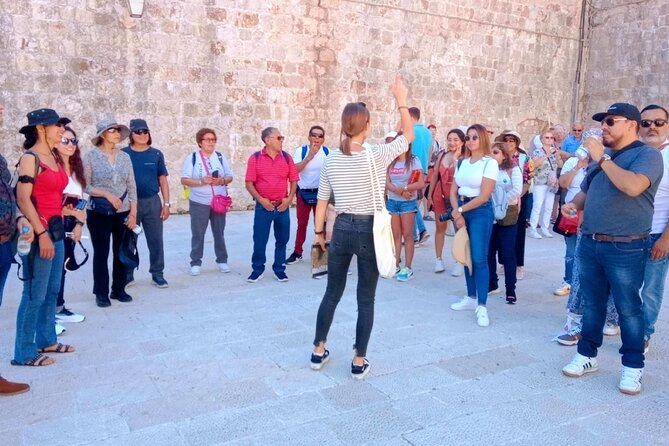
The group is capped at 16 travelers, which keeps the experience more interactive. In practice, it also helps when you need to stop for a story and actually hear it over the street noise.
Wear comfortable walking shoes. Dubrovnik’s Old Town streets are stone, and you’ll be on your feet most of the time. Also, plan for sun. Even with a morning start (the tour begins at 10:30 am), Dubrovnik light can be intense, and the route is outdoors for much of the walk.
One more practical tip: if your listening skills vary with noise, stand where you can hear the guide clearly. The difference between hearing the explanation and missing it is huge on tours like this.
Guides Make the Difference: How Storytelling Turns Sights into Understanding
The tour’s main engine is the local guide. Expect professional commentary tied to the architecture and the city’s evolution—everything from daily life to how Dubrovnik faced damage and defense in the early 1990s war.
What I like about this approach is that it doesn’t just hand you dates. It helps you connect why certain buildings matter, why Dubrovnik’s street plan looks the way it does, and why the city feels both historic and lived-in.
The best part is the guide’s ability to point out details you’d normally skip: the fountain’s water connection, the cloister mood, and the clock’s numerals. It turns photo stops into learning stops, without turning the tour into a lecture hall.
Value for Money: Getting More Than a Walk for $31.46
At $31.46 per person for roughly 90 minutes, you’re not paying for transportation or timed entry perks. You’re paying for a local guide who can do what an audio app can’t: connect the dots between buildings, street layout, and real history.
You also get free admission for at least the tour’s core listed components (the itinerary notes free admission for the Pile Gate and Old Town segments). Even if you later choose to explore additional museum content on your own, this tour gives you the “what matters most” filter.
And because the tour is short, it’s easy to slot into your first day. The payoff is that your remaining hours in Dubrovnik become smarter and less random: you’ll recognize landmarks and understand what you’re looking at.
Should You Book This Dubrovnik Old Town Walking Tour?
Book it if you want the fastest route to understanding Dubrovnik’s Old Town. This is ideal for first-timers, for couples and solo travelers, and for anyone who doesn’t want to spend hours climbing stair-heavy alternatives while still getting meaningful context.
Skip it only if you hate walking in tight spaces or you’re expecting a long, museum-style deep dive. This tour is about orientation and highlights, not an all-day crawl.
If you’re planning to explore on your own after the tour, this one helps you see Dubrovnik with smarter eyes.
FAQ
Where does the Dubrovnik Old Town walking tour start?
It starts at Elite Travel Walking Tours, Brsalje ul. 1, 20000 Dubrovnik, Croatia.
What time does the tour begin?
The start time listed is 10:30 am.
How long is the walking tour?
The duration is approximately 1 hour 30 minutes.
Is the tour in English?
Yes, it’s offered in English.
Do I get a mobile ticket?
Yes, the tour uses a mobile ticket.
How big is the group?
The tour has a maximum of 16 travelers.
Which sights are included during the walk?
The route covers highlights such as Pile Gate, Onofrio’s Fountain, the Franciscan monastery, the Church of St. Blaise, Orlando’s Column, Sponza Palace, the Rector’s Palace, and the Cathedral of the Assumption area.
Are food and drinks included?
Food and drinks are not included unless specified.
What is the cancellation approach if weather is bad?
The experience requires good weather. If it’s canceled due to poor weather, you’ll be offered a different date or a full refund.
What is the cancellation window for a full refund?
You can cancel up to 24 hours in advance for a full refund. If you cancel less than 24 hours before the start time, the amount paid is not refunded.