REVIEW · DUBROVNIK
Dubrovnik Private Small-Group Walking Tour in Spanish
Book on GetYourGuide →Operated by Turistički Obrt " Patricia" · Bookable on GetYourGuide
Dubrovnik is best understood on foot. This private, Spanish-language walk threads together the big icons and the quieter corners of the old city. I love that it starts at Pile Gate and follows the heart of Dubrovnik along Stradun, so you get your bearings fast.
The second thing I like is the mix of formal landmarks and lived-in neighborhoods. You’ll see the Renaissance-era masterpieces around Sponza and the Cathedral area, then move into Santa Maria and Buza for views locals actually linger for.
One drawback to consider: it’s a compact 2-hour route, so if you want long stops or museum-style time inside churches, you may need extra time in the city before or after.
In This Review
- Key Highlights Worth Prioritizing
- Stradun First Steps at Pile Gate
- City Walls, Renaissance Sights, and Why This Route Makes Sense
- Stops You’ll Notice Along the Way
- Stradun: The Main Promenade That Ties Everything Together
- Franciscan Monastery and the Cloister Moment
- Santa Maria: The Oldest District Brings the City Down to Earth
- Buza Quarter and the Door That Opens the View
- Ulica od Puca: Jewelry Shops, an Old Barber, and Small Churches
- Private Spanish Guidance: Why the Guide Matters More Than the Checklist
- Price and Value for a Small Private Group
- Logistics That Actually Affect Your Day
- Who This Tour Suits Best
- Should You Book This Dubrovnik Private Walking Tour?
- FAQ
- How long is the Dubrovnik private small-group walking tour?
- Where is the meeting point?
- Is this tour private?
- What language is the guide?
- What major sights are included in the walk?
- Do we visit the Santa Maria and Buza areas?
- Do I need to bring food or drinks?
- Are transfers included?
- What’s included in the tour price?
- Can I cancel for a refund?
Key Highlights Worth Prioritizing
- Stradun promenade: the centuries-old main drag where the old city rhythm clicks into place
- City wall architecture: more than a mile of walls with towers at corners, built to defend and impress
- Franciscan Monastery focus: a cloister that’s called out for its inspiration and atmosphere
- Santa Maria + Buza: the oldest district plus the local-frequented quarter of Buza
- Lokrum Island viewpoints: the white rocks, blue sea, and sightlines that make Dubrovnik feel cinematic
- Ulica od Puca stop: traditional jewelry shops, a historic barber shop, and small churches on the way back
Stradun First Steps at Pile Gate
If Dubrovnik feels like a storybook from the outside, this tour helps you read it once you’re inside the walls. The meeting point is at the Armerling Water Fountain in Brsalje, just a short distance from Pile Gate. From there, you enter the old town and start walking right away.
The big advantage here is pacing. A 2-hour private walk is long enough to connect monuments into a clear route, but short enough that you won’t feel like you’re being herded. You’re not just seeing isolated spots; you’re following the city’s logic from gate to promenade to older neighborhoods.
Your guide leads in Spanish, and the tone is clearly geared toward conversation. In the strongest feedback from past groups, guides like Patricia (and also Ankica, mentioned in separate experiences) didn’t just recite facts. They took time to answer questions and adjust speed to match the group, which matters a lot in Dubrovnik when heat and crowds can steer the day.
You can also read our reviews of more walking tours in Dubrovnik
City Walls, Renaissance Sights, and Why This Route Makes Sense
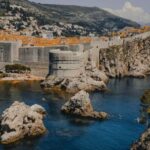
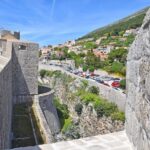
Dubrovnik’s old town is enclosed by more than a mile of walls, with a tower at each corner. Even if you don’t spend the whole time on top of the ramparts, you’ll still “feel” the scale—because the route is chosen to keep the walls and strategic layout in your awareness.
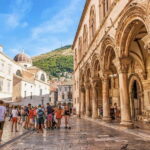
Once you move off the gate area, the tour lines up the major landmarks that define the city’s Renaissance look and civic power. You’ll pass the kind of buildings that make Dubrovnik look official, polished, and planned—especially around the Sponza and Rector’s Palace zone.
Here’s what I think makes these stops valuable for you: they show how Dubrovnik worked. You’re not only admiring architecture. You’re walking through the spaces that shaped trade, law, religion, and public life. That’s how Dubrovnik becomes more than a view—it becomes a system.
Stops You’ll Notice Along the Way
As you go, you’ll see named highlights including:
- Onofrio’s Fountains
- Sponza Palace
- Orlando’s Column
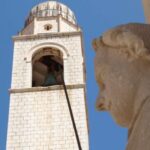
- The Bell Tower
- The Rector’s Palace
- The Cathedral
- The Church of St. Blaise
- Plus additional historic points that naturally sit in this core area
Even if you’re not an architecture nerd, these place names matter because they map to what Dubrovnik is famous for: a city that rebuilt itself after major challenges and then put its identity into stone.
Stradun: The Main Promenade That Ties Everything Together
Stradun is Dubrovnik’s main promenade, and it’s the kind of street that makes the city feel instantly legible. This is where you slow down—not because the tour stalls, but because the street itself has gravity.
You’ll walk down Stradun as the tour’s central spine. One end pairs with the Franciscan Monastery, and the other end brings you to the Church of St. Blaise and the cluster of major buildings that frame the walkway.
For your day, Stradun is useful in two ways:
1) It’s the quickest route to orientation. After you’ve walked it once with context, you’ll understand where you are even if you later wander on your own.
2) It’s a visual checklist. You can look left, right, and back to the walls and instantly recognize the city’s rhythm.
If you’re thinking about crowds: Stradun gets busy. This kind of guided route helps because your guide keeps the flow moving and keeps you focused on what to look at next, instead of losing time guessing where to go.
Franciscan Monastery and the Cloister Moment
At one end of Stradun sits the Franciscan Monastery, and the cloister is highlighted as one of the most inspiring spots in the city. This is the right stop to include because it’s different from the big public squares.
Church and cloister spaces tend to offer a change in mood—less street energy, more quiet structure. Even without going into long interior time, the setting gives you contrast: you see Dubrovnik’s grand civic face, then step into a spiritual, enclosed rhythm.
If you’re traveling with older relatives or anyone who likes breaks, this kind of stop is a good “reset” in the middle of a walking tour. You get a moment to regroup while still staying on schedule.
You can also read our reviews of more private tours in Dubrovnik



Santa Maria: The Oldest District Brings the City Down to Earth
After the core sights, the tour shifts gears to Santa Maria, described as Dubrovnik’s oldest district. This is where the city stops feeling like a stage set and starts feeling like a place where people actually live.
The tour doesn’t treat Santa Maria as just another historic zone. It frames it as the real Dubrovnik—one that’s built around older streets and less tourist-flat energy. That matters if you’re the type of traveler who wants more than photos and monument names.
Buza Quarter and the Door That Opens the View
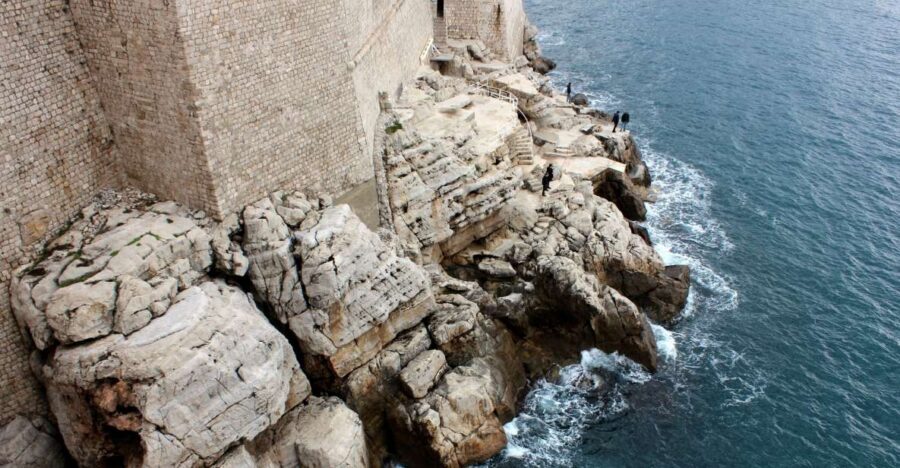
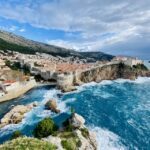
From Santa Maria, you’ll explore Buza, a hidden quarter frequented almost exclusively by locals. The standout moment here is the view connected to St. Stjepan: the door opens to reveal white rocks and blue sea stretching toward Lokrum Island.
This is the kind of payoff that makes a short guided walk feel worth it. You’re not just told that Dubrovnik is beautiful—you’re guided to the exact perspective where the city’s coastal geography becomes part of the story.
If you’re trying to take photos, plan for a steady pace here. The view is the point, and the guide’s job is to time it so you’re not rushing past the best angles.
Ulica od Puca: Jewelry Shops, an Old Barber, and Small Churches
On the way back to Stradun, the tour includes Ulica od Puca, a street known for traditional jewelry shops. It also features an old barber shop and small churches, which gives the street more texture than a typical shopping lane.
I like this stop because it rounds out the experience. Early on, you’re mostly in civic and religious landmark zones. Here, you see the everyday commercial and community details that make the old town feel lived-in.
Also, it helps you understand what to look for later if you continue exploring. After you’ve seen Ulica od Puca with context, you’ll recognize the difference between a street that sells souvenirs and a street that still reflects local traditions.
Private Spanish Guidance: Why the Guide Matters More Than the Checklist
This tour is private and designed for small groups (priced for up to 3 people per group). That changes the experience more than you’d think.
With a private group, you get:
- More time for your questions
- A pace that can flex based on your comfort
- The chance to get practical suggestions, not just facts
In the feedback for this tour, the guide quality is the most consistent strength. Many notes mention Patricia by name. People describe her as warm, attentive, and empathetic, with a real habit of answering questions. One review also highlighted that the guide took more time than the scheduled tour to make it feel complete, including taking photos for the group and offering personal recommendations for what to do next in Dubrovnik.
Another Spanish-language highlight from feedback: the explanations were described as very clear and detailed, and the tour felt valuable even when the group included visitors who wanted both history and street-level guidance.
If you’re traveling in Spanish, this matters. Language isn’t just comfort—it’s how fully you’ll grasp why each place matters.
Price and Value for a Small Private Group
The price is listed as $117 per group up to 3, for a 2-hour tour. That’s not the cheapest option on paper, but it’s often the best value when you break it down by people.
Here’s the simple math:
- 3 people: about $39 each
- 2 people: about $58.50 each
That’s the point of pricing like this: you get a dedicated guide without paying a big-tour-per-person premium. And since the tour concentrates on a walkable core that includes the most important old-town sights plus Santa Maria and Buza viewpoints, you’re buying a tight route design, not just a person reading a brochure.
If you’re traveling solo or as a duo, you may still find it good value because private guiding in Dubrovnik’s old town saves mental energy. You don’t have to constantly decide what’s next.
Logistics That Actually Affect Your Day
This is a walking tour in the old town. That means you should plan for:
- Uneven medieval street surfaces
- Sun exposure, especially in open sections like Stradun
- The fact that you’ll move through several major sites in a short time
The meeting point is straightforward: Armerling Water Fountain in Brsalje, near the entrance to the old town at Pile Gate. No transfers are included, so you’ll want to arrive on your own.
Food and beverages aren’t included either. Since the tour is short, you’ll probably want to handle snacks and water separately based on your preferences and energy level.
Included materials are thoughtful: you get tourist brochures and maps. That’s helpful if you want to keep exploring after the walk, especially since Stradun becomes your mental map once you’ve walked it with context.
Who This Tour Suits Best
This tour fits best if you:
- Want a structured first walk through Dubrovnik’s UNESCO old town
- Prefer a small private group over big group chaos
- Like both major monuments and quieter local-feeling streets
- Are traveling in Spanish and want explanations without having to translate in your head
It may not be the perfect match if you:
- Want a long, slow visit inside major churches and museums
- Plan to spend most of the day on the city walls themselves (this route focuses on key sight areas and viewpoints rather than a full all-day wall walk)
Should You Book This Dubrovnik Private Walking Tour?
Yes, if you’re aiming for a smart first experience in Dubrovnik. The route covers the city’s headline identity—Stradun, the Renaissance-style core, and the city walls’ presence—then adds real texture with Santa Maria and Buza, including the view toward Lokrum Island.
I’d especially book it if Spanish matters to you, because the guide approach shows up as a top priority in the feedback: clear explanations, time for questions, and personalized attention for photos and next-step recommendations.
If you’re on a very strict schedule and only have a couple hours, this is the kind of guided walk that can turn confusion into confidence—so you can enjoy the rest of Dubrovnik without constantly re-planning.
FAQ
How long is the Dubrovnik private small-group walking tour?
The tour lasts 2 hours.
Where is the meeting point?
The meeting point is the Armerling Water Fountain (Brsalje), meters from Pile Gate, at the entrance to the old town of Dubrovnik.
Is this tour private?
Yes. It’s a private group tour.
What language is the guide?
The live tour guide speaks Spanish.
What major sights are included in the walk?
You’ll see highlights such as Stradun, the city walls, Santa Maria (including Buza), the Franciscan Monastery, Onofrio’s Fountains, Sponza Palace, Orlando’s Column, the Bell Tower, the Church of St. Blaise, the Rector’s Palace, the Cathedral, and more.
Do we visit the Santa Maria and Buza areas?
Yes. The tour takes you to Santa Maria and includes time in Buza, including a viewpoint associated with St. Stjepan.
Do I need to bring food or drinks?
Food and beverages are not included, so you’ll need to plan your own snacks and water.
Are transfers included?
No. Transfers are not included.
What’s included in the tour price?
You get a private walking tour with a guide, plus tourist brochures and maps.
Can I cancel for a refund?
You can cancel up to 24 hours in advance for a full refund.