REVIEW · SIBENIK
From Sibenik: Private Walking Sibenik Sightseeing Tour
Book on GetYourGuide →Operated by Rent a guide · Bookable on GetYourGuide
Sibenik feels like a time machine. On this private walking tour, you move at street level through Šibenik’s narrow lanes, staircases, and stone houses, guided by local stories that make the old harbor-city feel close and human. I especially love the focus on stone architecture you can actually see and touch with your eyes, and the way the guide turns key sites into clear, memorable stories (often with warmth and humor).
The only real catch: the tour is about 90 minutes, so you’ll cover a lot of ground—but you won’t have time to linger forever at every viewpoint or side street. If you want a slow, sit-and-stare pace, you might need to do a bit of self-guided wandering afterward.
In This Review
- Strolling Šibenik’s stone maze: what makes this tour work
- Key highlights I’d plan around
- Starting point by the waterfront: get your bearings fast
- The old town streets: where the city’s “romance” shows up
- St. Jacob’s Cathedral: the stone cathedral lesson you can’t get online
- Churches with shifting significance (and why that matters)
- King Petar Kresimir and the city identity connection
- Squares, theaters, and the surprising urban logic of Šibenik
- Four Wells cistern: the practical medieval story
- Timing and pace: how to get the most from 90 minutes
- Price and value: $188 per group, what that means for you
- Who this tour suits best
- Practical tips so you don’t get stuck
- Should you book the Šibenik private walking tour?
- FAQ
- How long is the Šibenik private walking sightseeing tour?
- Where do we meet for the tour?
- Is the tour private, and how large is the group?
- What languages are available for the live guide?
- What’s included in the price?
- What should I wear or bring?
- Is there free cancellation?
Strolling Šibenik’s stone maze: what makes this tour work
Šibenik is in Dalmatia, in one of the Adriatic’s most protected natural harbors, so the city has always been tied to both land and sea. As you walk, the town’s layout does half the work for the guide: narrow winding streets, stony houses, lots of stairs, and remnants of older city defenses all funnel you toward the “here’s the view” moments.
This kind of tour is valuable because it does two things at once. It shows you famous monuments, yes—especially St. Jacob’s Cathedral—but it also teaches you how to read the city: why certain buildings look the way they do, what the church art meant, and how the city’s power and daily life have shifted over centuries.
The best part is that you’re not getting a stop-and-collect-brochure tour. You’re learning the “why” behind what you’re seeing: who mattered (like King Petar Kresimir), what changed (patron saints and church significance), and how practical medieval needs shaped the city (like public water storage).
Key highlights I’d plan around
- St. Jacob’s Cathedral in stone-only splendor, including the bold structural design that uses stone slabs and ribs without binding material
- Old town streets and stairways, where the city’s medieval feel shows up quickly when you’re walking, not staring from a bus window
- Stories tied to named places, from King Petar Kresimir to the churches with centuries of shifting meaning
- Town planning surprises, like learning why the main city square isn’t located where you’d instinctively expect
- Four Wells (medieval cistern), a practical piece of city life that often gets overlooked without a guide
- Bell-tower details and bell timing, especially the church of St. Barbara and its set of four bells
You can also read our reviews of more walking tours in Sibenik

Starting point by the waterfront: get your bearings fast
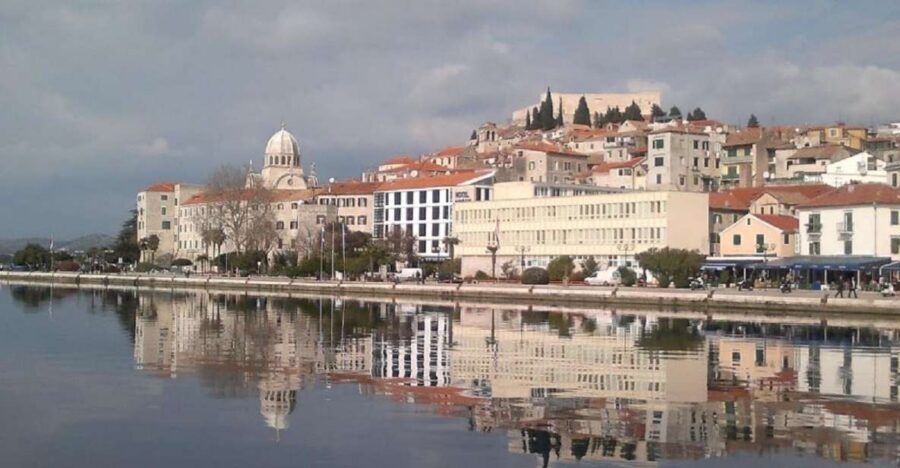
You meet at a parking lot on the waterfront, next to a gas station. That’s useful because it puts you where the city breathes—close to the harbor feel—before you start climbing into the older streets.
Bring comfortable shoes. Šibenik’s old town is made for walking, but the walking includes uneven stones and stairs. If your feet are already tired before you start, the tour can feel like more effort than it should be.
Also, wear gear for religious venues: when you enter churches, your shoulders and knees need to be covered. This isn’t just a polite suggestion here—it’s part of the experience.
The old town streets: where the city’s “romance” shows up
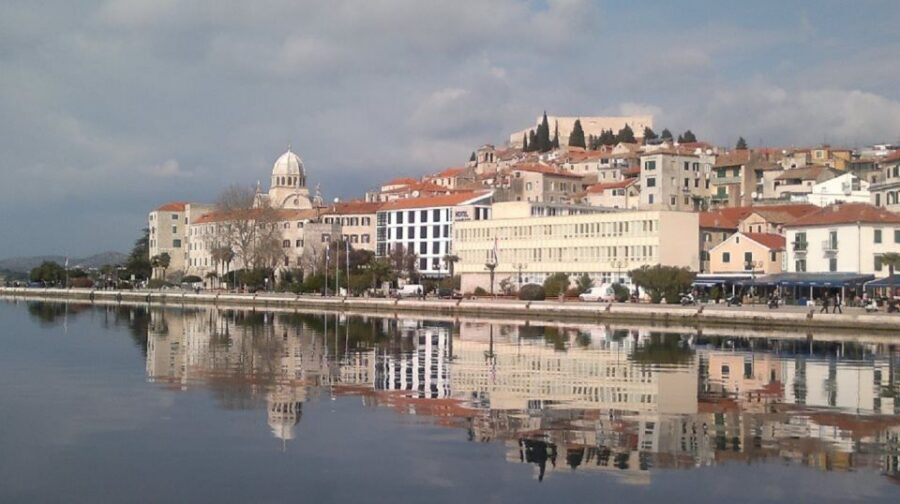
Once you head into the old town, you’ll notice how quickly the atmosphere changes. The combination of narrow passages, stony facades, and staircases creates that Mediterranean “you’re inside the centuries” feeling. You’ll also see remnants of old city walls, which help you understand that Šibenik wasn’t just decorative—it was defensive and strategic.
Walking with a guide matters here because the city is visually busy, but the meanings aren’t obvious. A good guide helps you spot what you’d otherwise miss: architectural rhythms, how buildings relate to the street, and why certain layouts feel the way they do.
This is also where you’ll feel the benefit of a private setup. Your pace can match your questions, and if you’re visiting with family (including kids), the tour style can flex instead of running you through rigid photo stops.
St. Jacob’s Cathedral: the stone cathedral lesson you can’t get online
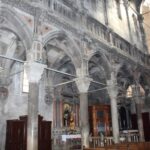
St. Jacob’s Cathedral is the headline for a reason. You’ll learn that it was constructed over about a century, and the story behind that span is about more than construction—it’s about persistence, sacrifice, and belief by the generations who kept the project going.
What I’d watch for (and what the guide will help you understand) is the cathedral’s uniqueness in European architecture:
- It’s entirely built of stone—no other material was used.
- Its structure is described as brave and unusual: stone slabs and ribs with no binding material.
- Its front facade is distinctive too, including a trefoil design.
- And the harmony of the architecture is part of what makes it work visually, not just structurally.
Even if you don’t love architecture, this stop rewards attention. You start noticing how the stone elements connect, how the design guides your eye, and why the cathedral is treated as a national architectural landmark.
Churches with shifting significance (and why that matters)
Šibenik’s churches aren’t just pretty walls. They’re historical time stamps—religious priorities, artistic choices, and community needs changing across centuries.
On your walk, you’ll get help answering questions like:
- Why the church of St. Francis is more special than other churches in the city.
- Why the church of St. John the Baptist mattered through the Middle Ages—and why its patron saint changed.
- Why the church of St. Krsevan is the oldest in town.
- How people remember the artist’s name connected with the church of the Assumption of the Blessed Virgin Mary and its interesting bell tower.
That last point is a real example of what makes a guide worth paying for: instead of throwing names at you, you get a memory hook tied to the story. It’s the difference between hearing trivia and walking away with something you can actually recall later.
And then there’s the church of St. Barbara. You’ll learn why it has four bells, and when those bells ring. If you’re the type who notices sound before you notice details, this stop can be extra satisfying.
You can also read our reviews of more private tours in Sibenik


King Petar Kresimir and the city identity connection
One of the best parts of a good old town tour is when it answers the question you’re silently thinking: who were the people behind all this stone?
You’ll find out who King Petar Kresimir was and why he matters to Šibenik and its people. That context changes how you see the city. Suddenly the monuments feel less like isolated attractions and more like evidence of local pride and leadership.
This is where the tour earns its place in a short itinerary. If you only do “top sights,” you’ll leave with photos. If you do this, you’ll leave with a mental map of what the city valued.
Squares, theaters, and the surprising urban logic of Šibenik
You’ll also learn about one of those odd-but-fascinating city planning mysteries: why the main city square is not located in the city.
That kind of detail is more than a fun fact. It hints that Šibenik’s “center” has shifted with trade patterns, defense needs, and the way the city expanded. You start reading the town like an evolving system, not a frozen postcard.
You’ll also see the Croatian National Theater in Šibenik. Built as the largest and most beautiful theater in South Europe, it later got electric lighting in 1896—one of the first theater electrification moments in the world. It’s a good reminder that this coastal city wasn’t stuck in the medieval past. It modernized in its own way.
Four Wells cistern: the practical medieval story
A standout stop for many visitors is the public town cistern called Four Wells. It was built during the Middle Ages, and the point of it is simple: water storage mattered.
Without a guide, a cistern can look like a leftover structure. With a guide, it becomes a window into daily life—how people handled water needs when the city grew and the harbor brought both visitors and pressure.
This is also where the tour feels balanced. You get drama and beauty (cathedrals, bell towers), but you also get systems and survival (water, streets, planning).
Timing and pace: how to get the most from 90 minutes
The tour runs 90 minutes, which is a sweet spot for an old town walk. You can cover multiple key sites without turning the day into a sprint.
Still, plan realistically. The tour is private, but it isn’t infinite. You’ll likely move between stops with some walking time and short explanations at each site. If your interest is very narrow—say, only cathedrals—then you might want extra free time afterward to revisit St. Jacob’s Cathedral or linger in the squares.
A helpful detail from the experience style is that the guide pays attention to the conditions. In warm weather, that makes a difference. You’ll want to bring sun protection too, since you’ll be out on the streets.
Price and value: $188 per group, what that means for you
At $188 per group (up to 20 people), the price isn’t just about the number—it’s about how your group size changes the value.
- If you’re coming as a couple or small family, you’ll likely pay more per person than a large group—but you get a true private walking experience, with room for questions.
- If you’re traveling with friends and can fill a group, the per-person cost drops fast, and the tour becomes one of the more practical ways to learn a lot in a short time.
I’d treat it as a “short, guided compression” of Šibenik. You’re paying for someone to connect the dots: the architecture, the churches, the civic stories, and the city’s odd logic like the square’s location.
Who this tour suits best
This is ideal if you:
- Want a real walking orientation of Šibenik’s old town rather than a quick photo loop
- Enjoy architecture and church details but also want the context explained in plain language
- Like local stories that make the city feel lived-in, not museum-clean
- Prefer a private guide who can adjust to your pace and needs
It’s also a good match for families, as long as everyone can manage uneven stones and stairs for about 90 minutes.
Practical tips so you don’t get stuck
Here’s how to make the tour smoother:
- Wear shoes that grip on stone and stairs.
- Use a light layer or scarf because religious venues require shoulders and knees covered.
- Bring sun protection. The streets can heat up, and you’ll be walking.
- Have one flexible question in mind. The best moments happen when you connect what you’re seeing to something you genuinely want to understand.
Should you book the Šibenik private walking tour?
I’d book it if you want Šibenik to make sense fast. The cathedral stop is a major draw, but what makes this tour worth your time is how it links sites together with stories—who mattered, why certain churches are important, how water and city planning shaped daily life, and how Šibenik moved from medieval survival to modern ambition.
I wouldn’t book it if you already know you want a long, slow wander with minimal explanations. For that, you can DIY. But if you want guided clarity and high-impact sights in 90 minutes, this is a strong choice.
FAQ
How long is the Šibenik private walking sightseeing tour?
It lasts 90 minutes.
Where do we meet for the tour?
The meeting point is a parking lot on the waterfront, next to the gas station.
Is the tour private, and how large is the group?
It is a private group. The price is listed per group up to 20 people.
What languages are available for the live guide?
The guide is available in Croatian, English, and German.
What’s included in the price?
Guide services and taxes are included.
What should I wear or bring?
Wear comfortable shoes. For religious venues, shoulders and knees must be covered.
Is there free cancellation?
Yes. You can cancel up to 24 hours in advance for a full refund.