REVIEW · SIBENIK
Sibenik: Guided Walking Tour
Book on GetYourGuide →Operated by Croatia Inside · Bookable on GetYourGuide
History and walking shoes mix well here. This tour is interesting because it links Šibenik’s waterfront world to its UNESCO centerpiece, with a guide who adds fun, specific details you won’t get from a standard map. I especially like the Riva embankment start for fast city orientation and the St. James Cathedral focus on stonework and the famous human-face carvings. The main drawback to consider is that the cathedral entrance fee is not included, so you’ll want a little extra cash for the final stop.
You’ll spend about 90 minutes moving at an easy walking pace through spots locals actually use and through quieter corners of the Old Town. The route includes Perivoj Roberta Visianija (a Mediterranean park break) and Poljana Square before you thread your way into the Old Town lanes. One more practical note: it’s not a good fit for people with mobility impairments, since the old streets and cathedral area are built for walking, not for accessibility.
This is set up as a private group, so you’re not stuck listening to a one-size-fits-all script. The guide works in English, Croatian, or Russian, and you can ask questions as you go. Bring comfortable shoes and water, since it’s a straightforward walking tour without long sit-down breaks.
In This Review
- Key highlights worth your attention
- Riva to St. James Cathedral in 90 minutes
- Gat Krka meeting point: start where the water meets town
- The Riva embankment: your quick orientation to Šibenik
- Perivoj Roberta Visianija: a Mediterranean park reset
- Poljana Square: where old buildings meet everyday life
- Old Town narrow streets: how stone lanes tell the story
- St. James’s Cathedral: the UNESCO finale with 70+ carved faces
- Price and value: what $57 really covers
- Tips to get the most from the walk
- Who should book this Šibenik walking tour
- Should you book it?
- FAQ
- How long is the Sibenik guided walking tour?
- What is the price per person?
- Where do I meet the guide?
- Is the cathedral entrance fee included?
- What languages are available for the live guide?
- Is this tour private or shared?
- Is the tour suitable for people with mobility impairments?
- Can I get a full refund if I cancel?
Key highlights worth your attention
- Riva waterfront start for an instant feel for Šibenik’s setting on the Adriatic
- Perivoj Roberta Visianija for a calm pause with Mediterranean plants and shaded paths
- Poljana Square to connect historic buildings with today’s daily life
- Old Town narrow lanes where stone houses and side alleys explain the city’s layout
- St. James Cathedral (UNESCO) with the exterior frieze of over 70 human faces
- Stone construction details including the fact it was built entirely of stone without mortar
Riva to St. James Cathedral in 90 minutes
If you like tours that give you both a mental picture and a few “wait, that’s cool” moments, this works. The big win here is the flow: you start at the waterfront edge of town, then move step-by-step into the older urban core, ending at St. James’s Cathedral, the UNESCO site that anchors Šibenik’s story.
A 90-minute format is also practical. It’s long enough for the guide to explain the city’s past and connect it to present-day life, but short enough that you can still plan the rest of your day—whether that means another walk, lunch on the coast, or a self-guided wander.
What you’re really paying for is direction. Without a guide, you could still see these places, but you might miss what connects them. This tour is built around that connection: the waterfront as the city’s gateway, the squares and lanes as how people moved and lived, and the cathedral as the architectural signature.
You can also read our reviews of more walking tours in Sibenik

Gat Krka meeting point: start where the water meets town
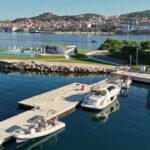
The tour begins at Gat Krka, at a parking lot on the waterfront. It’s next to a gas station, so it’s easy to spot once you know what you’re looking for. This matters more than it sounds: starting right by the embankment means you get context immediately instead of waiting until later to understand where the city sits.
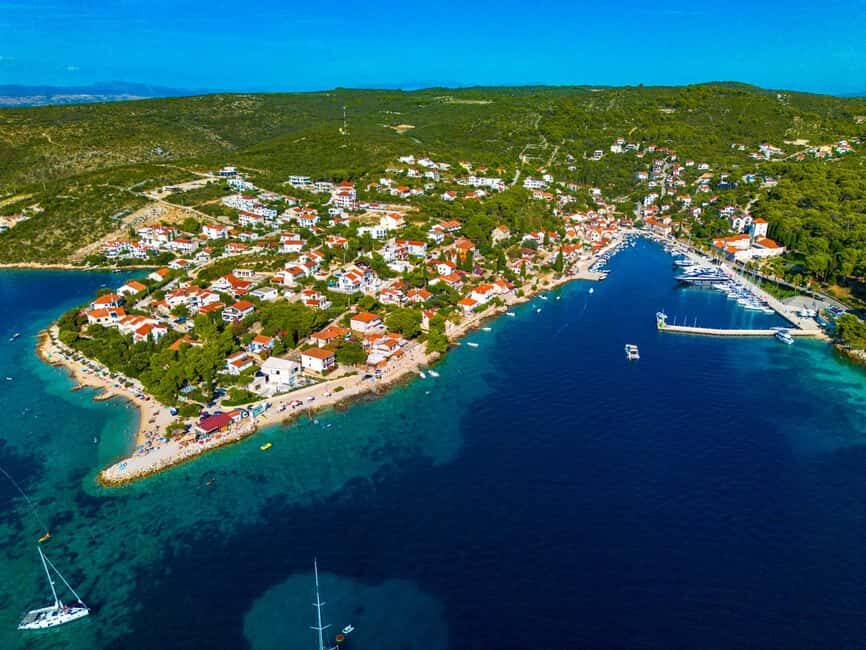
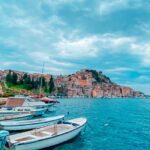
From this first spot, you’re in the right mood for the rest of the walk. You can see the skyline and feel the Adriatic setting, and that helps everything that follows make sense. As you move away from the water, the city doesn’t feel like random streets—it feels like a system that grew inward from the coast.
This first segment also sets expectations. Expect a guided pace that keeps you moving, not one that stops every 30 seconds. It’s a walking tour, so treat it like one: step into comfortable rhythm and save your deeper questions for the guide’s stops along the way.
The Riva embankment: your quick orientation to Šibenik
Your first major stop is the Riva, Šibenik’s waterfront promenade. This isn’t just a pretty warm-up. It’s where the guide can explain the city’s relationship to the sea—how the coastline shaped daily life and how the city’s landmarks align once you know where you are.
I like this kind of start because it helps you stop sightseeing in a vacuum. When you know the shoreline context, the Old Town streets feel less like a maze and more like a deliberate, human-scale layout.
You’ll also get a strong visual cue for where the “city center gravity” lies. Even if you plan to explore later on your own, you’ll remember the line between water, squares, and the cathedral area. That makes later wandering easier and less stressful.
Practical tip: if the sun is strong, aim to drink water early. The tour includes water advice, and for 90 minutes that’s a real comfort factor, not a formality.
Perivoj Roberta Visianija: a Mediterranean park reset
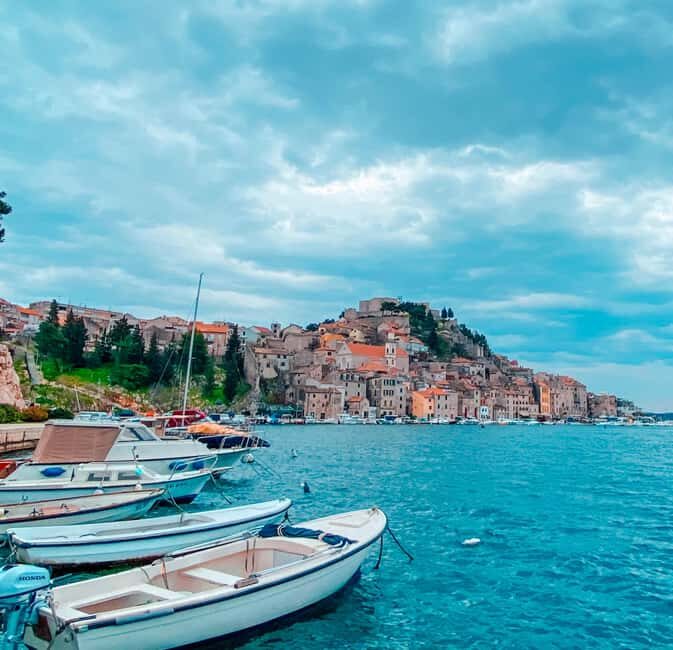
After the waterfront, you head to Perivoj Roberta Visianija, also called the Mediterranean Park. This is one of the smartest breaks in the route because it breaks the rhythm from streets to greenery, and you get shade and breathing room.
The park’s story adds another layer. It’s named after the Croatian botanist Roberto de Visiani, and you’ll see how Mediterranean plant life shapes the feel of the space. Even if you’re not a plant nerd, you’ll appreciate the point: this is a city that builds moments of calm inside the urban fabric.
Why this stop matters for your understanding: parks like this often signal how a city balances daily movement with restorative spaces. On this walk, you get that balance before you enter the densest part of the Old Town. By the time you reach the squares and lanes, your eyes are ready for texture—stone, courtyards, small streets, and the sense of layers.
Poljana Square: where old buildings meet everyday life
Then you reach Poljana Square, described as the main hub of Šibenik activity. Here, you’ll find a mix of old and newer architecture, plus the feeling of a working public space—shops, cafés, and landmarks that help you read the city as it exists today, not just as it existed centuries ago.
I find squares like Poljana useful because they give you a reference point. Even if you lose the street-name of a later lane, you’ll remember the square. It becomes the mental anchor that makes the Old Town feel navigable.
Also, this is where the tour’s theme shows up: the “past and present” connection. The guide’s job here is to help you notice how older structures still perform real roles—supporting commerce, gathering, and movement—rather than being preserved in a museum bubble.
One consideration: if you’re visiting during a busy period, the square can be lively. If you prefer quiet photos, the guide may be able to time your viewing points, but you may still have to work with pedestrian flow.



Old Town narrow streets: how stone lanes tell the story
From Poljana, the tour turns into the Old Town’s narrow lanes—cobblestone and tightly spaced stone houses, with small passages that feel like you’re moving through a layered neighborhood, not a packaged attraction.
This part is where the walk earns its “guided” label. Old streets can look pretty but confusing. With the guide, you get the city logic: where the pathways lead, why certain corners matter, and how the architecture fits into the story of Šibenik’s growth.
You can also expect the tour to slow slightly at key viewpoints—enough for the guide to explain rather than just point. In the process, you learn what to look at: building materials, street rhythms, and the way courtyards and small turns create pocket spaces of everyday life.
A practical note: cobblestones and old paving can be slippery when wet and hard on tired feet. That’s why comfortable shoes are part of the advice. Give your feet some respect and you’ll enjoy this segment more.
St. James’s Cathedral: the UNESCO finale with 70+ carved faces
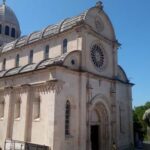
The tour ends at St. James’s Cathedral, a UNESCO World Heritage site and the crown jewel of Šibenik architecture. This is where you’ll see why the tour’s payoff is worth the walking.
The most striking detail is the cathedral’s exterior frieze: over 70 human faces carved into the stone. The guide will connect these faces to a 15th-century idea—believed to represent the citizens of Šibenik at that time. It’s an unusual kind of portrait, not like a painting, but like stone testimony.
Another key fact you’ll hear is that the cathedral was built entirely of stone without mortar. Even if you don’t study architecture, that detail changes how you read what you’re seeing. It’s not just “pretty stone.” It’s a construction achievement.
The cathedral visit also makes the theme land. The tour ties the city’s historic ambitions to what you’re standing in front of now: a massive stone statement that still anchors the streets around it.
One important consideration: the cathedral entrance fee (5,00 € per person) is not included. So budget for that if you plan to go in. If you’re counting costs tightly, this is the only clear extra expense mentioned for the experience.
Price and value: what $57 really covers
At $57 per person, you’re buying a guided walking experience with interpretation and the tax included. That’s a fair structure for a 90-minute private format, especially when the guide is doing more than reciting basic facts.
Here’s how I judge value for a tour like this:
- You’re not just being transported between sights. You’re getting the city story in the order it makes sense: waterfront → gardens → square → Old Town lanes → cathedral.
- You’re getting explanation at the actual landmarks, including architectural specifics about the cathedral exterior.
- The private group format helps if you like asking follow-up questions.
The extra cost to consider is the cathedral entrance fee. If you’re planning to enter, your total spend is a bit higher than the headline price, and that matters for budget travelers. On the other hand, if you were going to visit the cathedral anyway, the guide helps you make that stop much more meaningful.
Tips to get the most from the walk
This is a straightforward walking tour, but you can make it smoother with a few small moves.
- Wear good shoes. Cobblestones and uneven old paving are part of the experience.
- Bring water. It’s hot in Dalmatia often, and the tour includes only a short reset in the park, not a long break.
- Ask questions at the squares and cathedral approaches. That’s when the guide can connect place to story most clearly.
- Plan your day with breathing room. Even at 90 minutes, you’ll want time after the tour to slow down and look at the cathedral area again on your own.
If you enjoy history, you’ll get it in human terms. If you enjoy architecture, you’ll get concrete details about the cathedral stonework and the face carvings. If you enjoy city life, Poljana Square and the Old Town lanes show you daily structure, not just monuments.
Who should book this Šibenik walking tour
I’d point you toward this tour if:
- You only have a short time in Šibenik and want the city “readable” fast.
- You like walking routes that connect old structures to today’s spaces.
- You care about architectural explanation, especially at St. James’s Cathedral.
It’s also a good pick if you prefer a guided experience without rushing through too many stops. The route is focused, and the tour is designed around understanding, not checklisting.
It’s not the best fit if you have mobility limitations, because the tour isn’t marked as suitable for people with mobility impairments. The walking surfaces and historic areas are part of what makes it work, so you’d likely struggle.
Should you book it?
Yes, if you want a guided walk that actually teaches you what you’re looking at—starting at the waterfront, shaping your understanding in the park and squares, and finishing with the cathedral’s stone face frieze and construction story. The price is reasonable for a private 90-minute format, and the route is the kind that helps your later self-guided wandering feel easier.
If you’re trying to keep costs ultra-tight, remember the cathedral entrance fee is extra. If you need full accessibility support, skip this one and choose a different format.
FAQ
How long is the Sibenik guided walking tour?
The tour lasts about 90 minutes (listed as 1.5 hours).
What is the price per person?
It costs $57 per person.
Where do I meet the guide?
You meet at the waterfront parking lot called Gat Krka, next to the gas station.
Is the cathedral entrance fee included?
No. The entrance fee to St. James Cathedral is 5,00 € per person and is not included.
What languages are available for the live guide?
The guide offers live interpretation in English, Croatian, and Russian.
Is this tour private or shared?
It is a private group.
Is the tour suitable for people with mobility impairments?
No, it is not suitable for people with mobility impairments.
Can I get a full refund if I cancel?
Yes. You can cancel up to 24 hours in advance for a full refund.