REVIEW · SIBENIK
Šibenik: Medieval Night Walking Tour
Book on GetYourGuide →Operated by Magnificat, owner Dario Mikulandra · Bookable on GetYourGuide
Night in Šibenik feels medieval for real. This Šibenik Medieval Night Walking Tour leans into darkness on purpose: you’ll follow stories through narrow lanes that weren’t lit the way we expect today, guided by Magnificat’s Dario Mikulandra. I especially like the mix of big-city drama and small, human details—like the tour’s talk about the city’s 72 bells and the exact spots tied to punishment and escape legends.
Second, I love that the tour isn’t only about churches you can photograph. You also get the practical side of medieval life with a visit to a medieval cistern with four wells, plus covered passageways, tunnels, and stair-heavy old-town corners that make the place feel built for walking, not wandering. One consideration: because it’s a night walk in darker streets with stairs and tunnels, it’s not the easiest option if you dislike uneven stone underfoot.
If you’re new to Šibenik, this is a strong way to get oriented fast. You’ll start at a precise landmark by the cathedral entrance portal (west-facing), then spend an hour learning how the city’s architecture, religion, and everyday survival all connect—right down to what light meant to the cathedral builders.
In This Review
- 6 Key Things That Make This Night Tour Worth Your Time
- Why a Night Walk Changes How You Read Šibenik
- Meeting at the Cathedral Portal (and the one detail people miss)
- Cathedral Square, St. John Reliefs, and the 1895 First Lamp Moment
- The Medieval Cistern, Water Collection, and What Underground Teaches
- The Oldest Street, Stair Towers, and the City’s Hidden Passages
- St. Lawrence Monastery Area, the Cave-in-Old-Town Stop, and Craft Details
- Price and Value for a 1-Hour Medieval Walk ($29)
- Who Should Book This Night Tour (and who might hesitate)
- Should You Book the Šibenik Medieval Night Walking Tour?
- FAQ
- How long is the Šibenik Medieval Night Walking Tour?
- Where is the meeting point?
- What languages is the tour offered in?
- What stops are included on the tour?
- Are entrance fees included for churches or museums?
- Is the tour a walk only, or do you go into enclosed spaces?
- Is there a way to book without paying right away?
6 Key Things That Make This Night Tour Worth Your Time
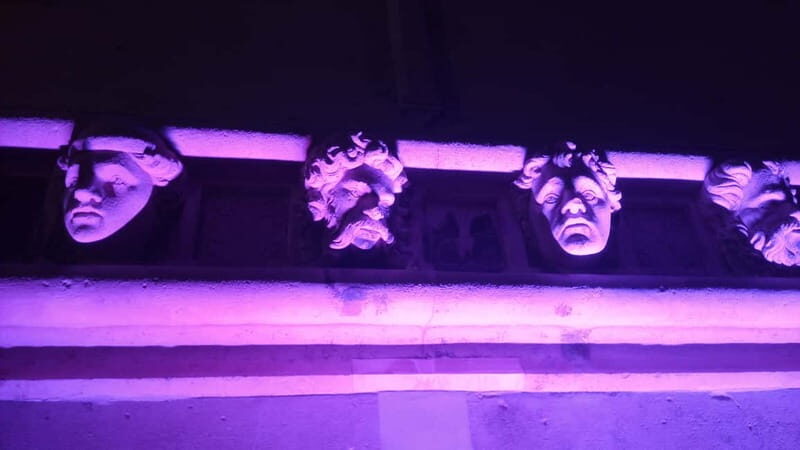
- Dark-street atmosphere on purpose: the route is designed for the unlit feel of the Middle Ages, not daytime sightseeing.
- Dario Mikulandra’s storytelling style: history is tied to street-level clues, not just lecture-style facts.
- Cathedral square + St. John’s reliefs: you’ll connect the cathedral of St. James with what people believed and built.
- The cistern with four wells: you’ll see how water collection worked and what it looked like underground.
- St. Lawrence monastery area and the cave-in-old-town stop: the old city gets more physical and less abstract.
- Short time, lots of named stops: multiple specific sites in 1 hour, with maps and brochures provided in your language.
Why a Night Walk Changes How You Read Šibenik
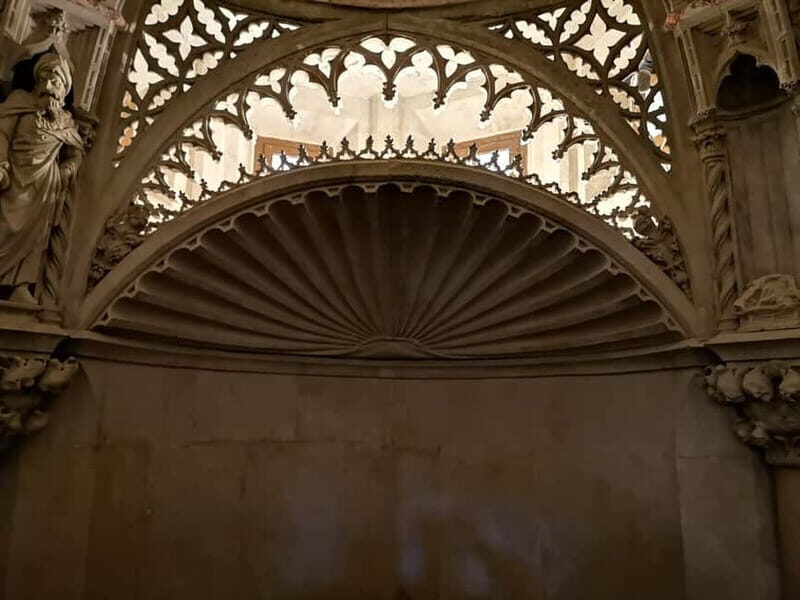
Šibenik is packed with history, but the difference here is timing. In daylight, you see stone. At night, you start to understand why those stones mattered. This tour is built around the idea that medieval streets were darker and narrower than what you’re used to—so you experience that feeling directly as you move through the old core.
That darkness also helps the stories land. The tour talks about why the cathedral’s light mattered during construction, how midnight on December 17 was greeted, and why all 72 bells were involved. Whether you’re religious or not, it’s the kind of detail that shows how public life revolved around sound, timekeeping, and shared rituals.
I also like the way the night route changes your pace. You slow down. You look up more often. You notice stairways you’d otherwise skip over, and you register that the old town wasn’t laid out for cars or even casual strolls. Add in covered passageways and tunnels, and the city becomes less like a postcard and more like a lived-in maze.
Two practical points that matter to your comfort:
- The tour includes a multitude of stairs, so good shoes matter.
- You’ll be walking in darker streets, so stay aware of uneven old-stone surfaces.
You can also read our reviews of more walking tours in Sibenik

Meeting at the Cathedral Portal (and the one detail people miss)
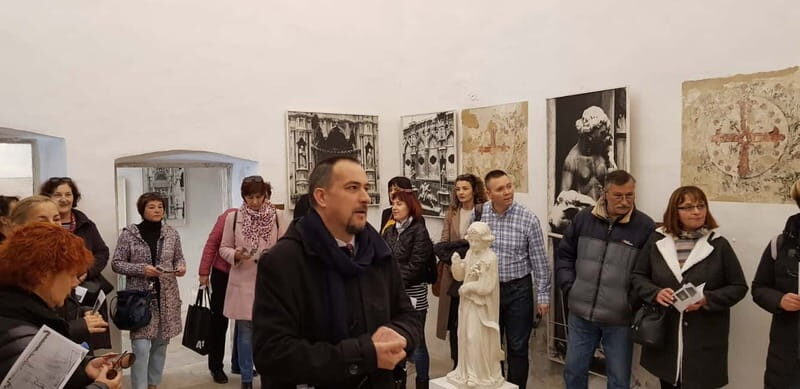
You meet at the main entrance-portal of the cathedral, the one facing west. It’s important: this is not the cathedral doors with lions. Look for the portal opposite the statue of Juraj Dalmatinac.
That choice isn’t random. Starting right at the cathedral entrance sets the tone for everything that follows. From the beginning, you’re primed to notice scale, the idea of long building projects (or at least the way people remembered them), and the relationship between the cathedral and the surrounding streets.
You’ll also be in good shape if you like structure during a short tour. The guide has a clear flow: cathedral square for the big architectural stories, then down into places tied to survival and daily life—like the cistern and covered passages—before working through the monastery area.
From a logistics standpoint, it’s straightforward:
- The tour runs for 1 hour.
- It’s offered in English, Croatian, and Serbo-Croatian.
- A live guide leads you in person, and you receive maps and brochures in your language.
If you’re trying to fit this into a first visit, this is the kind of tour that helps you later. When you walk the same streets the next morning, you’ll likely spot more meaning in the stonework and in why certain corners exist at all.
Cathedral Square, St. John Reliefs, and the 1895 First Lamp Moment

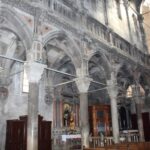
The heart of the walk is the cathedral area. You’ll spend time around cathedral square and hear how people understood the cathedral’s construction and its meaning to Šibenik. One of the tour’s recurring themes is time—was it built over a long span or in a record short burst? You’re not just getting an architectural overview; you’re getting the human logic behind how the city interpreted the work.
You’ll also connect the cathedral with nearby religious landmarks, including the church of St. John and the reliefs on it. This helps you stop treating the old town like a collection of separate buildings. Instead, the story shows how they functioned as part of one civic-spiritual world.
Then comes the “wait, really?” detail that I find makes history feel real: the tour includes the first public lighting lamp from 1895. That single stop gives you a strong contrast between medieval darkness and the later shift to public illumination. You start to understand why the tour’s night atmosphere is more than a gimmick.
If you’re thinking about the cathedral itself, here’s what you should listen for:
- How light was treated as a construction idea, not just something you enjoy visually.
- The way public celebrations were marked—especially December 17 and the ringing of all 72 bells.
- The stories attached to places in the square, so you’re not just staring at stone but reading it like evidence.
The cathedral zone is also where the tour’s pacing makes sense. It’s a good place to orient your bearings before the streets start twisting and tightening, and before you head into underground and semi-enclosed spaces.
The Medieval Cistern, Water Collection, and What Underground Teaches
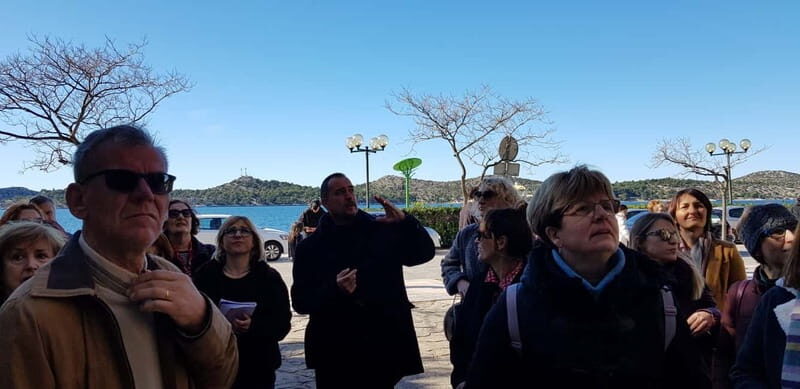
Then you move from sacred architecture to survival basics. The tour includes a stop at a medieval cistern with four wells. This is where the experience shifts from “look and listen” to “picture daily life.”
A cistern visit does two things well:
- It explains medieval priorities. Water systems weren’t background details; they determined how a city functioned.
- It gives you a physical sense of scale and design. You can compare the calm, practical engineering beneath the city to the louder symbolism above.
You’ll also get a guided explanation of what it looked like inside and how they collected water. Even if you’ve seen cisterns elsewhere, the value here is the way it’s tied to the specific medieval street life of Šibenik—how people moved, where they accessed resources, and how the city’s form served its needs.
And because this is a night tour, underground feels different. The contrast between dark stone spaces and open square light tends to make the stories stick. You start to feel why medieval cities were built to endure—before modern plumbing and before reliable daylight comfort.
If you’re the type who likes practical history, this cistern stop is one of the biggest reasons to book. It’s not just another church photo. It’s a key to how people lived.
The Oldest Street, Stair Towers, and the City’s Hidden Passages
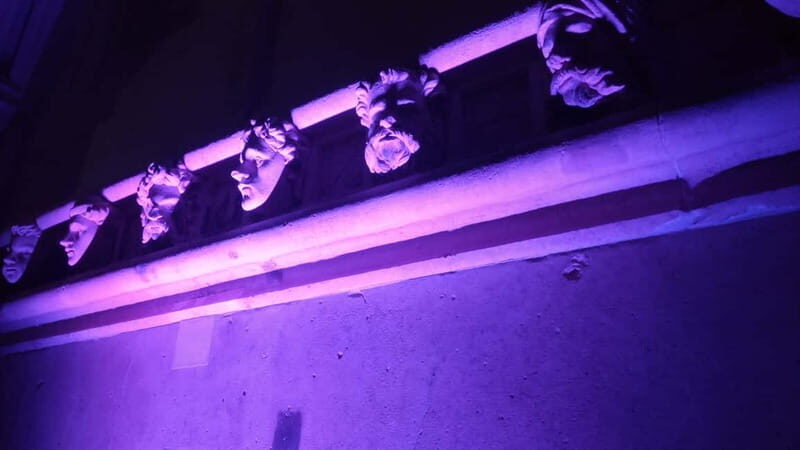
After the main cathedral focus, the tour heads deeper into the old town’s rhythm—narrow streets, stair-heavy routes, and passageways that feel almost secret. The tour includes the oldest street in the city and emphasizes how tight the layout is.
This is also where the tour leans into medieval imagination. You’ll hear where the pillar of shame was located, where cheaters escaped from the medieval fair, and how nuns prayed for the city in darkened monasteries. Those stories might sound dramatic, but they’re exactly the kind of details that help you understand a city’s social rules and fears.
You’ll also encounter the medieval cistern area logic continuing on the surface—covered passageways and tunnels that make Šibenik feel like it has internal weather systems. In other words: you’re not only walking through history, you’re walking through how the city was shaped to handle people, movement, and daily routines.
Two more specific stops add flavor to this section:
- The medieval sign of the Šibenik subway is part of the included route, giving you another “this city has its own map of underground life” moment.
- The tour also takes you by a chapel tied to local medicine: the chapel of the first Šibenik doctor from 1419.
Those aren’t random add-ons. They widen the frame beyond religion into civic life—health, rules, and how the city taught people what mattered.
For comfort, remember the route includes many stairs. If you’re traveling with older family members or anyone who needs smooth surfaces, wear shoes with solid grip and take it slow in the darker stretch.





St. Lawrence Monastery Area, the Cave-in-Old-Town Stop, and Craft Details
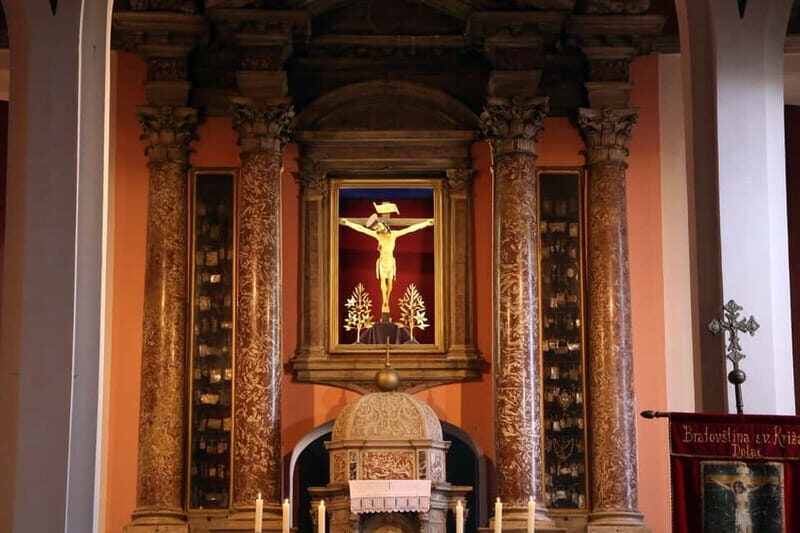
One of the highlights on this tour is the monastery of St. Lawrence area. You’ll visit this part of the old town, and the experience gets even more cinematic because of what’s around it—especially the stop described as a cave in the old town next to the monastery of St. Laurence.
I like this part because it’s not just “here’s a building.” You get a sense of how the monastery zone relates to the city’s physical structure—how people used the terrain, and how movement and shelter overlap in older cores.
You’ll also see how the city relates to religion and community life. The tour includes stories connected to nuns and darkened monastery spaces, keeping the theme consistent: medieval Šibenik wasn’t separated into neat categories. Spiritual life, civic order, and physical survival were intertwined.
Another included element is a look at the town’s crafts. The idea isn’t to turn the tour into a shopping stop. It’s to show that the city’s identity included work and skill, not only cathedrals and bells.
And you’ll get a few more “specific named-place” moments that add credibility:
- The tour includes time around the cathedral square for the view and construction story.
- It includes church-related elements like St. John and its reliefs.
- It includes the pillar of shame and other pinpointed legend sites—so you’re not just hearing general history.
Price and Value for a 1-Hour Medieval Walk ($29)
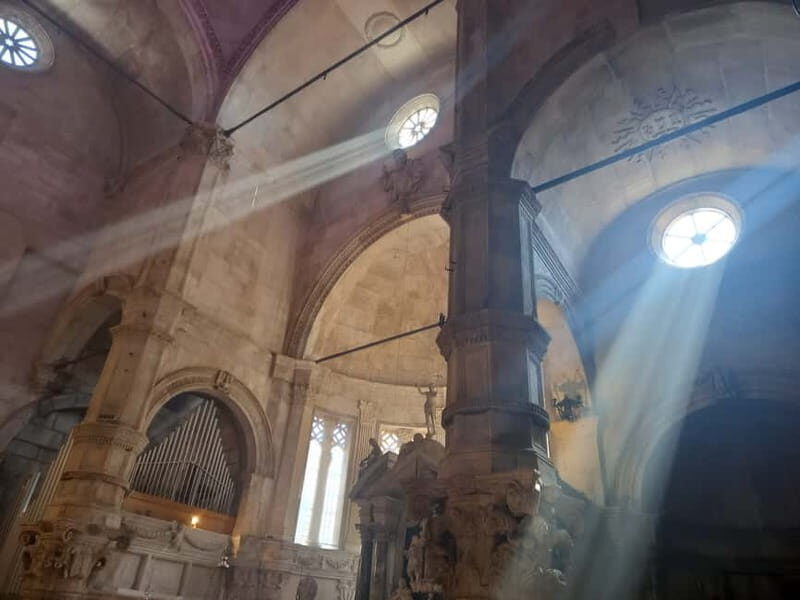
At $29 per person for a 1-hour night tour, the question isn’t just cost—it’s what you get per minute.
Here’s why it feels like good value:
- The tour packs multiple clearly named stops into a short timeframe: cathedral square, cistern with four wells, the oldest street, St. Lawrence monastery area, plus chapel and legend sites.
- You also get interpretive context. For example, the tour doesn’t only say what you’re seeing; it explains why certain details mattered—like the cathedral’s approach to light and the timing/bell story around December 17.
- No church or museum entrance fees are needed as part of this night-focused walk, so your ticket price stays tied to the guided experience rather than add-on admissions.
- You receive maps and brochures in your language, which is helpful if you’re trying to keep learning after the walk ends.
This tour also plays well with the rest of a trip. It’s a good “set the framework” activity early. Once you’ve heard the stories and seen the key spaces, it’s easier to make sense of Šibenik on your own.
Booking-wise, it’s designed for flexibility: you can reserve now and pay later, and free cancellation is offered up to 24 hours in advance.
If you want your evening in Dalmatia to be more than dinner and photos, this is a smart pick.
Who Should Book This Night Tour (and who might hesitate)
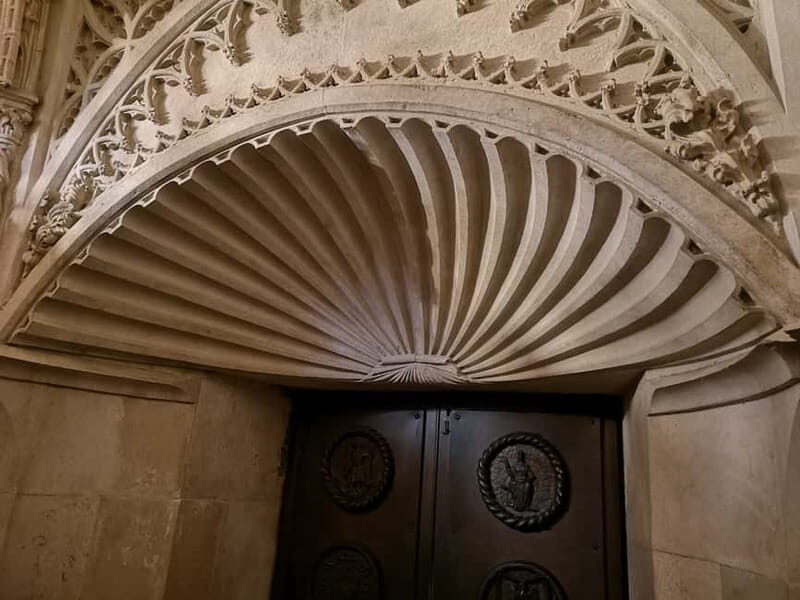
This tour fits best if you:
- like architecture and you want the stories behind it, especially around the cathedral.
- enjoy walking with a guide who connects sites to social life—public punishment, public timekeeping, and community rituals.
- want a short, high-impact activity that still feels like you saw something real.
It can also work well for families. The experience includes stories and landmarks that are lively, and at least one family found it enjoyable for kids—mainly because it’s a guided walk with a steady flow.
But you might hesitate if:
- you strongly dislike stairs and darker paths.
- you expect a quiet, leisurely stroll. This is more guided and story-driven than wandering.
Should You Book the Šibenik Medieval Night Walking Tour?
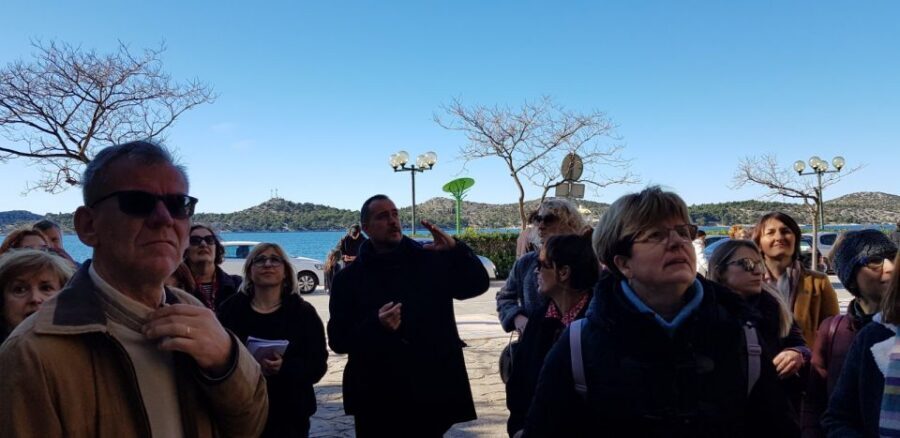
If you’re choosing between a daytime tour and a night experience, I’d lean night—especially in warm months. The city feels cooler and more comfortable under evening air, and the route’s whole point is to recreate the medieval mood with dark streets and enclosed passages.
Book this if you want a solid first framework for Šibenik: cathedral meaning, a real look at medieval water collection, and the old town’s stair-and-tunnel feel, all in one hour. It’s priced to be accessible, and the stop selection stays focused on the places that carry the city’s core stories.
Don’t book it if you’re looking for a short, easy flat walk. This one includes stairs and darker streets, so plan accordingly.
FAQ
How long is the Šibenik Medieval Night Walking Tour?
It lasts 1 hour.
Where is the meeting point?
Meet at the main entrance-portal of the cathedral, facing west, opposite the statue of Juraj Dalmatinac. It is not the cathedral doors with the lions.
What languages is the tour offered in?
The tour is available in English, Croatian, and Serbo-Croatian.
What stops are included on the tour?
The included stops cover the cathedral square, the medieval cistern of four wells, the oldest street, the monastery of St. Lawrence, the town’s crafts, the medieval sign of the Šibenik subway, the chapel of the first Šibenik doctor (1419), and the column of shame, among other points.
Are entrance fees included for churches or museums?
For this short night tour, there are no entrance fees for churches and museums.
Is the tour a walk only, or do you go into enclosed spaces?
You do more than outside walking. The route includes covered passageways/tunnels and a visit inside the cistern, plus stops connected to monastery and nearby cave-like old-town spaces.
Is there a way to book without paying right away?
Yes. You can reserve now & pay later. Free cancellation is also available up to 24 hours in advance.
If you want, tell me your travel month and who’s going (adults only, kids, any mobility concerns). I can help you decide if the night timing and stair-heavy route match your pace.