REVIEW · KORCULA
Korčula: Culture and History Walking Tour
Book on GetYourGuide →Operated by Travel Matters - putovanja na šestu · Bookable on GetYourGuide
Korčula’s streets have a pattern you can feel. This Culture and History Walking Tour is a compact way to grasp how Korčula Old Town works: you’ll trace the fishbone street layout and get up close to the storybook carvings inside St. Mark’s Cathedral. I also like that the guide doesn’t just point at sights. The tour ties the town’s design, building material, and power connections into one smooth walk.
The one catch is simple: the tour runs rain or shine. Old Town streets are narrow, so you’ll want comfortable shoes you can rely on if the weather turns.
In This Review
- Fishbone Streets, St. Mark’s Cathedral, and Venetian Clues
- Korčula Old Town in 60 Minutes: What This Walk Really Covers
- Starting at Land Gate: Your Quick Orientation into the Old Town
- Fishbone Streets and Narrow Lanes: How the Town Layout Becomes Clear
- St. Mark’s Cathedral in the Main Square: Carvings You Can See Properly
- Venetian Ties and the Marco Polo Story: Why Power Shows Up in Stone
- Local Life Details That Make History Feel Present
- Guides Matter: Tina and Bojana Set the Tone
- Price and Value for a Private 1-Hour Tour
- Who Should Book This Tour (and Who Might Not)
- Should You Book Korčula Culture and History Walking Tour?
- FAQ
- How long is the Korčula Culture and History Walking Tour?
- How much does it cost?
- Where does the tour start?
- What languages are available for the live guide?
- What should I bring?
- Does the tour run in bad weather?
- Is this tour suitable for kids?
- Is it wheelchair accessible?
Fishbone Streets, St. Mark’s Cathedral, and Venetian Clues
- Land Gate to the main square, so you start with clear orientation and end where the town energy concentrates
- The fishbone street pattern on the ground, not just a history lesson in the air
- St. Mark’s Cathedral with standout decorative carvings that look better the closer you get
- Secret corners and small streets, where the town’s 15th–16th century planning becomes obvious
- Local storytelling that answers real questions, with guides like Tina and Bojana earning top marks for pacing and detail
Korčula Old Town in 60 Minutes: What This Walk Really Covers
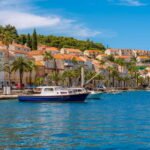
Korčula Old Town is a Gothic-Renaissance whole made from local limestone, and most of what you’re seeing comes from the 15th and 16th centuries. The fun part is that this tour is built to make that design readable in real time. You’re not trying to memorize dates while standing in one spot. You walk through the historical nucleus and watch the town structure unfold around you.
This is also a “whole town” experience in miniature. The route goes through the major beats of Korčula—then tucks into smaller lanes and lesser-seen corners—so you leave with a mental map, not just photos. Expect a fast pace for 1 hour, the kind where you feel like you’ve learned a lot without feeling rushed through key points.
And yes, it stays practical. Even details like cats hanging around the streets get folded into the local-life picture, which is part of what makes the tour feel grounded rather than museum-like.
You can also read our reviews of more walking tours in Korcula
Starting at Land Gate: Your Quick Orientation into the Old Town
The tour begins at the Land Gate, and that matters more than it sounds. Starting at a town threshold gives you a framework for everything else you’ll see: how Korčula is laid out, where circulation naturally flows, and why some streets feel more enclosed than others.
From there, you’ll move into narrow streets where everyday life is on display—laundry hung out to dry is specifically part of the atmosphere you’ll notice. That’s a clever way to break the spell of Old Town tourism. You’re not just “in history.” You’re passing through a place locals keep using.
You’ll also get guided context early on: the guide points out the town’s strategic position and connects it to the bigger story of why Korčula was built the way it was. In a one-hour format, that kind of early framing is the difference between random looking and real understanding.
Fishbone Streets and Narrow Lanes: How the Town Layout Becomes Clear
One highlight is the streets laid out in a fishbone pattern, and you’ll actually trace it with your feet. This is the kind of urban planning detail that becomes obvious once you’re walking it, because you can feel how side streets “branch” off from main lines.
When you walk that pattern with a guide, it stops being an architectural label and turns into a living system. You start understanding why certain streets bend, why crossings appear where they do, and how the town’s structure supports movement in a tight footprint.
The tour also takes you into secret corners. Even without a long stop list, that “in-between” wandering does real work. It shows you how the historical nucleus functions beyond the postcard streets. And since the route is designed to trace history little by little, you’ll usually get the explanation right as you’re looking at the urban feature the story is referring to.
Practical tip: keep your camera ready, but don’t let it hijack your walk. The best part is watching the layout make sense as you move.
St. Mark’s Cathedral in the Main Square: Carvings You Can See Properly
Then you reach the main square, where St. Mark’s Cathedral feels slightly compressed—like it’s squeezed into the heart of the town. That contrast is worth noticing: the square looks compact, and the cathedral’s presence becomes all the more striking because it’s not isolated. It’s embedded in the same streets and stone world you’ve been walking through.
The tour’s focus here is the cathedral’s decorative work—those gorgeous carvings are the moment many people slow down. Up close, the details matter: carved stone doesn’t feel like decoration when someone points out what to look for. You start seeing patterns, workmanship, and how the aesthetic fits the Gothic-Renaissance whole of the Old Town.
This stop is also a useful anchor for your memory. Once you have the cathedral framed in your mind, the rest of the streets you walked on the way there become easier to place afterward.
If you’re the type who loves to read architecture like a map, this cathedral moment delivers more than a quick photo stop.
Venetian Ties and the Marco Polo Story: Why Power Shows Up in Stone
Korčula formed part of the Republic of Venice, and the guide uses that connection to explain more than politics. You’ll learn how control and influence can show up in the built environment—how towns like this get shaped by who holds power and what kind of stability they want.
And then there’s the Marco Polo angle. The tour tells the story that Marco Polo, a celebrated Venetian, was born in Korčula, a claim that can sound unbelievable until the guide lays out the connection in a clear, story-first way. Whether you come in skeptical or fully bought in, the guide’s job here is to give you the reasoning and context so the tradition lands better than a random trivia fact.
For me, the value isn’t whether you already accept the story. It’s the way it turns history into something specific to Korčula. You’re not just learning that Venice existed. You’re learning how Korčula’s identity got tied to a larger Adriatic world.
You can also read our reviews of more historical tours in Korcula
Local Life Details That Make History Feel Present
The tour isn’t only stone and dates. It includes small touches that help you feel like you’re walking through a place that still lives.
Cats are explicitly part of the experience—so yes, you’ll see cats around the Old Town. It sounds funny, but it works. When a guide mentions cats as part of the reality of Korčula, it nudges you to stop viewing the town as a stage set and start viewing it as a town where people and animals share the same tight streets.
You’ll also hear about where the limestone came from. “Carved out of local limestone” isn’t just a material detail here; the guide connects the town’s construction to the practical side of how resources were hauled and used. That kind of explanation makes the stonework feel earned, not magical.
And the overall approach—moving, explaining, pointing, then moving again—keeps the experience lively. One review described it as a complete tour without dead time, and that matches the feel of this 1-hour format. You’re always in motion with fresh context.
Guides Matter: Tina and Bojana Set the Tone
The reviews put the spotlight on guides, and it’s easy to see why. People praised Tina for being amazing, interesting, and informative, and they thanked her directly for making the content land. Others highlighted Bojana as passionate about the island and its culture, with detailed storytelling that covered battles, laws, architecture, and daily life—plus quick answers to questions.
That “answer your questions” part matters for a short tour. In 1 hour, you can’t afford long pauses of uncertainty. A guide who can respond in the moment turns your curiosity into part of the lesson rather than something you save for later.
You’ll also notice that the best feedback isn’t about fancy delivery. It’s about clarity, personality, and local depth. That’s what you want in a town-walk format.
Price and Value for a Private 1-Hour Tour
At $70 per person for a 1-hour walk with a licensed local guide, the question is value: are you paying for time, or for transformation?
Here, the “transformation” is the ability to leave with a coherent sense of Korčula’s layout and historical narrative. Most short tours fail when they become a highlight reel—quick stops, quick photos, then back out. This one is structured to do more: starting at Land Gate, tracing the fishbone streets, guiding you into secret corners, then anchoring you at St. Mark’s Cathedral and connecting what you see to Venice and the Marco Polo story.
Because it’s a private group, you’re also more likely to get your questions answered in a way that matches your pace. In a one-hour format, that personalization can be worth real money. If you’re the type who likes to ask “why is it like this?” rather than “what is it?”, you’ll probably feel the value quickly.
If you want a slow, sit-down museum-style visit, this tour may feel like a quick course. But if you want a fast, guided way to understand the Old Town you’re already standing in, it’s good value.
Who Should Book This Tour (and Who Might Not)
This tour suits you if:
- You want to learn the layout of Korčula Old Town on foot, not just view landmarks
- You like a guide who tells stories that connect power, architecture, and everyday life
- You’re short on time and still want a meaningful walking introduction
It may not suit you if:
- You need long stops for cathedral-style lingering (this is a 1-hour walk)
- You’re traveling with children under 14, since it’s not suitable for that age group
- You use a wheelchair, since it’s not suitable for wheelchair users
And one more reality check: comfortable shoes are a must. Narrow lanes and old stone aren’t forgiving on tired feet.
Should You Book Korčula Culture and History Walking Tour?
I’d book it if you want to understand Korčula Old Town quickly, with a guide who can keep the pace moving while still explaining the key ideas. The standout strength is the combination of urban planning details (that fishbone street layout), a concrete architectural anchor (St. Mark’s Cathedral), and story-driven context (Venice and the Marco Polo connection). Add in the consistently strong guide feedback—Tina and Bojana in particular—and you get the kind of 1-hour experience that leaves you feeling oriented and impressed, not overwhelmed.
If you’re expecting a slow, deep cathedral-only visit, or you need accessibility-friendly routing, you’ll be happier choosing a different format. Otherwise, this is one of the smarter ways to spend an hour in Korčula when you care about seeing the town with your brain switched on.
FAQ
How long is the Korčula Culture and History Walking Tour?
The tour lasts 1 hour.
How much does it cost?
It costs $70 per person.
Where does the tour start?
It starts at the Land Gate, and the meeting point may vary depending on the option booked.
What languages are available for the live guide?
The live guide is available in English, French, and Portuguese.
What should I bring?
Bring comfortable shoes.
Does the tour run in bad weather?
Yes. The tour takes place rain or shine.
Is this tour suitable for kids?
No. It is not suitable for children under 14 years.
Is it wheelchair accessible?
No. It is not suitable for wheelchair users.