REVIEW · KORCULA
Lumbarda: Half-Day Kayaking and History with Wine delight
Book on GetYourGuide →Operated by Spirit of Korkyra · Bookable on GetYourGuide
Wine, deer, and sea kayaks in five hours. This half-day outing off Lumbarda mixes quarry history with quiet paddling between small islands, ending with wine and sweets. It’s not just sightseeing from shore; you’re out on the water, with plenty of chances to pause, swim, and soak up the calm.
I love the food part: a glass of local GRK white wine plus homemade Klašun pastries that are made to taste like Korčula, not like a tourist package. I also like the Badija stop, where the tour walks you through a 14th-century Franciscan monastery and gives you a good shot at seeing wild deer roaming the island.
One thing to think about: it’s not listed as suitable for people with mobility impairments. You’ll be in sit-in sea kayaks for the main part of the experience, plus you’ll walk on the islands during the monastery and deer segment.
In This Review
- Key points before you go
- Why this Lumbarda kayak tour feels different
- Getting to the start: Tatinja Bay in Lumbarda
- What’s provided on the water (and why it helps)
- The kayaking route: calm islands, short stretches, real breaks
- Stop 1: the old quarries around Lumbarda and Vrnik
- Stop 2: Badija island and the 14th-century Franciscan monastery
- Wild deer on Badija: the moment that lands softly
- The end break on a deserted island: GRK wine and Klašun
- Swim time: how flexible this day really is
- Guides that make it feel personal (Boris and Andre)
- Price and value: is $81 worth it?
- Who this tour suits best
- Logistics that help your day run smoothly
- Final verdict: should you book the Lumbarda half-day kayak and history with wine?
- FAQ
- How long is the kayaking and history tour?
- Where do we meet for the tour?
- What’s included with the kayaking?
- What food and drink are included?
- Which sites and islands does the tour visit?
- How big are the groups?
- Is it suitable for people with mobility impairments?
Key points before you go
- Tatinja Bay launch: meet in Tatinja Bay, near restaurant Feral, with easy walk-in access from Lumbarda.
- History you can feel: you pass old quarries, from ancient times through later quarrying traditions on Vrnik.
- Badija monastery + deer: a 14th-century Franciscan site and a real chance to see wild deer on the island.
- Short, manageable paddles: the pace is built around breaks, with time to swim when the group wants it.
- Wine and sweets included: GRK wine and Klašun pastries, plus homemade sage juice for kids.
- Small groups (max 10): you get hands-on guidance from the guide and helper team.
Why this Lumbarda kayak tour feels different
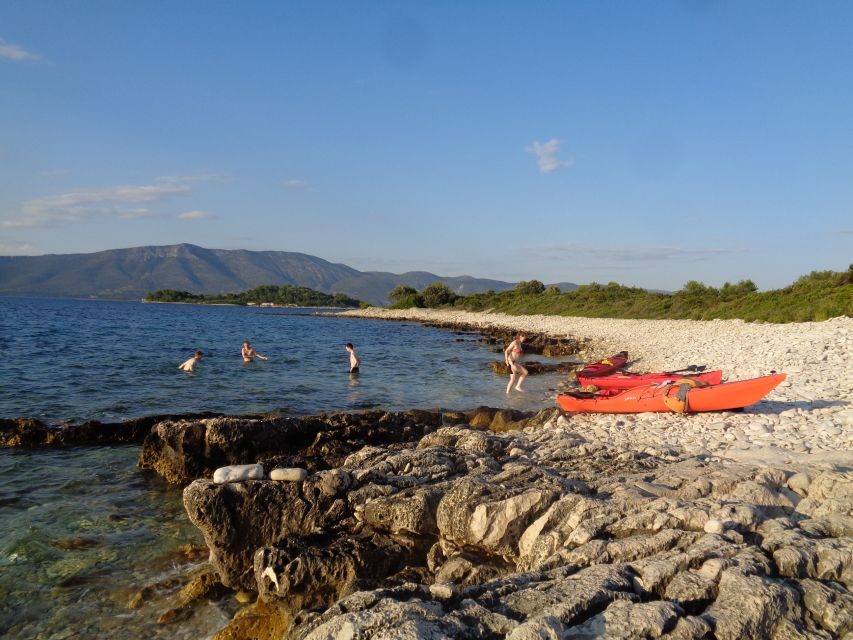
Most kayak days in Croatia turn into a long loop with quick stops. This one is shaped more like a day with chapters. You start in Tatinja Bay, then shift between nature and human history: quarries, a monastery, and finally a deserted island break where the tour slows down on purpose.
The value is in how many “sides” of the place you get in just 5 hours. You get sea time, walking time, and tasting time—plus a guide who connects the dots between rock, people, and local food.
And yes, the wine and pastries aren’t an afterthought. They’re timed for the end of the paddling part, when you’re ready for a reward and a view that doesn’t need words.
You can also read our reviews of more historical tours in Korcula
Getting to the start: Tatinja Bay in Lumbarda
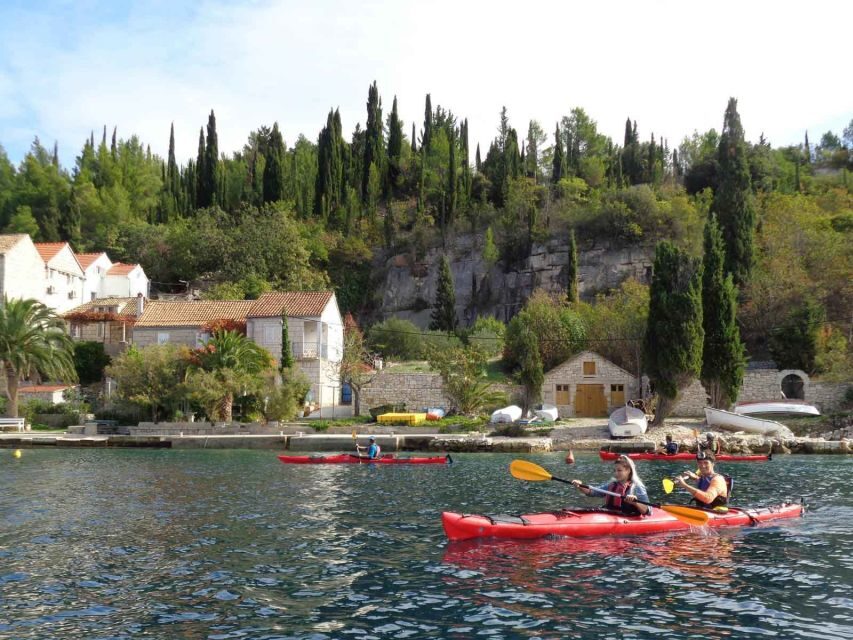
Your meeting point is in Tatinja Bay in Lumbarda, near restaurant Feral. It’s about a 3-minute walk from the center, so you’re not stuck with a complicated “transfer” before you even launch.
If you’re driving, you can park close to kayak storage directly in Tatinja Bay. If you’re using public transport, you can reach Lumbarda by bus or taxi. Once you arrive, it’s a short walk and then you’re on the water.
Why this matters: with sea tours, timing is everything. A close meeting point reduces stress, and it gives you more energy for paddling and the island walks.
What’s provided on the water (and why it helps)
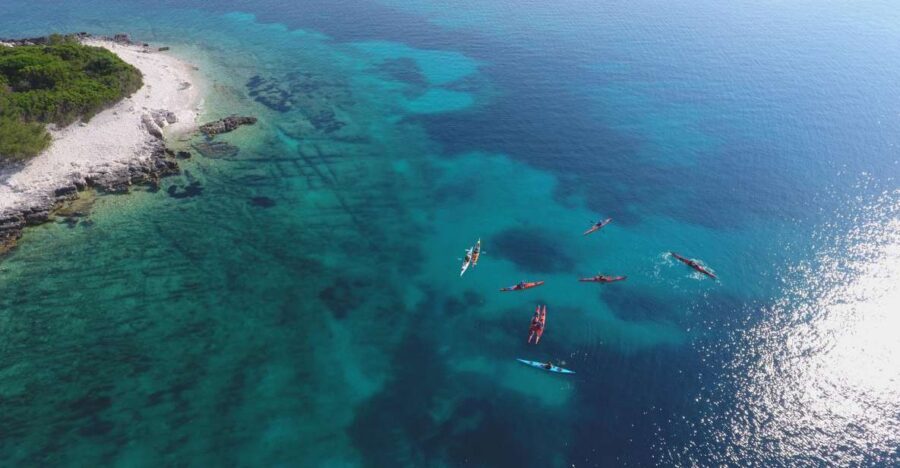
You don’t just get a kayak and a hope. The tour includes the full basic setup: sit-in sea kayaks, paddles, a personal floating device, a dry bag, and a spray skirt.
That kit makes a real difference if you’re new to kayaking or you’re not sure what the “right” clothing is. The dry bag helps you keep your phone and essentials safe from splashes. The spray skirt (where used) helps you stay drier in choppier moments.
Also, you go out as a small group—limited to 10 participants. That size keeps the guide’s attention practical, not stretched thin.
The kayaking route: calm islands, short stretches, real breaks
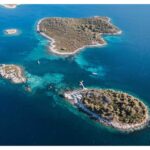
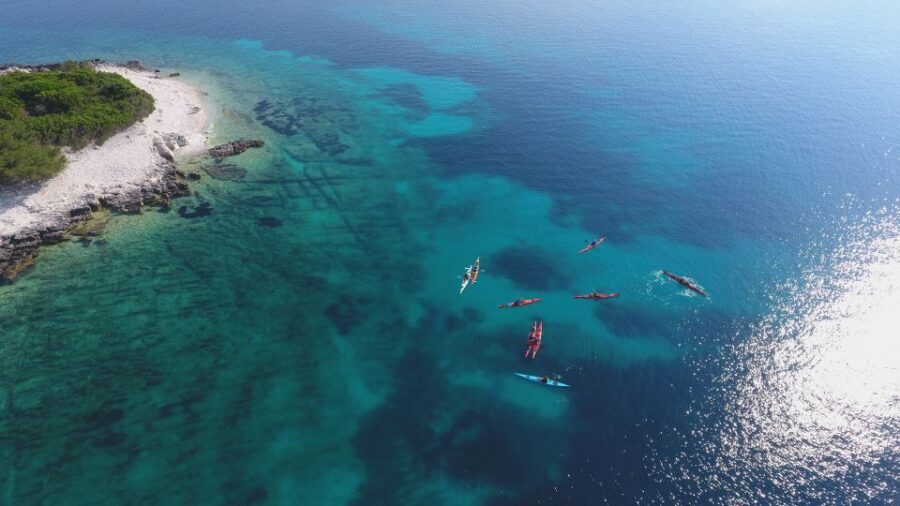
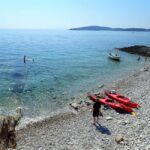
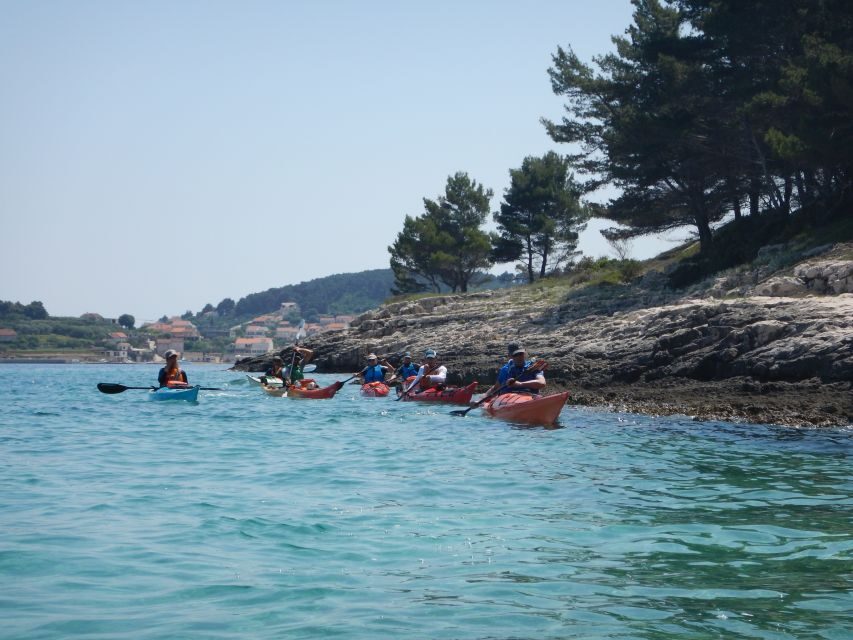
You’ll paddle around the little islands in front of Lumbarda. The rhythm is the point: several island-to-island segments, then time to regroup.
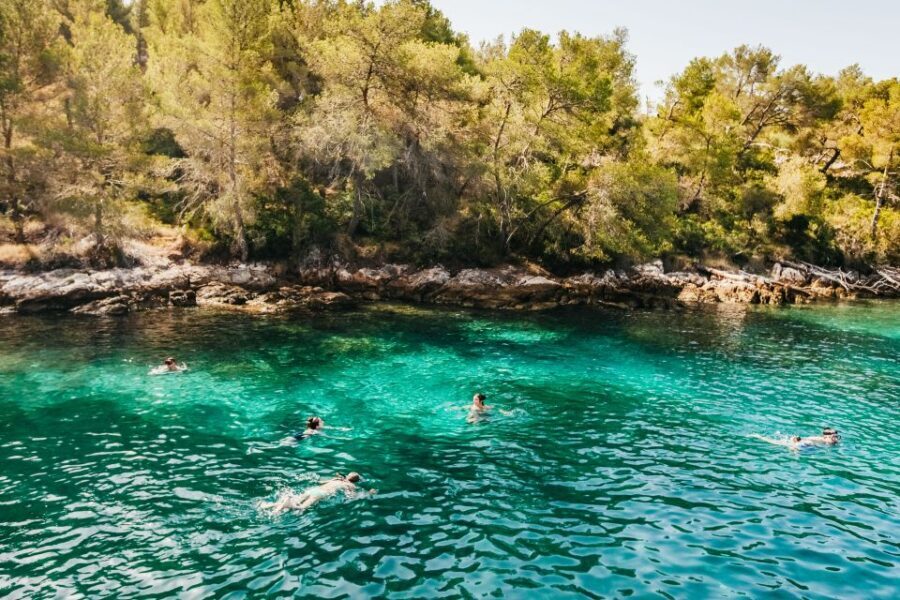
From what the tour pace tends to feel like in practice, plan for paddling that’s broken into manageable chunks—short enough that you stay comfortable, long enough that you’ll feel you did something active. The tour also allows relaxation and swimming breaks depending on what the group wants.
So you’re not in a race. You’re moving, stopping, and moving again—like island hopping, but with your own legs doing the propulsion.
A practical note: even if you’re a confident swimmer, treat the water as part of the activity. Wear what you’d wear for being on the sea, not just for a stroll. You’re also likely to get splashed, so plan for that.
Stop 1: the old quarries around Lumbarda and Vrnik
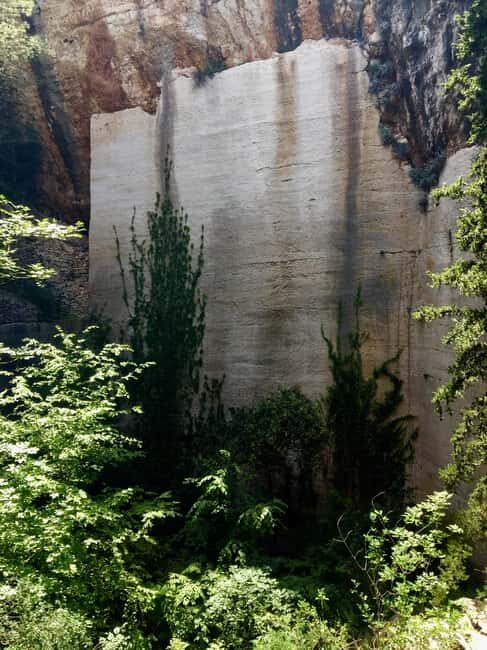
One of the most compelling parts of this tour is how it uses the water route to tell quarrying history. You’ll see old quarries dating from antiquity, then later quarrying areas on Vrnik, showing how quarrying traditions continued over time.
Why quarry sites work so well on a kayak: they’re not trapped behind fences or museum glass. You view them from the sea approach, with the island context still intact—rock, coastline, and the places where materials were extracted long before modern industry.
You’re not just looking at “ruins.” You’re seeing the physical landscape of work—stone shaped and used across generations. It’s one of those history stops that feels grounded, not abstract.
You can also read our reviews of more wine tours in Korcula
Stop 2: Badija island and the 14th-century Franciscan monastery
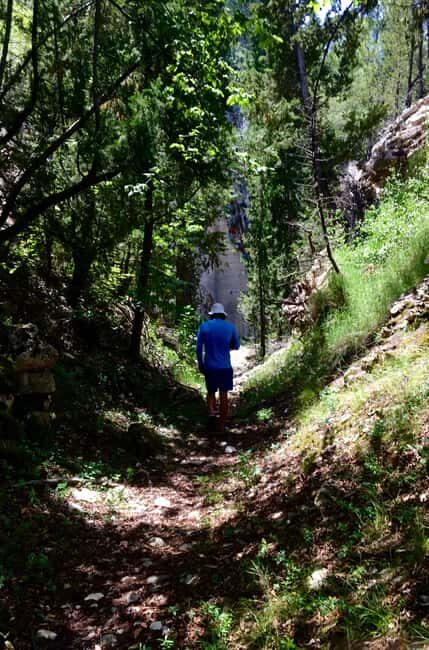
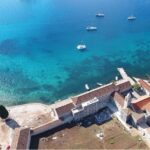
Then comes Badija, and the vibe shifts from work-history rocks to a quieter island walk. The tour visits an old Franciscan monastery on Badija that dates back to the 14th century. The site has had a turbulent past, but the beauty stayed.
You take a walk on the island to explore the monastery. This isn’t a fast drive-by. You get time to look around and read the feel of the place: stone buildings, open space, and an island that feels lived in by nature more than by people.
Wild deer on Badija: the moment that lands softly
Badija isn’t only a monastery stop. It’s also where the tour gives you a real chance to meet the island’s wild deer.
This is one of those details that sounds cute in a brochure, but it’s better in person. On a small island, deer sightings feel like a calm surprise rather than a staged event. You’re outside, walking slowly, listening more than rushing.
If you want that best chance, keep your pace steady and avoid big sudden motions. Let the island be the island.
The end break on a deserted island: GRK wine and Klašun
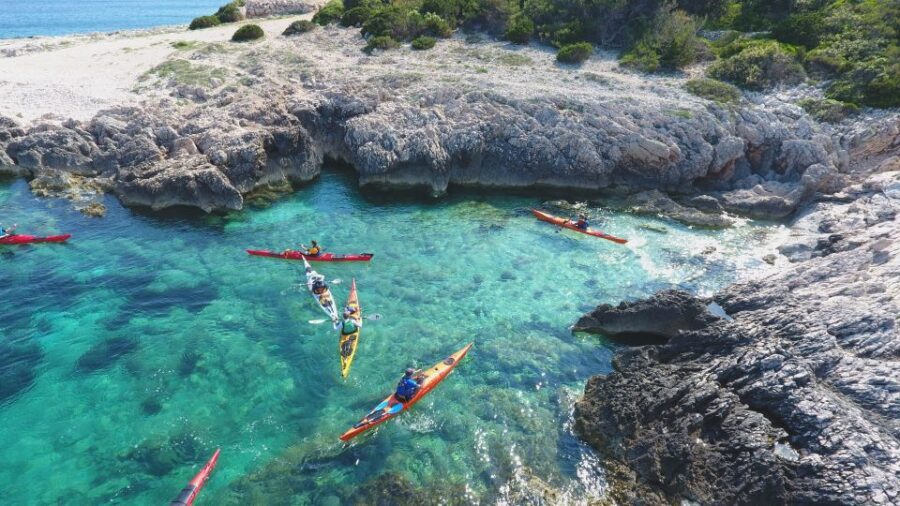
At the very end, you get a break on a deserted island. This is the payoff for all that paddling and walking: a chance to fully relax, with time to enjoy the setting without crowds pushing the schedule.
Food and drink are part of the plan. The tour serves GRK white wine from Lumbarda and homemade Klašun pastries native to Korčula town. Kids get homemade sage juice, too—small touch, but it matters if you’re traveling with family.
This is a smart timing choice. You’re not eating right as you’re launching or scrambling to keep the group together. You reach the final stop ready to slow down, taste, and stay awhile.
Swim time: how flexible this day really is
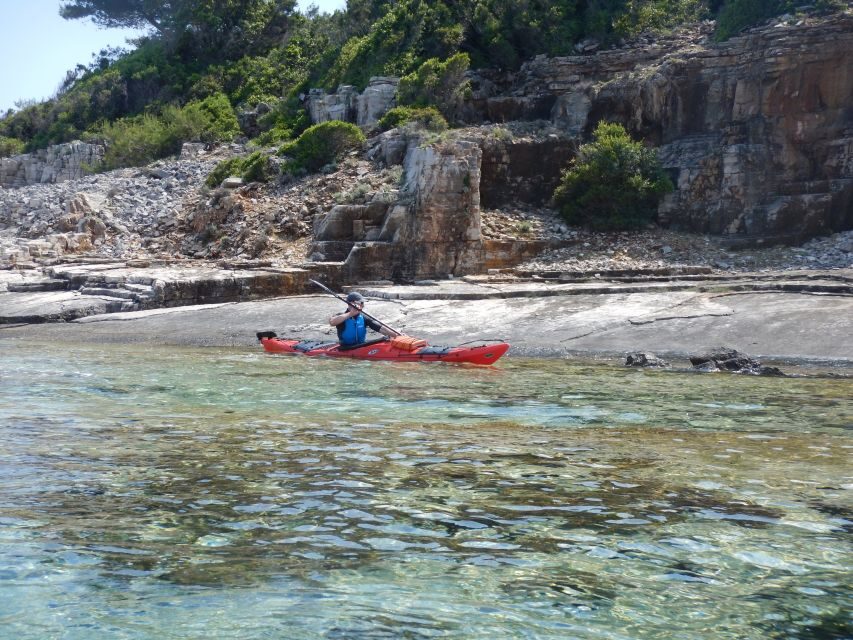
You get built-in flexibility for relaxation and swimming breaks, depending on group wishes. That means you can lean into the sea time if you want it, or keep it lighter if you’d rather just enjoy the views and then recover with the included snacks and wine.
If you’re deciding whether to bring swim gear, think about your comfort level. With the equipment provided and the emphasis on breaks, the tour is set up so swimming is optional, not mandatory.
Guides that make it feel personal (Boris and Andre)
This tour stands or falls on the guide. In this case, the guide team is a big reason people rate it so highly.
You may go out with Boris as the main guide, and Andre as the helper. Both are described as attentive and invested in the area’s story, with history woven into the route rather than presented as a lecture. Guides also tend to share practical ideas about Korčula—like where to eat—because they know what locals prefer over what brochures push.
Language coverage is also a plus: live guiding is offered in Bosnian, Croatian, English, and Serbo-Croatian.
If you like tours where you can ask questions and get real answers, this style is a good match.
Price and value: is $81 worth it?
At $81 per person for a 5-hour outing, you’re paying for more than “kayak time.” You’re getting:
- a guide and small-group attention (max 10)
- sit-in kayaks plus full safety gear
- dry storage (dry bag) and spray skirt
- stops that combine quarries, a monastery, and wildlife
- included tastings: GRK wine and Klašun pastries
- a family-friendly drink option: homemade sage juice for kids
On paper, it’s a fair price for a packaged half-day with equipment and food already handled. The real value is how the inclusions match the experience theme. You’re not paying extra once you’re out there. And the tasting feels like it belongs to the route, not like a separate tourist activity stapled onto a kayak ride.
If you’re the type of traveler who hates adding up costs mid-day, this tour is the kind where the math stays simple.
Who this tour suits best
You’ll likely enjoy this most if you want:
- a mix of outdoor time and walking time
- a calm pace with swimming options
- local food and wine that’s connected to the place (GRK, Klašun)
- a small group that doesn’t feel like a cattle line
It’s also a solid “first kayaking day” option for people who want guidance. The guide and helper setup matters here, especially when you’re learning how to handle a sit-in sea kayak and adjust your comfort level.
Who should reconsider: if you have mobility limitations, the tour is not listed as suitable for people with mobility impairments.
Logistics that help your day run smoothly
Here are a few practical pointers based on how the tour is set up:
- Plan to meet at Tatinja Bay and arrive a bit early so you’re not rushing when gear is being checked.
- Wear clothing that’s fine with saltwater and splashes.
- Bring essentials you don’t want to get wet; you’ll have a dry bag, but it’s still smart to travel prepared.
- Expect a day that alternates between paddling and stops. If you hate any amount of walking on islands, you’ll want to think carefully.
Because the tour allows group-dependent swim breaks, being flexible helps. This isn’t a rigid, clockwork day where you’ll be out of the water no matter what.
Final verdict: should you book the Lumbarda half-day kayak and history with wine?
I’d book this if you want a Korčula-area day that feels local, not generic. The combination is strong: quarries on the water, a 14th-century Franciscan monastery walk on Badija, a deer chance, and then the payoff of GRK wine and Klašun pastries on a quiet island.
Skip it if kayaking is a hard no for you, or if mobility needs make island walking and being on the water unrealistic.
If you’re on the fence, here’s the simple test: do you want a tour where the food is part of the story, and where the route includes real stops instead of only paddling past a few points? If yes, this one is a high-probability win.
FAQ
How long is the kayaking and history tour?
The tour lasts 5 hours.
Where do we meet for the tour?
The meeting point is in Tatinja Bay in Lumbarda, near restaurant Feral.
What’s included with the kayaking?
You get sit-in sea kayaks, paddles, a personal floating device, a dry bag, and a spray skirt.
What food and drink are included?
You’ll receive a glass of GRK white wine and traditional Klašun pastries. Kids also get homemade sage juice.
Which sites and islands does the tour visit?
The tour includes old quarries (including ones on Vrnik), a Franciscan monastery on Badija, time to see wild deer on Badija, and a break on a deserted island at the end.
How big are the groups?
The tour is a small group limited to 10 participants.
Is it suitable for people with mobility impairments?
No. The tour is not suitable for people with mobility impairments.