REVIEW · PULA
Pula Essentials Walking Tour
Book on GetYourGuide →Operated by SG Turist · Bookable on GetYourGuide
Pula teaches its history fast, if you know where to look. This 90-minute walking tour in Pula links Roman engineering with later Venetian, Austrian, and modern Croatian influences through key sights you can actually see on foot. I like that it starts outside the busiest highlights and builds toward the Forum area, so you’re not constantly backtracking.
Two things I really like: the guide-led pace is built for asking questions, and you get practical guidance for what to do next (where to eat, where to drink, and how to spend your free time). The only real consideration is that the Pula Amphitheater is shown from the outside, and entrance tickets aren’t included—so if you want inside, you’ll need a separate plan.
In This Review
- Key Stops You’ll Walk Past or Into (and Why They Matter)
- Pula in 90 Minutes: what this walk really gives you
- Tito’s Park meeting point: find it easily and start with the right vibe
- Pula Arena: seeing the Amphitheater from the outside (and what to watch for)
- Twin Gate and Gate of Hercules: Roman gateways with a purpose
- Giardini: a small pause that keeps the walk human
- Arch of the Sergii and Ulica Sergijevaca: Roman details on everyday streets
- Forum and Temple of Augustus: where the city’s civic story takes center stage
- Riva at sunset: the view shift that makes the tour feel worth it
- Pula Cathedral: the story keeps going past Rome
- Drop-off points: Tito’s Park or Forum means less hassle later
- The guides: what makes this tour feel personal
- What the tour helps you do after: food, drinks, and nightlife plans
- Pace and group feel: when 90 minutes is a strength
- Price and value: is $34 fair for what you get?
- Who should book this Pula Essentials walking tour?
- Should you book this tour
- FAQ
- FAQ
- How long is the Pula Essentials Walking Tour?
- Where does the tour start?
- Is the tour in English?
- Are entrance tickets included?
- Will I go inside the Pula Amphitheater?
- Is the tour wheelchair accessible?
- What happens if too few people book for the tour?
Key Stops You’ll Walk Past or Into (and Why They Matter)
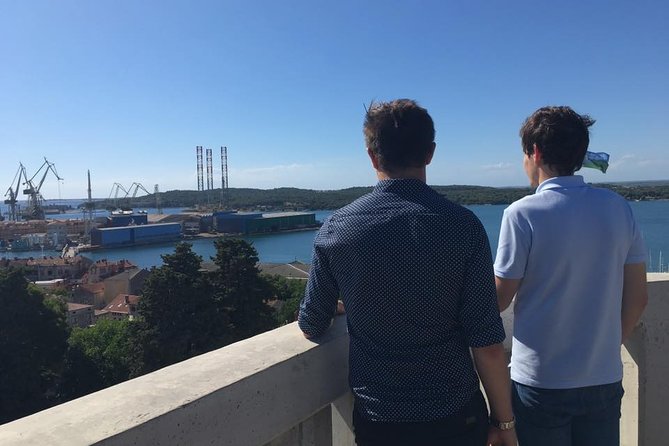
- Tito’s Park start: a clear meeting point with a cast model and a quick warm-up.
- Pula Arena (outside only): a Roman coliseum view without the ticket hassle.
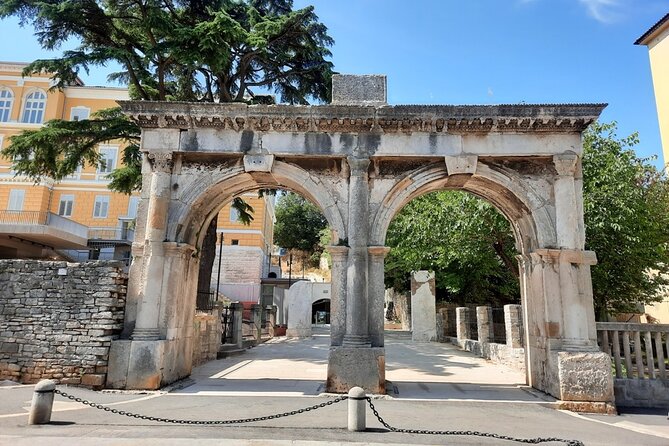
- Twin Gate and Gate of Hercules: defensive and ceremonial gateways that show the city’s power mood.
- Arch of the Sergii and Ulica Sergijevaca: the Roman overlay on everyday streets.
- Forum and Temple of Augustus: where civic life and imperial symbolism met.
- Riva at sunset and Pula Cathedral: a smoother shift from stone empire to lived-in city.
Pula in 90 Minutes: what this walk really gives you
Pula is one of those cities where the stones do a lot of talking. You’ll notice it most when you stop trying to memorize dates and start tracing cause and effect: who ruled, what they built, what they repurposed, and what stayed part of everyday life.
This tour is a classic good-for-first-time approach. In about 90 minutes, you get a guided route through the Roman core and then a thread that carries you through the later eras that shaped what Pula feels like today. It’s not a museum day. It’s a “get your bearings fast” day, with context you can carry into your next meal, your next walk, and your next conversation.
If you’re the type who enjoys a tight route, this works well. And if you’re not, the tour helps you by keeping the stops practical and the explanations tied to what’s right in front of you.
You can also read our reviews of more walking tours in Pula
Tito’s Park meeting point: find it easily and start with the right vibe
The tour meets at the top of Tito’s Park, across the street from a big Anchor. Look for a cast model of the city with a tiny fountain—this is your visual landmark.
That detail matters more than it sounds. In old-town areas, meeting points can turn into a scavenger hunt. Here, you get something you can spot quickly, even if you’re arriving slightly warm and out of breath.
Also, starting at Tito’s Park sets the tone. You begin with an easy orientation before you move into the denser Roman core. That makes the later stops feel more logical rather than random.
Pula Arena: seeing the Amphitheater from the outside (and what to watch for)
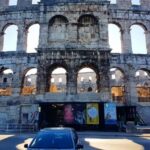
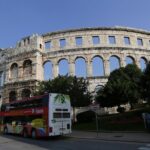
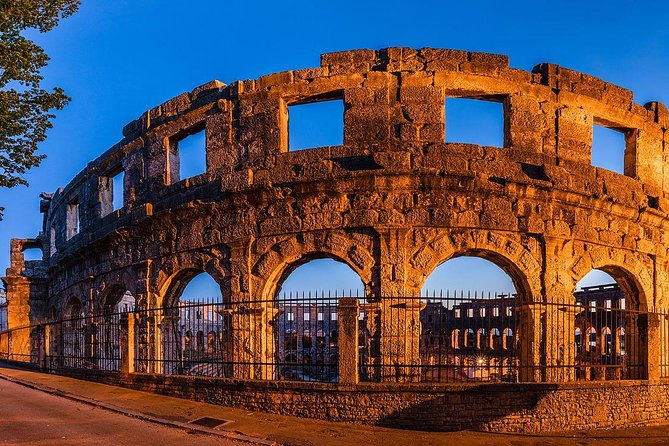
One of the first big moments is Pula Arena. You’ll spend about 20 minutes sightseeing, and yes, you only see it from outside.
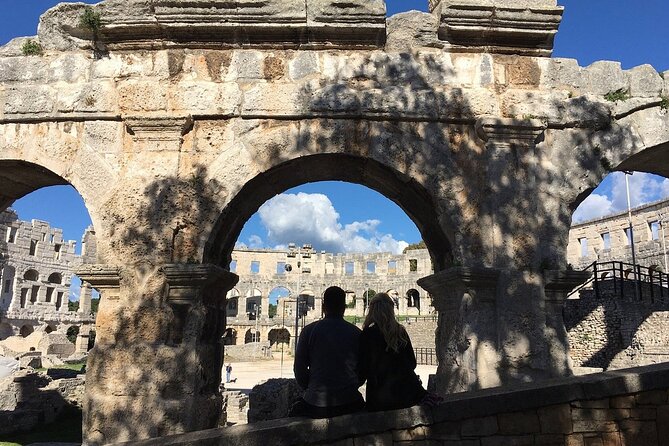
That might sound limiting, but it can actually be a smart way to start. From the outside, you can focus on mass and proportion—how the arena dominates the surrounding area and how the city’s urban fabric wraps around it. You also avoid spending your tour time lining up for an entrance ticket when your main goal is orientation and story.
A simple way to get more from the outside view: take a moment to look at the arena as part of the skyline you’ll keep seeing throughout Pula. It’s a useful reference point for your own navigation later.
If you decide you want to step inside, plan that separately. Entrance tickets aren’t included, and the tour is designed for the city walk rather than a timed interior visit.
Twin Gate and Gate of Hercules: Roman gateways with a purpose
Next up are the Twin Gate and the Gate of Hercules. These stops are short, but they’re the kind of short that teaches you how to look.
Gates aren’t just pretty stone. They’re control points. They mark boundaries, show power, and signal how people expected movement to happen. When you stand near them with a guide explaining the role of Roman design—civic pride, military logic, and ceremonial flow—you start noticing how the city functioned rather than only what it looked like.
If you like photos, this is also a good zone for them. Gates frame views. You can catch strong angles without needing elaborate photography gear.
Giardini: a small pause that keeps the walk human
You’ll move through Giardini for about 10 minutes. This is one of those intermissions that helps you reset before the tour gets more concentrated around the Roman monuments and civic center.
Even without extra “ticket” sights, this kind of breathing space matters. It keeps your brain engaged. You’ll still be learning, but you’re not forcing yourself to process every minute as a high-stakes landmark stop.






Arch of the Sergii and Ulica Sergijevaca: Roman details on everyday streets
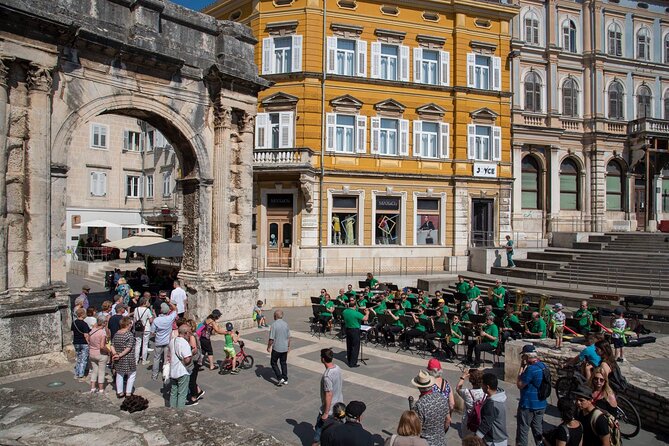
Then comes the Arch of the Sergii, followed by a walk along Ulica Sergijevaca. This is where Pula shifts from “monument viewing” to “city walking with meaning.”
Roman arches and streets can feel the same as any historic postcard if you only glance. With a guide, you’ll notice how Roman design influences circulation—how people moved, where attention was directed, and why certain spots became natural meeting points.
A nice bonus of these street sections: they make it easier to ask questions. If something feels confusing—why something is positioned where it is, or what survived from one era into another—you can usually get a quick answer while you’re still standing in place.
Forum and Temple of Augustus: where the city’s civic story takes center stage
The Forum stop is a key one. You’ll also visit the Temple of Augustus. The walk between them is brief, which is great because it keeps the relationship clear.
This is where you learn to read the city like a system. In Roman planning, civic areas weren’t just for government. They were for identity. The Temple of Augustus, in particular, helps connect imperial power with daily life—so you understand why rulers cared about stone, sightlines, and public space.
If you enjoy “why this matters” explanations, this part delivers. You’re not just hearing what happened. You’re connecting how the built environment shaped what people did, where they gathered, and how the city framed authority.
Riva at sunset: the view shift that makes the tour feel worth it
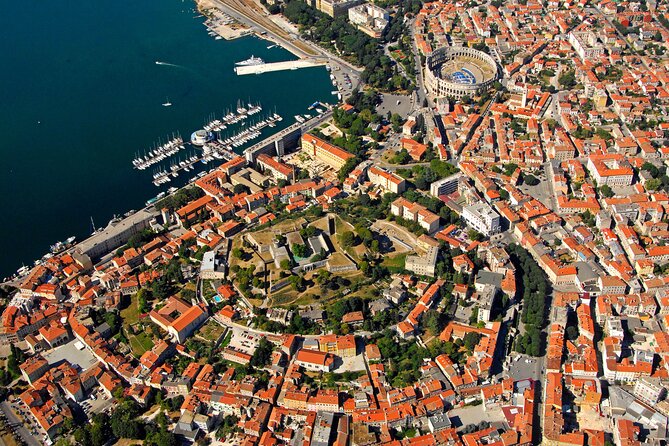
One of the more memorable timing choices is Riva for a walk and sunset (about 10 minutes). You’re moving from the Roman civic core into a more lived-in atmosphere, and the sunset element helps you see the city as a place, not a timeline.
Even if you don’t care about sunsets, this stop is still valuable because it softens the tour. After concentrated history, you get a change of pace that makes it easier to enjoy the city on your own afterward.
If you’re a “walk it at golden hour” person, you’ll appreciate the way this section gives you a visual payoff.
Pula Cathedral: the story keeps going past Rome
Then you visit Pula Cathedral. It’s another stop where the learning doesn’t pause just because Roman structures stop being the headline.
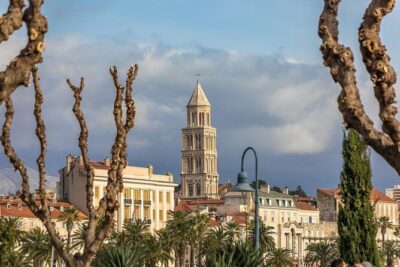
Cathedral areas often represent later layers—new religious life, shifting artistic priorities, and the way power expresses itself once the Roman era is no longer the only story. In a guided setting, you can connect that shift to what you’ve already seen around the Forum, so it feels like one continuous thread rather than a series of disconnected stops.
Drop-off points: Tito’s Park or Forum means less hassle later
You’ll finish with two possible drop-off locations: Tito’s Park and the Forum. That flexibility can be handy depending on what you want next—whether you’re heading back toward your accommodation direction or staying closer to the historic center for dinner.
If you like to keep your legs moving after a tour, dropping near the Forum makes it easy to continue exploring at your own pace.
The guides: what makes this tour feel personal
The heart of this kind of tour is the guide. In the feedback, names like Stefano and Ana come up again and again, and the consistent theme is clarity with a friendly approach.
The standout pattern: guides answer questions without rushing you. People also report that the pace feels right—fast enough to keep momentum, calm enough to stay engaged. One more practical detail: guides often take photos when you ask, which is a small service that saves you from awkward solo selfies.
One fair note: a single review raised concern about repetition during a tour, plus a distracted moment involving alcohol and bringing a dog. That doesn’t sound like the standard experience, but it’s a reminder that every public-group walk has its own human quirks. If you’re sensitive to repetition, go in ready to ask a question early so the guide can adjust to your interests.
What the tour helps you do after: food, drinks, and nightlife plans
This isn’t just “look at buildings.” The route is also designed to help you make better choices after it ends.
You’ll get tips on places to eat and drink, plus ideas for how to spend free time around Pula. That matters because the best historic-city tours still leave you with a gap: you learn the story, but you need a plan to live it.
Think of this tour as your setup. If you’re only staying in Pula for a short time, having a guide point you toward realistic options can save you a lot of guesswork.
Pace and group feel: when 90 minutes is a strength
Ninety minutes is a sweet spot for many people. It’s long enough to connect the Roman monuments to later layers, but short enough that you don’t spend your whole afternoon cramping your brain.
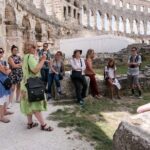
Also, because this is a public group experience, the tour usually keeps a steady rhythm. You’ll walk between stops, with short sightseeing segments sprinkled in. That’s ideal if you like structure and don’t want to navigate alone.
If you’re traveling with someone who likes Q&A, you’ll likely appreciate that your guide can respond to what you ask in real time. People specifically mention getting answers and explanations that make the city’s development click.
Price and value: is $34 fair for what you get?
At $34 per person for about 90 minutes, this is positioned as an affordable orientation tour. The value comes less from ticking off a huge checklist of indoor attractions and more from getting a trained guide who can connect the dots between eras.
You’re paying for:
- a certified, live guide in English
- a route through major landmarks that are spread out enough to be annoying to self-navigate efficiently
- the story structure that helps you remember what you saw
- practical recommendations for food and time after the tour
And you’re not paying for:
- entrance tickets to sights along the way (not included)
- interior access to the amphitheater (outside view only)
So the bargain makes sense if your goal is understanding and getting oriented. If your goal is a ticketed “see everything inside” day, you may feel like you’re missing part of the package—because this is intentionally designed around walking and explanation rather than admissions.
Who should book this Pula Essentials walking tour?
This is a strong match if you:
- want a first-pass introduction to Pula without spending hours
- enjoy Roman-era design and civic spaces
- like city walks that include practical local suggestions for meals and downtime
- prefer guided context over reading plaques for an hour
It may be less ideal if you:
- want amphitheater interior access as part of the experience
- need a long, slow pace with lots of time inside buildings
- don’t want a public-group structure
Should you book this tour
I’d book it if you want to understand Pula quickly and then enjoy the rest of your day with a smarter plan. The outside amphitheater approach is a trade-off, but it keeps the tour focused and affordable, and you still get the big Roman reference point that makes the rest of the city easier to read.
Skip or plan differently if amphitheater interior access is your main goal. In that case, you can still take this tour for orientation, but you should pair it with a separate interior visit.
FAQ
FAQ
How long is the Pula Essentials Walking Tour?
The tour lasts 90 minutes.
Where does the tour start?
It starts at the top of Tito’s Park, across the street from the big Anchor. Look for a cast model of the city with a tiny fountain.
Is the tour in English?
Yes. The tour is only offered in English.
Are entrance tickets included?
No. Entrance tickets are not included for the sights you see along the way.
Will I go inside the Pula Amphitheater?
No. The Pula Amphitheater is only seen from the outside on this tour.
Is the tour wheelchair accessible?
Yes, the tour is wheelchair accessible.
What happens if too few people book for the tour?
The tour requires a minimum of two participants. Individual bookings will be refunded if they are the only booked person one hour before the tour commences.