REVIEW · PULA
Pula: Historic Sites Guided Walking Tour
Book on GetYourGuide →Operated by Istria Tours · Bookable on GetYourGuide
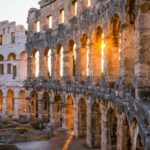
Romans run the show in Pula. This Historic Sites Guided Walking Tour is a fast, smart way to connect the dots between landmarks that otherwise feel like separate photo stops. I especially love how the guide starts right at the Pula Arena so you know what you’re looking at and why it matters.
In my view, the best payoff is the mix of Roman sights and street-level details, including the Augustus Temple and the Roman mosaics you’ll spot along the route. One heads-up: entry tickets aren’t included, so if you want to go inside everything you see, budget a little extra.
In This Review
- Key things I think you’ll enjoy
- Romans First: Kicking Off by the Pula Arena
- Climb Without the Sweat: Venetian Pula Castle Views
- Cathedral to City Hall: Understanding the Roman Forum Area
- Temple 2,000 Years Old: Augustus and the Arch of Sergii
- Roman Mosaics, Pula Market, and the Gate of Hercules
- How the 90 Minutes Really Feels on Your Feet
- Price Check: Is $20 Good Value in Pula?
- Who Should Book This Tour (and who might skip it)
- Should you book this walking tour of Pula’s historic sites?
- FAQ
- How long is the Pula Historic Sites Guided Walking Tour?
- Where do I meet the guide?
- Where does the tour finish?
- Is the tour in English?
- Are entry tickets included?
- Is the tour allowed to be recorded on video?
- Does the tour run in bad weather?
- Is this tour suitable for people with mobility impairments?
- What is the cancellation policy?
Key things I think you’ll enjoy
- Pula Arena orientation first: you get the big-picture context before you wander.
- Panoramic castle views: the Venetian-era Pula Castle gives you a helpful bird’s-eye view.
- Roman Forum focus: Augustus Temple, City Hall, and the forum area get explained clearly.
- Small-trace Roman moments: mosaics and other Roman remnants show up more than you’d expect.
- A route that stays walkable: the main stops are close enough to keep things moving comfortably.
Romans First: Kicking Off by the Pula Arena
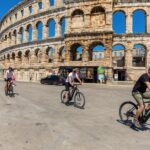
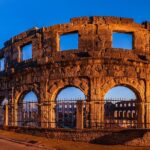
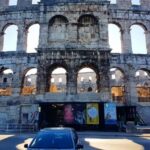
Your tour starts in front of the Arena (Amphitheater) entrance, and it’s easy to find the guide: they’ll wear a blue card around their neck and hold an umbrella. That first moment matters more than you might think, because the Arena is not just an old building. It’s the anchor for Pula’s Roman identity.
Expect a quick-but-useful overview as you stand near the Arena. The guide sets the timeline, explains what the arena tells you about ancient power and public life, and then gives you a simple mental map for the rest of the walk. One of the nicest practical touches I like here is that the guide doesn’t just list sites. They help you connect them, which means you don’t spend ninety minutes saying, nice, nice, nice, and then forgetting it all later.
This is also where the guide’s style shows. People mention guides like Sini/Sinisha for being friendly and good at answering questions, and you can feel that early on—especially when you’re standing at a place that looks impressive but can be hard to decode without context.
You can also read our reviews of more walking tours in Pula
Climb Without the Sweat: Venetian Pula Castle Views
After the Arena, the route works its way toward Pula Castle, built by the Venetians in the 17th century. You’re not going up for a long hike, but you are going up enough to change how the city “reads.” The payoff is a set of panoramic views that help you see how Pula’s historic core lines up.
What I like about this stop is the perspective shift. On the ground, Roman ruins, medieval walls, and later Venetian influence can feel like a grab bag. From the castle, the guide can point out how the neighborhoods and monument spacing make sense. You’ll also learn about previous inhabitants—useful background that turns the castle from a pretty viewpoint into part of Pula’s layered story.
Even if you’re not obsessed with military architecture, the viewpoint helps you take better photos and, more importantly, understand why the rest of the tour route goes where it goes.
Cathedral to City Hall: Understanding the Roman Forum Area
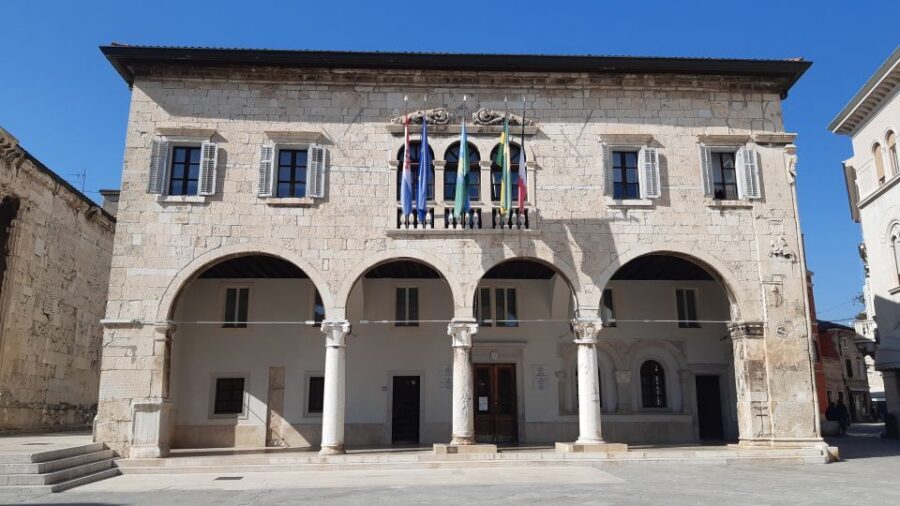
From the castle viewpoints, the tour heads toward major religious and civic landmarks, including the Cathedral and the Roman Forum area. This section is where the walk becomes more than just sightseeing—it becomes a guided “read” of the city.
Here’s how it works in plain terms. The guide points out the forum spaces and explains how the Roman city functioned—public life, governance, and ceremonial architecture all in one area. Then they connect specific named landmarks to broader Roman patterns.
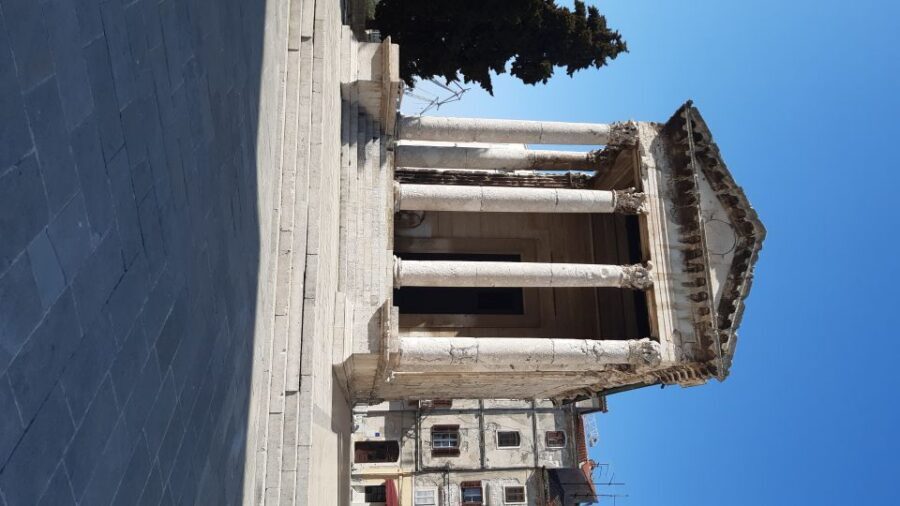
You’ll also see the Augustus Temple and City Hall within this forum circuit, and the guide explains what you’re looking at (and why it’s still standing in recognizable form after centuries). This is where the tour earns its reputation for value: you don’t just get a ticket-to-seeing list. You get a short course in how Roman cities organized themselves.
I also like that the tour includes Roman remnants you might otherwise overlook. People often expect only the headline monuments, but here the route nudges you to pay attention to smaller traces—like mosaics and other details along the way—that make Pula feel lived-in rather than staged.
Temple 2,000 Years Old: Augustus and the Arch of Sergii
The Augustus Temple is the standout in this Roman stretch, and it’s not a vague stop. You’re specifically there to understand why this is a big deal: it’s around 2,000 years old, and the guide frames it as a key piece of Roman religious and political signaling.
Next, you’ll move toward the Arch of Sergii. Arches can look like “nice Roman decoration” if you don’t know the basics, but with the guide’s explanation, you start noticing patterns—how monuments are placed, how they relate to nearby spaces, and what they communicate about status and public messaging.
This is also where you get the sense that the guide isn’t just reciting facts. People mention strong English and being able to answer questions. In practical terms, that means if your group asks why a building looks the way it does, or how a Roman civic space worked day to day, you’re likely to get a clear answer instead of a shrug.
And if you’re the type who likes to ask why, this tour rewards that behavior. The pace is relaxed enough to keep questions from derailing the walk.
Roman Mosaics, Pula Market, and the Gate of Hercules
One of my favorite parts of this tour is that it sneaks in everyday city texture between big monuments.
Along your route, you’ll see Roman mosaics. You don’t need to be an art expert to appreciate this. Mosaics change the mood fast: they move you from “I’m looking at stone history” to “this was decoration for real life.” The guide helps you notice what you’re seeing and places it within the broader Roman story you’ve already been learning.
Then the tour shifts to the Pula Market, established in the early 1900s. This is a smart rhythm choice. After Roman architecture and ancient city planning, you get a more modern layer of how Pula functions as a town. Even if you don’t buy anything, it’s a useful contrast point.
Finally, you’ll head toward the Gate of Hercules. City gates can feel like background scenery—until someone points out why they matter in a walled city and how that helps you understand movement in and out of town. The gate also serves as a practical endpoint moment: it gives you a clear finish line and a sense of completion.
The tour ends at Twin Gate, so you exit the experience with a stronger mental map of where you’ve been and how Pula’s historic core connects.
You can also read our reviews of more guided tours in Pula
How the 90 Minutes Really Feels on Your Feet
This tour runs about 90 minutes, which is perfect for a first-time visit when you want history context without losing half your day.
The walk is steady but not rushed. A recurring theme in the feedback is that everything stays close enough for a comfortable pace. The guide also uses tools to help orientation—people mention that the guide showed the route using a town-style diorama. That kind of visual help can make the whole tour click, especially if you learn better by seeing the shape of the city rather than just following a set of directions.
It also runs rain or shine, so bring weather gear. The guide’s umbrella is a nice visual cue that they’re set up for wet conditions, but you’ll still want a jacket that handles drizzle and shoes that don’t slip.
Two practical fit notes:
- This walk is not suitable for people with mobility impairments. If you need step-free routes, you’ll want to plan differently.
- Since entry tickets aren’t included, you may need to decide ahead of time what you want to go into. The tour is designed to show the important sights, but your exact inside-the-building time may depend on what’s ticketed.
Also, one rule: video recording isn’t allowed. So take photos if you want, but skip filming.
Price Check: Is $20 Good Value in Pula?
At $20 per person for a ninety-minute guided walk, this tour sits in that sweet spot where you’re paying for something that changes how you see the city.
Here’s the value logic. You’re getting:
- A local English live guide
- A route that covers major Roman and city landmarks without making you guess
- Explanations tied to what you’re looking at in real time
If you’ve ever self-guided a historic town and still felt like you were missing the “why,” this is the fix. The guide turns the Arena, Forum area, temple, mosaics, and gates into a connected story.
Could you do it on your own? Sure. But you’d likely spend more time searching, less time understanding, and you might miss the “small traces” that make this tour feel special.
If you want maximum value for a short stay, this one makes sense.
Who Should Book This Tour (and who might skip it)
This tour is ideal if you:
- Want a strong first orientation to Pula
- Like Roman architecture, city planning, and public monuments
- Prefer a guided pace where questions are welcome
- Are short on time and don’t want to build a detailed self-guided plan
You might skip it if:
- You need mobility accommodations not suited to this walking route
- You strongly prefer to roam independently without a structured path
- You’re hoping every stop includes entry tickets (it doesn’t)
If you’re somewhere in the middle—curious but not hardcore Roman-history mode—this tour is a good match. It’s detailed enough to satisfy history lovers, but it stays practical and readable.
Should you book this walking tour of Pula’s historic sites?
I’d book it if you want a guided way to connect Pula’s big Roman monuments to the city you’re actually standing in. The Arena start, the castle viewpoint, and the forum/temple stops create a logical arc that makes the city easier to remember.
Just plan for two realities: you’ll likely pay extra for any entry tickets you choose, and you’ll be walking in real weather. If you can handle that, this is one of the most straightforward ways to get your bearings fast and leave with a real sense of what Pula is.
FAQ
How long is the Pula Historic Sites Guided Walking Tour?
The tour lasts about 90 minutes.
Where do I meet the guide?
Meet the guide in front of the Amphitheater entrance. The guide will have a blue card around their neck and hold an umbrella.
Where does the tour finish?
The tour finishes at Twin Gate.
Is the tour in English?
Yes, the live guide speaks English.
Are entry tickets included?
No. Entry tickets are not included.
Is the tour allowed to be recorded on video?
Video recording is not allowed.
Does the tour run in bad weather?
Yes. The tour takes place rain or shine.
Is this tour suitable for people with mobility impairments?
No, it is not suitable for people with mobility impairments.
What is the cancellation policy?
You can cancel up to 24 hours in advance for a full refund.