REVIEW · SPLIT
Split: Guided Walking Tour in English
Book on GetYourGuide →Operated by Tours In Croatia · Bookable on GetYourGuide
Split’s old stones have stories you can feel.
This 90-minute walking tour is built around the UNESCO World Heritage heart of Split: Diocletian’s Palace, plus the street life that grew around it over centuries. I like the way the guide ties the big Roman setting to what you can actually see on the ground, and I especially like the focus on how daily life continues inside the palace walls.
I also like that you get a guided sweep of the most important monuments without needing to plan a self-guided route first. And because the tour is in English with a live local guide, you’re not stuck staring at walls wondering what you’re looking at.
One drawback to plan for: the tour includes the walk and explanations, but entrance fees for churches and museums are not included, so you’ll need extra time (or extra money) if you want to go inside.
In This Review
- Key Highlights You’ll Notice Right Away
- Starting at Obala Hrvatskog narodnog preporoda 21 (and Getting Oriented)
- Diocletian’s Palace: The Roman Power Core of Split
- Peristyle Court and the Mausoleum Context You Can Actually Picture
- Medieval Extensions and Narrow Streets That Still Make Sense
- People Still Live Inside the Walls
- What a Great Guide Changes (Gabrijela and Petra as Proof)
- Price and Value: Is $29 a Smart Deal?
- Practical Tips for Your 90-Minute Walk
- Who This Tour Suits Best (and Who Might Skip It)
- Should You Book This Split Walking Tour?
- FAQ
- How long is the guided walking tour?
- Where does the tour meet?
- Is the tour in English?
- Are entrance fees included?
- Is the tour wheelchair accessible?
- Are pets allowed?
- Can I cancel and get a refund?
- Can I reserve first and pay later?
Key Highlights You’ll Notice Right Away
- Diocletian’s Palace as the anchor for Split’s whole layout
- The Peristyle court and what it meant for imperial access
- A guided path through narrow stone lanes and medieval additions
- Clear storytelling about customs and local culture, not just dates
- You’ll see that people still live inside the historic walls
- A tight 1.5-hour format that helps you get oriented fast
Starting at Obala Hrvatskog narodnog preporoda 21 (and Getting Oriented)

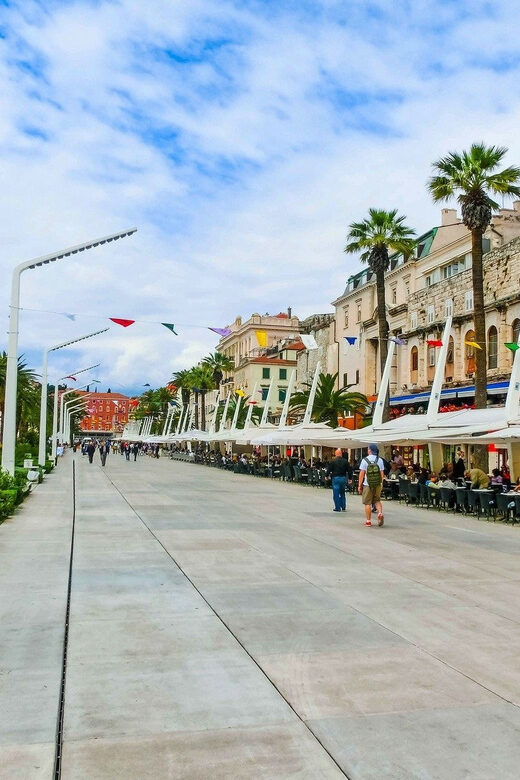
The tour meets at the Gray Line office on Obala Hrvatskog narodnog preporoda 21 in Split. It’s a good spot to start because it puts you right in the historic-city rhythm—close enough to jump into the old center without wasting time on transfers.
The timing is also friendly: you’re out for about 90 minutes, then you return to the same starting point. That matters in Split, where the best sightseeing often depends on where the light hits and how much walking you want to do in a day.
If you’re the kind of traveler who likes to know where you are before you start wandering, this format is smart. You’ll get a guided overview of the palace area and the main monuments, which makes it easier to come back later and explore at your own pace.
You can also read our reviews of more walking tours in Split

Diocletian’s Palace: The Roman Power Core of Split

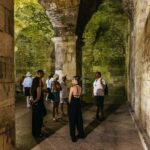
Your walk centers on the UNESCO World Heritage Site of Diocletian’s Palace, built for the Roman emperor Diocletian. This is the kind of place where the scale surprises you—once you understand the purpose of the complex, the streets around it start to make sense.
The tour is designed to show you the palace not as an abstract attraction, but as the structural reason Split grew the way it did. You’ll learn that what you’re walking through was laid out in relation to imperial life, then gradually absorbed by later eras as the city expanded.
That’s why this stop is more than sightseeing. It turns Split into a map you can read. After the explanation, you’ll have an idea of how the palace sections connect to the wider city fabric—why the streets feel like a maze, and why so many medieval buildings show up where you might not expect them.
Peristyle Court and the Mausoleum Context You Can Actually Picture
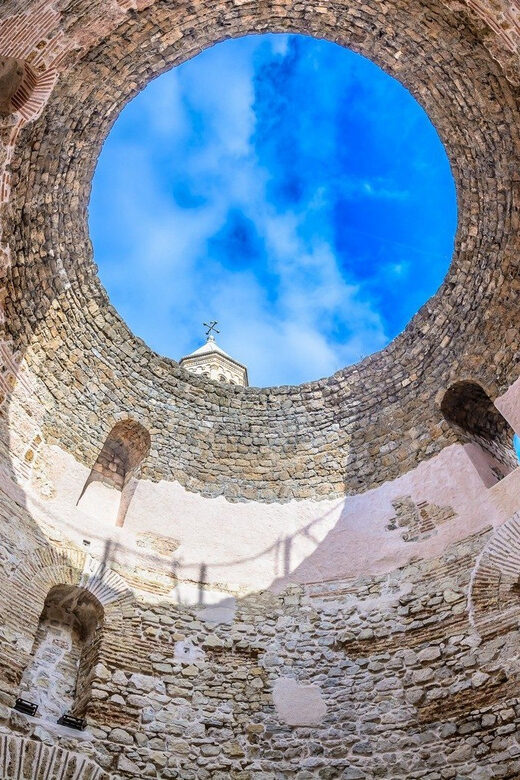
One of the most memorable parts of the tour is how the guide uses the palace features to explain daily movement and power. You’ll spend time around the Peristyle, described as the monumental court that provided access to the imperial apartments and the mausoleum.
Even if you’ve seen photos of Diocletian’s Palace before, the tour framing helps you understand what those spaces were for. A court like the Peristyle wasn’t just decorative. It was part of how people entered, circulated, and connected to imperial spaces.
And the mausoleum detail matters because it anchors the story in why this complex existed beyond everyday politics. You’ll come away with a clearer sense that the palace was designed as an entire world—one that later generations had to live within, adapt, and expand.
This is also where you’ll see the charm of a guided walk: you’re not just looking at old architecture. You’re learning the logic behind it.
Medieval Extensions and Narrow Streets That Still Make Sense
After the Roman core, the tour shifts to the layers. You’ll hear how the city grew around the palace, including medieval extensions that took over parts of the structure over time.
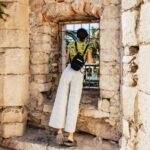
What you’ll likely appreciate is the pacing. The route keeps you moving through the maze of narrow stone streets, where medieval buildings show up in a way that feels organic, not forced. The streets don’t look like a museum set. They look like places where people kept building and living.
This is also a big reason the tour works as a first step in Split. Once you understand that the palace is the foundation and the later periods are the additions, you’ll start spotting patterns as you wander on your own—doors, passageways, and street alignments that suddenly feel less random.
If you like history but you hate getting lost in facts, this is a good middle ground: the story stays connected to what you can see.
People Still Live Inside the Walls
Here’s one of the most satisfying parts of the experience: you explore features of Diocletian’s Palace with the reminder that there are still people living within the walls.
That changes the tone. You’re not only looking at ruins; you’re walking through a living neighborhood shaped by ancient architecture. The palace becomes less like a sealed-off monument and more like a framework that has been used, reused, and reinterpreted.
The guide’s focus on local customs and traditions helps tie that living reality to the bigger story. You’ll hear how the city’s age shows up in how locals talk about the place, where life happens, and how the community relates to its Roman centerpiece.
It’s the kind of detail that makes the tour feel more like understanding a place than checking boxes.
You can also read our reviews of more guided tours in Split





What a Great Guide Changes (Gabrijela and Petra as Proof)
A good walking guide can turn a bunch of landmarks into a story you remember. In the experiences attached to this tour, Gabrijela and Petra come up as standout names, both praised for being engaging and for delivering local insight with strong English.
You’ll feel that effect even if your guide isn’t one of those two. The tour is built around an English-speaking guide who explains how Split evolved—from the palace to later medieval growth—and connects it to current culture.
Ask questions. This kind of tour rewards curiosity. If you’re wondering how one area connects to another, or why the palace layout matters, this tour format is made for that.
Price and Value: Is $29 a Smart Deal?
At $29 per person for about 1.5 hours, this tour is positioned as a value-forward orientation session. You’re paying for an organized route, an English guide, and the context that makes the monuments easier to interpret.
What you should factor in: entrance fees are not included for churches and museums. The guide can help with details and where to buy tickets, but you still control whether you add on those interiors after the walking portion.
So the real value is not just that you see Diocletian’s Palace. It’s that you see it with enough context to decide what you want to explore next. If you’re the type who wants to do a museum or church stop later, you’ll likely find the total time and cost still works out well.
If you only want exterior viewpoints and street-level impressions, you’ll likely feel the price is fair for what you get.
Practical Tips for Your 90-Minute Walk
This tour is short, so you’ll want to show up ready to move and listen. The route includes narrow stone streets and palace-area spaces, so comfortable shoes are a must. Bring a water bottle if you’re going in warmer weather, and keep your camera accessible—you’ll have plenty of angles.
If you know you want to go inside a church or museum later, plan for that extra step. Since entrance fees aren’t included, you’ll either purchase separately or choose what matters most after the walk.
For families: children must be accompanied by an adult. Also note the tour is not wheelchair accessible, so if mobility is a concern, you’ll want to plan an alternative sightseeing approach.
One more small strategy: after the tour, revisit the palace areas you liked most. With the guide’s explanations in your head, you’ll interpret the architecture faster and feel more confident wandering.
Who This Tour Suits Best (and Who Might Skip It)
This is a strong fit if you:
- Want a first-time orientation to Split’s historic center
- Like Roman sites but also want the story of how life evolved afterward
- Enjoy local culture explanations, not just monument facts
- Prefer a guided format that helps you avoid wasting time figuring out routes
It may not be ideal if you:
- Need wheelchair access for sightseeing (this walking tour isn’t wheelchair accessible)
- Want a tour that includes paid entry into churches and museums (those fees are extra)
- Are traveling with pets (pets aren’t allowed)
If your goal is to understand the city quickly and then roam with purpose, this is an efficient starting point.
Should You Book This Split Walking Tour?
I’d book it if you want to get oriented fast around Split’s most important landmark and understand why the streets and buildings look the way they do. The Diocletian’s Palace focus, plus the storytelling about living culture and city growth, is exactly the combo that turns a short walk into a lasting mental map.
Skip it only if you already feel confident about Diocletian’s Palace and you don’t want any guided context, or if your plans depend on included museum/church entrances. Otherwise, for the money and the time, this is a smart way to start your day in Split.
FAQ
How long is the guided walking tour?
It lasts about 90 minutes (described as a 1.5-hour walking tour).
Where does the tour meet?
Meet at the Gray Line office at Obala Hrvatskog narodnog preporoda 21, Split.
Is the tour in English?
Yes, it’s offered with an English-speaking live guide.
Are entrance fees included?
No. Entrance fees for churches and museums are not included, though the guide can help you with where to buy tickets and what to do next.
Is the tour wheelchair accessible?
No, the tour is not wheelchair accessible.
Are pets allowed?
No, pets are not allowed.
Can I cancel and get a refund?
Yes. You can cancel up to 24 hours in advance for a full refund.
Can I reserve first and pay later?
Yes. You can reserve your spot and pay later.