REVIEW · SPLIT
Split: Walking Tour of Split with Art Historian
Book on GetYourGuide →Operated by Aspalathos Guided Tours · Bookable on GetYourGuide
Split can feel like a maze. This walk turns it into a story you can follow, led by Josipa, an art historian who connects Roman bones to what you see today. I liked two things most: the way she points out details like Egyptian sphinxes hiding in plain sight, and the careful, stop-and-explain pace that actually helps you understand Diocletian’s Palace instead of just taking photos. One catch: it involves steps and some walking, so it’s not a good fit if mobility is an issue.
You’ll start at Strossmayer Park, work your way through gates and courtyards, then end along the Riva waterfront with practical guidance for what to do next. The overall value is strong because you don’t waste time on gimmicks—just a focused route, thoughtful context, and advice on how to experience Split like a person who lives there.
In This Review
- Key things I like about this Split walking tour
- Why an Art Historian Makes Split Make Sense
- Meeting at Strossmayer Park and Getting Oriented Fast
- From Gregory of Nin to the Golden Gate: Split’s Story Starts Outside
- Peristyle to the Gates: Reading the Palace Like a Floor Plan
- Jupiter’s Temple and the “Street Let Me Pass” Moment
- Triklinij to the Cellars: Where Daily Life and Scale Hit
- Riva Waterfront and the Model That Clarifies Everything
- What You Actually Get (and What You Skip on Purpose)
- Price, Pace, and Who This Tour Fits Best
- Should You Book This Split Walking Tour with Josipa?
- FAQ
- Does the tour go inside paid attractions like the Cathedral or Substructures?
- How long is the Split walking tour?
- Where do I meet Josipa for the tour?
- What language is the tour offered in?
- Is the tour always outdoors?
- Is this tour suitable for people with mobility impairments or wheelchair users?
- Is the tour suitable for hearing-impaired people?
Key things I like about this Split walking tour

- Art history meets street-level reality: you learn what you’re actually looking at, not just dates.
- Hidden details on purpose: sphinxes, architectural quirks, and less-obvious stories you’d miss alone.
- A small-group feel: it stays conversational, so questions don’t get rushed.
- Everything important is passed, not skipped: paid sites aren’t entered, but the route still covers the big names and how to plan them.
- Local suggestions you can use immediately: from where to eat to viewpoints worth the walk.
Why an Art Historian Makes Split Make Sense
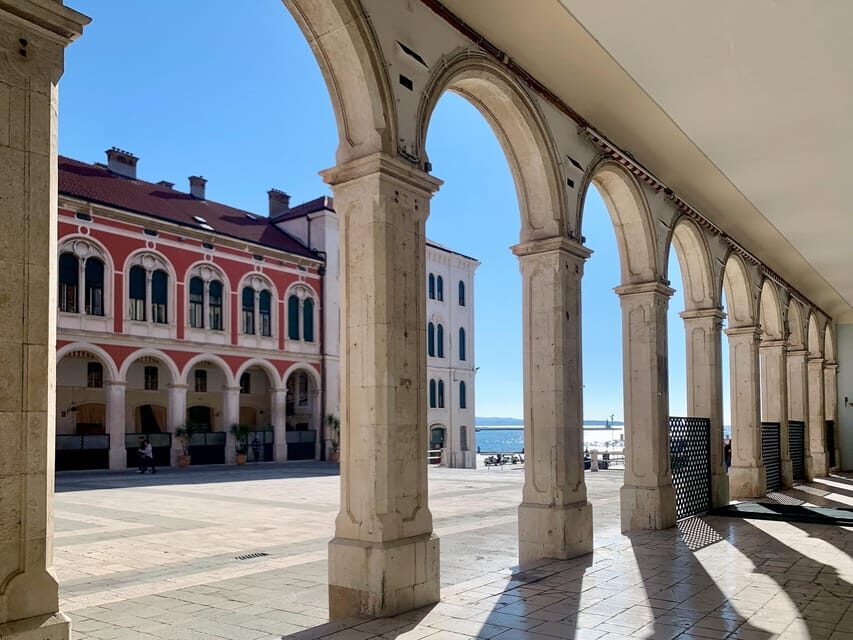
Split’s star attraction is Diocletian’s Palace, but “palace” can be misleading. It’s not one grand museum room. It’s a whole urban machine—streets, thresholds, gates, courtyards, and semi-public spaces—built so daily life could happen inside fortress-like walls. That’s exactly why an art historian helps. Josipa doesn’t just recite facts; she teaches you how the buildings were meant to work.
And you feel that in the way she narrates the route. Each stop has a visual reason for existing. A gate isn’t only pretty. A courtyard isn’t only scenic. You start seeing the logic of space—where people moved, what likely happened where, and how later generations repurposed Roman structures into a functioning modern city.
This also matters because the palace can be crowded and fast-paced when you visit on your own. Here, you’re guided through the key spaces in a way that slows your brain down just enough to notice the small stuff. The result is better “seeing,” not just better photos.
You can also read our reviews of more walking tours in Split

Meeting at Strossmayer Park and Getting Oriented Fast
The tour meets around the fountain in the center of Strossmayer Park, also called Djardin. It’s just above the Golden Gates and near the statue of Bishop Gregory (so you get oriented early, which saves time later). Find Josipa by the yellow and blue Aspalathos Guided Tours sign she holds.
This first stretch is smart because it gives you the right mental map before you start threading through the palace. You’re not wandering into the maze with zero context. You start with the idea that you’re walking across layered time: Roman planning, medieval and later adaptations, and the city life that keeps happening on top of it.
The pace is designed for a 2-hour walk, and that helps you decide whether you need more time at any spot afterward. By the end, you’ll know what deserves a revisit on your own—without guessing.
From Gregory of Nin to the Golden Gate: Split’s Story Starts Outside
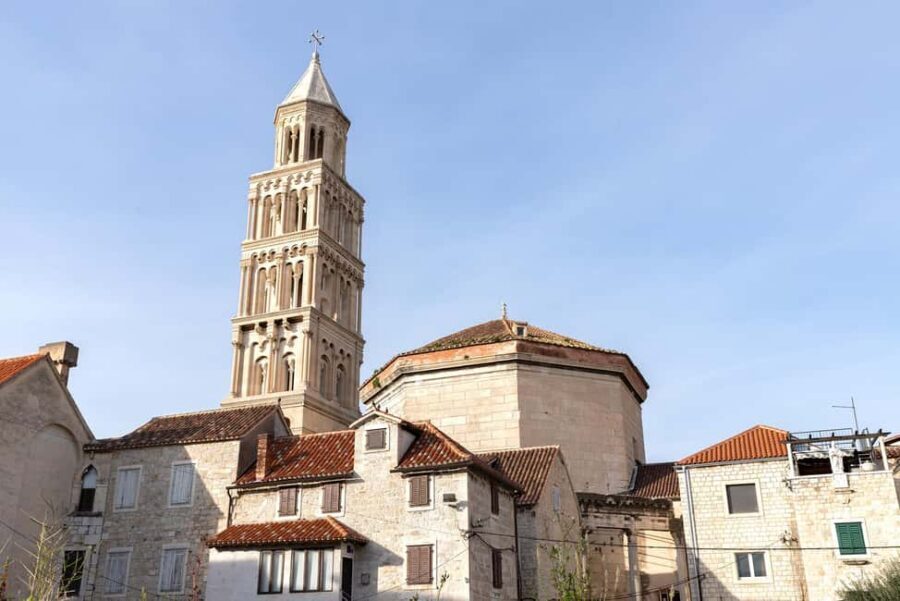
Your walk begins at Strossmayerova Fountain, then moves to the Gregory of Nin Statue. This is the moment to understand how Split tells its identity. Gregory of Nin is tied to the city’s cultural memory, and even if you don’t care about church history, you’ll see why this statue sits where it does—near the incoming flow into the old core.
Next comes the Golden Gate. Josipa’s focus here is less about postcard angles and more about how city entrances functioned. Gates mattered. They controlled movement. They marked status. And they framed what came next, so you’ll start to read the palace layout like a system.
You then pass by Sv. Martin. It’s a quick stop, but it helps you understand how buildings of different eras coexist. In Split, you rarely have a clean “Roman-only” or “medieval-only” scene. The layering is the point.
After that, the Bronze Gate appears, followed by the Peristil (Peristyle). This is where the tour really starts to feel like a guided interpretation of Diocletian’s Palace rather than a checklist walk. You’re not just moving between monuments. You’re learning how the palace’s open spaces worked as civic and social stages.
Peristyle to the Gates: Reading the Palace Like a Floor Plan

The Peristyle is one of the most important spaces in the palace complex, and Josipa uses it to teach you how much meaning can fit into one courtyard. Look around and you’ll start noticing symmetry and design choices that hint at original function. She also points out authentic architectural details—things you might otherwise assume are random decoration.
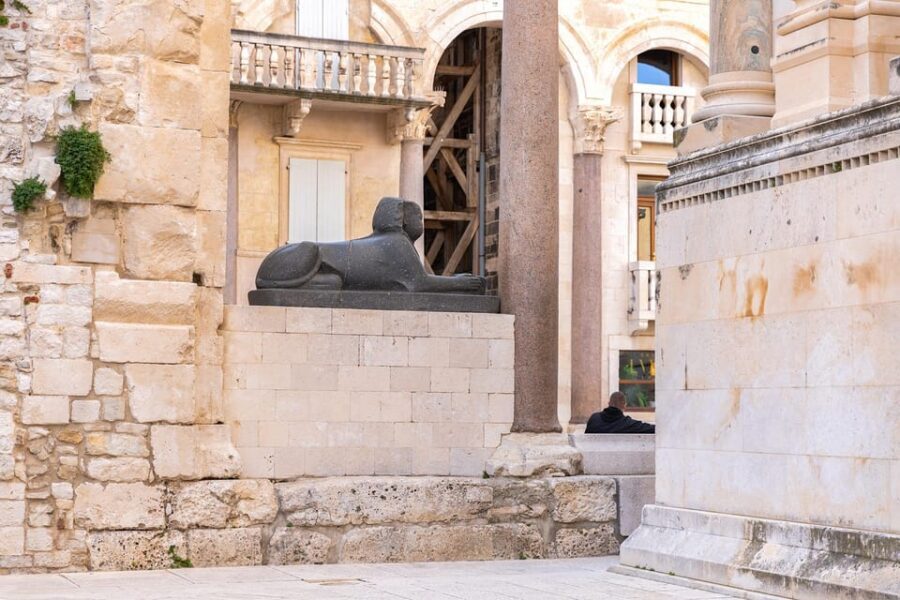
One highlight is the Egyptian sphinxes, famously visible once you know where to look. Josipa’s approach makes them feel less like trivia and more like evidence of how the palace borrowed visual power from across the Roman world. The point isn’t just that they exist—it’s that they show how taste, politics, and symbolism traveled into Split.
From there, you move to the Silver Gate. This is another threshold moment. Josipa uses these gates to show how people likely moved through daily rhythms, and how later use changed the vibe without erasing the Roman skeleton beneath.
Even the short stops matter here because they reinforce the same theme: the palace was built for life, not only for power. It’s easy to forget that once you’re standing in a place that now looks like a finished set. The tour corrects that.
Jupiter’s Temple and the “Street Let Me Pass” Moment
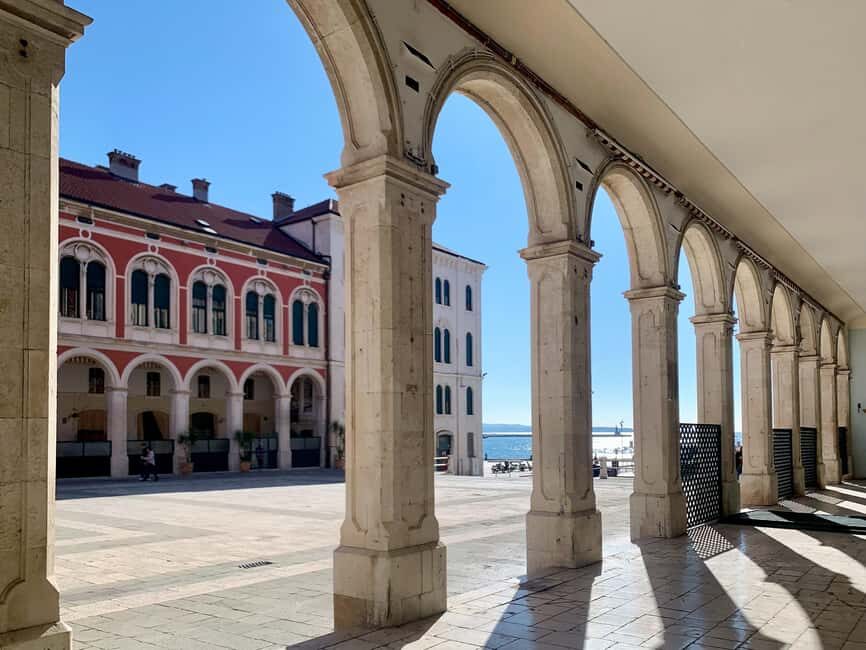
As you head deeper into the palace layout, you reach Jupiter’s Temple. You don’t go inside paid areas on this tour, but you’ll still learn why the site matters and what you’ll want to plan for later. Josipa explains the role of the temple structure and how it fits into the surrounding layout, so when you eventually visit those substructures or indoor sections elsewhere, it won’t feel like a surprise.
Then comes a quieter, fun-to-watch segment: Street Let Me Pass. It’s a short stop, but the name sticks, and Josipa uses it to highlight movement and passage in the palace. You’ll start noticing how narrow choices in design shape your walking path and your sense of privacy or exposure as you move.
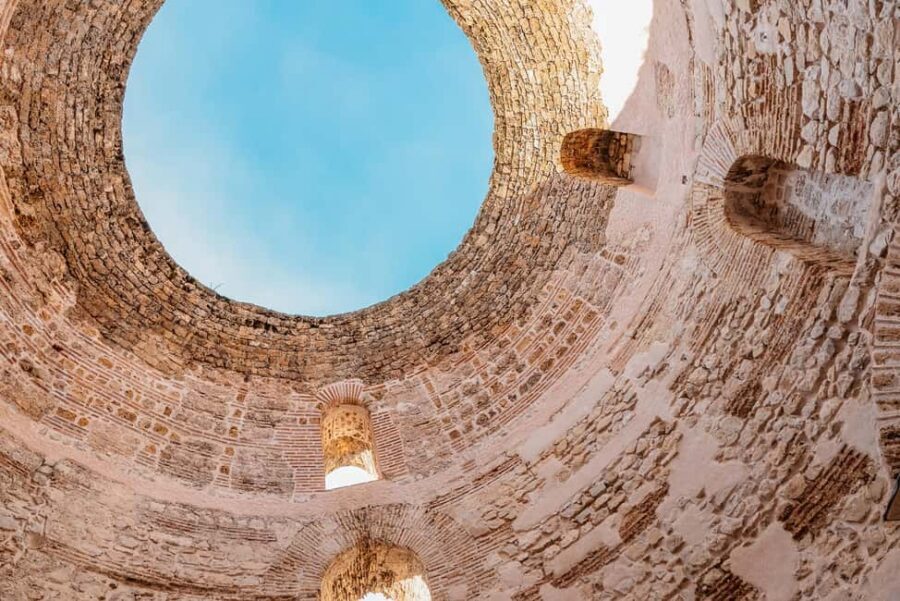
A photo stop follows at the Vestibul. Photo stops can sometimes feel filler. Here, it’s a chance to pause at a visually meaningful viewpoint, where the architecture makes more sense once you’ve heard the story tied to that specific location.





Triklinij to the Cellars: Where Daily Life and Scale Hit
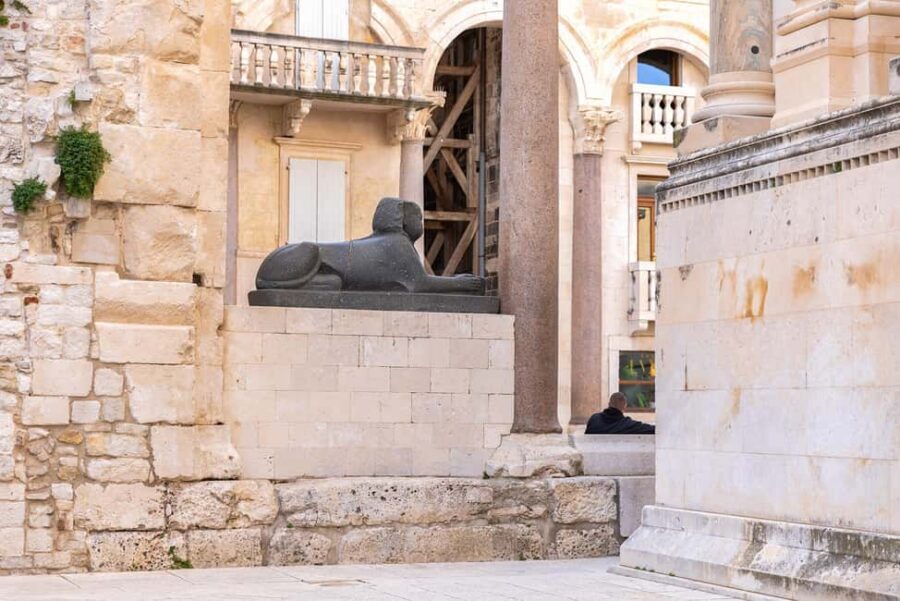
Next is the Triklinij. This is a key palace space connected to dining and ceremonial life in Roman terms. Even without entering paid sites, Josipa helps you understand why this area was positioned where it was and what the space was likely designed to support. You’ll come away with a better sense of scale—how large the complex was and how many people could be connected to events and daily routines.
Then you pass Diocletian’s Cellars. Again, you don’t enter on this tour, but you’ll get a story that makes the place feel less like a closed-off attraction and more like part of the building’s operating system. These cellars help you understand the practical side of the palace: storage, support, and the hidden layers that keep “aboveground life” possible.
This is also where the tour’s structure pays off. Josipa keeps the narrative tight. You don’t wander around hoping you’ll later connect the dots. Each stop nudges you to connect the dots while you’re still standing in the right context.
Riva Waterfront and the Model That Clarifies Everything
After the palace interior route, the walk opens out to the Riva waterfront. This transition is useful because it reminds you that Split isn’t a ruin you visit. It’s a living city built on top of that Roman core. The Riva area also helps you understand why people still gather and stroll here: the geography makes it natural.
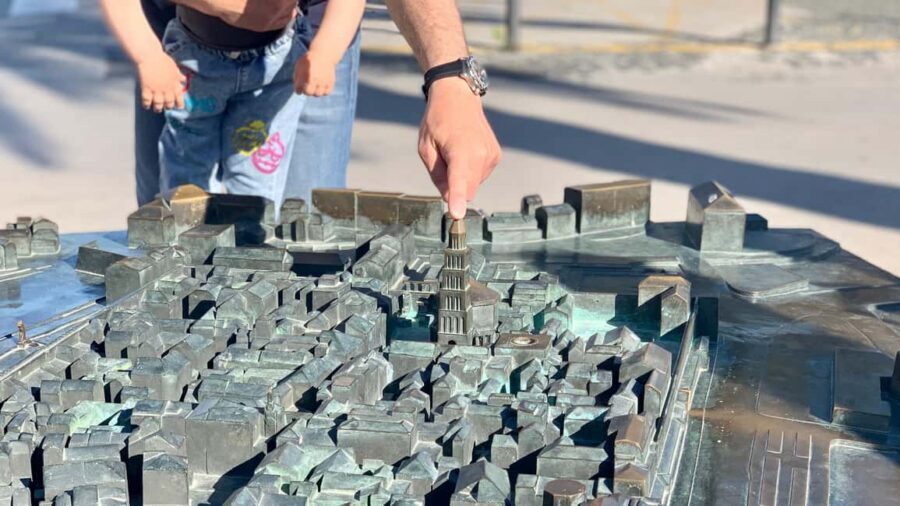
Then comes a smart teaching stop: a model of the historical core of the city of Split. If you’ve ever left a sightseeing walk feeling like you “saw stuff” but couldn’t place it on a map in your head, this part fixes that. You’ll use the model to orient yourself for the rest of your stay.
From there, you walk through Fruit Square and People’s Square. These are the kinds of public spaces where a city’s everyday tempo shows itself. Josipa’s guidance at this stage is about making your next moves smoother—where to spend a little more time, what to prioritize, and how not to waste an afternoon wandering in the wrong direction.
What You Actually Get (and What You Skip on Purpose)
This tour covers all the must-see sights along the route, but it does not enter paid sites like the Substructures, Cathedral, or the Temple of Jupiter. That might sound like a downside if you’re expecting ticketed entry. The tradeoff is time and focus.
On this walk, you get stories and context for those major sites while keeping the overall flow to a 2-hour experience. Josipa also gives instructions and suggestions for how to visit those places later on your own. For many people, that’s the best of both worlds: learn what matters first, then choose when and how to go inside.
You should also expect rain or shine. This is an outdoor walk with steps, so plan accordingly. If you’re sensitive to heat, you’ll still be okay, but you’ll want water and comfortable shoes. One nice note: Josipa tends to manage the group’s comfort, including avoiding the most intense sun spots when she can during explanations.
Price, Pace, and Who This Tour Fits Best

The price is about $27 per person for a 2-hour walking tour. That’s a fair figure when you consider what you’re buying: a licensed local guide (Josipa owns Aspalathos Guided Tours), plus focused art-historical interpretation and practical advice you can act on right away.
The pace works especially well as a pre-dinner activity. You finish while the city is still in motion, but you’ve already learned how to read it. If you’re the type who likes to understand why a place looks the way it does, you’ll enjoy this more than the “snap photos and move on” style tours.
Who it suits:
- First-timers who want the Diocletian’s Palace layout explained in plain language
- People who like architecture and stories that connect buildings to human use
- Travelers who want honest local recommendations for where to eat and where to go next
Who should consider other options:
- Anyone with mobility impairments or wheelchair users (the tour includes unavoidable steps)
- People who are hearing-impaired (not suitable)
- Anyone expecting lots of indoor entry and paid-site time
Should You Book This Split Walking Tour with Josipa?
If you’re visiting Split for a short time and you want to leave with a real understanding of what Diocletian built (and how that survives as today’s city), I think this is a strong booking. Josipa’s strength is that she doesn’t treat the palace like a set of isolated sights. She teaches you the logic—gates, courtyards, thresholds, and the small details you’d miss.
Book it if you like asking questions and want a route that stays efficient but still feels personal. Skip it if you need step-free access or if you only want ticketed entry into major interior attractions.
FAQ
Does the tour go inside paid attractions like the Cathedral or Substructures?
No. This walking tour does not enter paid sites. It passes major places and Josipa explains them, including what to do and how to visit later.
How long is the Split walking tour?
It lasts 2 hours.
Where do I meet Josipa for the tour?
Meet around the Strossmayer Park fountain (Strossmayerova Fountain). Look for the area just above the Golden Gates near the Gregory of Nin statue, and find Josipa holding the yellow and blue Aspalathos Guided Tours sign.
What language is the tour offered in?
The tour is guided in English.
Is the tour always outdoors?
Yes. It takes place rain or shine.
Is this tour suitable for people with mobility impairments or wheelchair users?
No. It is not suitable for people with mobility impairments or for wheelchair users.
Is the tour suitable for hearing-impaired people?
No. It is not suitable for hearing-impaired people.