REVIEW · ZAGREB
Back to Yugoslavia Private City Tour in Old-Timer Yugo Car
Book on Viator →Operated by YUGOcar adventure · Bookable on Viator
A ride in a classic Yugo turns sightseeing into something you can actually feel. This private tour mixes Zagreb’s Yugoslav-era landmarks with practical street-level context from a licensed local guide. The whole route is designed so you can focus on what you care about, not what fits on a big coach.
I especially like the combination of original Yugo transport and a truly private, bespoke pace. You’re not just parked at photo stops; you’re moving through the city in a 35-year-old car while the guide explains everyday life and history along the way. You’ll get a clear sense of why these buildings and bridges matter.
One thing to consider: you need good weather for the experience as planned, since it includes walking segments.
In This Review
- Key things you’ll notice on this Zagreb Yugo tour
- Why a Yugoslav-era car changes how you see Zagreb
- Start at Lisinski: a simple meeting point that keeps things smooth
- The open-air market and Gorica’s abandoned dishes factory
- Travno and the Mammoth apartment building
- Zagreb Fair: where the city shows its public life
- Kockica, The Dice, and power behind the walls
- The Sava River levee and the Hendrix bridge
- Concert hall stop for Eurovision 1990 context
- The Lady from Zagreb and the city’s layered stories
- Dražen Petrović Museum and Cibona Tower: sports, memory, skyline
- What the private pacing feels like in real life
- Price value: what you’re actually paying for
- Best fit: who should book this tour
- Should you book Back to Yugoslavia in the Yugo?
- FAQ
- How much does the Back to Yugoslavia Private City Tour cost?
- How long is the tour?
- Where do we meet and where does the tour end?
- Is this tour private?
- What language is the tour offered in?
- What vehicle is used for the tour?
- What’s the cancellation policy?
Key things you’ll notice on this Zagreb Yugo tour
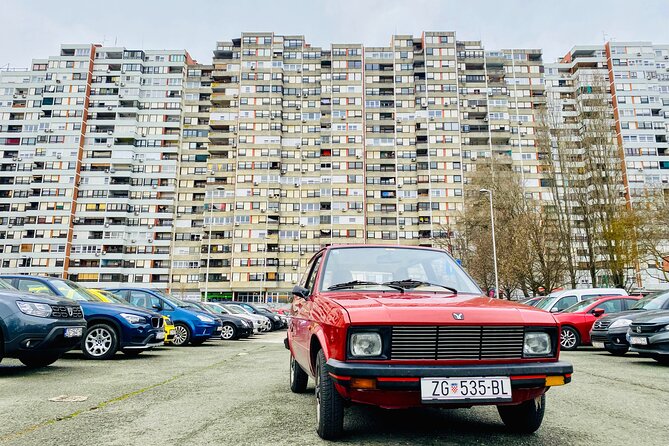
- Private guide, private route: you can steer the tour toward what you want most
- 35-year-old Yugo car: a memorable way to cover city sights without feeling rushed
- Yugoslav-era landmarks explained: you’ll connect architecture to real political and social shifts
- Short walking stretches: enough time to see places up close, not so much you feel stuck
- River and skyline views: the Sava River levee and famous bridge are built into the plan
- All in English: offered in English with a licensed local guide
Why a Yugoslav-era car changes how you see Zagreb
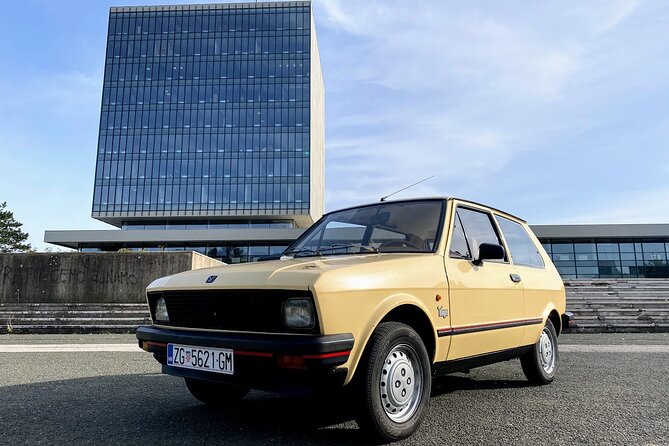
Zagreb is the kind of city where history shows up in everyday geometry. On this tour, that reality lands faster because you’re not just looking from the sidewalk—you’re traveling through the city in an original Yugo, a car with its own time period built in.
The private setup matters too. Instead of getting a rehearsed lecture aimed at everyone, you’re with a licensed local guide who can shape the story to your pace and interests. If you want more political context, ask. If you’d rather focus on daily life and how neighborhoods feel, that works too.
And at $102.41 per person for about 2 hours 30 minutes, the value isn’t only the guide—it’s the transport plus the fact that you’re paying for a custom experience rather than a seat on a large group tour.
You can also read our reviews of more tours and experiences in Zagreb.


Start at Lisinski: a simple meeting point that keeps things smooth
Your tour starts and ends at Koncertna dvorana Vatroslav Lisinski at Trg Stjepana Radića 4, in central Zagreb. That location is handy because you’re meeting near a major landmark, so you can find it without complicated navigation.
From a practical point of view, this start point also makes the end easy to manage. You’ll either return back in front of Lisinski or be dropped at a location you choose within city limits (within 3 km around the main square).
A quick tip: if you’re pairing this with other plans, give yourself a little buffer afterward. Two and a half hours sounds tight on paper, but walking segments and photo moments add up fast.
The open-air market and Gorica’s abandoned dishes factory
The tour begins with a stop at the open-air market and the abandoned dishes factory Gorica. Even if you’re not focused on industrial ruins, this part is useful because it frames the city as working place, not just postcard views.
Markets tell you what a city buys, sells, and eats—often more directly than museums. You get a sense of neighborhood rhythm and the practical side of local life. Pair that with an abandoned industrial site, and the contrast makes the story feel less abstract. You can see how production shaped spaces, and how those spaces changed when times did.
What to watch for here: you’ll probably want your camera ready, but don’t rush. This stop sets the tone for the rest of the tour—short, meaningful, and connected.
Travno and the Mammoth apartment building
Next you’ll be in Travno, with a stop in front of The Mammoth, the largest apartment building in Zagreb. Big housing blocks can be hard to picture until you see one at street level. This stop gives that scale in a way that photos usually can’t.
This is also the kind of site where a guide’s explanation helps. The point isn’t just that it’s tall or massive. It’s what that housing model meant for everyday life—how people lived, worked, and shared public space around these buildings.
It’s a quick stop, about 5 minutes, and admission isn’t needed. That’s a good match if you like “see it, understand it, move on” pacing.
Zagreb Fair: where the city shows its public life

You’ll also pass by Zagreb fair, the main Zagreb venue for different fairs and trade shows. This stop may feel less dramatic than other landmarks, but it’s quietly valuable.
Fairs and trade venues reflect how a city communicates its priorities. They’re places for commerce, industry, and public gatherings—so they fit the tour’s Yugoslav-era theme without needing to be a single famous building.
If you’re more into social history than monuments, this is the kind of stop you’ll appreciate. It helps you connect policy and culture to spaces where people actually gathered.



Kockica, The Dice, and power behind the walls
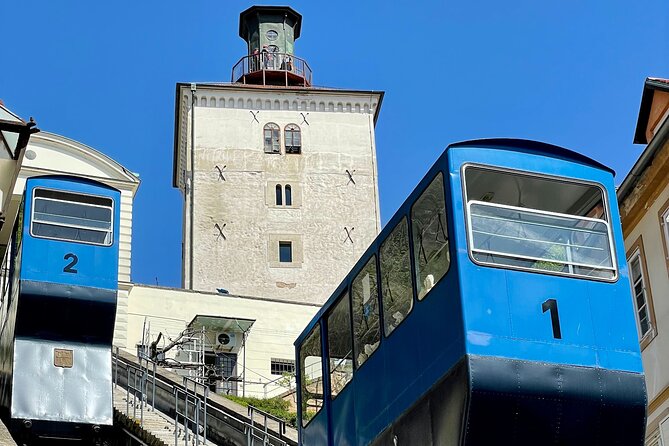
Stop Kockica brings you to The Dice, the building that housed the Central Committee of Croatian Communists. The name is catchy, and the architecture is memorable—but the real value is how the guide ties the building to political power and the everyday reality around it.
Even if you don’t read every detail on a facade, you’ll understand the logic quickly: when institutions take space, they shape the city around them. That city-shaping is the whole reason this tour works.
This stop is also about 5 minutes, and it’s free in the sense that you’re just seeing it from the outside. That keeps the pace rolling, which is important over a 2.5-hour experience.
The Sava River levee and the Hendrix bridge
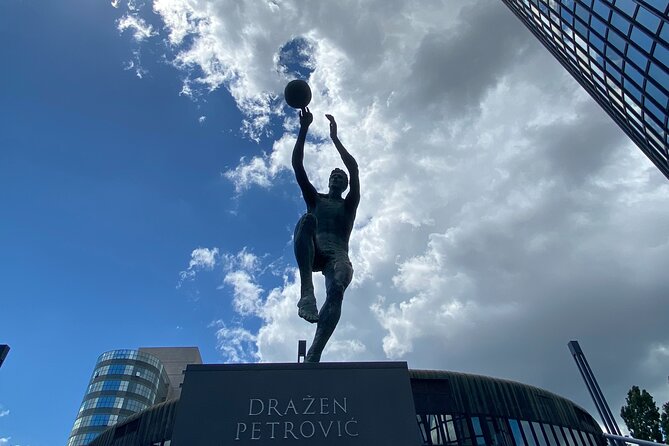
Then you’ll move along the Sava River levee and see the famous Hendrix bridge. This is the tour’s visual reset. After buildings and institutions, you get open lines, movement, and a clearer view of how Zagreb sits with its waterways.
Walking here for about 10 minutes gives you enough time to slow down. You can look at how bridge design fits the river, and you can watch the space between old institutions and modern city flow.
Bring sensible shoes. The walk isn’t long, but you’ll cover uneven pavement and you’ll want a stable footing for photos.
Concert hall stop for Eurovision 1990 context
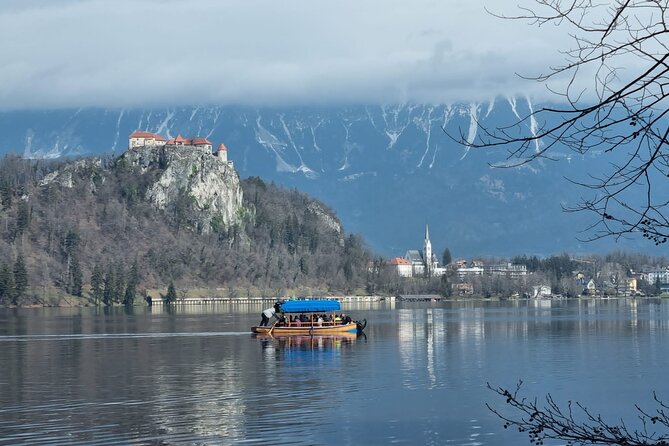
After the river, you’ll stop at a concert hall known as the venue for the Eurovision Song Contest in 1990. This is a smart inclusion because it shifts the conversation from politics and housing to culture as public identity.
Even if Eurovision is just a fun reference point to you, the broader idea is useful: large events take place in specific places, and those places become part of national memory. A guide can help you connect that cultural moment to the era this tour centers on.
You’ll likely do more passing-by than long lingering here, but it still counts. It’s a reminder that history isn’t only laws and buildings—it’s also music, media, and shared experience.
The Lady from Zagreb and the city’s layered stories
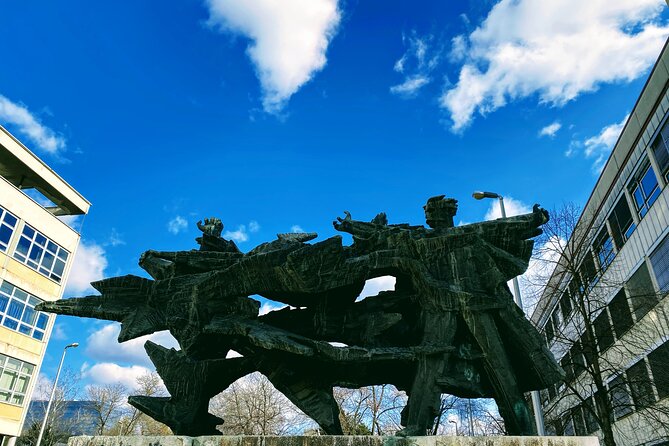
You’ll also pass by the attraction known as The Lady from Zagreb. This is the kind of stop that works well during a private tour because you can decide how long you want to linger based on your interest.
Some monuments feel like trivia until someone explains what they represent. Others make sense immediately. Either way, this pause helps connect the big-idea history to street-level identity.
If you like quirky, local landmarks, you’ll probably enjoy this stop more than you expect.
Dražen Petrović Museum and Cibona Tower: sports, memory, skyline
The tour finishes at the Dražen Petrović Museum – Memorial Center area, including the statue of Dražen Petrović and the Cibona tower. This stop is worth it because it blends sports fame with a visible landmark that dominates the skyline.
Dražen Petrović is tied to a specific kind of cultural pride—one that shows how Yugoslav and Croatian identity can show up through athletics as much as through politics. Then the Cibona tower adds the urban scale piece. You can look up and see how high-rise architecture creates a city’s sense of power and ambition.
You get about 10 minutes here. That’s enough for the key viewpoints and a few questions without turning it into a museum visit.
What the private pacing feels like in real life
This is a private tour for only your group, with private transportation and a licensed local guide. That combination is what makes it feel different from the usual “park and go” format.
On a group tour, you usually trade time for logistics: waiting, regrouping, and walking in a pack. Here, the pacing is more flexible. If you want to slow down for a particular building, you can. If you’re eager to move on, the guide can keep things moving.
The tour duration is around 2 hours 30 minutes, and that’s a sweet spot for an intensive city story. Long enough to connect multiple sites, short enough that you still have room for lunch or your next plan.
Also, there are snacks included. That sounds minor, but it helps keep the tour comfortable—especially if you’re doing this earlier in the day.
Price value: what you’re actually paying for
At $102.41 per person, you’re paying for more than a guide. You’re paying for:
- a licensed local guide who can explain the Yugoslav-era context in plain language
- private transportation using an original 35-year-old Yugo
- a route that includes both quick exterior stops and small walking sections
- snacks, so you’re not stressed about hunger during the window
If you compare this to standard city tours that don’t include the transportation piece, the Yugo car is the main differentiator. It’s not just fun—it helps you move between areas efficiently while keeping the experience from feeling like a checklist.
One caution: this price is best when you’re a group that values a private format. If you’re traveling solo and you’re price-sensitive, you might want to see if a shared tour elsewhere fits better. But if your goal is a memorable, narrative-driven way to see Zagreb’s Yugoslav-era sites, this is in the right zone.
Best fit: who should book this tour
You’ll likely enjoy this most if you:
- want Zagreb’s Yugoslav-era story explained in context, not just dates
- like architecture and public spaces, especially housing and institutional buildings
- enjoy transportation that feels like part of the experience (that Yugo factor is real)
- prefer a private format where you can ask questions and set your own pace
It also makes sense if you’re short on time but still want more than the usual city highlights. In one outing, you’ll see housing scale, political landmarks, river views, cultural references, and a sports-memory stop.
Should you book Back to Yugoslavia in the Yugo?
If you’re excited by history that shows up in the streets, not just in museums, I’d book it. The private guide + original Yugo combo gives this tour a strong identity, and the itinerary hits a good mix: housing, power, culture, and skyline.
The main reason to skip is simple: if the weather is iffy and you’d be unhappy walking briefly outside, wait for a steadier day. Also, if you hate the idea of quick exterior stops and prefer long museum time, this format may feel too fast in places.
But if you want a practical, story-driven Zagreb experience that feels personal and a bit unusual, this is a strong match.
FAQ
How much does the Back to Yugoslavia Private City Tour cost?
It costs $102.41 per person.
How long is the tour?
The duration is approximately 2 hours 30 minutes.
Where do we meet and where does the tour end?
You meet at Koncertna dvorana Vatroslav Lisinski (Trg Stjepana Radića 4, Zagreb). The tour ends back in front of the Lisinski concert hall or at a chosen location within city limits (3 km around the main square).
Is this tour private?
Yes. It’s a private tour/activity, so only your group participates.
What language is the tour offered in?
The tour is offered in English.
What vehicle is used for the tour?
You ride in an original 35-year-old classic Yugo.
What’s the cancellation policy?
Free cancellation is available up to 24 hours in advance for a full refund. The experience requires good weather, and if it’s canceled due to poor weather, you’ll be offered a different date or a full refund.