REVIEW · ZAGREB
Croatia Countryside and Island Hopping from Zagreb (8 or 10 days)
Book on Viator →Operated by Elite Travel LTD · Bookable on Viator
Croatia changes pace when you sail each night. This route strings together Plitvice Lakes wonder, UNESCO-worthy old towns, and island evenings from Hvar to Korčula and Dubrovnik—without locking you into a big bus-group day. I especially love the balance of guided orientation walks with real freedom afterward, and I like that you spend nights in the places you’re visiting (not just a rushed stop). One drawback to weigh: it’s a fast-moving itinerary, so hotel locations and travel timing matter more than on a slower tour.
The crew keeps things practical: pickup is offered, the group is kept small (max 10), and you’ll have English support plus help with moving days and sea crossings. You also get mobile tickets and transfers that take the stress out of figuring out what bus or ferry goes where—so your energy stays for the walking and the views.
In This Review
- Key points before you go
- Zagreb first: a warm-up city before the sea days
- Plitvice Lakes and Trogir: two very different UNESCO-style stops
- Plitvice Lakes National Park
- Trogir: a quick UNESCO-style detour
- Split: Diocletian’s Palace plus a ferry to Hvar
- Split walking tour
- Ferry/catamaran to Hvar
- Hvar: lavender vibes, wine talk, and real free time
- Day 5: explore Hvar town at your own speed
- Day 6: more options, then a boat to Korčula
- Korčula: Venetian lions and medieval streets that feel very preserved
- Dubrovnik Old Town: walls, orientation, and choosing your own pace
- Practical wall strategy
- Hotel location matters
- Your Dubrovnik free day: Lokrum and the Elaphite Archipelago choices
- Transfers, tickets, and the small-group advantage
- Hotels on this route: what’s usually good, what to double-check
- Price and value: what $2,745.38 is really buying you
- Who this tour suits best
- Should you book this Croatia countryside and island-hopping trip?
- FAQ
- Where does the tour start, and is pickup available at the airport?
- What parts of the trip include guided walking tours?
- Is Plitvice Lakes National Park admission included?
- Do you include ferry/boat travel between islands?
- Do you have time to explore on your own?
- How big is the group?
- Is the tour offered in English, and are breakfasts included?
Key points before you go
- Small group size (max 10) means less waiting and more personal flexibility
- Guided “get your bearings” walks in Zagreb, Split, and (on 10 days) Dubrovnik
- Plitvice Lakes entrance included with a guided walk on wooden pathways
- Island nights, not just island visits across Hvar and Korčula
- Boat, ferry, and catamaran tickets included with assistance handling the tickets
- Time for independent exploring every day after the guided portion
Zagreb first: a warm-up city before the sea days
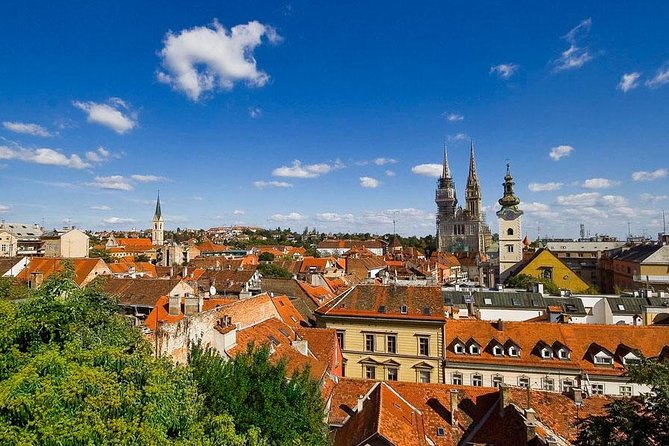
Your trip starts in Zagreb, with a transfer from Franjo Tuđman Airport to your hotel. There’s something reassuring about arriving, grabbing your luggage, and seeing your driver holding a sign with your name—no guesswork, no scrambling. After one night, you’ll get a guided introduction to Croatia’s largest city, covering the big visual hits: baroque facades and towers, parks, and those quiet courtyards tucked between lively streets.
Why this matters: Zagreb is a smart entry point. It’s not only pretty; it sets the tempo for the trip. You learn what to look for before you start chasing waterfalls and Roman-era stones later on.
Practical tip: plan a low-key afternoon after your guided walk. Zagreb’s best moments often come when you stop “trying to see everything” and instead drift—especially if you want to find a simple café rhythm.
You can also read our reviews of more tours and experiences in Zagreb.
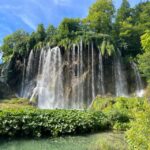

Plitvice Lakes and Trogir: two very different UNESCO-style stops
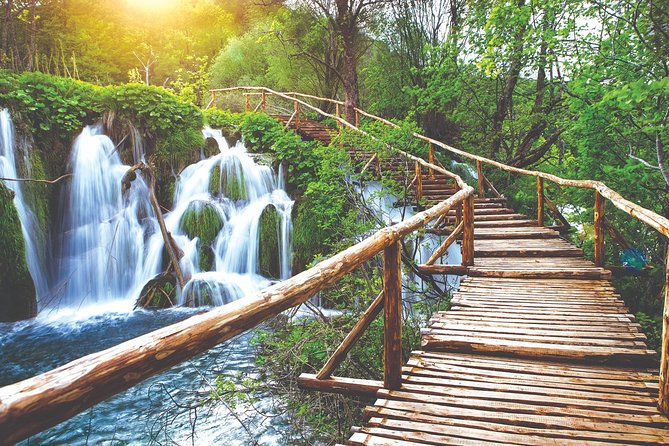
The day you leave Zagreb for the coast is where the trip really earns its keep.
Plitvice Lakes National Park
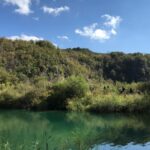
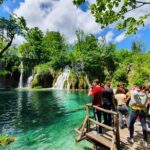
You’ll head to Plitvice Lakes for a guided walk along wooden pathways. The setting is all cascading lakes and waterfalls—think 16 lakes and more than 90 waterfalls, linked together in a way that makes you feel like the scenery is constantly changing. One season can look different from another, but the basic effect stays: you keep turning corners and the water keeps surprising you.
Value angle: Plitvice is expensive in time and logistics if you do it alone. Having entrance included and taking the guided route removes the most annoying friction, so you can focus on actually seeing.
What to consider: you’ll be walking and standing in wet, slippery conditions. Comfortable shoes are not optional here, even if you feel like you packed light.
Trogir: a quick UNESCO-style detour
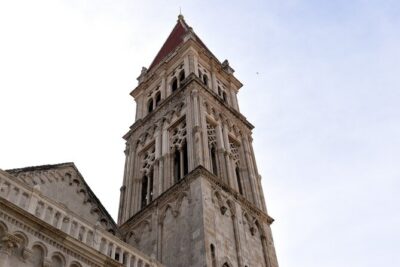
On the way to Split, you’ll pause in Trogir, which is UNESCO listed. The appeal is the tight layout: narrow streets that twist through houses, palaces, and churches. It’s rooted in Greek and Roman times, and you’ll spot some of the best architectural details in Croatia, including the intricate portal of the Cathedral.
This stop works because it’s short enough to keep momentum. It’s like a cultural appetizer—enough to whet your appetite for medieval stonework without turning your day into a marathon.
Split: Diocletian’s Palace plus a ferry to Hvar
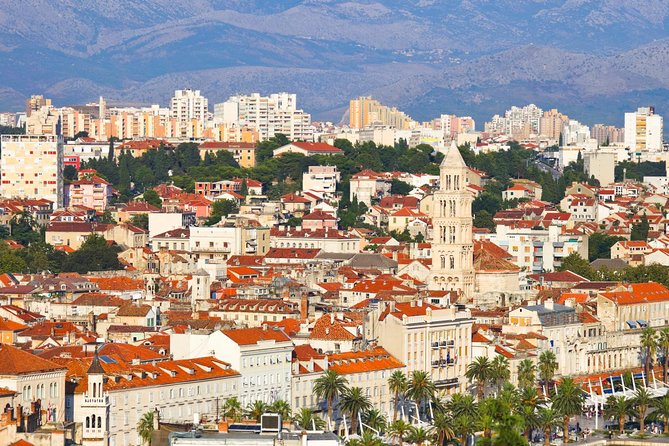
Split is the Dalmatian city where you learn how quickly the trip shifts from inland scenery to coast life.



Split walking tour
After breakfast, you get a late-morning walking tour of Split. The star is Diocletian’s Palace, originally the Roman Emperor’s retirement estate and now a living heart of the city, with thousands of residents inside the old walls and structures. Your guide helps connect the dots—why the buildings are where they are, how the palace became the city’s core, and what to notice as you walk.
I like tours like this on island itineraries. It’s not about memorizing dates; it’s about understanding the bones of the place so your self-guided time afterward feels easier.
Ferry/catamaran to Hvar
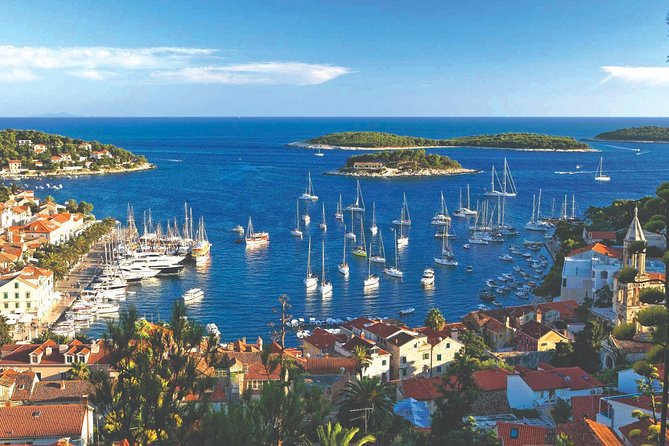
Then comes the sea hop. You’ll travel by ferry or catamaran from Split to Hvar and sleep in Hvar. That single decision—spending the night on the island—changes the whole feel of Hvar. You get morning and late-evening atmosphere, not just daylight tourist hours.
Hvar: lavender vibes, wine talk, and real free time
Hvar is famous for a few specific things: lavender fields, steep-vineyard red wines, and the island’s sunny reputation. It’s also known for a glitzy waterfront scene that shows up in plenty of summer media, which can be a selling point—or a reason to plan your time carefully so you’re not stuck only in the most crowded corners.
Day 5: explore Hvar town at your own speed
You’ll spend the day on your own in and around Hvar town. You also have a built-in reference point for the island’s depth: Hvar has the oldest theatre in Europe, and the story of the island is broader than the party strip.
What I like for you here: you’re not forced to do an all-day excursion. Instead, you can choose your pace—wander for architecture, hunt for a viewpoint, or just sit with a drink and people-watch while the light changes.
Day 6: more options, then a boat to Korčula
You get another breakfast, then more independent time. Hvar isn’t just Hvar town; you can head toward Jelsa for a quieter waterfront vibe, walk around Vrboska and its bridges, or aim for vineyard areas such as Ivan Dolac if you want wine-country scenery. In the afternoon, you bid farewell to Hvar by boat and continue to Korčula, arriving in the evening for an overnight stay.
This is one of the tour’s best “value for your attention” moments. You get enough time on Hvar to feel like you learned something, but not so much time that you burn out before the next big stop.
Korčula: Venetian lions and medieval streets that feel very preserved
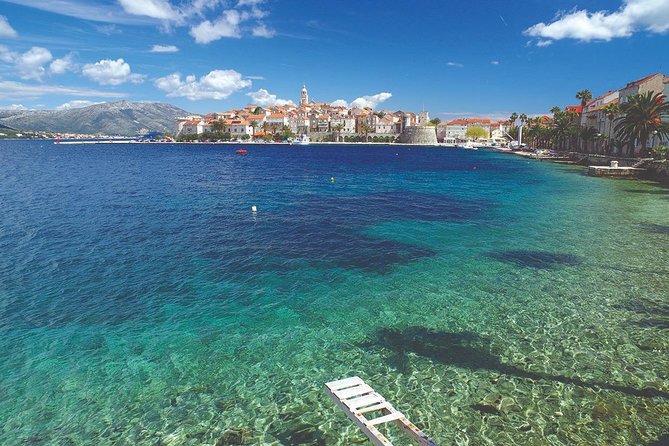
Korčula sits far south and has an entirely different flavor from Hvar. You’ll recognize the Venetian imprint quickly—lion statues appear on facades and gates—mixed with some of the most impressive stonework along the Adriatic.
When you walk Korčula Town, you’re looking at a medieval layout that still feels intact. Narrow, curved streets guide you toward churches and palaces, and the scale is easy to manage without constant transportation.
Then you transfer to Dubrovnik later in the afternoon. Arrival means you’re set up for the walking tour the next day, with enough downtime to reset.
Dubrovnik Old Town: walls, orientation, and choosing your own pace
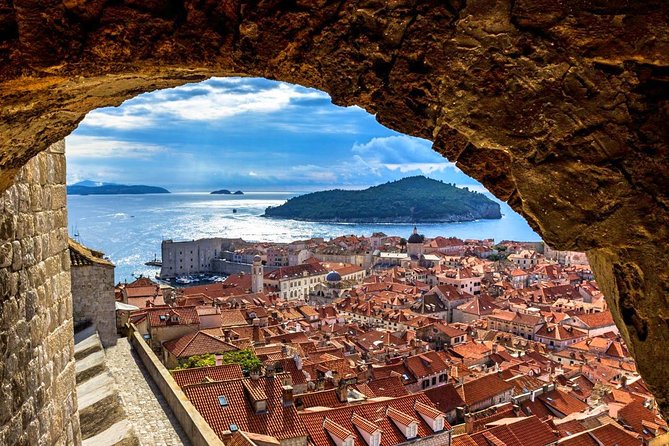
Dubrovnik is the reason many people plan this part of Croatia. Here’s the good news: the trip doesn’t treat you like you’re arriving at a theme park. You get a guided walking tour of Old Town, typically in the late morning, with an emphasis on history and what you’re looking at—plus the big visual payoff of Dubrovnik’s walls.
The tour helps you understand how the city once rivaled other Mediterranean powers and functioned as an independent republic. Then you get the afternoon free to explore on your own.
Practical wall strategy
Even though the tour focuses on walking and orientation, your free time is where you can decide how hard you want to push. Dubrovnik’s walls are a major experience, but they’re also physically demanding and weather-dependent. Plan your timing around your energy, and remember that this is a city where you can easily go from beautiful to crowded in minutes.
Hotel location matters
A note based on real-world experience on this style of route: you might not always be in the thick of Dubrovnik Old Town itself. One traveler had a hotel around 5 km away, which meant extra walking for someone with limited mobility. So when you book, pay attention to where your hotel sits relative to Old Town and what the easiest route to the center looks like.
Your Dubrovnik free day: Lokrum and the Elaphite Archipelago choices
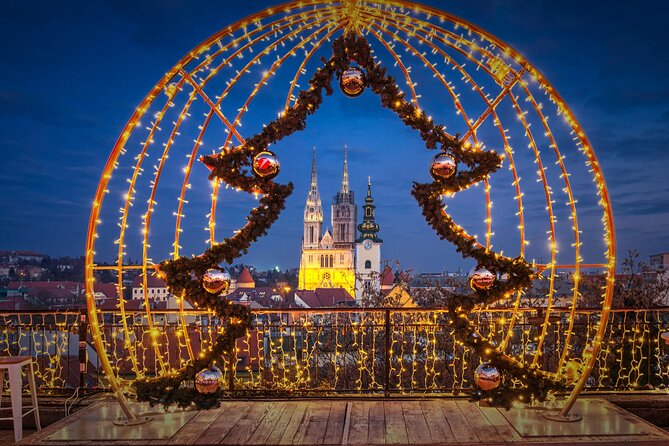
On the final full day in Dubrovnik (Day 9), you get to tailor your interests.
If you want something easy, locals suggest Lokrum Island as a short trip from the Old Town Harbor. It’s known for thick greenery and some unusual permanent residents: peacocks and rabbits. If you want a longer day with more variety—beaches, hikes, and places to eat—the Elaphite Archipelago is another option.
Even if you don’t do either excursion, this day is still valuable because it’s downtime built into an itinerary that otherwise has a lot of movement. You’ll feel better on your last day, and you’ll enjoy your final dinner more.
Transfers, tickets, and the small-group advantage
One of the best things about this kind of Croatia routing is that transport can make or break your trip. This itinerary leans toward “organized but not over-managed.”
- Shared arrival and departure airport transfers keep you from handling everything solo.
- Your driver meets you in the arrivals hall holding a sign with your name.
- You travel between destinations by included transportation, including the key sea legs (ferry/boat/catamaran).
- You get assistance with sea crossing tickets during the program, including delivery or something similar.
- Mobile tickets are part of the setup.
Group size helps too. With a maximum of 10 travelers, you’re less likely to spend your day waiting for a line to form. You’re also more likely to get practical answers fast when something changes.
In terms of guiding style, this trip works best if you like a mix: a couple of structured walking tours, then freedom to choose your own path. One solo traveler noted that outside of the walking tours, there was no guide hovering over every step. That’s often exactly what you want when you’re paying for convenience but still want to roam.
Hotels on this route: what’s usually good, what to double-check
Accommodation is one of the biggest variables in any multi-stop tour.
The overall pattern here looks strong: hotel stays are described as safe, clean, and comfortable, with breakfasts served each morning. Some stops have stood out—like a very appreciated sea-view room at Grand Hotel Park in Split, and praise for Hotel Amfora in Hvar. Others are simply described as excellent bases for walking around.
Still, not every hotel location is equally convenient. If you’re the type who wants to step out and instantly be in the middle of Old Town life, ask yourself a simple question before booking: would you be okay with a short ride or walk each day to get to the main sights? For Dubrovnik, this is especially worth considering.
Price and value: what $2,745.38 is really buying you
At $2,745.38 per person for the 10-day option (as shown), you’re paying for more than bed nights. You’re paying for the removal of sticky logistics: transfers, route sequencing, key entrance fees, and the sea transport that otherwise requires research, ticket timing, and extra planning.
Here’s what you’re effectively getting value from:
- Nine nights of accommodation for the 10-day version
- Plitvice Lakes entrance included
- Walking tours in Zagreb and Split, plus a Dubrovnik walking tour on the longer option
- Ferry/boat/catamaran tickets and help handling them
- Transportation between destinations, plus transfers in multiple cities
If you tried to DIY this itinerary, your costs would likely rise in the places that are hard to manage: last-minute ferries, entrance coordination, and the time you lose solving transport puzzles while on vacation.
That said, the value depends on your tolerance for motion. This is not a slow, resting-on-one-island-only trip. You’re trading downtime for variety—and that can be worth it if you like seeing more of Croatia in one stretch.
Who this tour suits best
This works especially well for you if:
- You want big-ticket sights with minimal hassle
- You like structure for orientation, then time on your own
- You’re comfortable with frequent hotel changes and daily walking
- You want island nights in Hvar and Korčula, not just day trips
It may not fit as well if:
- You want one base for the whole trip
- You’re sensitive to walking on uneven or wet surfaces
- You need very specific hotel locations for every stop
Should you book this Croatia countryside and island-hopping trip?
If you want an efficient “best of” route through Croatia with built-in sea crossings and only a few guided days, this is a strong match. The itinerary hits major highlights—Zagreb, Plitvice, Split, Hvar, Korčula, Dubrovnik—with enough free time to feel like you’re living there instead of just passing through.
Before you book, do two quick checks:
1) Decide if you’re okay with the pace and the frequent moving day rhythm.
2) In Dubrovnik, make sure your hotel situation fits your comfort level for getting into Old Town.
If you’re the kind of traveler who likes variety, this is the kind of trip that leaves you with stories: waterfall paths, Roman walls, and evenings on islands where the light changes faster than your itinerary.
FAQ
Where does the tour start, and is pickup available at the airport?
It starts at Franjo Tuđman International Airport Zagreb. Pickup is offered, and your driver will meet you in the Arrivals Hall holding a sign with your name after you collect your luggage.
What parts of the trip include guided walking tours?
In both options, you get guided walking tours in Zagreb and Split. In the 10-day option, you also get a guided walking tour of Dubrovnik Old Town.
Is Plitvice Lakes National Park admission included?
Yes. The Plitvice Lakes National Park entrance fee is included in both tour options.
Do you include ferry/boat travel between islands?
Yes. Boat/ferry/catamaran tickets are included, along with assistance with ticket delivery or something similar during the program.
Do you have time to explore on your own?
Yes. After the guided elements, the itinerary builds in free time for independent exploring in Zagreb, Split, Hvar, and Dubrovnik, along with leisure time on other days.
How big is the group?
The tour has a maximum of 10 travelers.
Is the tour offered in English, and are breakfasts included?
The tour is offered in English. Breakfast is included for 9 days on the 10-day option (and 7 days on the 8-day option).