REVIEW · SPLIT
From Split: Half-Day Tour of Trogir Old Town in Small Group
Book on GetYourGuide →Operated by www.splitwalkingtour.com · Bookable on GetYourGuide
Trogir is Croatia’s old town that feels calmer. This half-day trip from Split pairs a comfortable, air-conditioned ride with a guided walk through UNESCO Trogir’s medieval streets and main sights. I especially like the licensed English guide who turns stone streets into stories (Ivana, Ante, and Antonia all stood out in different groups), and I like the built-in balance of guidance plus breathing room—you also get free time to wander.
The main thing to consider is pacing: the tour packs in the core highlights and then hands you the town for about an hour, so if you’re the type who likes to linger in every alley, you may want extra time beyond this half-day.
In This Review
- Key takeaways before you go
- Split to Trogir by van or car: the comfort factor
- UNESCO Trogir on foot: what the guided walk really gives you
- The main square moment: cathedral, loggia, and art
- Narrow alleys and local legends: the part you’ll remember
- Free time in Trogir: how to use your hour well
- Group size and guide style: why it feels personal
- Price and value: what $53 gets you from Split
- Who this Split to Trogir half-day tour suits best
- Should you book this tour?
- FAQ
- How long is the Split to Trogir half-day tour?
- Is the tour guided in English?
- Do I get free time in Trogir?
- What’s included in the price?
- Is pickup from my hotel or cruise ship available?
- Where do I meet the group?
- Are food and drinks included?
Key takeaways before you go
- Small-group feel: many departures run as tight groups, which keeps questions easy and the walking pace comfortable.
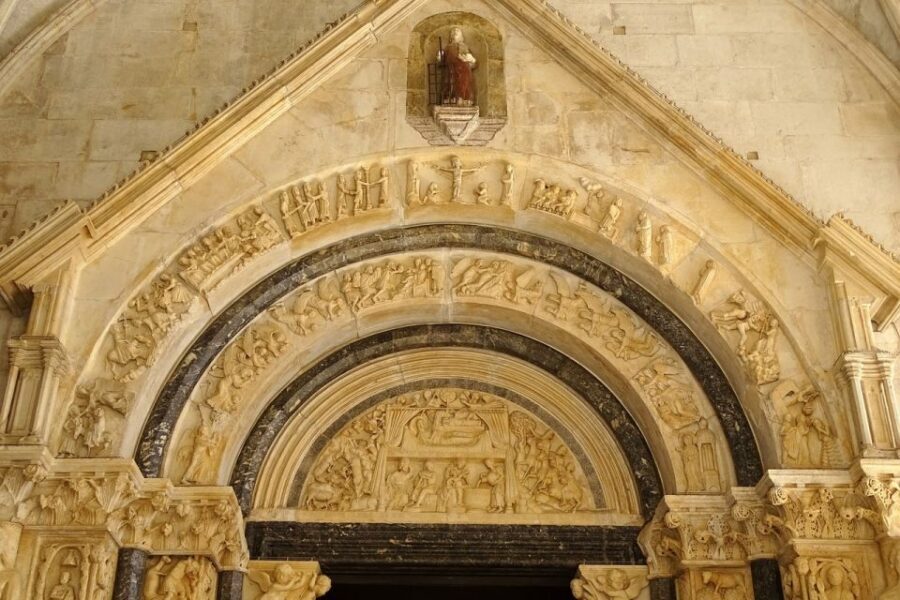
- UNESCO old town highlights: you’ll focus on the main square, cathedral area, and the city loggia, not just random streets.
- Time to choose your own pace: after the guided portion, you get a full hour to eat, shop, or simply stroll.
- Comfortable, air-conditioned transport: the ride from Split is part of the package, and the car/van is designed for sightseeing days.
- Guides who bring local history to life: expect myths, legends, and local context that make Trogir feel more than a postcard.
- Not a food tour: you won’t be fed on this one, so plan meals on your own during free time.
Split to Trogir by van or car: the comfort factor
The day starts with the transit from Split to Trogir, typically by van or a people-mover style vehicle. You’re looking at about a 45-minute ride each way, which is long enough to reset, short enough that you still feel like you’re spending most of the day in Trogir.
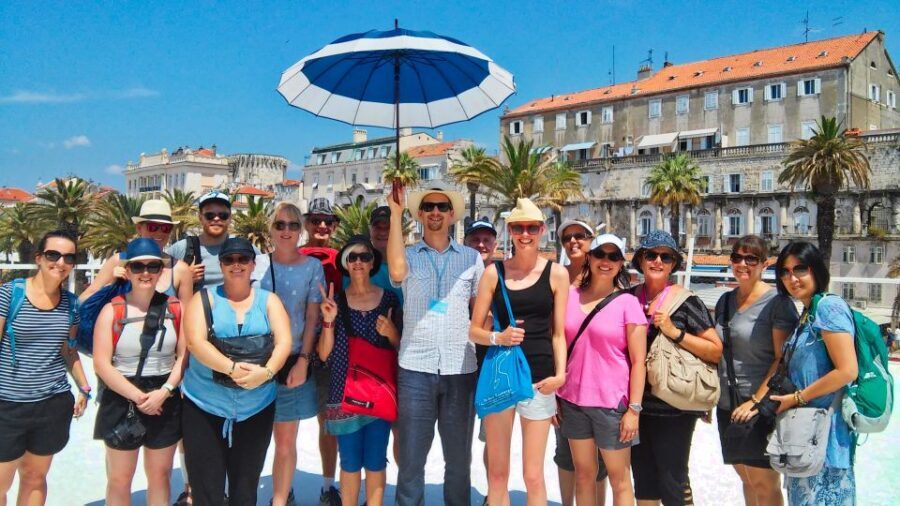
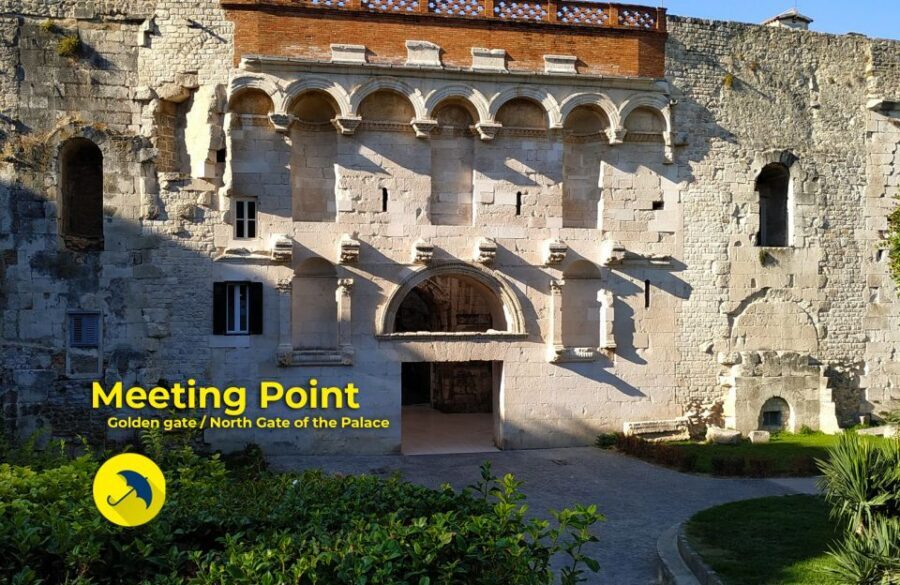
If you choose pickup, it can come from your accommodation or a cruise ship. If not, you’ll meet at a very specific spot: below the statue of Gregory of Nin at the Golden Gate of Diocletian’s Palace, and look for your guide holding a blue umbrella. That detail matters—Trogir is easy, but meeting points near major landmarks can get busy.
I like that the transport is air-conditioned. Croatia’s sun can be forgiving, but a warm walking day benefits from a cool ride afterward, especially if you’re coming straight from the coast in Split.
A few more Split tours and experiences worth a look

UNESCO Trogir on foot: what the guided walk really gives you
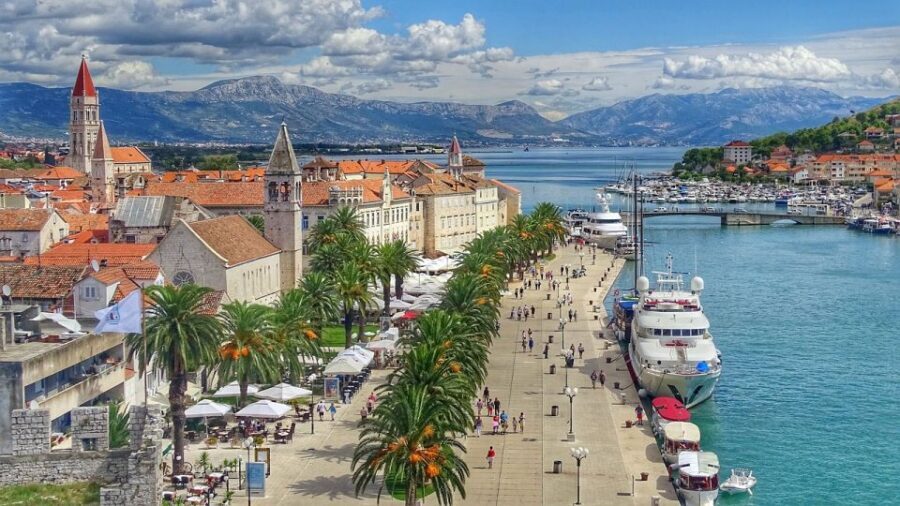
Once you’re in town, the heart of the experience is a licensed guide leading you through Trogir’s historic center. The tour is in English, and the focus is not just facts—it’s what those places meant, how the town formed over time, and why locals still talk about certain stories.
This is the part where Trogir clicks. You’ll walk past the medieval maze: narrow lanes, stone facades, and squares that open up like little stages. The guide keeps things moving while still pointing out the features you’d miss if you wandered on your own—like how the town layout directs your eyes toward the main public spaces.
A big plus: you’re not stuck in a huge crowd. Some departures run very small, which helps a lot when you want to ask questions or adjust your pace mid-walk. If you’re traveling solo, it also feels easier to connect with the story since the guide can actually talk to individuals, not just a mass.
The main square moment: cathedral, loggia, and art
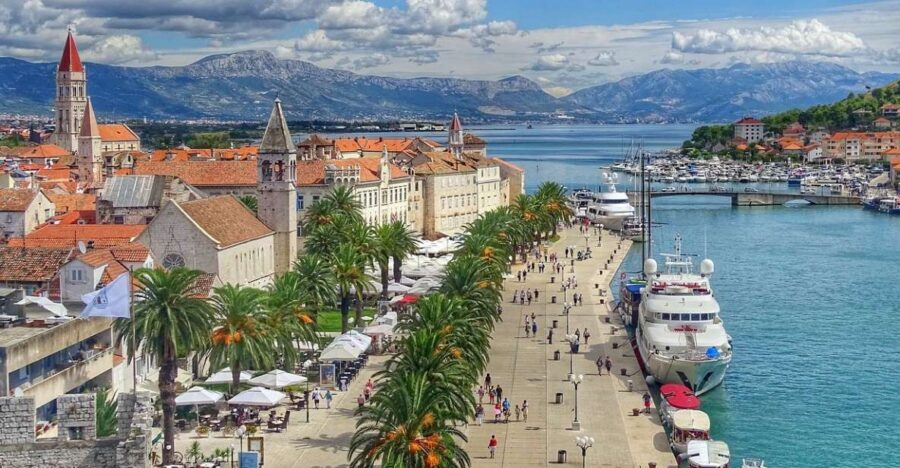
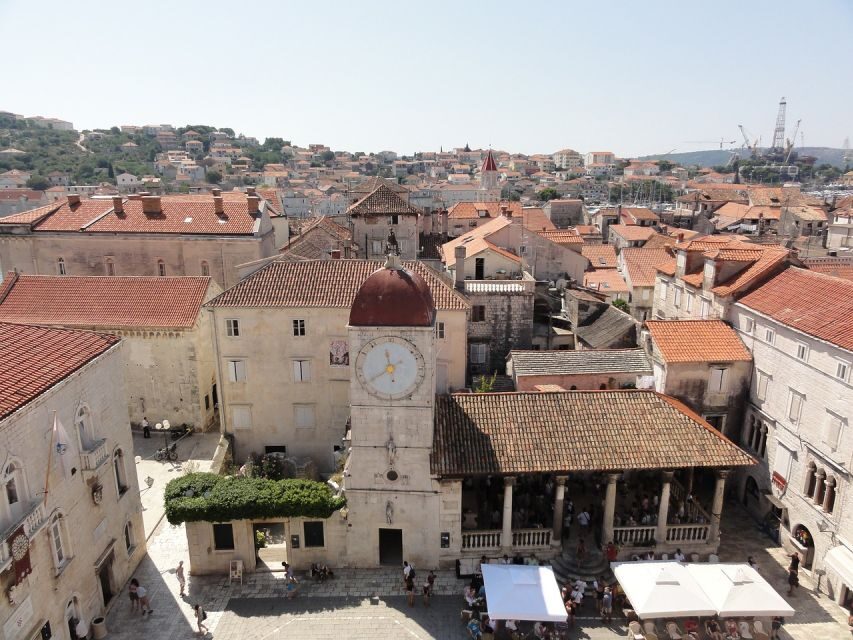
The tour’s anchor stop is the area around the main square, where Trogir’s “city center” energy is strongest. You’ll see the cathedral area, the city loggia, and an art collection connected to the landmark setting.
What I like about this approach is that it’s not random sightseeing. You start with the civic and spiritual core, so later alleys and side streets feel like they connect to something bigger. The architecture also does the teaching for you: once you’ve seen the public face of the town, the surrounding stonework makes more sense.
The cathedral and loggia area tends to be where you can pause for photos without feeling like you’re blocking traffic. It’s also a good place to slow down mentally. Even if you’re not a history diehard, this is where you can look at the town and think, Okay, this is why people used to come here and stay.
Narrow alleys and local legends: the part you’ll remember
After the main landmarks, the guided portion shifts into the parts that feel more personal—Trogir’s tighter streets and quieter corners. This is where the town’s reputation for myths, legends, and local storytelling becomes practical. A good guide points out the reason a particular lane exists, or explains how a local legend ties to a real building or a real square.
That matters because Trogir can look like just another pretty old town—until someone gives you context. Then the same streets start feeling purposeful. You notice details you’d normally walk past: small features in stonework, odd angles, and signs of how the town handled daily life over centuries.
One thing I learned from guides in different groups is that their enthusiasm isn’t performance. It’s craft—figuring out what to emphasize so you don’t drown in dates. You get a story-driven tour, with enough history to make the places meaningful, without forcing you to track every century.
Free time in Trogir: how to use your hour well
After the guided walk, you get about an hour of free time. This is the part where you can steer the day toward what you personally like: photos, a slow coffee, a snack, a souvenir stop, or just circling back to places you liked most.
Because the tour doesn’t include food, I recommend planning your meal timing around your free hour. In practice, that means you shouldn’t treat it like a quick stroll. If you want lunch or dessert, arrive with an idea in mind, or ask your guide for quick suggestions right before you go off on your own.
This is also where you can do the “one extra loop” habit. If the guided walk felt like a guided highlight reel, your free time lets you find the streets that you personally want to see again. It’s not long, so you’ll want to choose wisely—like staying near the most interesting areas rather than trekking to far edges.
A small drawback: because the free time is time-boxed, you may not see everything in town if you’re someone who likes to chase every street. Still, for a half-day, the structure is fair: it gives you both direction and freedom.



Group size and guide style: why it feels personal
One of the most praised parts of this experience is how it feels in the group—small enough that you’re not lost in a crowd. In at least one group, it was only four people, and that changes the tone. Questions get answered. The guide can adjust pacing. It also makes the stories land better because you’re not just hearing facts; you’re interacting.
Guide quality shows up in practical things: speaking clearly, keeping explanations organized, and answering the extra questions that pop up mid-walk. You can see this in guides such as Ivana and Ante, and in others who were described as friendly and fun while still sticking to the historical thread.
There’s also a transport note worth keeping in mind: some people sit in different rows or positions, and if you’re seated toward the back of a taxi, you might catch only parts of driver commentary along the way. That’s not a dealbreaker—your main learning happens on foot in Trogir—but it’s good to know if you’re the type who likes to listen during transfers.
Price and value: what $53 gets you from Split
At about $53 per person, this tour sits in the “worth it if you want structure” category. The value comes from what’s bundled: transfer from Split, a licensed English guide in Trogir, and free time once you’re oriented.
You’re not just paying for walking. You’re paying for an organized way to reach a UNESCO old town from Split without coordinating public transport, and for a guide who helps you understand what you’re looking at. When you add up your own time and decision-making effort, a guided half-day can be a good deal.
The trade-off: food and drinks are not included. That’s normal for this style of tour, but it means your total day cost depends on what you choose during free time. If you budget a casual lunch or a snack, you’ll feel set. If you were hoping for a package meal, you’ll need to plan that separately.
Who this Split to Trogir half-day tour suits best
This is a strong fit if you:
- want a half-day that includes both guidance and freedom
- like historic towns but don’t want to spend your whole day “researching”
- enjoy listening to local stories and myths connected to real buildings
- appreciate small-group pacing
It might be less ideal if you’re chasing a deep, slow travel experience. Trogir deserves lingering—this tour gives you the main highlights and then a limited window to explore. If you want to wander for hours, consider pairing it with independent time in Trogir before or after.
Should you book this tour?
Book it if your goal is a well-paced UNESCO-focused stop from Split, with transport handled and a guide who makes the old town feel alive. This is the kind of outing that helps you leave with more than photos—you’ll have a mental map of where Trogir’s key spaces sit and why they matter.
Skip it or adjust expectations if you want a food-inclusive experience or a long, unhurried day. For a half-day, the structure is smart: get oriented with a licensed guide, then use your hour to turn the highlights into your own version of Trogir.
FAQ
How long is the Split to Trogir half-day tour?
The experience runs about 210 minutes up to roughly 5 hours, depending on the selected option and timing.
Is the tour guided in English?
Yes, the live tour guide speaks English.
Do I get free time in Trogir?
Yes. After the guided portion, you’ll have about an hour of free time to explore on your own.
What’s included in the price?
Included are the transfer from Split to Trogir, a guided tour of Trogir with a licensed guide, and the free time in Trogir.
Is pickup from my hotel or cruise ship available?
Pickup is optional and can be offered at your accommodation or cruise ship.
Where do I meet the group?
Meet below the statue of Gregory of Nin at the Golden Gate of the Diocletian’s Palace, and look for a guide holding a blue umbrella.
Are food and drinks included?
No. Food and drinks are not included, so you’ll need to plan meals during free time.