REVIEW · ZAGREB
Kumrovec: Croatian Ethno Village & Josip Broz Tito’s Birthplace
Book on Viator →Operated by Servus Tours · Bookable on Viator
Tito’s childhood starts in a quiet museum village. Kumrovec (the Staro selo open-air museum) takes you into a real-looking slice of rural Croatia, then threads it straight through Josip Broz Tito’s birthplace and early life, with homes, exhibits, and a few details that make history feel human. You’re not just looking at buildings here, you’re learning how a village can shape a person.
What I love most is how the village feels authentic and carefully maintained, from the original homes to the period crafts and exhibits inside. I also like the way a local guide connects the dots—Tito’s childhood school, a bronze statue honoring the communist Yugoslavia founder, and even an arboretum tied to public visitors. It turns a simple visit into a clear story you can follow without needing a history degree.
One possible drawback: this tour is very focused on Tito and rural life, so if you want modern cities or lots of free time wandering on your own, you might find it a bit museum-walk heavy. With about 3 hours at the village during a total 5-hour outing, you’ll want comfortable shoes and a patient pace for the outdoor setting.
In This Review
- Key Things to Know Before You Go
- Kumrovec and Tito: a rural village built into the story
- Getting There from Zagreb: pickup and a clean start at 9:00
- Staro selo Museum: the open-air village walk that makes history feel tangible
- What to watch for while walking
- Tito’s birthplace house: the small details that hit hardest
- Crafts, workshops, and rural life: what you’ll see beyond the Tito rooms
- Food, cafés, and souvenirs: the easy way to end the visit
- Price and timing: is it worth $328.59 per person?
- Who this tour suits (and who should skip it)
- Should you book Kumrovec and Tito with pickup from Zagreb?
- FAQ
- Where does the tour take place?
- How long is the experience?
- What time does the tour start?
- Is pickup provided?
- Is admission included?
- What language is the tour offered in?
- Is this a private tour?
- What is the price per person?
- Can I cancel and get a full refund?
- Do I get anything like a mobile ticket?
Key Things to Know Before You Go
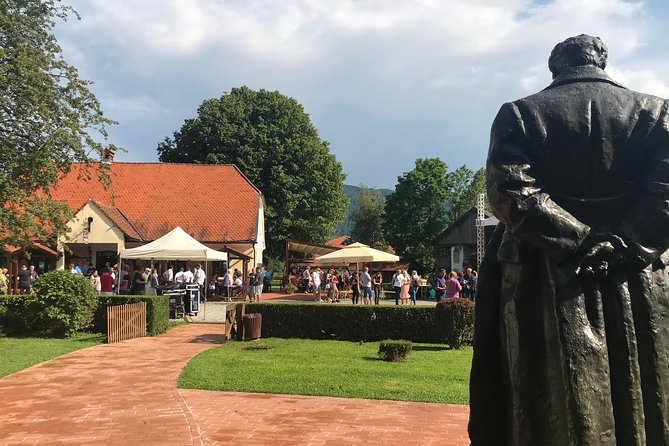
- Staro selo is an open-air ethnographic museum built around traditional homes (hize) from the 1800s and early 1900s.
- Tito’s early life is built into the walk, including his childhood elementary school and the house connected to his birthplace.
- The village is pedestrian in practice, so expect a steady on-foot visit rather than a bus-and-pause loop.
- Crafts and rural life show up inside the homes and workshops, not just on signs.
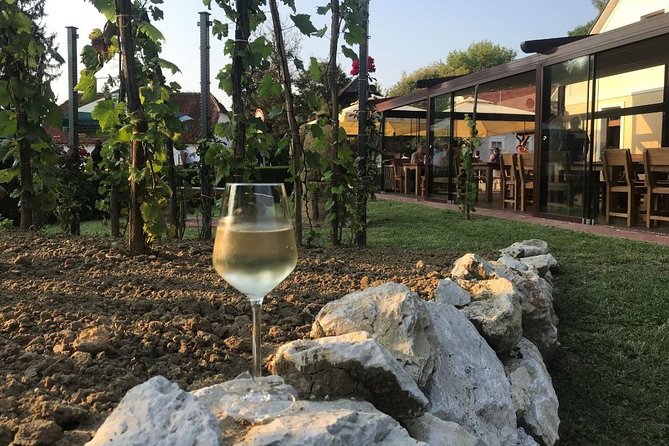
- You’ll have time for food and wine afterward, plus café/snack options once you’re done exploring.
Kumrovec and Tito: a rural village built into the story
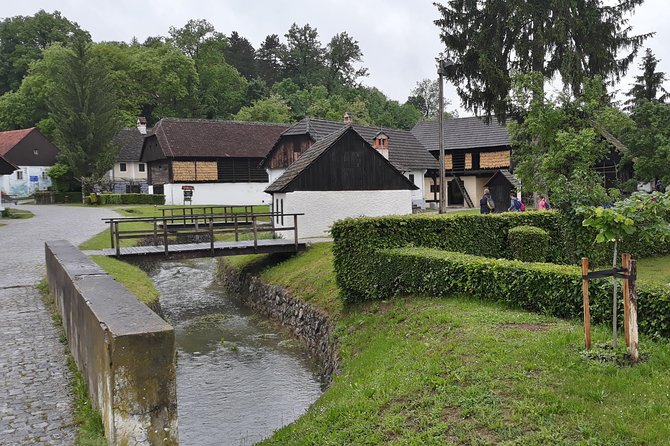
If you only know Tito from textbooks or headlines, Kumrovec changes the angle. This place is an open-air ethnographic village where traditional houses (called hize) from the 19th and early 20th centuries show what daily life looked like in northern Croatia. You start by getting your bearings in a real village setting, then you move through Tito-related stops that explain why this birthplace mattered.
The big win is that the tour doesn’t treat history like a distant museum label. The guide ties the village timeline—its founding in 1435—to the human scale of homes, school life, and the social world Tito grew up in. You end up with a clearer picture of the person behind the politics, and how childhood environment can shape how someone later moves through the world.
And yes, the symbolism is right there too. There’s a bronze statue honoring the founder of communist Yugoslavia, so the visit doesn’t shy away from the era’s impact. You’ll also see Tito’s childhood elementary school and an arboretum where he hosted public figures. That last detail helps you connect the village to the broader stage he later reached.
You can also read our reviews of more tours and experiences in Zagreb.



Getting There from Zagreb: pickup and a clean start at 9:00
This tour starts in the morning, with a 9:00 am departure time. The convenient part is that pickup is offered for all travelers, which means you’re not trying to solve transportation on your own for a day trip outside Zagreb.
You’re looking at roughly 5 hours total, and about 3 hours of that is focused on the village visit with admission included. For most people, that time split is workable: it gives you enough time to walk through multiple homes and exhibits without turning the day into an all-day marathon.
Since the experience is offered in English, it’s also easier to follow the guide’s story. That matters here, because a lot of the value comes from context—why each house or exhibit is there, and what it connects to in Tito’s life and the local rural world.
Staro selo Museum: the open-air village walk that makes history feel tangible
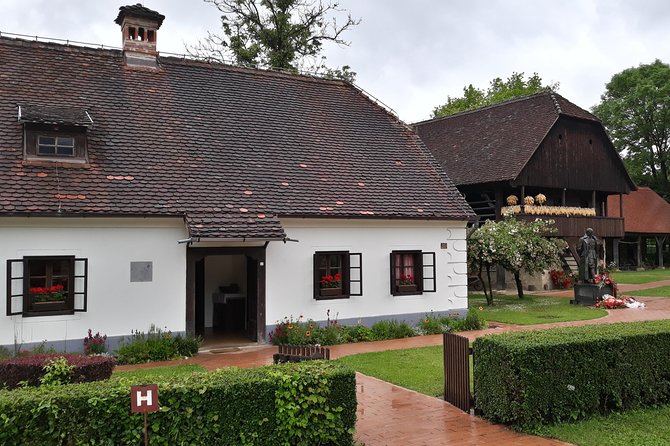
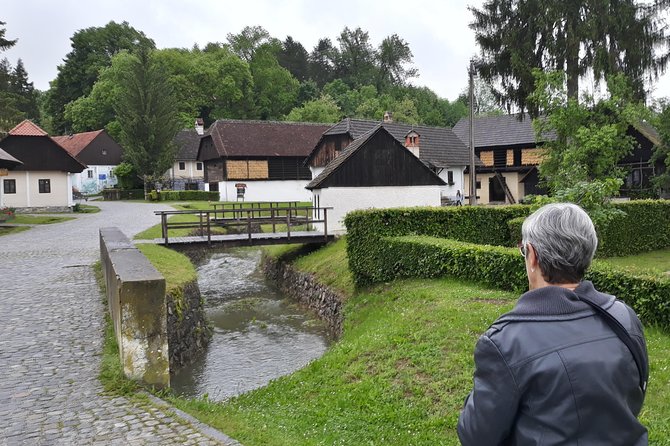
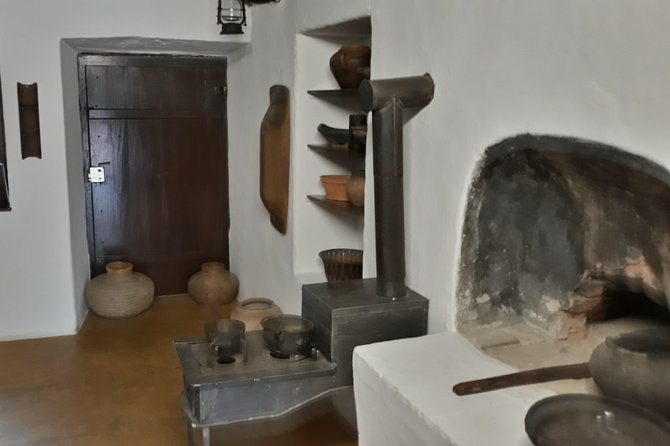
Your main stop is Staro selo, an open-air museum built around the older homes of Kumrovec. This is not the kind of site where buildings feel randomly assembled. The layout helps you sense the village as a living place: houses in their original positions, outdoor spaces, and exhibits inside that match the period theme.
As you move through, you’ll learn about Kumrovec’s long roots, including the village’s founding in 1435. That early timeline might sound like a quick fact at first—but it becomes useful once you start seeing crafts and home interiors tied to everyday life in the 1800s and early 1900s.
A few Tito-linked highlights come early in the flow. You’ll visit the bronze statue connected to the founder of communist Yugoslavia, and you’ll also get to Tito’s childhood elementary school. That’s where the visit shifts from general rural history into personal biography.
One more detail I appreciate is the arboretum. It’s not just a pretty addition. It’s there because Tito hosted public figures there, which subtly changes how you interpret the village. You start seeing it not only as a quiet childhood backdrop, but as a place that connects to bigger political and social networks.
What to watch for while walking
- Look for workshops and craft-focused buildings. They help you understand the economy of the village, not just the houses.
- Notice the way some details in the Tito-related rooms are about lived-in life, not just staged display.
- Plan for steady walking. The village is pedestrian, so most of your day is on your feet.
Tito’s birthplace house: the small details that hit hardest
The part of the day that many people remember is the house connected to Tito’s life. You’ll find it open to the public, and you’ll spend time inside learning how different rooms tell different chapters.
A practical note: not everything in the house is literally original. Some furniture details may be interpretive, but the visit still lands because the museum gives you a sense of what the household felt like. And when the exhibits include an original detail, you can feel the difference.
One poignant example is the cradle described as original. The display notes that the cradle has many scratches on the floor from being rocked often. That’s a small physical trace, but it makes Tito’s childhood seem less like a photo in a textbook and more like something with ordinary repetition—day after day, rhythm after rhythm. The fact that Tito had seven siblings adds weight to that image of a crowded household and shared family life.
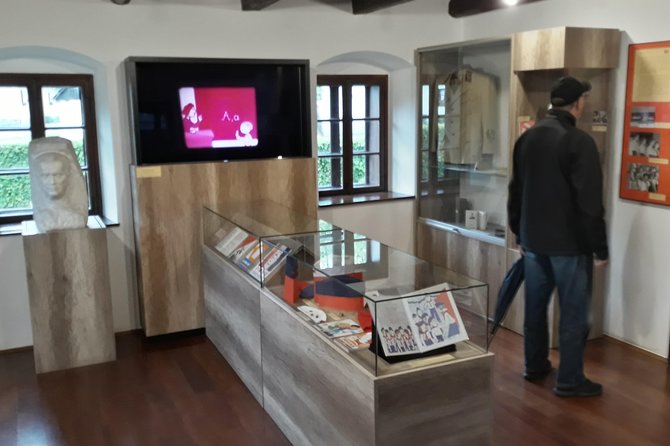
Another exhibit room focuses on Tito’s public life. You’ll see items connected to gifts from dignitaries, which show how his influence spread beyond his home village. There’s also a stark detail in the museum story about his funeral, described as including 100 heads of state. Even if you already knew the broad outlines of Tito’s international status, seeing that figure in a place rooted in rural beginnings makes the contrast feel real.
If you like history that’s anchored to objects—real-world items, rooms, and traces of daily living—this is where Kumrovec earns its place.



Crafts, workshops, and rural life: what you’ll see beyond the Tito rooms
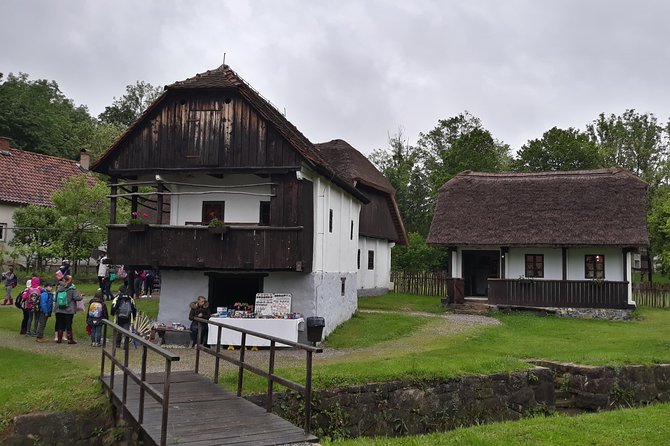
Kumrovec isn’t only Tito. It’s an ethnographic village, so you’ll also see buildings dedicated to crafts and trades. This is where the visit becomes more than biography and turns into a study of village life.
Expect specialty areas connected to practical work, including blacksmithing and other artisan skills. The value here is that you can visualize how these jobs supported a community. A sign can explain a tool, but seeing the workshop space tied to the period house style gives you a better feel for how work fit into daily life.
You’ll also notice that the village is designed as a whole environment. Many of the structures have period features like thatched roofs. One detail shared on site is that thatched roofs need replacement only about every 30 years, which helps you understand how rural maintenance cycles worked and why certain building styles made sense.
This part of the tour is also useful if you’re traveling with someone who might not care about Tito as much. They can focus on crafts, household interiors, and the rural routines displayed throughout the homes. Meanwhile, Tito-focused visitors still get constant context because the biography is woven into the broader village story.
Food, cafés, and souvenirs: the easy way to end the visit
After you’ve walked the village and worked through the key exhibits, Kumrovec gives you time to slow down. The format works nicely because there’s an intentional ending moment with local food and wine.
There are also café and snack options inside the village, so you’re not forced to leave the site just to eat. That’s a practical advantage on a day trip, because it reduces time pressure when you’re using a tight schedule from Zagreb.
Then there’s the souvenir shop. It has a mix that fits the place: things connected to Tito (like T-shirts and magnets) alongside traditional hand-made toys. If you’re the kind of person who likes souvenirs with some local craft logic, you’ll probably enjoy browsing here more than at a generic tourist stop.
Price and timing: is it worth $328.59 per person?
At $328.59 per person for a roughly 5-hour outing from Zagreb, you’re paying for more than admission. You’re paying for guided interpretation, pickup, and a structured visit that keeps you from wasting time figuring out what matters once you arrive.
Here’s how I think about value for this specific tour:
- Admission is included for the main village time, so you’re not adding extra ticket costs later.
- Pickup from Zagreb saves time and hassle, especially on a day trip where schedules matter.
- The experience is shaped around Tito and rural life, so a guide is more than a bonus. It’s part of how you get meaning out of the rooms.
The best-fit situation is when you want context and you’d rather spend your energy looking at exhibits than sorting out logistics. If you’re comfortable planning on your own, you might find a cheaper way to visit Kumrovec. But if you want a clear narrative with stops that hit the most important Tito-linked places (school, birthplace house, statue, arboretum) and a smooth schedule, the price starts to look more reasonable.
Also consider the pacing. About 3 hours on-site can feel like plenty if you’re into museums, crafts, and interiors. If you’re not, you might feel like you’re spending time moving between rooms rather than soaking in atmosphere. Either way, it’s a focused experience, not a free-form wandering day.
Who this tour suits (and who should skip it)
This is a great match if:
- You’re curious about Josip Broz Tito’s childhood and life story, and you like seeing historical context in real settings.
- You enjoy ethnographic museums where houses, crafts, and daily life details help you understand an era.
- You want a guided experience from Zagreb with English support and less transportation stress.
It might not be ideal if:
- You want a modern city day with lots of independent time.
- You prefer museums with heavy emphasis on art or architecture only, rather than biography and rural history.
- You dislike walking. The village visit is pedestrian in practice, and you’ll spend a lot of time on your feet.
Should you book Kumrovec and Tito with pickup from Zagreb?
I’d book this tour if you want a day trip that’s both educational and oddly personal. Kumrovec works because it connects rural Croatian life—homes, crafts, and village rhythms—to Tito’s early story through specific stops like his childhood elementary school, the bronze statue honoring the era’s founder, and the birthplace house with those object-level details.
If you’re on the fence, my advice is simple: ask yourself whether you’ll enjoy a structured history walk. If yes, this is strong value for a guided, admission-included visit that saves you the headache of figuring out how to make the day work.
If you’d rather skim fast and move on, you might feel the focus is too narrow. But for the right traveler, Kumrovec is the kind of place that sticks with you because you remember not just facts—you remember rooms, tools, and the lived-in feel of the village.
FAQ
Where does the tour take place?
The tour takes place in the Kumrovec area, starting from Zagreb, Croatia.
How long is the experience?
The experience is about 5 hours total.
What time does the tour start?
The start time is 9:00 am.
Is pickup provided?
Yes. Pickup is offered, and the tour picks up all travelers.
Is admission included?
Yes. Admission ticket is included for the Staro selo museum portion (about 3 hours).
What language is the tour offered in?
The tour is offered in English.
Is this a private tour?
It’s described as a private tour/activity, so only your group participates.
What is the price per person?
The price is $328.59 per person.
Can I cancel and get a full refund?
You can cancel for a full refund if you cancel up to 24 hours in advance of the experience’s start time.
Do I get anything like a mobile ticket?
Yes. A mobile ticket is included.