REVIEW · ZAGREB
Zadar, Šibenik: olive oil, wine & food tasting, Self Drive
Book on GetYourGuide →Operated by Dalmatia Oil · Bookable on GetYourGuide
Olive oil here comes with a story. This self-drive, small-group tasting near Benkovac turns a walk through an ancient olive grove and mill visit into a hands-on 5-oil course plus Croatian wine and local bites. I especially like the sensory training for award-winning extra virgin olive oil, and I like how the food and wine feel like a relaxed family gathering, not a staged production. The one thing to consider: you’ll want a car for the “close to Benkovac” location, and the full lunch option costs extra.
The hosts, including Branimir, keep it friendly and practical. You’ll learn what makes good oil taste the way it should, then you’ll use the same kind of step-by-step attention for wine appreciation with a simple sight, smell, swirl, sip, savour approach.
If you’re short on time around Zadar or Šibenik but still want something more authentic than a basic tasting room stop, this hits the sweet spot.
In This Review
- Key highlights you’ll actually feel during the experience
- Why this olive oil and wine stop works from Zadar and Šibenik
- Getting there by self-drive: easy, but don’t wing it
- Entering the grove: climate, stony soil, and 2,000 years of practice
- The vintage fire engine moment (and why it isn’t just a gimmick)
- Inside the mill: from olive to bottle, without the mystery
- The olive oil tasting course: how to spot quality by aroma and finish
- What you learn to do with your senses
- Why that matters for value
- Croatian wine tasting: sight, smell, swirl, sip, savour
- The food pairing: Dalmatian bites built around olive oil
- A practical tip
- History without the lecture: Roman and Venetian threads
- Price and value: $29 for skill, not just sips
- Who this is best for (and who might want to choose differently)
- A note on guides, language, and the tone of the group
- Should you book this? My honest call
- FAQ
- Where does the experience start?
- Is this experience self-drive?
- How long is the tasting?
- What do you taste for the olive oil part?
- What wines are included?
- Do you get food during the experience?
- Is lunch included?
- Can you buy olive oil to take home?
- Is the tour wheelchair accessible?
Key highlights you’ll actually feel during the experience
- Ancient grove stroll plus mill walkthrough: see the olives to bottle process up close.
- Sensory olive-oil training with pro cups: aroma, bitterness, and a peppery finish, taught in real time.
- Gold-award oils, including 2024 early harvest: learn about polyphenols (including the 1,200 mg/kg figure).
- Croatian wine tasting by the five-step method: sight, smell, swirl, sip, savour.
- Local bites made to pair with oil and wine: including bread and Dalmatian favorites drizzled with their own oil.
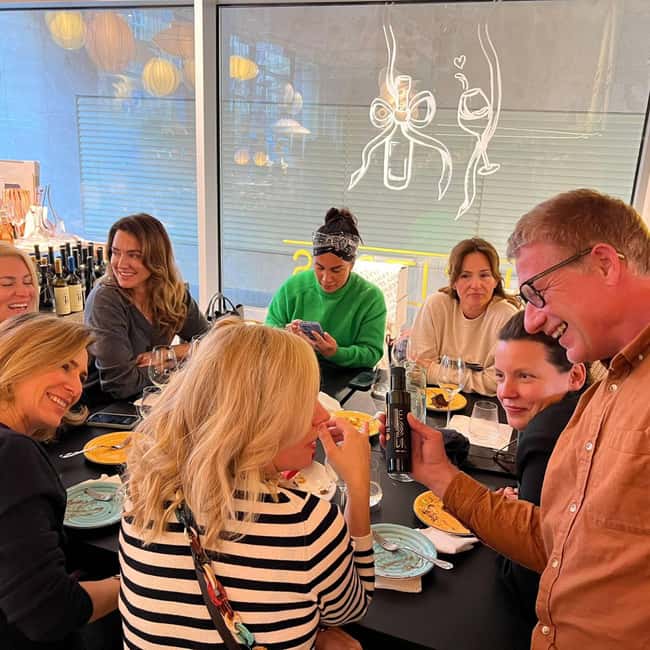
- Time to chat and relax under the trees: this is meant to feel personal, not rushed.
Why this olive oil and wine stop works from Zadar and Šibenik
This is a smart pick if you want a taste of Dalmatian food culture without spending the whole day on a long tour loop. The experience is built around one place: a family olive estate near Benkovac, where you can connect the dots between soil, harvest, milling, and what ends up on your plate.
You start outdoors, among the trees. Then you move into the mill, where the conversation shifts from romance to technique. That mix is what I like: it’s not just tasting for tasting’s sake, and it’s not just a lecture either.
You can also read our reviews of more tours and experiences in Zagreb.
Getting there by self-drive: easy, but don’t wing it
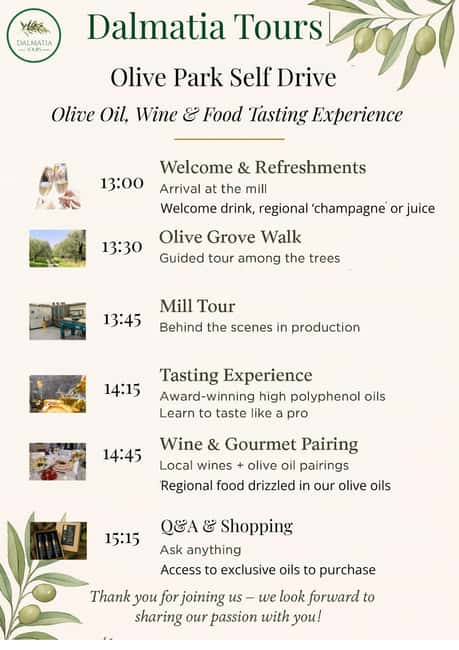
You’re driving yourself, and the start time runs from 13:00 to 15:30 (about 2.5 hours total). The meeting point can vary depending on the option you choose (one option is OPG Lepur in Donji Lepuri), and the tour notes that directions come from the host.
My practical advice: message or call ahead so you’re not circling a rural road at the exact moment you want to be relaxed. Once you’re there, the flow is straightforward: welcome, grove walk, mill visit, then tastings and food.
Entering the grove: climate, stony soil, and 2,000 years of practice
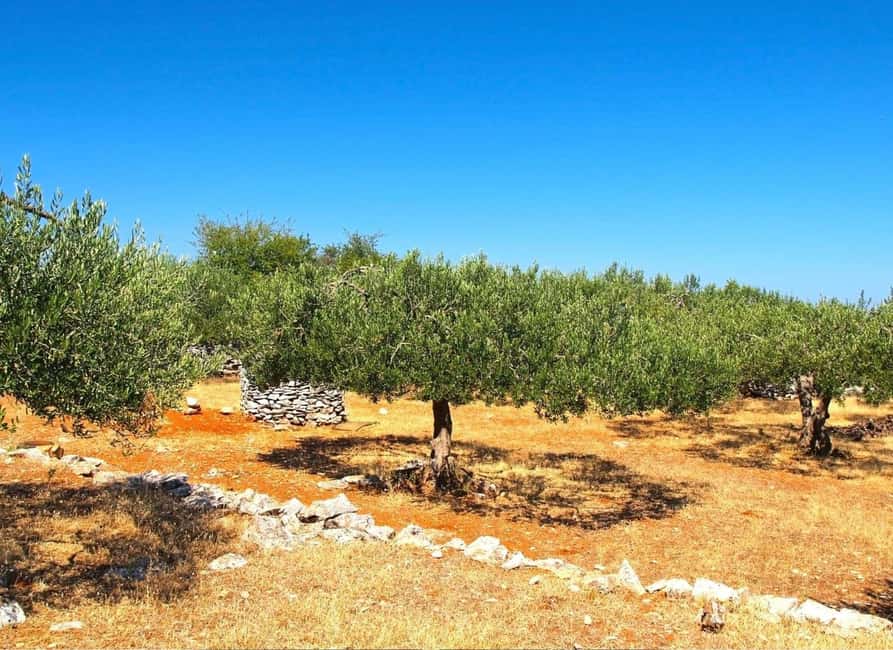
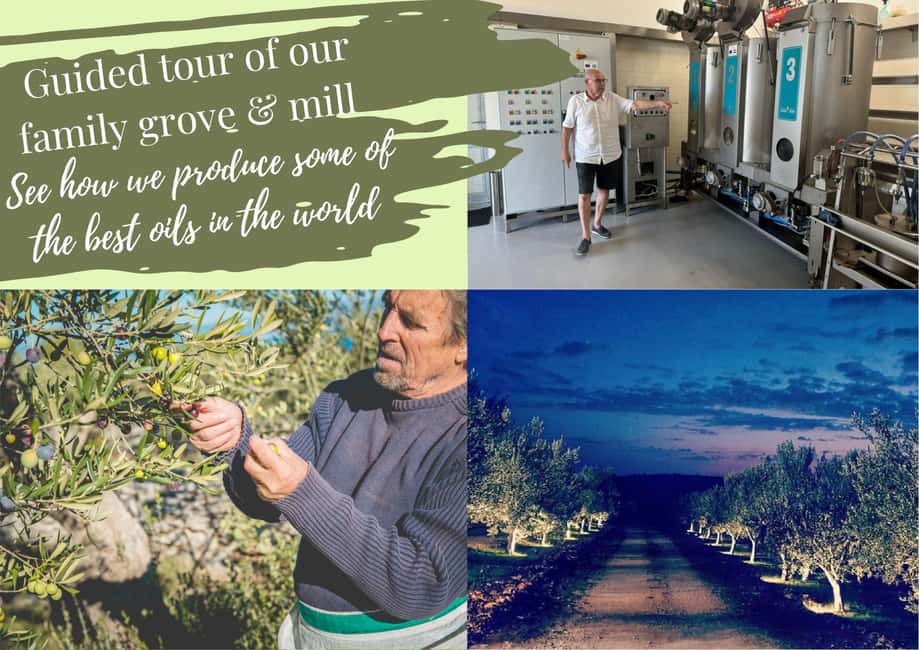
The afternoon begins with a warm welcome and a scenic stroll through the ancient olive grove. This is where the tour earns its keep. Instead of jumping straight to liquids in glasses, you get the “why” first: how Dalmatia’s unique climate and stony soil shape flavor.
As you walk, Branimir shares the story of the grove and the harvest. You also learn how the family preserves traditional techniques while using cutting-edge technology in their mill to protect flavor and nutrition.
If you like agriculture tourism that’s more “hands-on understanding” than “walk and smile,” you’ll appreciate this part. It’s also a nice breather from the typical coastal rhythm, because you end up breathing rosemary and wild herbs while you listen.
The vintage fire engine moment (and why it isn’t just a gimmick)
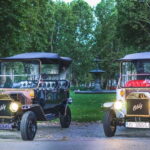
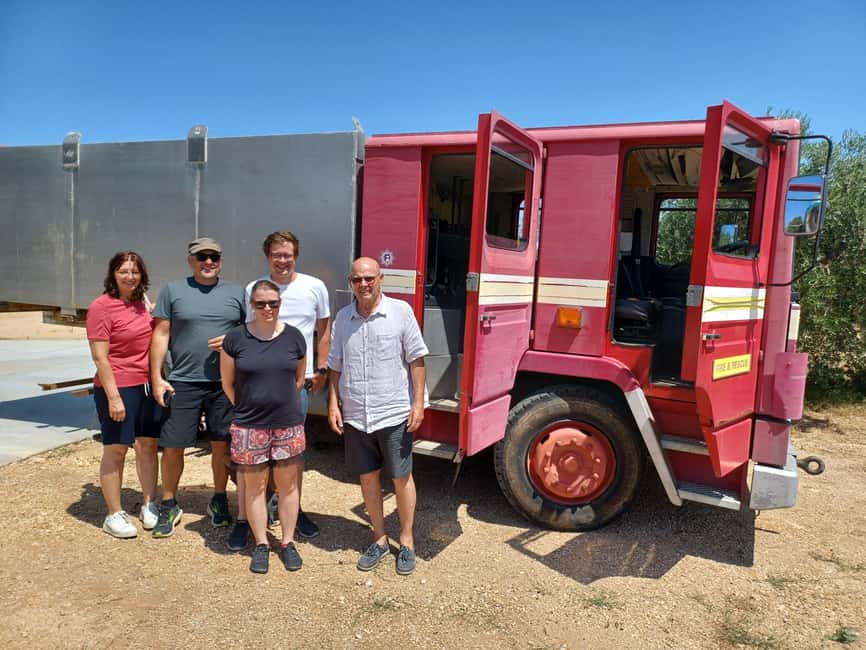
There’s a ride through the groves in a charming vintage fire engine. Yes, it sounds like a postcard detail. But it actually helps you cover the space without burning time or energy, and it keeps the mood light early on.
The main point isn’t the vehicle. It’s that the route connects you with the working estate environment, so when the tasting starts, you already understand you’re drinking something grown and processed right here.
Inside the mill: from olive to bottle, without the mystery
After the grove, you head into the mill. This is where you see firsthand how the award-winning extra virgin olive oil is made—from olives to the bottle you might take home later.
You’re not left to guess. The tour explains how they handle the process and why their approach matters for taste. It also sets you up to understand what you’ll later identify in your tasting cups.
Even if you don’t care about production, this step gives you context. You’ll taste with more focus afterward, because you’ve already seen the pipeline.


The olive oil tasting course: how to spot quality by aroma and finish
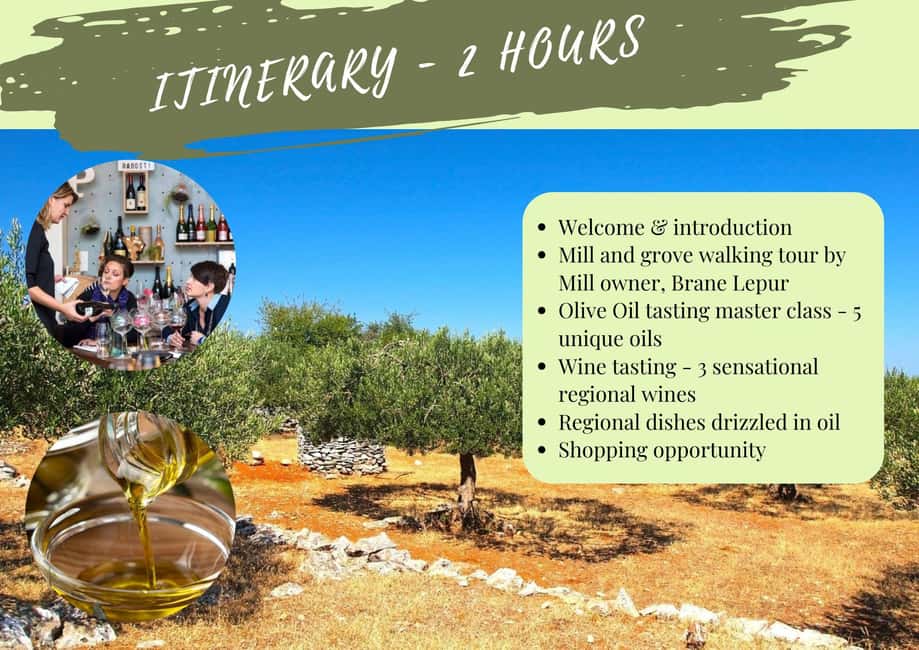
This is the core experience, and it’s built as a real course, not just a quick sip-and-go. You’ll take part in a guided tasting of five olive oils, including their gold-medal-winning 2024 early harvest oil.
One standout detail is the polyphenol claim: the 2024 early harvest oil is described as having 1,200 mg/kg of polyphenols, compounds celebrated for health benefits. Even if you don’t treat numbers as a personality trait, this tells you they’re serious about quality and measurable attributes.
What you learn to do with your senses
You’re taught an approach to identify quality using:
- aroma
- bitterness
- a peppery finish
The tour uses the real technique of gently warming and swirling the oil in professional tasting cups. That matters because extra virgin olive oil can read differently at different temperatures and after swirling releases aromatics. You’re not just tasting; you’re learning how to taste.
Why that matters for value
At places that serve “tasting flights,” you often leave with favorites but not skills. Here, you walk away with a method. That means if you buy a bottle later, you have a way to compare what you bought to what you might try back home.
Croatian wine tasting: sight, smell, swirl, sip, savour
Once the oil training is done, the pace shifts into wine appreciation. You’ll taste premium Croatian wines selected from native grape varieties across the country’s main regions.
The set includes a welcome glass of local Croatian “champagne” and then a tasting of 1 red and 2 white wines. You’re guided through the five steps of wine appreciation: sight, smell, swirl, sip, savour.
What I like here is the pairing logic. The tour helps you notice how the oils’ profiles—grassy, robust, and fruity—match well with the wines. Instead of serving wine as a separate event, they treat it as part of the same flavor system.
The food pairing: Dalmatian bites built around olive oil
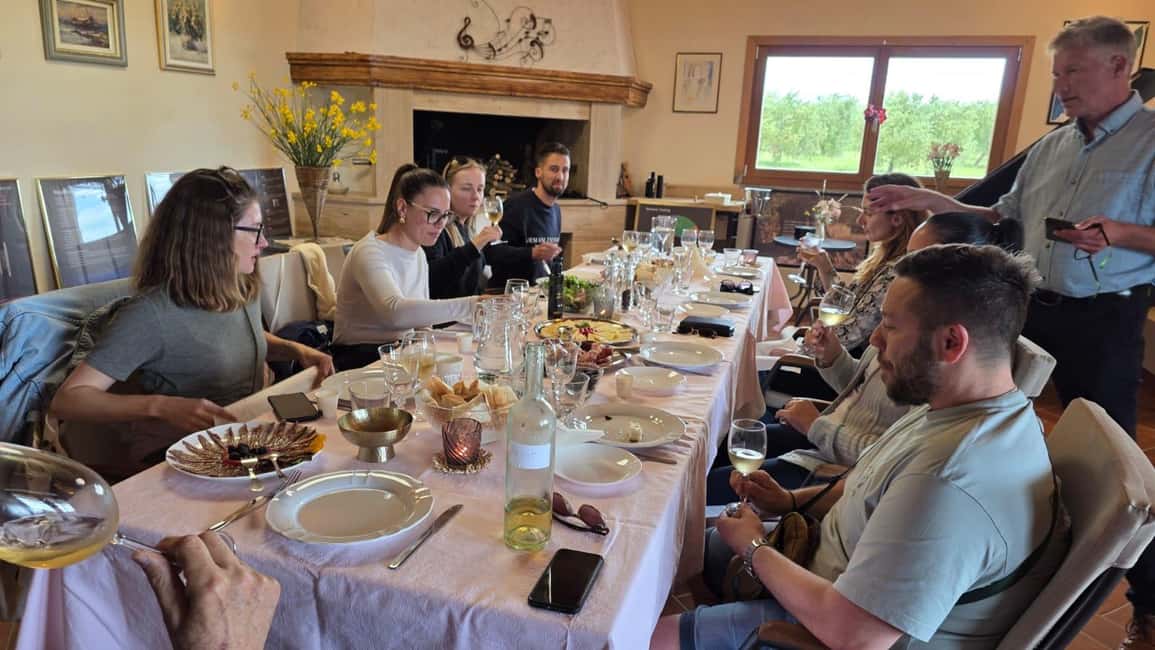
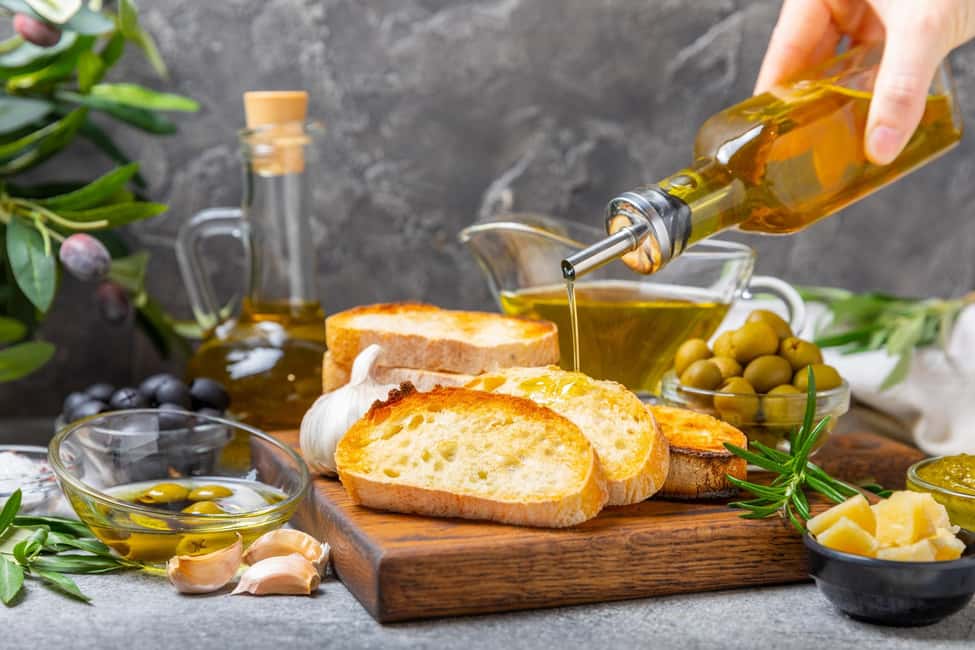
You’ll eat local bites alongside the tastings. The oil and wine aren’t treated like garnish for the food. The bites are made to complement both, and you’ll see the oil used in a way that feels normal for the region, not like a stunt.
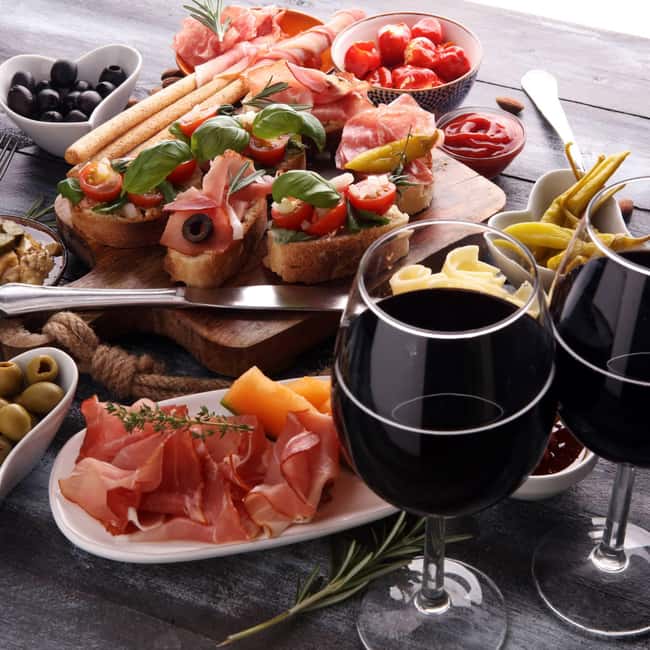
Your included food typically features a buffet-style spread of items such as:
- locally baked sourdough bread
- seasonal bites
- local olives, peppers, fruits
- cheese
- seafood items as part of the overall pairing
The optional lunch is an upgrade if you want more time at the table (and a larger meal). It’s listed at 20€ and described as a cold buffet-style spread with meats, seafood, cheeses, plus fruit and vegetable dishes. Menu examples include Croatian salad, pršut platters, cheese platters, stuffed cherry tomatoes with tuna and olive tapenade, Dalmatian seafood (marinated anchovies and prawns), and homemade apple strudel. Each option is served with a glass or two of your favorite of their Croatian wines.
A practical tip
If you’re hungry but want to stay within the core 2.5 hours, consider how much you’ll want to eat during the tasting portion first. The included bites are described as more than “snacks,” and they’re designed to keep the pairing experience comfortable.
History without the lecture: Roman and Venetian threads
The tour gives some context on the story of olive growing in the area, described as shaped by Roman settlers and Venetian traders, plus more recent generations who carried knowledge through war and change. It’s not presented as a dry timeline.
Instead, the history supports what you’re tasting today. When you understand the long continuity of olive growing, the oil course feels less like a product demo and more like a living craft.
Branimir’s storytelling keeps it human. If you want culture layered lightly on top of food and technique, this amount feels about right.
Price and value: $29 for skill, not just sips
At $29 per person, this experience is priced like a true tasting session with a teaching component. You’re not just paying for samples. You’re paying for guided oil tuition with five oils, a wine tasting with multiple wines, and included food pairings.
You also get something practical that many cheaper tastings don’t provide: you learn how to evaluate quality using aroma, bitterness, and peppery finish. That skill is useful after you leave, especially if you plan to buy bottles as gifts or pantry staples.
One more value lever: the hosts offer the opportunity to buy their selection of gold award-winning oils. If you’re the type who likes good olive oil and will actually use it, this can easily justify the cost if you take home a bottle or two.
Who this is best for (and who might want to choose differently)
This is a strong fit for:
- food lovers who want a hands-on method for tasting oil
- wine people who appreciate a structured approach rather than random pours
- couples or small groups looking for a relaxed, family-run feel
- anyone doing time around Zadar or Šibenik who wants a Dalmatian hinterland day without a huge travel grind
It may not be ideal if:
- you don’t want to drive rural roads and prefer city-based meeting points
- you’re only interested in wine and not in the olive oil education (the oil course is the centerpiece)
- you expect a full lunch included in the base price (the 20€ lunch option is extra)
A note on guides, language, and the tone of the group
The tour runs with a live guide in English and Croatian. You’ll also hear from family members and hosts, including Branimir. Based on the way people describe the experience, the tone tends to be warm, relaxed, and tailored rather than formal.
That matters because olive oil tasting can feel serious if it’s delivered like a classroom. Here, the vibe is friendly, so you’re likely to ask questions and actually understand the answers.
Should you book this? My honest call
If you’re in the Zadar area and you want an experience that connects production, tasting skills, and real Dalmatian flavors, this is an easy yes. The olive oil portion is the main reason to book: five oils, gold-award quality, and a sensory method that helps you buy smarter afterward.
Book it if you enjoy learning through food and if you’re comfortable self-driving to a rural family estate near Benkovac. Consider skipping or swapping for something else if you only want a quick wine stop, or if driving out of the city is a hassle for you.
FAQ
Where does the experience start?
There are two starting options mentioned: OPG Lepur in Donji Lepuri, and another option that lists Donji Lepuri. The meeting point can vary depending on what you book, so the tour advises calling the host for specific directions to the family mill near Benkovac.
Is this experience self-drive?
Yes. The experience is self-drive, with the family mill located close to Benkovac.
How long is the tasting?
It runs about 2 hours to 150 minutes, with the scheduled time listed as 13:00–15:30.
What do you taste for the olive oil part?
You’ll take part in a guided olive oil tasting of five oils, including gold-award oils and the 2024 early harvest extra virgin olive oil with 1,200 mg/kg polyphenols.
What wines are included?
You’ll receive a welcome glass of local Croatian champagne, then taste 1 red and 2 white Croatian wines as part of the wine tasting.
Do you get food during the experience?
Yes. Included bites include items like locally baked sourdough bread, seasonal specialities, olives, peppers, fruits, and cheese intended to complement the oils and wines.
Is lunch included?
No. A full buffet lunch is optional and costs 20€. The lunch is described as a cold buffet-style spread with dishes such as Croatian salad, pršut platter, cheese platter, stuffed cherry tomatoes with tuna and olive tapenade, Dalmatian seafood, and apple strudel, served with wine.
Can you buy olive oil to take home?
Yes. There’s an opportunity to buy their selection of gold award-winning oils.
Is the tour wheelchair accessible?
The experience is listed as wheelchair accessible.