REVIEW · ZAGREB
Discover Zagreb Tour
Book on GetYourGuide →Operated by Štiklec · Bookable on GetYourGuide
Zagreb clicks into focus fast. This 2-hour walking tour strings together the city’s big landmarks and everyday-life corners, then explains the legends people still repeat. The route is compact, the pace is built for first-timers, and it ends right back where you can easily continue on your own.
I especially like two things: you get a licensed local guide who talks through history and culture in plain language, and you spend time in places that still matter to locals, not just postcard spots. I also love that it’s not only dates and rulers; it’s legends you can picture while you’re standing there—plus practical suggestions that help you plan the rest of your trip.
One thing to think about: there’s no food or drinks included. You’ll learn what to look for at markets and where to eat next, but you’ll still want water and a plan for lunch afterward.
In This Review
- Key Things I’d Book This For
- A Two-Hour Zagreb Walk That Actually Helps You Navigate
- Starting at Ban Josip Jelačić Square: Manduševac as Your First Landmark
- Cathedral Stop: Getting the Feel of Zagreb’s Center
- Dolac Market: The Zagreb Food-and-Culture Checkpoint
- Tkalčićeva and Krvavi Most Streets: Where the Stories Meet Daily Life
- Stone Gate and St Mark’s Square: Why Zagreb Feels Like It Has a Soul
- Lotrščak Tower: The Daily Cannon Moment
- Uspinjača Funicular Legends: When the Shortest Ride Is Offline
- Grič Tunnel and the Hidden-Tunnel Story
- End Back at Ban Josip Jelačić Square: Easy Next Steps
- Price and Value: What $23 Buys You in Real Terms
- Who Should Book This Tour (and Who Might Prefer Something Else)
- Should You Book Discover Zagreb Tour?
- FAQ
- How long is the Discover Zagreb Tour?
- Where does the tour meet?
- What is included in the price?
- Are food and drinks included?
- Is the tour guided in English?
- Do we ride the Uspinjača funicular or enter the Gric Tunnel?
- What should I bring?
- Is this tour suitable for wheelchair users or mobility impairments?
- What is the cancellation policy?
- Does the tour offer reserve now, pay later?
Key Things I’d Book This For
- A tight Old Town loop in just two hours so you don’t waste your first day getting oriented
- Legends with local pull, not just facts pinned to a plaque
- Dolac Market as the food-and-culture checkpoint
- Lotrščak Tower’s daily cannon story you can connect to today
- Uspinjača and Grič Tunnel explained up close, even when access is limited
- Guides like Ivana who often go the extra mile with tips and small surprises like licitar hearts
A Two-Hour Zagreb Walk That Actually Helps You Navigate
If you want one early win in Zagreb, this is it. You start in the center of town and build a mental map quickly: fountains, the cathedral area, a major market, the lanes of the Upper Town, and back to the main square. It’s the kind of route that helps you later when you’re making choices like where to wander next, where to stop for coffee, and which viewpoints are worth your time.
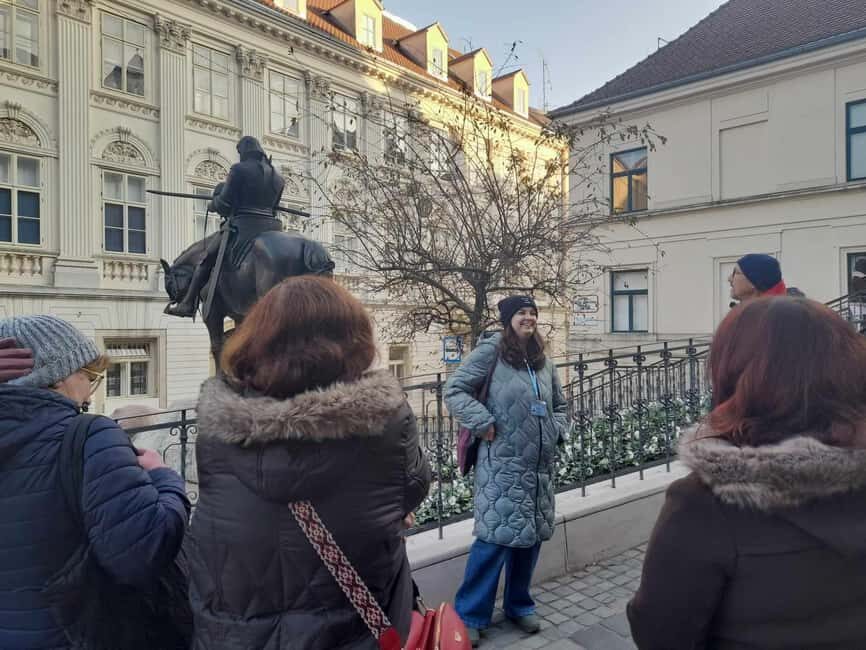
The tour is designed for walking between key places, and you’re not stuck reading from your phone. Instead, your guide points out what you’d likely miss on your own: which spots shaped Zagreb over time, and why they still feel important in daily life. Many guests highlighted how the guides (often Ivana) keep the stories flowing and answer questions as you go, so the time doesn’t feel like a lecture.
The other practical angle is the structure. In two hours, you cover what most people list as must-sees—Cathedral, Dolac, Stone Gate, St Mark’s Square, Lotrščak Tower, and the Upper Town area—without the stress of figuring out the order yourself.
You can also read our reviews of more tours and experiences in Zagreb.


Starting at Ban Josip Jelačić Square: Manduševac as Your First Landmark
Meeting at the Manduševac fountain on Ban Josip Jelačić Square is smart. It’s central and easy to find once you’re in the historic core, and it gives you a clean starting point before the walk starts climbing and narrowing.
From the first minutes, the guide frames Zagreb beyond the obvious. You learn how the city grew historically while still functioning as a lived-in place. That matters, because Zagreb is a city where “monuments” and “neighbors” overlap. The tour leans into that idea, so the streets you walk through don’t feel like a museum corridor.
This start also sets up an easy end later. You’re not trekking out to some distant neighborhood only to return by transit. You’ll finish back at Ban Josip Jelačić Square, which makes it simple to grab dinner or continue sightseeing without a second navigation problem.
Cathedral Stop: Getting the Feel of Zagreb’s Center
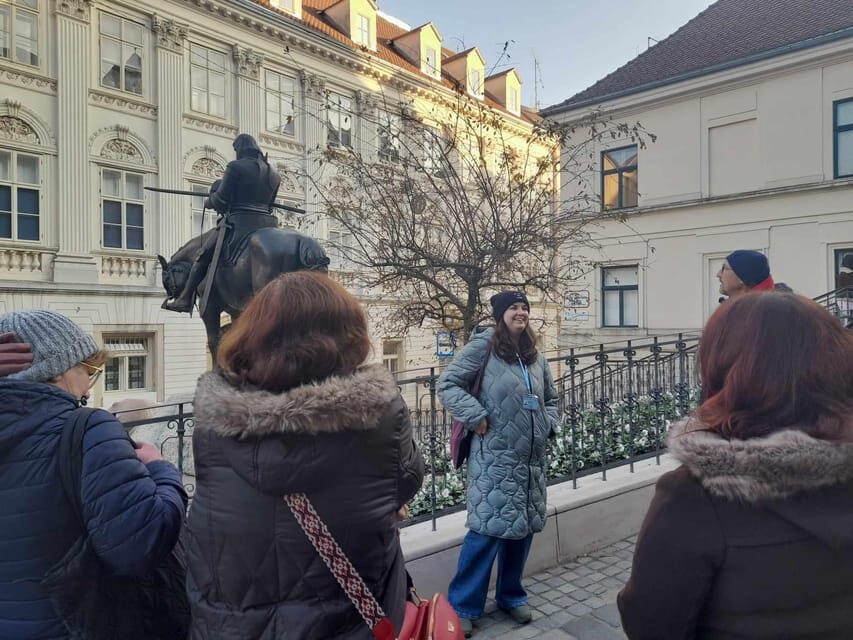
The next major anchor is the Cathedral of Zagreb. Even if you don’t go inside (the tour focus here is the guided route through the area), the cathedral zone is a strong “heart of the city” reference point. Your guide uses it to talk about Zagreb’s cultural and historical development, but also about why the area remains meaningful to people today.
This is one of those stops that works well early in the tour. It gives you context before you move toward the market and then up into the Upper Town. By the time you reach the smaller streets and gates later, you’ll recognize themes the guide highlighted at the start.
A practical note: this is a walking tour with uncovered urban paths and some stairs/uneven ground. You’ll want comfortable shoes because the tour is built for mobility, not for slow rolling strolls.
Dolac Market: The Zagreb Food-and-Culture Checkpoint
Then comes Dolac Market, and it’s one of the best parts of this tour for first-timers. The market area is more than just a place to buy things; it’s an everyday stage for Zagreb. You’ll get a guided introduction to Croatian and Zagreb cuisine and the kinds of items people shop for there.
The big benefit of including Dolac is that it changes how you read the city. After this stop, food stops feel less random. You’ll know what you’re looking at, and your guide can help you make sense of flavors and local staples. Even though food and drinks aren’t included, the market stop often acts like a roadmap for your next meal.
One reason I like this approach: it doesn’t trap you into long tastings you may not want. It’s time-efficient and keeps the tour focused. You get the cultural context, then you choose how you want to eat later—whether that’s a quick bite, a sit-down lunch, or a longer evening meal.
Tkalčićeva and Krvavi Most Streets: Where the Stories Meet Daily Life
After the big landmarks, you shift into the city’s street life with stops around Ivana Street Tkalčića and Krvavi Most Street. These are the kinds of Zagreb streets where you can feel the city moving even when you’re not looking for it. The guided part matters because it explains why these lanes aren’t just shortcuts—they carry names, memories, and local meaning.
I find this “street chapter” useful because it connects sights to how people actually experience Zagreb. You’re not only learning about past events; you’re learning about the city’s present rhythm. If you’re the type who likes to wander, this part gives you permission to wander with purpose.
These streets also do something subtle: they slow the tour down emotionally. After the cathedral and market, you get a chance to see the city at human scale—where the history your guide mentions doesn’t float above you; it sits next to storefronts, doorways, and everyday foot traffic.




Stone Gate and St Mark’s Square: Why Zagreb Feels Like It Has a Soul
Up next is Stone Gate, a stop built around legends and why the place still matters to people. You’ll hear stories people associate with the gate and learn how it fits into Zagreb’s larger historical picture. Even if you’re not a “legend person,” this tends to land because the guide connects the story to the physical space you’re standing in.
From there, you move to St Mark’s Square. Your guide explains why it can be called the main square of Croatia. That line sounds big, but the value is what comes with it: you learn how the square functions as a symbolic center while still being part of everyday movement in the city.
If you’re worried this will feel like too much theory, don’t. Several guests praised the way guides weave facts into conversation and keep the pace friendly. It’s not just standing and listening—it’s seeing a place and learning how locals interpret it.
Lotrščak Tower: The Daily Cannon Moment
At Lotrščak Tower, the highlight is the story behind the cannon firing every day. This is a classic Zagreb “only-in-this-city” detail, and it works because you can connect it to a specific moment you might notice later during your own visit.
For me, this stop is about perception. It’s easy to visit a tower and move on. But when a guide explains why there’s a ritual attached to it—and ties that ritual to the city’s identity—you start looking at the skyline differently. You’ll remember which direction the view is, how the tower relates to the surrounding areas, and why the place has an ongoing role rather than being frozen in time.
It’s also a good checkpoint for photos. You’ll likely pause naturally here because the cannon detail gives you something memorable to point at when you’re taking pictures.
Uspinjača Funicular Legends: When the Shortest Ride Is Offline
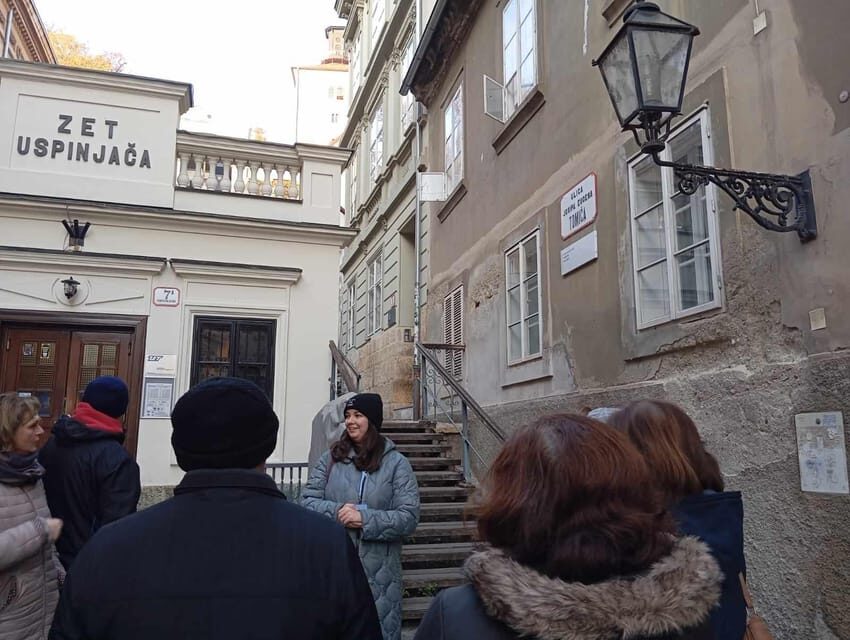
This is where the tour gets real-world practical. The itinerary includes Uspinjača, the short funicular, but the info you’re given is that it may not be working due to renovation. So instead of expecting a ride, expect storytelling.
The guide tells you the legends and background tied to the funicular and the idea of how Zagreb connects levels in a very physical way. Even without riding, you’ll understand the function—why a funicular belongs in this kind of terrain—and you’ll be better prepared to decide whether it’s worth checking later after renovation completes.
If you’re the type who plans around schedules, keep this in mind: walking tours are flexible, but ongoing city projects can change what’s running. The good news is the tour doesn’t stall. The guide uses the closed or slowed-down element to keep the explanation moving.
Grič Tunnel and the Hidden-Tunnel Story
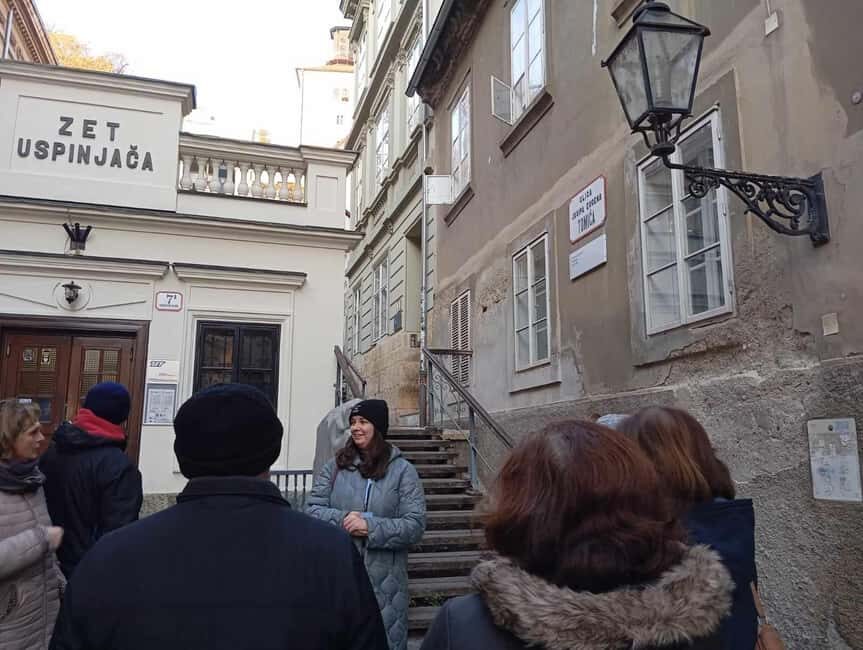
The tour also includes Grič Tunnel—but with an important caveat. During special events in the tunnel, the visit may not be included. Translation: you’ll still get the themed context, but access can vary on the day.
Why include the tunnel at all? Because it adds another layer to Zagreb beyond the usual squares and viewpoints. Your guide shares the stories tied to a hidden tunnel and helps you understand why people remember it. It’s the kind of detail that can turn a standard Old Town walk into something you talk about later.
When the tunnel isn’t fully open, don’t treat that as a disappointment. Treat it as proof that you’re seeing a living city, not a staged theme park. Your guide’s job is to keep you informed, and in this case the narration and legends are part of what you came for.
End Back at Ban Josip Jelačić Square: Easy Next Steps
You finish where you started: Ban Josip Jelačić Square. That matters more than it sounds. It means you’re not stranded halfway across town after two hours of walking. You can head straight to dinner, browse nearby streets, or link up with another plan without figuring out a complicated return route.
Many guests also mentioned that guides offered recommendations for restaurants and local spots. If that’s your style, take notes during the tour. Guides like Ivana are known for sharing food directions and even small extras like licitar hearts, which can be a sweet souvenir that also reminds you of the story you heard.
Price and Value: What $23 Buys You in Real Terms
At $23 per person for a 2-hour walking tour, you’re paying for time, route design, and a human guide who can answer questions and connect the dots. This is not a “sit on a bus and pass by” purchase. You’re walking between compact stops, and your guide helps you understand what you’re seeing rather than just naming it.
It’s also good value when you compare the alternatives. Hop-on hop-off buses can be useful for first-day orientation, but they don’t replace guided context in tight spaces. Guests noted that they were glad they didn’t rely on a bus tour because there are spots a bus can’t reach in the same way.
So the value calculation comes down to this: if you want a fast, guided Zagreb orientation and you like legends and practical city tips, the price makes sense. If you only want photo stops and already know the city well, you might prefer a self-guided plan.
Who Should Book This Tour (and Who Might Prefer Something Else)
This tour is a strong fit if:
- you want to see Zagreb’s core highlights quickly
- you like guided storytelling about legends and city identity
- you appreciate practical recommendations for where to eat and what to do next
- you want a route that doesn’t require map work at the start of your trip
It’s not a fit if:
- you need wheelchair access or have mobility limitations, since it’s not suitable for people with mobility impairments or wheelchair users
- you hate walking at all (it’s short, but it’s still a walking tour)
One more consideration from guest feedback: on at least one occasion, a guide brought up politics connected to a guest’s country. If you’d rather keep the conversation strictly about local culture and history, just set that expectation politely at the start.
Should You Book Discover Zagreb Tour?
Yes, if you want an efficient first look at Zagreb that connects major sights with the legends and street-level reality behind them. The price is reasonable for what you get: a guided route across the places that shape Zagreb’s identity—Manduševac, Cathedral area, Dolac Market, Stone Gate, St Mark’s Square, Lotrščak Tower, plus stories around Uspinjača and Grič Tunnel.
If you’re short on time and want your bearings fast, book it early in your trip. If you’re a details-only traveler who prefers doing everything independently, you might skip it. But for most people, this hits the sweet spot: two hours, great coverage, and a guide who helps you see the city the right way.
FAQ
How long is the Discover Zagreb Tour?
The tour lasts 2 hours.
Where does the tour meet?
The meeting point is next to the Manduševac fountain on Ban Josip Jelačić Square. Your guide will have a Discover Zagreb Tour sign.
What is included in the price?
You get a licensed local guide and guided coverage of must-see attractions in Zagreb.
Are food and drinks included?
No. Food and drinks are not included.
Is the tour guided in English?
Yes, the live tour guide speaks English.
Do we ride the Uspinjača funicular or enter the Gric Tunnel?
The tour includes the Uspinjača and Gric Tunnel parts as guided stops and stories, but the funicular is not working due to renovation, and a Gric Tunnel visit may not be included during special events in the tunnel.
What should I bring?
Bring comfortable shoes and water.
Is this tour suitable for wheelchair users or mobility impairments?
No. It is not suitable for people with mobility impairments or wheelchair users.
What is the cancellation policy?
You can cancel up to 24 hours in advance for a full refund.
Does the tour offer reserve now, pay later?
Yes. You can reserve now and pay later.
If you tell me your travel dates and whether you plan to visit any museums or tours after this, I can help you stitch the timing together so you don’t miss the best follow-ups.