REVIEW · ZAGREB
Private Walking Tour in Zagreb with Local Guide
Book on Viator →Operated by Netragom obrt, vl. Samia Zitouhni · Bookable on Viator
A great walking tour can be a history class. This one turns Zagreb’s streets into a story you can actually follow and a smooth route through the Upper Town highlights. I especially like how the guide uses the city’s present look—especially earthquake-era scaffolding—to explain the place instead of just pointing at it. One thing to consider: the route includes steep streets and stairs, so you’ll want at least moderate walking comfort (the funicular is an option, but costs extra).
What makes the experience feel personal is that it’s private—just your group—with a local guide who’s comfortable answering questions as you go. In the guide credits, I’ve seen names like Samia Zitouhni, plus other guides such as Samra and Spomenka Sabic mentioned for strong, friendly explanations. Timing can add extra street energy too—one past day included Advent-season activity and a bit of chaos when the Croatian football team returned—so if you’re sensitive to crowds, pick your time carefully.
In This Review
- Key Points You’ll Notice on This Zagreb Walk
- Where This Zagreb Private Walk Really Shines
- Zagreb After 2020: Scaffolding as Part of the Story
- Kaptol and the Zagreb Cathedral: Croatia’s Identity on Your Left
- Dolac Market: A Short Stop With Big Local Energy
- Tkalčićeva Street: Learning How Social Life Changes Over Time
- Petrini Pyli (Stone Gate): Medieval Layers in One Small Spot
- Gornji Grad (Upper Town): Where Politics and Power Seem to Echo
- St. Mark’s Church and the Upper Town Square: The Saint Twist Matters
- Funicular Railway: Ride Down, Walk Down, or Choose Your Comfort
- Tunel Gric: Fairy Tale or Nightmare—And Then the Truth
- Square of Petar Preradović: Social Life, Coffee Culture, and a Name You Might Not Expect
- Price and Value: What You Get for $28.92
- Who This Tour Fits Best (and Who Might Skip It)
- Should You Book This Private Zagreb Walking Tour?
- FAQ
- How long is the private Zagreb walking tour?
- How much does it cost per person?
- Where does the tour start and end?
- Is this a private tour?
- Do I need to buy admission tickets for the stops?
- Is the funicular included in the price?
- Is a mobile ticket used, and will I get confirmation?
Key Points You’ll Notice on This Zagreb Walk
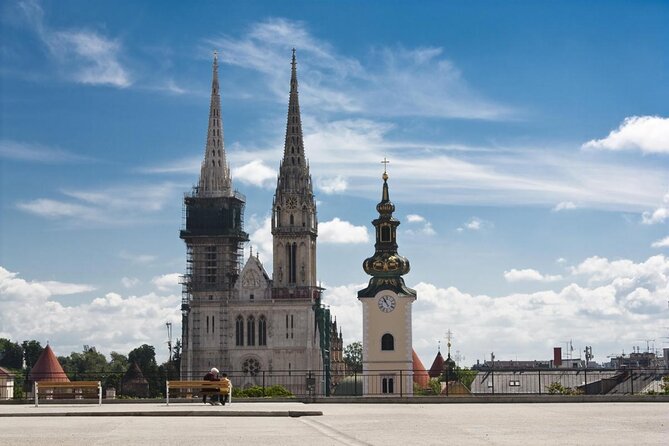
- Earthquake-to-history context: you’ll see scaffolding and hear how it fits the city’s long story
- A focused Upper Town route: Cathedral, medieval streets, St. Mark’s area, and key viewpoints
- Dolac Market stop: a quick taste of everyday Zagreb food culture
- Funicular choice: ride down if you want, or take the steep stairs route
- Tunnel Gric: a short, memorable stop with a built-in story twist
Where This Zagreb Private Walk Really Shines
This is a 1.5- to 2-hour private walking tour in Zagreb that feels built for first-timers who want clarity fast. You start at Ban Josip Jelačić Square, then work your way through the layers of the city—old religious power in Kaptol, everyday local life around Dolac and Tkalčićeva, and then the medieval civic rhythm of Gornji Grad (the Upper Town).
The biggest reason I’d recommend it is the way the guide connects what you see with what it used to mean. Zagreb’s center has been shaped by more than wars and politics. The tour specifically acknowledges the two strong earthquakes in 2020 (March and December), and the result is visible: many buildings sit under scaffolds. Instead of pretending that’s not there, the walk uses it as part of the city’s story—what survived, what changed, and how the city keeps going after disruption.
You’re also not stuck with a script that only works if you know the names of streets and saints already. The flow is approachable, and the guide encourages questions. That matters in a city like Zagreb where the “why” can be more interesting than the “what.”
You can also read our reviews of more tours and experiences in Zagreb.

Zagreb After 2020: Scaffolding as Part of the Story
When you walk through central Zagreb, it’s hard to miss that some building facades are covered for safety and restoration. This tour treats that as meaningful, not distracting. The guide explains that after the March and December 2020 earthquakes, many historic structures in the center ended up behind scaffolds. That changes the mood of the walk: you’re not just sightseeing, you’re witnessing a living city managing recovery.
For you, that means the tour won’t feel like a postcard parade. It’s more like a guided conversation where the guide helps you understand how a city keeps its identity while parts of it are temporarily hidden. It’s also a good reminder to look carefully at what’s still visible—arches, stonework, street alignment, and sightlines that suggest older layouts underneath today’s streets.
A small practical note: because parts of the center can be under repair, you should expect changes in where you can stand for photos. Your guide will manage the route on the ground.
Kaptol and the Zagreb Cathedral: Croatia’s Identity on Your Left
Your first big landmark is Zagreb Cathedral in Kaptol. Even if you’re not a church-architecture fanatic, it’s an anchor point for understanding Zagreb. The tour frames the cathedral as an identity building landmark for Croatians—not only as a religious site, but as a symbol that people connect to.
This is a good stop for a quick “reset” at the start of the walk. After you arrive at the cathedral area, the guide can set context: where Zagreb’s story begins, how religious and civic power shaped the city, and why this area matters in the hierarchy of places.
Admission here is free for the tour stop. That makes it easier to include without feeling like you’re paying your way into every single moment.
Dolac Market: A Short Stop With Big Local Energy
Next comes Dolac Market, where the tour takes a sensory approach. You get a brief chance to pause and absorb the space: how locals shop, what seasonal food looks like when it’s not staged for tourists, and how the market has served everyday needs for decades—possibly centuries, depending on how you count the market tradition.
This stop is only about 10 minutes, so don’t expect a full food tour. Instead, think of it as orientation for Zagreb’s daily rhythm. If you’re choosing what to eat later, you’ll often find this kind of stop helps you understand what the city actually buys and cooks.
A benefit: admission is free. A consideration: if you go at a time when the market is quieter, the sensory impact can be more subtle. Still worth it for the local-life perspective.
Tkalčićeva Street: Learning How Social Life Changes Over Time
Tkalčićeva Street is one of Zagreb’s main social streets, and the guide uses it to ask a smart question: how much of today’s street life is really new?
You’ll hear that this street didn’t always exist in its current form, which flips the usual sightseeing logic. Instead of treating the street as just a location to stroll, the tour treats it like a timeline. The guide explains what the area may have been during earlier centuries, then brings it back to what it represents now: a place tied to social life and everyday gatherings.
This is a quick stop, around 10 minutes, but it can change how you “read” the city later. When you see a street full of cafés, you start noticing what’s practical about it—entry points, pedestrian flow, and why certain kinds of spaces develop where they do.


Petrini Pyli (Stone Gate): Medieval Layers in One Small Spot
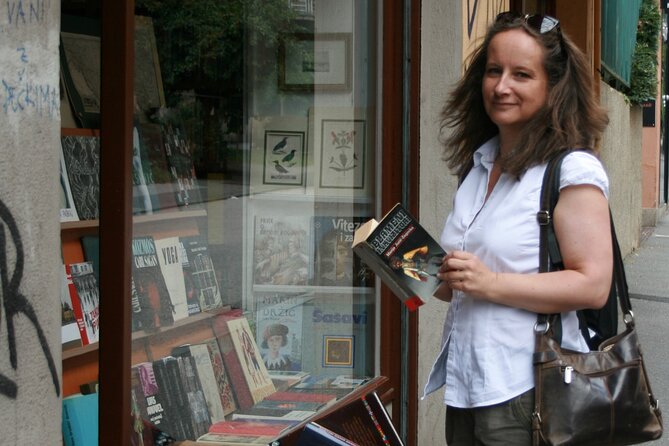
Then you’ll be at Petrini Pyli, the Stone Gate of Zagreb. This is the kind of place where a short stop can feel disproportionate, because the gate works as a compact summary of medieval urban structure.
The tour frames the Stone Gate as a special public place where medieval spirits hide—meaning the guide doesn’t just describe stone and arches. You get a sense of what this gateway likely signified: control of movement, city defense ideas, and the feeling that you’re passing from one “zone” of Zagreb to another.
Admission is listed as free here, so it’s a no-pressure photo-and-story moment. Expect a quick burst of medieval context before moving up toward the Upper Town.
Gornji Grad (Upper Town): Where Politics and Power Seem to Echo
Now you’re in Gornji Grad, the Upper Town. The tour connects this area to a change in hierarchy: historically, Kaptol and the cathedral were higher in status, but not necessarily higher in elevation. Today, the Upper Town’s landmarks set the pace visually, tied to the political life of the country.
This is a great section if you like “big picture” explanations without getting lost in dates. You’re not being asked to memorize a timeline. Instead, you’re guided through how the city’s power centers shifted and how that shows up in the spacing of streets, the scale of buildings, and the prominence of squares.
The stop here is around 20 minutes, which is enough time to let the guide’s story land. You’ll also likely pick up a better sense of direction—Zagreb is compact, but the hill makes it easy to feel turned around if you’re not guided.
St. Mark’s Church and the Upper Town Square: The Saint Twist Matters
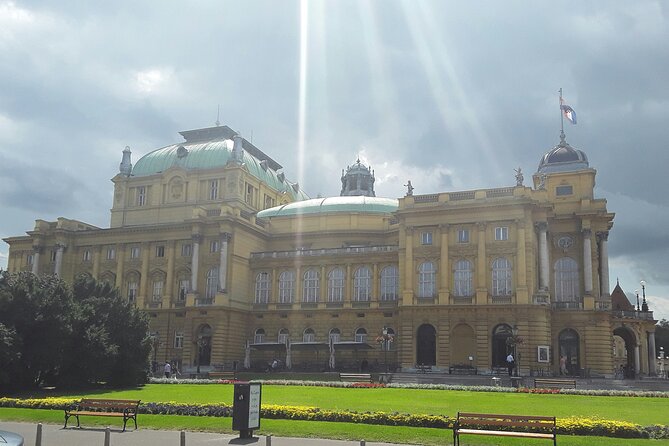
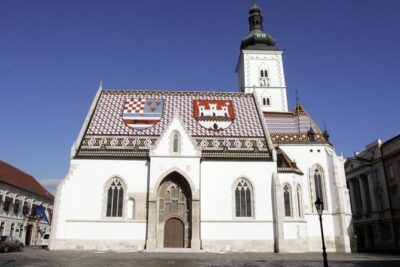
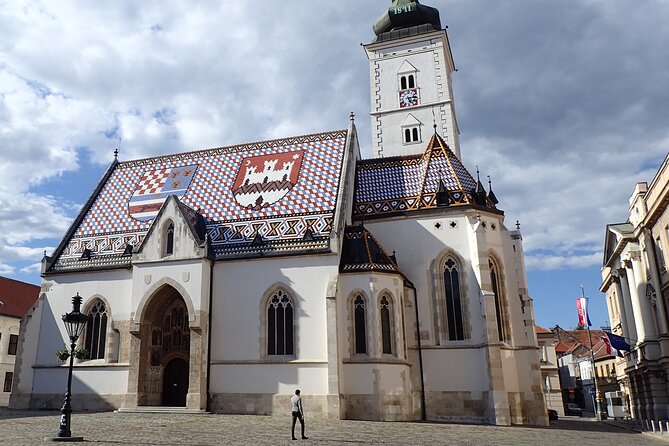
Next is St. Mark’s Church, tied directly to the Upper Town’s main medieval square. The tour also makes an important point about naming and patronage: the saint patron of the Upper Town isn’t St. Mark, but the main medieval square and community church are named after St. Mark.
That kind of detail is why a guided walk helps. Without guidance, you might assume the naming is straightforward. With the guide, the square’s identity becomes a story about how meanings get attached over time.
Admission here is listed as free for this stop. Time is about 10 minutes, so again: this is focused context rather than a long interior visit. If you’re the type who likes to linger, plan to spend extra time after the tour ends near the Croatian National Theatre area.
Funicular Railway: Ride Down, Walk Down, or Choose Your Comfort
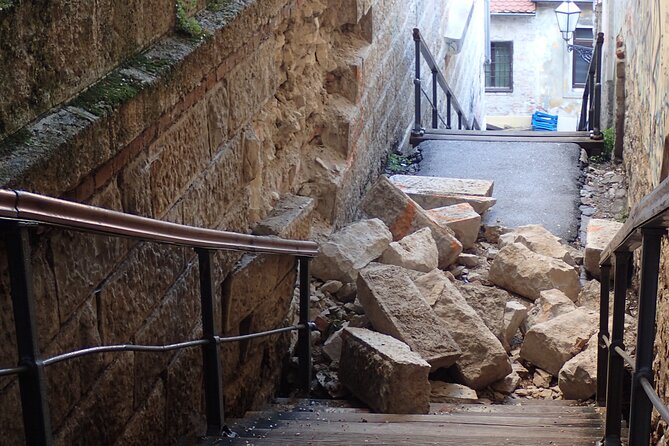
This is where you can match the tour to your energy level. The guide explains the options: use the funicular railway or walk down the hill via steep stairs through a park-like route.
The funicular is described as the shortest funicular in the world, with a cost listed as 5 Kunas per person in 2021 and noted as not included in the tour price. You’ll decide based on comfort and time.
If you’re budget-conscious, you might choose the stairs route to keep the trip fully included. If you’re protecting your knees or you’re traveling with older family members, the funicular option is a smart compromise. Either way, this section is useful because it changes how you experience the slope—Zagreb’s geography is part of the story.
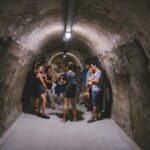
Tunel Gric: Fairy Tale or Nightmare—And Then the Truth
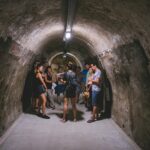
Tunel Gric is next, and the tour plays with expectations. The stop is short (about 10 minutes), and the guide nudges you to form your own impression first—fairytale or nightmare—before explaining what it really is.
This is one of those stops that feels small on the map but sticks in your mind because it turns a simple structure into a question. Even if you’re not sure you like “story stops,” this one helps you understand how the city’s legends and interpretations get attached to places.
Admission for this stop is listed as free, so it’s a low-cost, high-attention moment.
Square of Petar Preradović: Social Life, Coffee Culture, and a Name You Might Not Expect
You finish with Square of Petar Preradović. The tour notes an interesting naming issue: if you ask locals for directions, there’s a possibility they won’t know what you mean. They call the area something else.
That’s a real-world travel tip, not just trivia. Zagreb street names and local nicknames can differ, especially for squares and meeting points that locals use daily. Having this context makes you more confident later, when you’re trying to find places on your own.
The tour also frames the square as a key stage for social life alongside Tkalčićeva—connected to coffee culture and even elite passing by. Admission is listed as free, and the tour ends at the Croatian National Theatre area, so you’ll likely feel like you’ve completed a clean loop through the city’s main “upper” identity.
Price and Value: What You Get for $28.92
At $28.92 per person, this tour is priced in the zone where a private guide can be a real value—especially because you’re getting multiple landmark stops, a guided explanation tailored to what you see, and an actual sense of direction for later self-guided wandering.
Also, several key stops are listed with free admission tickets (cathedral, Dolac Market, Tkalčićeva Street, Stone Gate, Upper Town area, St. Mark’s Church, Tunnel Gric, and the square). The funicular is the main add-on, and it’s explicitly noted as not included.
So the math is fairly straightforward:
- You pay for the guide time.
- You’re not being nickel-and-dimed on most stops.
- The only meaningful variable is whether you choose the funicular.
If you’re traveling in a group and can split the cost comfortably, a private walking tour often becomes one of the better ways to see a city without feeling like you’re rushing.
Who This Tour Fits Best (and Who Might Skip It)
This tour is a strong fit if:
- you want a guided orientation in Zagreb’s key neighborhoods,
- you like context (why places matter, not just what they look like),
- you want a private format so the guide can respond to your questions.
It’s also a good match for people who like a walking pace they can adapt. The funicular gives you a built-in escape hatch if your legs aren’t feeling great.
You might think twice if:
- you struggle with steep stairs or you’re expecting an easy, flat walk,
- you don’t want to handle any extra “story-based” stops (like Tunel Gric), which are short but interpretive.
Should You Book This Private Zagreb Walking Tour?
Book it if you want Zagreb’s Upper Town story explained in plain language, with a local guide who connects today’s city to what’s been happening there for a very long time—including the reality of the 2020 earthquakes and the scaffolding you’ll see in the center.
Skip it if you’re looking for a long museum-style day or you prefer total independence. This is a guided walk with specific stops and a clear time frame, not a flexible food crawl or an all-day photo expedition.
If you’re on your first visit to Zagreb and you want to leave with a better mental map plus a handful of meaningful details, this one is a solid choice.
FAQ
How long is the private Zagreb walking tour?
The tour runs about 1 hour 30 minutes to 2 hours.
How much does it cost per person?
The price is $28.92 per person.
Where does the tour start and end?
It starts at Ban Josip Jelačić Square and ends at the Croatian National Theatre in Zagreb.
Is this a private tour?
Yes. It’s private, so only your group participates.
Do I need to buy admission tickets for the stops?
Most stops are listed with free admission tickets. The funicular railway cost is noted separately and is not included.
Is the funicular included in the price?
No. The tour notes the funicular is optional based on fitness and preference, and the cost is given as 5 Kunas per person in 2021.
Is a mobile ticket used, and will I get confirmation?
The tour uses a mobile ticket, and confirmation is received at the time of booking.