REVIEW · ZAGREB
PRIVATE Zagreb walking tour 2.5 hrs
Book on Viator →Operated by Ivana Ćurić · Bookable on Viator
Zagreb has a storyline you can walk. This private 2.5-hour highlights loop gives you a fast, friendly orientation of the city’s best-known landmarks while you move through the older streets of Gornji Grad. You’ll be with a guide from start to finish, not shuffled into a big group.
I love the undivided attention of a private guide, especially when you want answers in plain English. I also like how Ivana Ćurić brings the walk to life with fun myths and less-obvious details you often will not find just by reading guidebooks.
One consideration: this is a walking tour with a moderate fitness expectation, and it runs best in good weather. If you are hoping for lots of long, sit-down time inside churches or museums, plan to save extra stops for later.
In This Review
- Key things to know before you go
- Private Zagreb Highlights: what you get in about 3 hours
- Route flow: from Jelačić Square through Old Zagreb streets
- Stop-by-stop: what each landmark adds to your walk
- Cathedral of Zagreb: a strong first anchor (10 minutes; ticket not included)
- Dolac Market: where the city shows its daily rhythm (free)
- Kokumi Tkalča: pub street atmosphere without the planning headache (free)
- Krvavi Most: Bloody Bridge and the meaning behind the name (free)
- Petrini Pyli: Stone Gate as a boundary you can feel (free)
- St. Mark’s Church and Square: a meeting point for the eye (free)
- Lotrščak Tower: why this tower matters in the city’s layout (free)
- Ban Josip Jelacic Square: back to the center of gravity (free)
- Zrinjevac: parks plus the station area, with an included ticket element (20 minutes; ticket included)
- Why this churches-streets-squares mix works so well
- Price and logistics: is $168.58 per person good value?
- How to prepare for this Zagreb walk (and enjoy it more)
- Who should book this private Zagreb highlights tour?
- Should you book this tour?
- FAQ
- How long is the private Zagreb walking tour?
- Is this tour private?
- Where does the tour start and end?
- What language is the tour offered in?
- What is the price per person?
- Are entrance tickets included at every stop?
- Is pickup offered?
- What fitness level do I need?
- Is there free cancellation?
- Is the tour affected by weather?
Key things to know before you go

- Ivana Ćurić guides the whole walk in English, so you can ask questions as you go.
- You get a private experience with only your group, with time focused on Zagreb’s main sights.
- Dolac Market and Kokumi Tkalča bring everyday city texture into a mostly classic highlights route.
- The route connects dramatic names like Bloody Bridge and Stone Gate with major city squares.
- St. Mark’s Church, Lotrščak Tower, and Jelačić Square anchor the walk in the city’s central story.
- The Zrinjevac stop includes an admission ticket element and adds park space plus the train-station area.
Private Zagreb Highlights: what you get in about 3 hours
This tour is priced at $168.58 per person and runs for about 3 hours (often described as 2.5 hours). The big win is that it is private, meaning you are not competing for your guide’s attention. I find that makes a difference in Zagreb, because the city’s layout can feel a little tangled until someone points out what you are looking at and why it matters.
You start at Trg J. Jelačića in the Gornji Grad – Medveščak area, and you finish right back near the same meeting point. That keeps your day simple: you get the orientation walk, then you can spend the rest of the time exactly how you want—coffee, museums, neighborhoods farther out, or just more wandering.
One more practical point: pickup is offered, and the activity is listed as near public transportation. So even if you do not use pickup, getting there tends to be manageable.
You can also read our reviews of more tours and experiences in Zagreb.
Route flow: from Jelačić Square through Old Zagreb streets
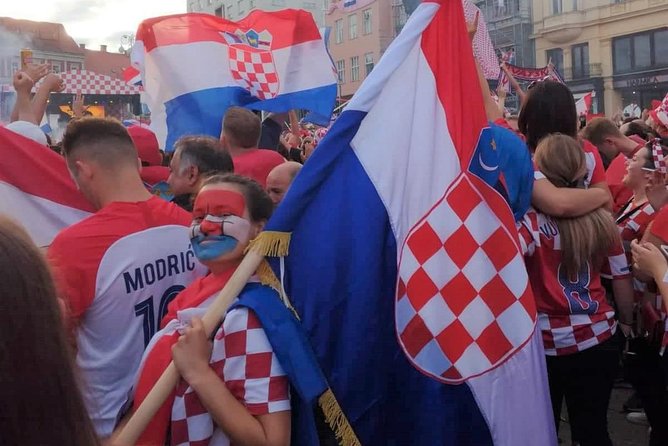
The walk is built like a guided map. You begin in the central square area, then move through the older core with stops spaced so you can look, listen, and move without feeling rushed into a sprint. You’ll spend brief, targeted time at most landmarks—like 10 minutes at the Cathedral of Zagreb—and then you’ll linger a bit more where the tour includes a ticketed stop (the Zrinjevac segment is about 20 minutes).
Because it is private, the pace can feel easier on your feet than a group tour that has to herd people along. Your guide can also adjust your attention if you are more interested in architecture, street atmosphere, or the stories behind place names.
And from the reviews, the standout pattern is clear: Ivana Ćurić is not just reciting facts. She connects the sights with stories and myths, and she points out details you might miss when you are alone.
Stop-by-stop: what each landmark adds to your walk
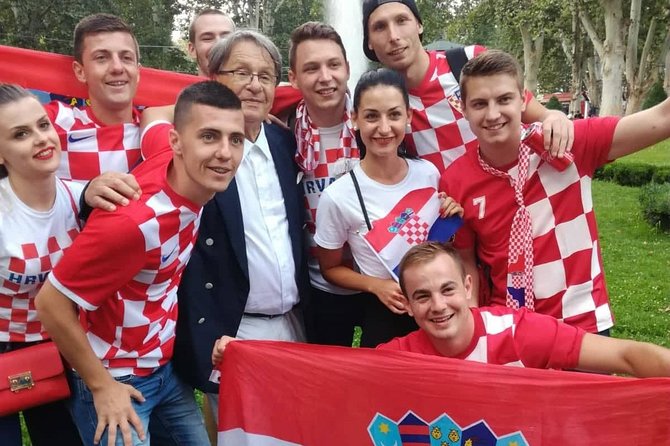
Cathedral of Zagreb: a strong first anchor (10 minutes; ticket not included)
You kick off at the Cathedral of Zagreb for about 10 minutes. The tour notes that the admission ticket is not included, so treat this as a quick orientation moment rather than a guaranteed inside visit.
Even in a short stop, starting here helps you understand the city’s center of gravity. Your guide typically uses this point to set context—why this site sits where it does, and how Zagreb’s landmarks relate to each other. If you want to go inside longer, this tour is a good start, and you can return later when you have time.
Dolac Market: where the city shows its daily rhythm (free)
Next is Dolac Market, listed as a local market stop with free admission. This is the kind of place that instantly changes the mood of a tour: you shift from major landmark energy to everyday city life.
What I like about mixing a market into a highlights route is that it makes the rest feel more grounded. You are not only seeing postcard points; you’re also seeing where people shop and pass time. Even if you only spend a short window here, your guide can help you notice how Zagreb lives around the historic core.

Kokumi Tkalča: pub street atmosphere without the planning headache (free)
Then you move to Kokumi Tkalča, described as Zagreb’s pub street, again with free admission. This stop is quick, but it does something important: it balances the churches and towers with the social side of the city.
For you, this means the tour does not turn into a parade of stone. You also get a feel for the street culture in the central area—useful if you plan to come back later for a meal or a drink. It also helps you place where the energy of the city gathers at street level.
Krvavi Most: Bloody Bridge and the meaning behind the name (free)
At Krvavi Most, the tour leans into the dramatic-sounding name—Bloody bridge street. It is listed as free admission, so you’re not paying extra just to stand and look.
This is one of those stops where the guide really matters. The value is not the bridge itself so much as what you learn about why this part of town carries that story. Even if you do not remember every detail, you’ll likely remember the feeling: Zagreb has a way of turning place names into mini legends you can carry around for the rest of your trip.
Petrini Pyli: Stone Gate as a boundary you can feel (free)
Next is Petrini Pyli, listed as a stone gate stop. Like many gates in older cities, it often works as a physical reminder that there used to be clearer edges between parts of town. Here, your guide’s job is to connect that idea to the streets you are walking through now.
Because admission is free, you can take your time with questions—like where the gate fits into the walk and what it suggests about how this area developed. Even a short stop can help you understand the geography so your later solo exploring feels less random.
St. Mark’s Church and Square: a meeting point for the eye (free)
You then reach St. Mark’s Church and Square. The tour lists free admission here, so the focus stays on the square area and the landmark presence.
Squares like this do more than host views. They act like natural “stops” for city life—where people gather, pause, and reorient themselves. With a guide, you also learn how this place connects to the larger walking story you’re building.
Lotrščak Tower: why this tower matters in the city’s layout (free)
After that comes Lotrščak Tower, again listed as free. Towers often feel like landmarks you can see from multiple angles, and that is exactly why your guide includes it. You start to see the city as a set of layers, not just separate buildings.
Even without a long ticketed visit, this stop helps you read Zagreb’s structure. When your guide explains how it fits into the story of the city, the rest of the walk suddenly makes more sense—especially the way older streets funnel toward major public spaces.
Ban Josip Jelacic Square: back to the center of gravity (free)
You then arrive at Ban Josip Jelacic Square, listed as a free stop. This is a key moment because it is also tied closely to your meeting point area, meaning it functions like a reset button.
In practice, this stop helps you confirm what you just learned. If you leave feeling oriented, it is easier to enjoy the rest of your day. If you feel uncertain, this is the perfect time to ask your guide for one or two “next-step” suggestions—where to go for lunch, where the nicest walking continues, or which neighborhoods are easiest to reach on foot.
Zrinjevac: parks plus the station area, with an included ticket element (20 minutes; ticket included)
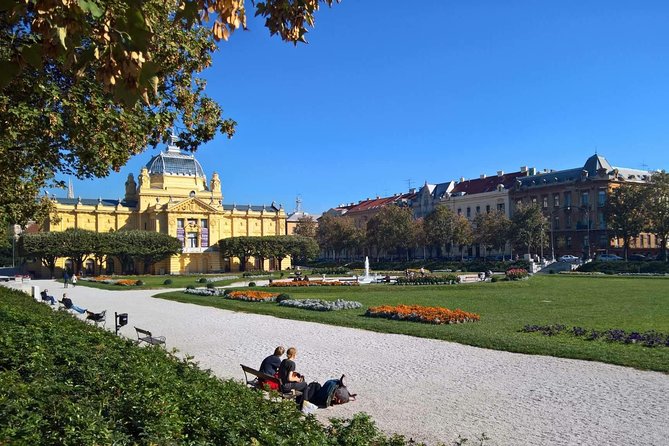
The final big segment is Zrinjevac, about 20 minutes. This part is listed with admission ticket included, and it also names Zrinjevac park, Tomislav park, the Main train station building, and hotel Esplanade.
This is a smart way to finish because it changes pace from historic streets into broader open space and the transit-and-city-arrival feel of central Zagreb. Even if you are not riding trains today, the station area gives you a sense of where the city connects to everywhere else.
Because the ticket is included but the exact facility is not specified in the tour info, I’d treat this as a guided entry element your guide handles. It is still a nice closing rhythm: a bit more time, park surroundings, and then the walk ends back near Trg J. Jelačića.
Why this churches-streets-squares mix works so well
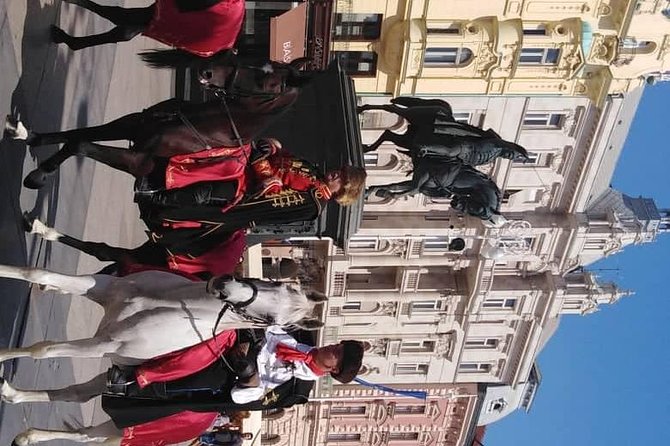
Some walking tours list sights like a checklist. This one feels more like a story you can track with your feet. You get religious and civic landmarks (Cathedral; St. Mark’s; Jelačić Square) plus street-level texture (Dolac Market; Kokumi Tkalča) plus older-city edges (Stone Gate) and a dramatic place name (Bloody Bridge).
That mix matters because it mirrors what you will do the rest of your day. You’ll likely start near the center, then drift between major squares and smaller streets, stopping when something catches your eye. With a guide, you learn enough to choose well without overthinking.
And the human factor is what I would bet on if I were you: Ivana Ćurić comes through in the reviews as someone who adds myths and fun stories, and she shares details that do not feel like copy-paste textbook facts. That is the difference between seeing Zagreb and understanding it enough to enjoy it on your own afterward.
Price and logistics: is $168.58 per person good value?
Let’s talk value honestly. $168.58 per person for a private walking tour is not a bargain price. It is closer to paying for convenience and personalization. The reason that can still be worth it is the structure: your guide does the orientation work, so you do not waste your first day tiptoeing around asking where things are and why they matter.
Also, this is a private tour, so the cost is effectively buying your time with a guide instead of buying a low-cost group slot. If you travel with a partner or a small group, a private format often feels more fair because you all benefit from the same guidance rather than splitting your attention across strangers.
One small financial detail to plan for: the Cathedral of Zagreb admission ticket is not included. So you may pay an extra entry cost if you want to go inside then. The good news is that the tour is clearly timed for a quick stop, so you can decide on the moment rather than committing in advance.
For logistics, you’ll also see:
- English language service
- mobile ticket
- pickup offered
- near public transportation
- service animals allowed
- confirmation at booking time
If you like clear communication and a smooth start, these details reduce friction.
How to prepare for this Zagreb walk (and enjoy it more)
This tour expects moderate physical fitness, and the listed duration is about 3 hours. That means you should wear shoes you trust on uneven sidewalks and be ready for frequent short walking segments.
Because it requires good weather, I’d think of it as a tour you schedule with at least one flexible day around it. If weather turns, the tour can be canceled and you’ll be offered a different date or a full refund. That safety net makes it easier to plan with confidence.
My practical advice is simple:
- Bring a light layer even in warm months; squares and towers can change the feel fast.
- Use the first part of the walk to ask your guide what to do next, since the tour ends back at the meeting point.
- If you care about photos, you’ll get the best results when you pause for the guide’s explanation—those moments usually align with the angles and context.
And if you are traveling with anyone who wants a mix of facts and stories, this is a good fit. The reviews highlight Ivana Ćurić’s storytelling style—history plus myths plus those little observational points that make a walk feel personal.
Who should book this private Zagreb highlights tour?
This is a great choice if you:
- want a private guide who can tailor the pace to your group
- like getting oriented quickly on day one (or early in your trip)
- enjoy stories and myths as part of sightseeing, not just dates and names
- want a route that covers major sights without locking you into a full-day itinerary
It may be less ideal if you prefer long museum time or you want a tour that focuses on only one theme, like church interiors or deep architecture tours. This is built for orientation and flow, not long stays inside each stop.
It is also the kind of experience people book with some planning—this one is listed as being booked on average 36 days in advance, which usually means it tends to sell out when dates are limited.
Should you book this tour?
If you want the simplest way to understand central Zagreb and you like your guide to bring the city to life with stories, I’d book it. The private format and the way Ivana Ćurić blends historical context with fun myths is a strong combo for travelers who get bored by pure lecture-style tours.
Pick it with confidence if your priority is getting bearings fast and then having the rest of the day free. You’ll leave with a mental map, a few memorable story threads, and enough context to explore the area on your own without feeling lost.
But if your top goal is spending lots of time inside landmark buildings, treat this as the first layer of your Zagreb trip. Do the walk, then add extra time where you personally want it.
FAQ
How long is the private Zagreb walking tour?
The tour duration is approximately 3 hours.
Is this tour private?
Yes. It is a private tour/activity, and only your group participates.
Where does the tour start and end?
It starts at Trg J. Jelačića 10000, Gornji Grad – Medveščak, Zagreb, Croatia and ends back at the meeting point.
What language is the tour offered in?
The tour is offered in English.
What is the price per person?
The price is $168.58 per person.
Are entrance tickets included at every stop?
No. The Cathedral of Zagreb entrance ticket is not included, while the Zrinjevac stop is listed with an admission ticket included. The other listed stops are shown as free.
Is pickup offered?
Yes, pickup is offered.
What fitness level do I need?
The tour is listed for travelers with moderate physical fitness.
Is there free cancellation?
Yes. Free cancellation is available up to 24 hours in advance for a full refund.
Is the tour affected by weather?
Yes. The experience requires good weather, and if it is canceled due to poor weather, you’ll be offered a different date or a full refund.