REVIEW · ZAGREB
Zagreb Highlights: Private Walking Tour with Local Guide
Book on Viator →Operated by Mapping Croatia · Bookable on Viator
Zagreb clicks into place on foot. This private highlights walk in Zagreb strings together the city’s key sights in a smart 1.5 to 2 hours, from the Cathedral of Zagreb in Neo-Gothic style to the Strossmayer Promenade for wide city views. I like how efficient the route feels—each stop gives you a real sense of place without wasting time—and I also like the human touch you can get from the licensed local guide, with strong feedback about Kristine’s mix of clear explanations and humor. The main drawback to plan for: the pace is tight, so if you want long interior time at churches or a slow market browse, you’ll likely need to add extra time on your own.
This is a private tour, so it’s just your group, starting and ending at Ban Josip Jelačić Square. You’ll be walking through both the Lower Town vibe and the medieval Gradec core, which is an easy way to understand why Zagreb feels split into “now” and “then.”
If you prefer a tour that acts like a practical map—what things are, why they matter, and how they connect—this one has that feel.
In This Review
- Key highlights you’ll feel right away
- How This 1.5–2 Hour Zagreb Walk Gets You Oriented Fast
- Starting at Ban Josip Jelačić Square: Your Zagreb Anchor
- Cathedral of Zagreb to Dolac Market: Neo-Gothic Grandeur Meets Daily Life
- Tkalčićeva Street: The City’s Go-to Walk-and-Stop Stretch
- Petrini Pyli (Kamenita Vrata) and St Mark’s Square: Read the Medieval Layout
- Strossmayer Promenade and Lotrščak Tower: The View Break You’ll Remember
- Ilica Shopping Street and the Return to Ban Jelačić Square
- Price and What $72.25 Buys You (Private Guide Value)
- What the Tour Feels Like Day-of (Pace, Stops, and Comfort)
- Who This Private Zagreb Highlights Tour Is Best For
- Should You Book This Zagreb Highlights Tour?
- FAQ
- How long is the Zagreb highlights private walking tour?
- What is the starting point and where does it end?
- Is this tour private?
- What’s included in the tour?
- Is pickup available?
- What language is the tour in?
- Is there an admission fee at the stops?
- What is the cancellation policy?
Key highlights you’ll feel right away
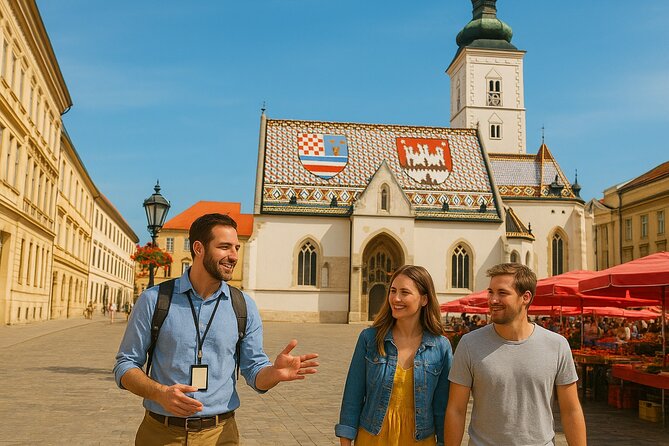
- Private and small by design: only your group participates, so questions don’t get lost in a crowd
- Dolac Market with local everyday context: the market people have used for decades, not just a photo stop
- Medieval Gradec focus: Stone Gate and St Mark’s Square help you read the city layout fast
- Panoramic payoff: Strossmayer Promenade gives you a calm lookout break
- Street-to-street flow: you’ll move from landmarks to shopping streets without backtracking
How This 1.5–2 Hour Zagreb Walk Gets You Oriented Fast
The best tours don’t just list sights. They help you build a mental map you can use later, when you wander on your own.
This one does that by keeping the route compact. You start at the heart of modern Zagreb—Ban Josip Jelačić Square—then you walk through the main landmark cluster that includes churches, markets, medieval gates, and city viewpoints. By the time you end back where you started, you’ll know what area you’re standing in and why Zagreb is laid out the way it is.
You should also expect a guided rhythm of short stops (often around 10 minutes) with quick interpretation. That’s great for first-timers who want clarity. It’s less ideal for travelers who want a slow, linger-along pace at each location.
You can also read our reviews of more tours and experiences in Zagreb.


Starting at Ban Josip Jelačić Square: Your Zagreb Anchor
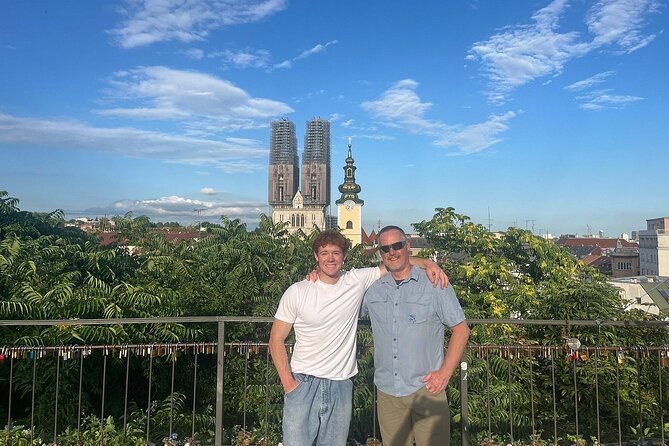
Ban Josip Jelačić Square is the natural launch pad for almost any Zagreb “highlights” day. It’s the city’s main square and the center of social life, so it’s where the different Zagreb energies meet.
I like that the tour begins and ends here. It means you don’t have to solve the transport puzzle twice, and you can roll your next plan right off the last stop. If you want lunch, a coffee break, or a quick browse after the walk, you’re already dropped into the easiest area to do it.
Also, you’ll see the city’s “today” mood early. That matters, because later you’ll transition into medieval Gradec landmarks and you’ll feel the contrast more clearly.
Cathedral of Zagreb to Dolac Market: Neo-Gothic Grandeur Meets Daily Life
Your first landmark is the Cathedral of Zagreb. It’s one of Zagreb’s best-known symbols and a major Neo-Gothic sacral building. Even with a short stop, you’ll get the kind of basic orientation that helps you look at architecture instead of just passing it.
Plan to keep your expectations realistic for this moment. The stop is brief, and the cathedral entry is listed as free (so the emphasis is on seeing and understanding, not a long ticketed visit). If you want time to go inside and take your time, you can do it either before or after the tour—just give yourself some buffer.
Then you shift to Dolac Market. This is one of Zagreb’s most visited farmers markets, and the standout detail here is that locals have been buying food there for about 80 years. That “everyday for decades” factor is what makes Dolac more than a tourist market. It’s a clue to how Zagreb feeds itself, not just a place where people pass through.
You’ll also get a quick feel for local shopping habits. That helps if you plan to eat well in the city, because you’ll know where the culture of ingredients is actually happening.
A small caution: markets can be crowded or busy at certain times. This tour stop is short, so you’ll get a guided slice rather than a full-on browse. If you’re the type who likes to compare stalls, bring the energy for quick scanning.
Tkalčićeva Street: The City’s Go-to Walk-and-Stop Stretch
After Dolac, the tour moves to Tkalčićeva Street. This street is known as Zagreb’s most lively street, lined with small boutiques, traditional shops, restaurants, and cafes.
This is a smart transition stop. You’ve had major landmarks and a market. Now you get the “between places” experience: where people actually wander, pause, and snack.
Because it’s a street segment with shops and food, you’ll probably notice two things fast:
- it’s easy to picture spending an afternoon here later
- the tour gives you a quick orientation, but you’ll likely want extra time if shopping or sitting outdoors is your thing
The listing doesn’t promise a long cafe break, and the stop is around 10 minutes. So think of this as a taste of the area, not your full meal plan.
Petrini Pyli (Kamenita Vrata) and St Mark’s Square: Read the Medieval Layout
Next comes Petrini Pyli—Kamenita Vrata, also called Stone Gate. It’s the eastern gate to the medieval Gradec Town, and it’s described as the most significant oath site in Zagreb.
That detail matters. Gates aren’t just walls here; they’re part of how the city organized authority and public life. A good guide will point out how seeing the gate in context helps you understand where medieval Zagreb “began” and how the town defended its boundaries.
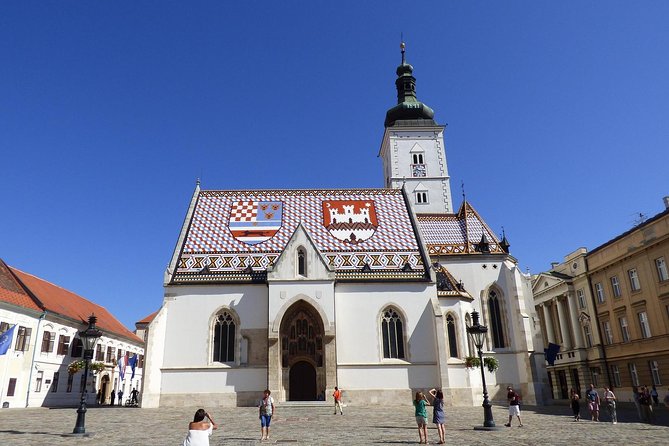
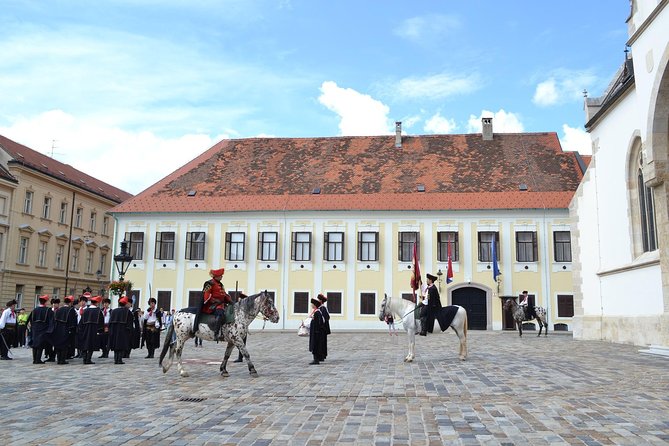
From there, you move into St Mark’s Square, once the center of medieval Zagreb and now the center of Croatian government and parliament. You’ll also see St Mark’s Church, recognizable as a 13th-century landmark.
I like this stop because it teaches you the city’s continuity. You can stand in the same square and understand how Zagreb layers its past over its present. Even if you’re not a medieval-architecture deep reader, the basics become clear quickly: what used to be the center is still a central stage, just with different roles.
There’s also St. Catherine’s Church included on the route. It’s a Baroque church built by Jesuits in the 17th century. This adds a strong architectural contrast. Neo-Gothic, medieval civic space, and Baroque church details in one flow is a great way to spot style differences without needing a whole separate museum day.
A possible consideration here: if you’re sensitive to walking on uneven medieval streets, you’ll want comfortable shoes. This route is a walking tour, and the Gradec area is exactly the kind of place where sidewalks can change character quickly.



Strossmayer Promenade and Lotrščak Tower: The View Break You’ll Remember
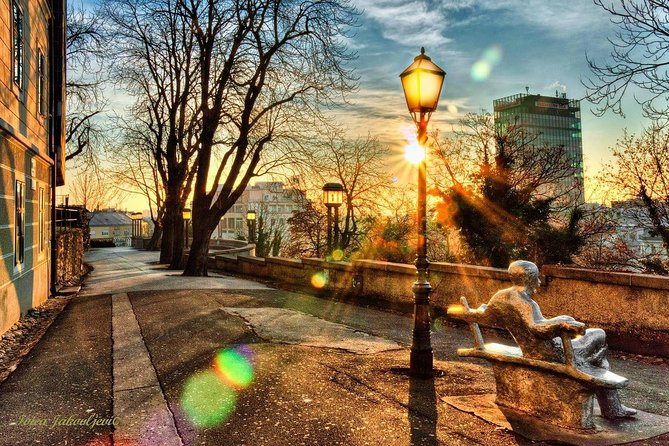
After the medieval core, you get a calmer stretch at Strossmayer Promenade. This is described as a peaceful, harmonious place hidden from the busy life of Zagreb, and it’s the best spot for panoramic views of the city.
This is one of my favorite kinds of tour stops: a “pause” point. Instead of forcing you to speed through photos, the promenade sets you up to look farther than the street in front of you. You get a sense of scale—how Zagreb spreads and where the main zones connect.
The listed stop is about 15 minutes, so you should have enough time to look around, take photos, and actually rest your feet a bit before the last landmark segment.
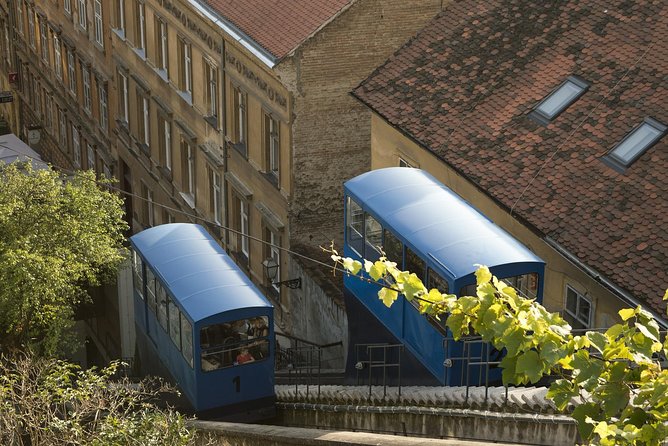
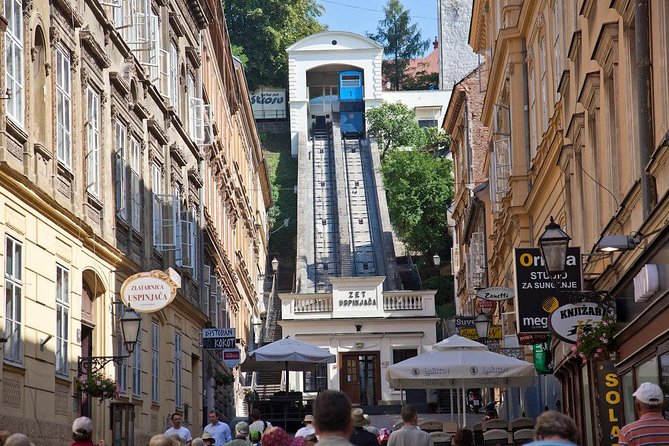
Then the tour heads to Lotrščak Tower. Dating to the 13th century, it guarded the southern gate of medieval Gradec. Across the street is the funicular railway, built in 1888, connecting Lower and Upper Town.
Even if you don’t ride the funicular during the tour, it’s useful context. Knowing there’s a practical link between the levels helps you move smarter later—especially if your legs start complaining. You can use that information to plan how you’ll get from one side to the other the rest of your trip.
Ilica Shopping Street and the Return to Ban Jelačić Square
Ilica is one of Zagreb’s longest, busiest, and most popular shopping streets. It’s a fitting last big “city life” segment because after churches, gates, and viewpoints, you end with something that feels like movement.
You’ll get another quick dose of what the city is like day to day. The stop is around 10 minutes, so you won’t turn it into a full shopping afternoon. But it’s enough to know where you’d come back for souvenirs, everyday goods, or a casual browse.
Finally, you wrap up back at Ban Josip Jelačić Square. That finish matters. You end where the public transit connection points are easier and where you can comfortably continue your day. It also closes the loop on the tour’s theme: Zagreb’s center as the anchor for everything else.
Price and What $72.25 Buys You (Private Guide Value)
At $72.25 per person, you’re paying for a private walking tour with a licensed local guide. That price can look high or reasonable depending on what you’re used to, so here’s the practical way to judge value.
You’re getting:
- a guided route through major highlights in about 1.5 to 2 hours
- a private format where your group can set the pace and ask questions
- English language service
- mobile ticket access and pickup offered
- group discounts (if applicable to your party size)
For me, the value is strongest if you’re doing a first Zagreb visit or if you want to stop guessing. A local guide can make the difference between seeing a gate or square and understanding why it’s important. The reviews also highlight guide style—Kristine is called out for being both witty and effective with explanations, which is exactly what you want in a short time window.
If you’re traveling with someone who enjoys walking but doesn’t want to spend hours researching, this fits well. If you only want a photo tour and you’re comfortable reading signage, you could potentially do this route on your own. But for an efficient orientation day, the private guide is what you’re really paying for.
What the Tour Feels Like Day-of (Pace, Stops, and Comfort)
This tour is designed as a sequence of quick “anchor points.” Many stops are about 10 minutes, with a couple longer ones around 15 minutes. That means you’ll cover a lot of Zagreb territory in a short window, but it also means you’re not meant to linger.
So I recommend treating it like a guided orientation tour. Afterward, you’ll have clearer ideas of what deserves your extra time—maybe the market again, maybe the cathedral interior, maybe another look from the promenade.
Also, there’s a pickup option. That’s a nice convenience if you’re staying outside the square area or you don’t want to coordinate a meeting from a hotel farther away. If you’re already near Ban Josip Jelačić Square, you might not need it, but it’s good to have.
For practical comfort: the tour is listed as near public transportation and most travelers can participate. Service animals are allowed, and the tour is set up as a private experience, which generally makes it easier to adapt to your group.
Who This Private Zagreb Highlights Tour Is Best For
This is a great choice if you:
- want a first-day overview that connects the dots fast
- like guided storytelling and short, meaningful stops
- prefer a private pace over following a larger group
- enjoy combining landmarks with local-life stops like Dolac Market
It may be less ideal if you:
- want long museum-style visits at each church or square
- hate any walking-based itinerary
- plan to treat this as a full-day itinerary rather than an orientation segment
Should You Book This Zagreb Highlights Tour?
I’d book it if you want Zagreb to make sense quickly. The route covers the city’s major “identity” points: cathedral landmark, a long-running market, medieval gates and squares, and viewpoints that help you read the geography.
The decision hinge for me is your taste for pace. If you’re okay with short stops and using the tour as a springboard for your own exploring later, this private format is strong value. If you’re the type who needs time to sit, browse, and linger for long stretches, you’ll probably want to add your own free time after the walk.
FAQ
How long is the Zagreb highlights private walking tour?
The tour runs about 1 hour 30 minutes to 2 hours.
What is the starting point and where does it end?
It starts at Ban Josip Jelačić Statue in Trg bana Josipa Jelačića, Zagreb, and it also ends at Ban Josip Jelačić Square.
Is this tour private?
Yes. It’s a private tour/activity, so only your group participates.
What’s included in the tour?
You get a licensed local tour guide.
Is pickup available?
Pickup is offered.
What language is the tour in?
The tour is offered in English.
Is there an admission fee at the stops?
The itinerary items listed show admission ticket free for the stops included.
What is the cancellation policy?
Free cancellation is available up to 24 hours in advance of the experience start time for a full refund.