REVIEW · ZAGREB
Zagreb Street Art Private Walking Tour with a Local Artist
Book on Viator →Operated by Kresimir Golubic · Bookable on Viator
Zagreb street art becomes readable with a local guide. On this private Zagreb walking tour with Croatian artist Kresimir Golubic, you’ll spot wall tags, paste-ups, letter art, and murals, then learn what each style is saying and where it fits in the city’s ongoing street culture. I especially like how art comes with context, not just photo stops, and how the pace stays comfortable with walking plus air-conditioned transfers.
One caution: you’re still walking for about three hours, so wear real shoes and plan for weather. If you’re sensitive to outdoor time, this is worth keeping in mind, since the route is set up as a good-weather experience.
In This Review
- Key Things You’ll Notice Right Away
- Price and What Makes This Feel Worth It
- Meeting at Trg bana Josipa Jelačića: Getting Oriented Fast
- Opatovina Park Walls: The Easy Start That Builds Your Eye
- Ban Josip Jelačić Square: Reading Street Art in a Main-Spot Context
- Stube Ivana Zakmardija: Art on the Stairs and in the In-Between Spaces
- Martićeva ulica: Where Murals Do the Talking
- Držićeva and the Atelier Visit: Seeing the Street-Art Work Behind the Work
- Jukićeva ulica and Zagreb’s Art Center Feel
- Pacing, Transfers, and Comfort Over 3 Hours
- How to Make the Most of Your Photos (Without Missing the Point)
- Who This Tour Suits Best
- Should You Book the Zagreb Street Art Private Walk?
- FAQ
- FAQ
- What is the duration of the Zagreb street art private walking tour?
- How much does the tour cost per person?
- Is the tour offered in English?
- Is this a private tour?
- Where do we meet and where does the tour end?
- When is the studio open?
- Is there a cancellation policy or weather contingency?
Key Things You’ll Notice Right Away
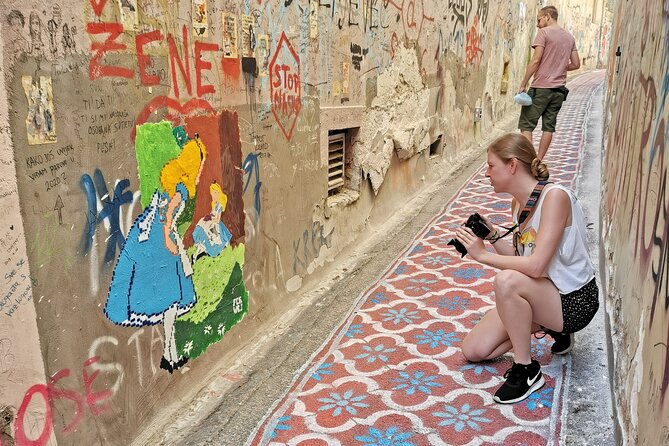
- You learn styles as you see them: tags, paste-ups, letter art, and murals, connected to the city’s street-art evolution
- Kresimir Golubic’s perspective: you’re not just looking, you’re getting an artist’s way of seeing
- Public walls plus a real studio visit: you get both the street and the behind-the-scenes side
- Small, focused route: many stops are quick, so you keep moving without feeling rushed
- Comfort between stops: walking does the heavy lifting, with short air-conditioned rides when needed
Price and What Makes This Feel Worth It
At $42.14 per person for about 3 hours, this isn’t a budget “just walk around” situation. You’re paying for two things that add up fast in Zagreb: a private local artist guide and access to street art through that artist’s eyes. The walking format also keeps the experience eco-friendly, while the air-conditioned transfers help you keep energy for the art instead of fighting the weather.
What you’re really buying here is time with someone who can explain why a piece matters beyond its look. In a city like Zagreb, street art changes street to street. A regular stroll helps you notice the artwork, but a guided one helps you read it.
You can also read our reviews of more tours and experiences in Zagreb.


Meeting at Trg bana Josipa Jelačića: Getting Oriented Fast
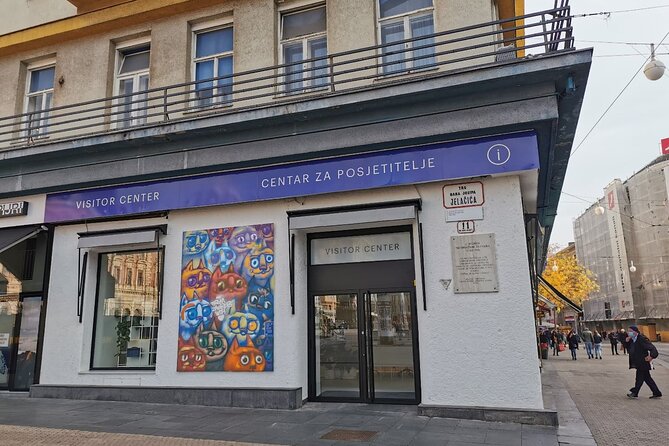
You start at Trg bana Josipa Jelačića 11, in the area of Ban Josip Jelačić Square. This is a smart starting point because it gives you the city center as a reference. Even if you’ve never studied Zagreb’s street art before, you’ll quickly learn what to look for: how styles show up in different neighborhoods, how letter shapes and tag structure can signal different eras or creators, and how murals often act like visual landmarks.
The good part here is momentum. You don’t spend the first hour figuring out where to go. You get a clear sense of what street art can mean in this city, and then you start moving to places where it’s more about discovery than crowds.
Opatovina Park Walls: The Easy Start That Builds Your Eye
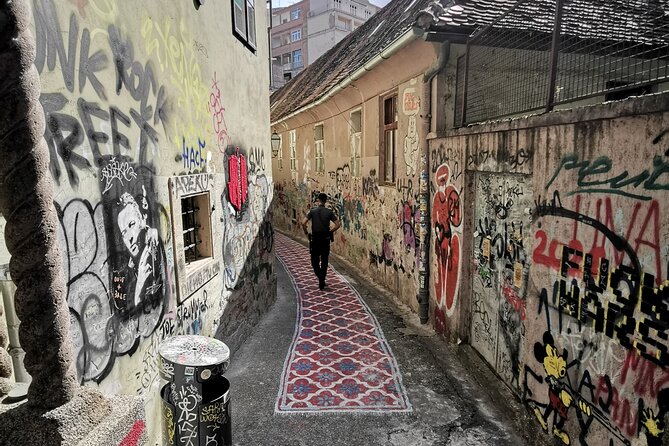
Your first real stop is Opatovina Park, where you’ll spend about 25 minutes checking out walls. This is a great early choice. Park areas let you see street art without the full pressure of the busiest squares, so your brain can switch from tourist mode to “look mode.”
When you’re doing street-art spotting, the hardest part is learning how to see patterns. Early on, you’ll get practice recognizing things like:
- the difference between quick tags and larger works
- how paste-ups and letter art can carry a creator’s identity
- how murals can feel like public storytelling
Drawback to keep in mind: park stops can be exposed. If the day is sunny or windy, you’ll want sunglasses and a light layer so you’re not distracted by comfort while you’re trying to observe.
Ban Josip Jelačić Square: Reading Street Art in a Main-Spot Context
Next you’ll check a few artworks around Ban Josip Jelačić Square for around 15 minutes. This isn’t a long stop, and that’s the point. The square is a place where you can compare what street art looks like in a high-visibility area versus places where it’s more tucked into everyday life.
I like this placement because it helps you avoid the common mistake of assuming all street art looks the same. Central locations can change the feel. Even within a compact city, the audience for a piece shifts from passersby on a main route to people moving through quieter spaces.
If you’re the type who takes lots of photos, you’ll still get enough time, but this is a good spot to keep your camera ready and listen as well.
Stube Ivana Zakmardija: Art on the Stairs and in the In-Between Spaces
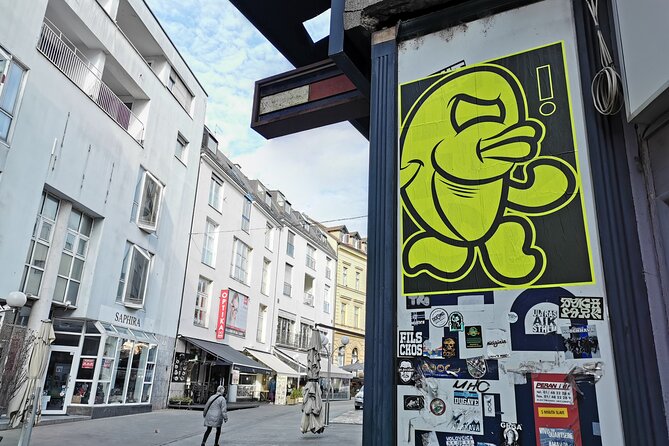
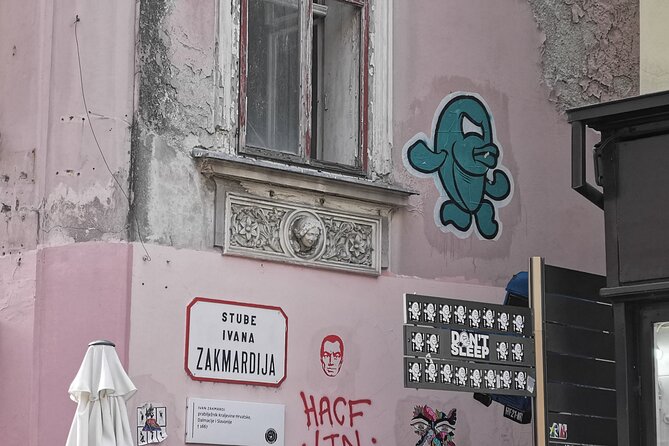
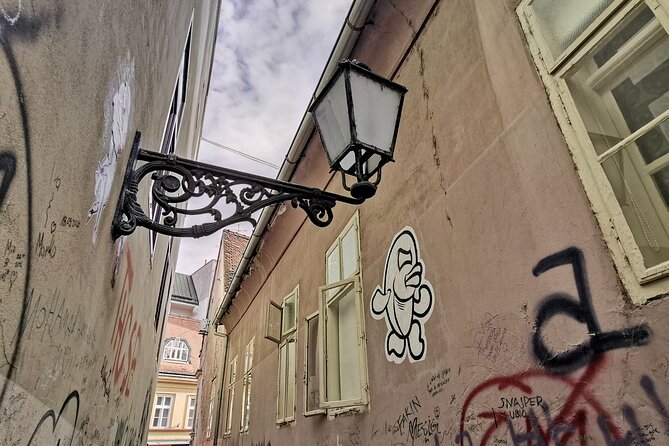
At Stube Ivana Zakmardija, you’ll spend about 25 minutes. Stairs and passageways are where street art often shows its personality. It’s not just about what’s painted or pasted. It’s also about how the architecture frames it—how you notice details while moving, and how the work changes as you climb or angle your body.
This is also the kind of stop where a guide’s explanation really matters. Street art can look chaotic if you only scan quickly. But when someone points out style differences—like letter structure, paint technique, or the way pieces relate to earlier graffiti traditions—you start seeing the logic.
Practical note: stairs mean you’ll want steady footing. If you’re traveling with limited mobility, you can still do the tour, but moderate physical fitness is the expectation.




Martićeva ulica: Where Murals Do the Talking
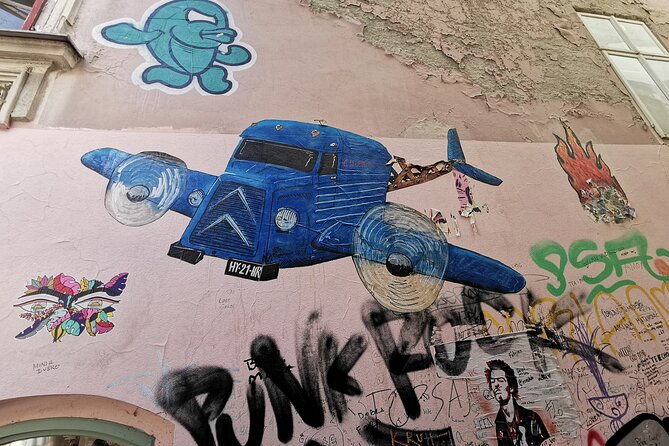
Your route continues to Martićeva ulica for about 40 minutes, and this is where you’ll likely slow down. This street is known in the street-art world for murals, and the time block tells you how the tour wants you to approach it: look closely, compare styles, then zoom out.
Here’s what I think you’ll enjoy most:
- you get multiple examples of murals rather than a single hit-and-run photo
- you’ll be learning the “language” of street art—how tags, letter art, and larger pieces relate
- the guided context helps you connect current trends to older forms
Possible drawback: Martićeva ulica can be a photo magnet. If you’re not into crowds or you prefer quiet viewing time, you may want to spend less time re-shooting and more time listening. The explanations are where the value lives.
Držićeva and the Atelier Visit: Seeing the Street-Art Work Behind the Work
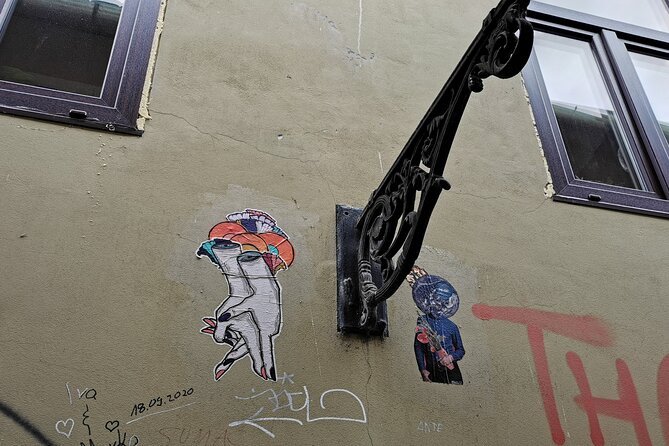
Next comes Držićeva, about 40 minutes, and the highlight for many people is the atelier visit—you’ll be meeting the artist side of the story. Your tour ends at the artist’s Atelier/Studio, and the provided opening hours show that this is designed for daytime visits: Monday to Friday, 10:00 AM to 3:00 PM.
This part matters because street art is often judged only on what’s outside. In the studio, you get a reality check. You can ask questions about materials, technique, or what kind of work an artist wants to make in the first place—then you go back out and your understanding of the walls becomes more grounded.
If you’re worried about the tour turning into a sales pitch, don’t. The point here is connection: you see the person behind the art, not just the finished public pieces.
Jukićeva ulica and Zagreb’s Art Center Feel
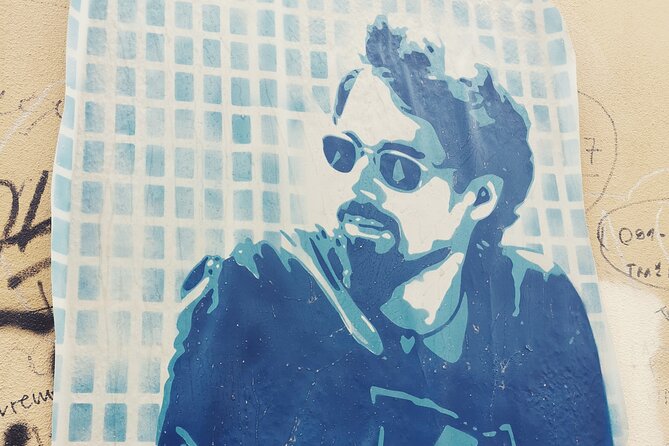
You’ll finish with Jukićeva ulica for about 40 minutes, described as the art center of Zagreb. This is a smart closing stop because it shifts your view from “street as a surprise” to “street art as part of a bigger cultural picture.”
By now, you’re likely noticing patterns on your own:
- how different styles cluster by area
- how murals can function like visual landmarks
- how letter art can act like identity and signature
The benefit is clarity. When you leave the tour, street art doesn’t look like random graffiti anymore. It looks like a living communication system operating in public space.
Pacing, Transfers, and Comfort Over 3 Hours
The tour is about 3 hours, private, and designed for a comfortable rhythm: walking for the art, with air-conditioned transfers to move between zones without cooking under the sun.
Because the stops are fairly timed (most are 15 to 40 minutes), you won’t feel stuck staring at one wall too long. You also won’t feel sprinted. It’s structured so you keep building recognition: first one area teaches you how to look, then the next area gives you a contrast, then the studio ties it together.
I’d also plan your day around it. A street-art walk is more satisfying when you’re not rushing to the next reservation immediately after.
How to Make the Most of Your Photos (Without Missing the Point)
Street art is visual, but the strongest parts aren’t always obvious from a distance. Here are a few ways to get better results while you’re learning:
- Take wider shots first, then come back for close-ups. Street art often changes as you get nearer.
- Focus on letters and shapes. If the guide is explaining tag or letter art styles, that’s the easiest thing to capture and compare.
- Keep one hand free. You’ll want balance on stairs and narrow passages like the kind you’ll see at Stube Ivana Zakmardija.
- Respect what you’re seeing. You’re viewing art on real walls in real neighborhoods, so stick to observing and photographing rather than touching.
And if you’re a notes person, jot down style words as you go. You’ll be surprised how quickly your brain starts “reading” tags and paste-ups like a script.
Who This Tour Suits Best
This tour fits you if you want more than a casual photo walk. You’ll enjoy it most if you:
- like street art and want the basics of how styles connect
- enjoy learning from a local Croatian artist rather than just general sightseeing narration
- want a private experience where your questions can shape what you notice
It may feel less ideal if you’re looking for a long list of famous monuments or you dislike walking on uneven surfaces. The route’s focus is street art itself—public walls, stairs, murals, and the artist’s studio.
Should You Book the Zagreb Street Art Private Walk?
If you care about street art as art—not just decoration—this is a very strong pick. For the price, you get three things that are hard to replicate on your own: a tight, well-sequenced route; an artist’s explanations that help you see differences in style; and time at the atelier, where the street feels connected to real craft.
I’d book it if you’re in Zagreb during the day and can match the studio visit window. If your travel dates fall outside those typical weekday hours, confirm the plan once you book so you’re not showing up expecting the studio portion to align.
FAQ
FAQ
What is the duration of the Zagreb street art private walking tour?
It lasts approximately 3 hours.
How much does the tour cost per person?
The price is $42.14 per person.
Is the tour offered in English?
Yes, it is offered in English.
Is this a private tour?
Yes. It is private, and only your group will participate.
Where do we meet and where does the tour end?
You meet at Trg bana Josipa Jelačića 11, 10000, Zagreb, Croatia. The tour ends at the artist’s Atelier/Studio near Oznaka for 16, Meridijankrižanje Vukovarske and Držićeve streets in 10000, Trnje, Zagreb.
When is the studio open?
The Atelier/Studio opening hours are Monday to Friday, 10:00 AM to 3:00 PM.
Is there a cancellation policy or weather contingency?
You can cancel for a full refund up to 24 hours in advance. If it’s canceled due to poor weather, you’ll be offered a different date or a full refund.