REVIEW · SPLIT
Split; Private Morning Walking Tour in Split
Book on GetYourGuide →Operated by Kaius · Bookable on GetYourGuide
Split feels ancient before breakfast. This private morning walk keeps things calm while you trace Diocletian’s Palace through its famous substructures and the city’s main sights, all with a licensed guide. I especially like the shift from palace stone to everyday Split by the end, when you’re strolling the Riva promenade like locals do. One drawback: the tour is focused on landmark time, so if you want hours for lingering and wandering on your own, you’ll need to add that after the 2-hour loop.
What makes this work well is the morning start and the private-group format, so you’re not stuck in a crush or playing keep-up. Recent groups got extra praise for a guide who was informative and personal, with clear explanations in German and English (for example, Kristina/Christina is named in recent feedback). You do walk and you do listen, but the pacing is built for a stress-free feel.
By the time you reach the end, you’ve covered the essentials and picked up context that makes the old town feel readable, not random. You’ll also touch the market rhythm at the Split Green market (Pazar), so the story isn’t only about stone and emperors. Bring water, wear comfy shoes, and you’ll be ready to enjoy the rest of your day with your bearings locked in.
In This Review
- Key takeaways (what I’d plan around)
- Starting at the Model: you set your mental map before you walk
- Diocletian’s Palace streets and substructures: the emperor’s city under your feet
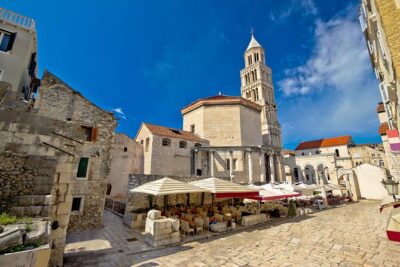
- St. Domnius Cathedral (Sveti Duje): mausoleum to living landmark
- Peristil and the palace squares: where the palace becomes a public space
- People’s Square and Split Green Market (Pazar): where the story turns practical
- Riva promenade at the right hour: calm views and easy people-watching
- Maketa grada Splita break time: a final look at the big picture
- Price and value: $129 per group up to 10 is the real deal if you keep it private
- Who this tour suits best (and who should skip it)
- Should you book this Split Private Morning Walking Tour?
- FAQ
- How long is the Split Private Morning Walking Tour?
- What languages does the live guide speak?
- Where is the meeting point?
- Is this tour private?
- What is included in the price?
- What should I bring?
- Can I cancel for a refund or pay later?
Key takeaways (what I’d plan around)
- A calmer morning route that’s designed to avoid crowds and stress
- Diocletian’s Palace cellar time with real guided context, not just photo stops
- St. Domnius (Sveti Duje) focus so you understand what you’re looking at
- Everyday Split stops like People’s Square and the Green Market (Pazar)
- Private-group flexibility for a more personal pace and Q&A
- Riva promenade at the right moment for that early-city breathing feeling
Starting at the Model: you set your mental map before you walk

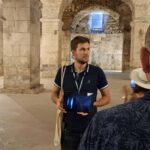
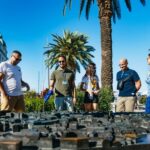
The meeting point is the Model of the historical core of the city of Split. It’s a smart warm-up. Instead of launching straight into narrow lanes, you start by seeing the old-town shape in miniature. That matters because Diocletian’s Palace can feel like a maze until you understand the logic of the streets and spaces around it.
You also get a photo stop right at the start, then the tour moves into the palace area quickly. The benefit for you: fewer wrong turns, less “wait, where are we exactly?” later on. You’ll also notice how the tour’s order builds from overarching structures into details. It’s a good way to learn without it turning into a lecture.
You can also read our reviews of more walking tours in Split
Diocletian’s Palace streets and substructures: the emperor’s city under your feet
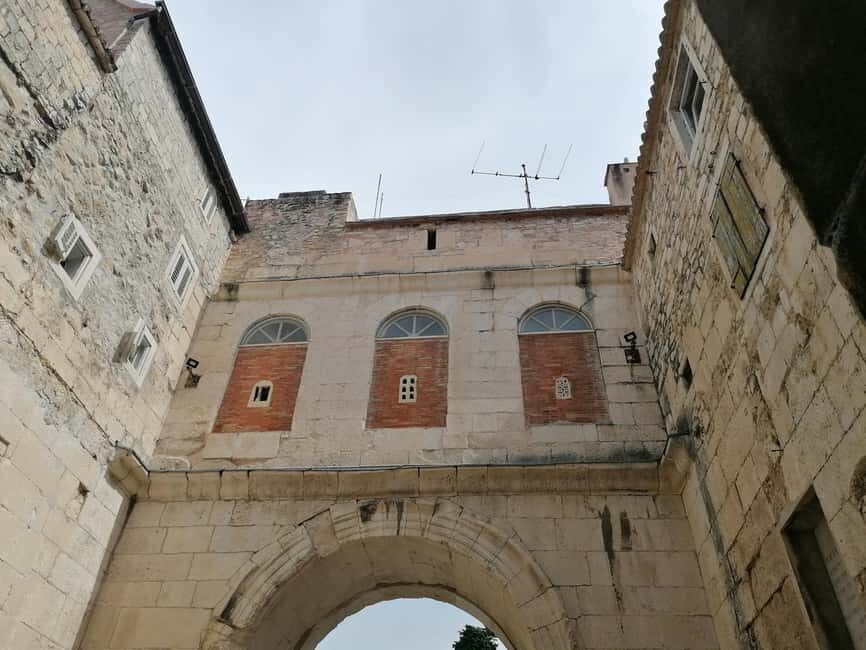
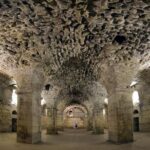
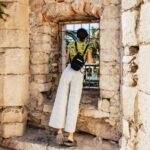
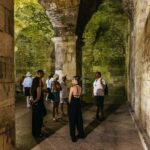
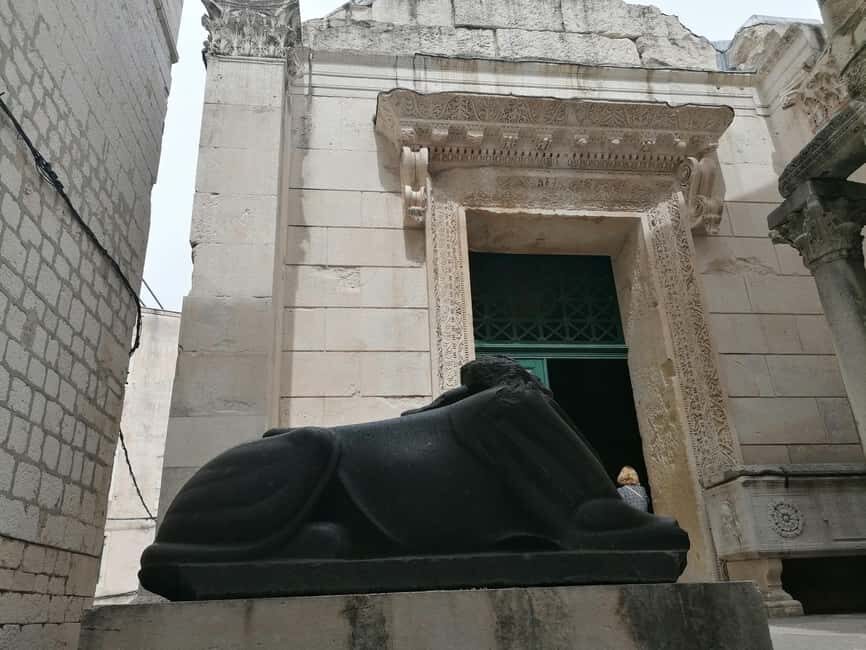
Diocletian’s Palace is the big reason Split exists as a layered place rather than a single-era museum. On this tour, you begin with time in the palace complex itself, then you go deeper into its substructures. You get a photo stop and sightseeing early, then a guided visit to the cellars, which is where the tour really starts to feel tangible.
Here’s what makes the cellars worth the time: you’re seeing preserved spaces that belong to a fourth-century palace built for Emperor Diocletian. The point isn’t just that they’re old. It’s that they show how the city worked, how spaces below ground connect to the life above, and how later Split adapted those structures rather than erasing them. You’ll learn what you’re looking at, and that turns the dim stone corridors into an actual story you can follow.
After that, the tour keeps you oriented by moving from the cellars to key vertical and spatial landmarks: the cathedral and major palace squares. That structure-to-details flow is one of the reasons this feels smooth as a morning walk, instead of a rushed checklist.
St. Domnius Cathedral (Sveti Duje): mausoleum to living landmark
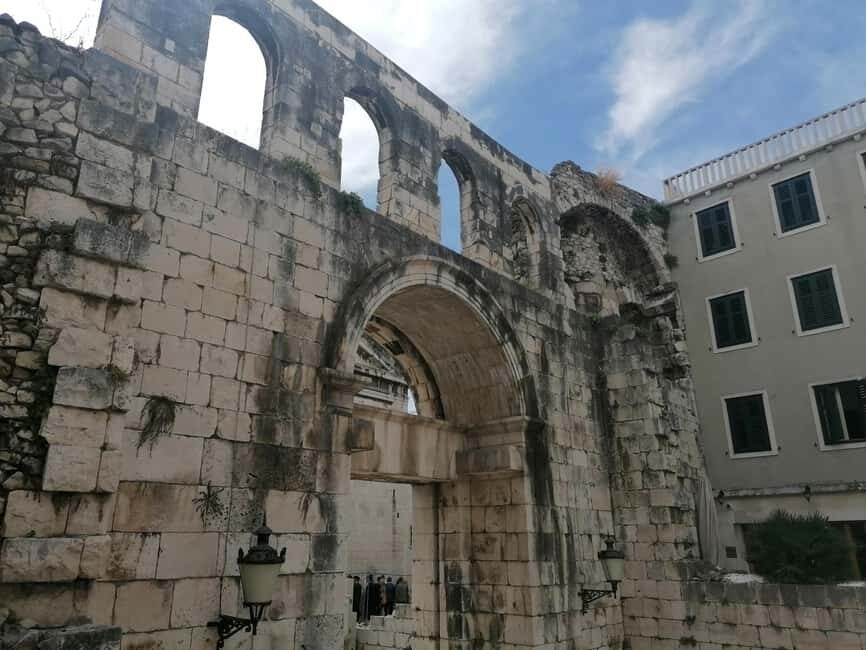
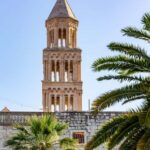
Next up is the Cathedral of Saint Domnius (Sveti Duje). You don’t just stop for a look; you get guided time and sightseeing, which is crucial here because the building has an origin story that changes how you see it.
This cathedral was originally the mausoleum of emperor Diocletian. That single detail shifts the whole meaning of the visit. You’re not only looking at church architecture; you’re standing on continuity—one ruler’s final resting place that later became a major religious landmark. It also helps you connect the palace complex to Split’s evolution over centuries.
The guided component matters. Without explanation, you can still enjoy the cathedral as a beautiful sight. With explanation, you understand why it sits where it does and why it matters to the city’s identity.
Peristil and the palace squares: where the palace becomes a public space
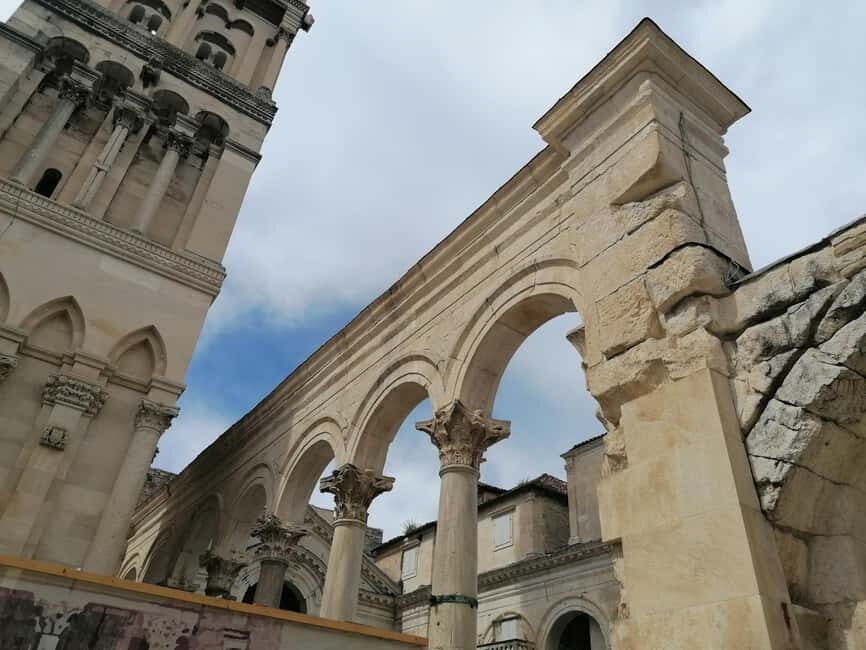
The tour then moves to the Peristil, with dedicated visit time. The Peristil is one of those spaces where the scale is easier to grasp when someone points out what you’re looking at. You can feel the contrast between enclosed palace substructures and the openness of a central courtyard-like area.
After that, you’ll hit the Golden Gate in Split with a photo stop. Photo stops can be hit-or-miss on guided tours, but here it functions as a visual anchor. You get a recognizable architectural moment tied to the palace layout, so later, when you notice parts of the old town lining up, you’ll know what’s connected.
Then comes a “secret stop” for a 20-minute visit. That’s the kind of time block that breaks up big-name sites. Even without specifying what it is beyond the label, the value is clear: you’re getting an extra layer to the route, not just repeating the same iconic shots.
People’s Square and Split Green Market (Pazar): where the story turns practical
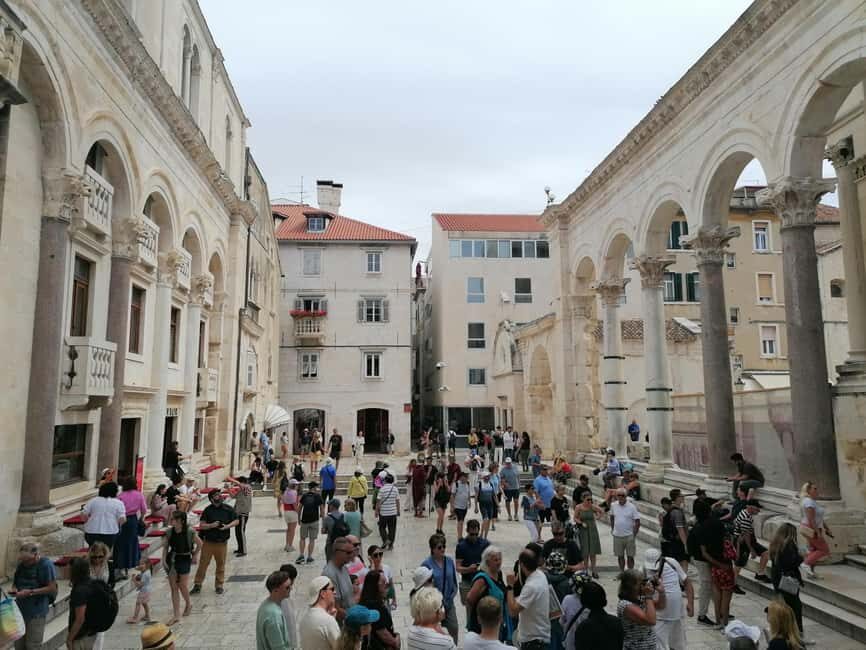
From the palace-and-cathedral zone, the tour shifts into areas that feel more like daily Split. People’s Square is on the route with shopping and sightseeing time. Even if you’re not shopping, it’s a useful stop because it helps you understand what people use now, not just what was built then.
Then you reach the Split Green market, the famous Pazar. This is where the tour’s “city breathing” idea becomes real. You get a feel for how locals buy and sell products native to Dalmatian soil. That phrase is important: you’re not just viewing stalls as props for photos. You’re being pointed toward local ingredients and the sort of food culture that naturally follows regional agriculture.
Practical tip: markets can be stimulating. If you’re the type who likes to take things in slowly, the guided context helps you decide what’s worth a closer look. And if you’re not a market person, it’s still a great way to shift gears from ancient stone to everyday life.
You can also read our reviews of more private tours in Split

Riva promenade at the right hour: calm views and easy people-watching
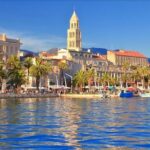
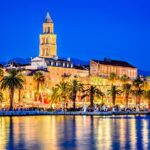
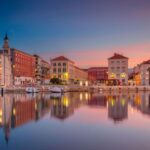
The Riva promenade comes later, with a photo stop. This positioning is smart. You’re already informed about Split’s old core, then you step into the open-air rhythm by the water. The result is a satisfying mental reset after indoor or enclosed palace areas.
This is also where you can catch that early-day feeling of a city waking up. The tour’s highlights mention “let’s feel how city breathing,” and the Riva promenade is the perfect place to sense it without needing a loud scene. You’ll notice movement, conversations, and the simple fact that Split lives in its public spaces.
If you want to maximize your experience, treat this as your pause moment. If you’re with friends, it’s a good spot to compare what you just learned with what you see now along the waterfront.
Maketa grada Splita break time: a final look at the big picture

The tour ends with Maketa grada Splita and a short break. A model at the end might sound redundant after a model at the start, but it’s not. It gives you a chance to re-check your mental map after you’ve physically walked the old town.
This kind of wrap-up works for most people because it turns the tour from memory into understanding. After you see structures in person, the miniature helps you remember where everything sits in relation to each other. It’s also just useful to take a breather. Even a 2-hour walk adds up, and this final break makes it feel less like a sprint to the finish.
Price and value: $129 per group up to 10 is the real deal if you keep it private

The price is $129 per group up to 10 people, for a duration of 2 hours. That’s the key value point: you’re not paying per person in a way that forces you into a solo-only budget. If you have even a small group, the math improves quickly.
You’re also paying for more than walking. You’re paying for a licensed guide, guided tours at the cellars and St. Domnius, and explanation that connects the palace to the rest of Split. If you tried to do the same loop on your own, you’d likely spend more time sorting out what you’re seeing. With a guide, the early investment pays off because you leave with context rather than only photos.
So who gets the best value? Families, friend groups, or anyone traveling with a flexible schedule who wants a structured morning but still doesn’t want the stress of crowds. If you’re going solo, it can still be worth it if you strongly prefer guided context over self-exploring.
Who this tour suits best (and who should skip it)
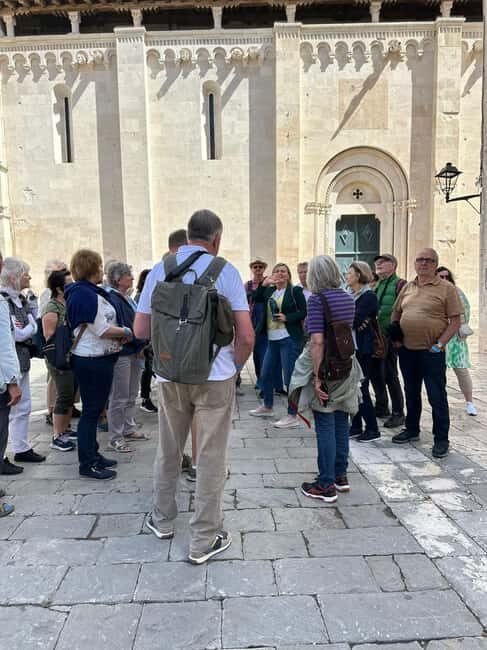
This Split private morning walk is ideal if you want:
- A calm start (no crowd pressure)
- Guided time in high-value interiors like the cellars and St. Domnius
- A mix of monuments and real-life stops like People’s Square and the Pazar
- Clear, personal guiding in German or English (recent feedback praised how well the guide explained things)
It might not be the best fit if you:
- Prefer to spend most of your time alone outdoors rather than in guided segments
- Want a longer day focused only on the waterfront or only on beaches
- Feel uneasy about walking a route packed with major sights in just 2 hours
Should you book this Split Private Morning Walking Tour?
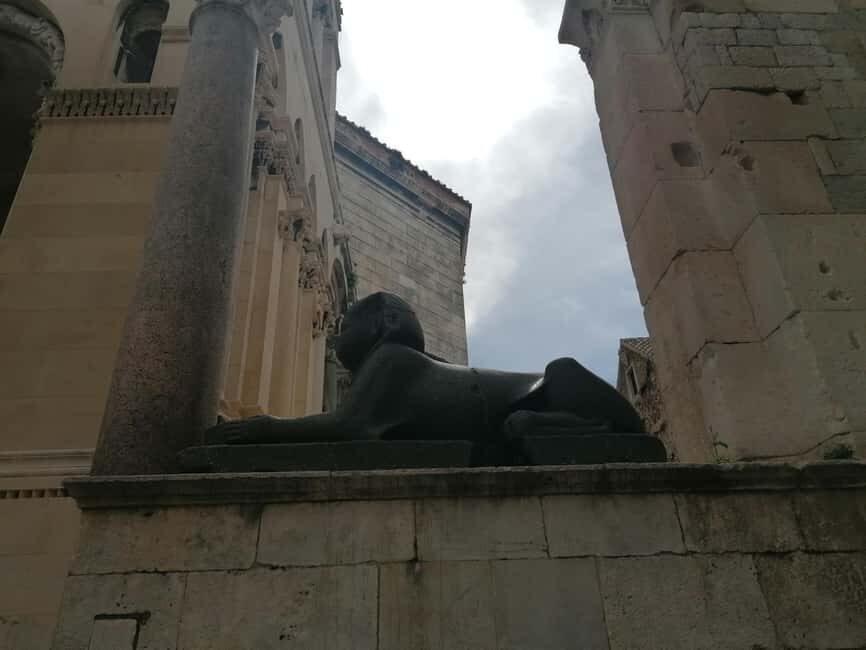
Yes, if your priority is understanding Split fast, without the noise of tour crowds. Booking makes the morning efficient: you’ll hit the essentials, get guided context in the areas that matter most, and still end with the lively feel of Riva and the market.
I’d book it especially if you like tours that feel personal. Recent guidance names like Kristina/Christina come up for being informative and clear. That’s exactly what you want when you’re walking inside spaces like Diocletian’s cellars or learning why St. Domnius links to the mausoleum story.
If you’re the type who enjoys doing everything at your own speed, plan extra time afterward. The tour is designed to return you to the city with energy, not to exhaust your morning.
FAQ
How long is the Split Private Morning Walking Tour?
The tour lasts 2 hours.
What languages does the live guide speak?
The licensed tour guide offers German and English.
Where is the meeting point?
You meet at the Model of the historical core of the city of Split.
Is this tour private?
Yes, it’s a private group.
What is included in the price?
The tour includes a licensed tour guide.
What should I bring?
Bring water.
Can I cancel for a refund or pay later?
You can cancel up to 24 hours in advance for a full refund, and you can reserve now and pay later.