REVIEW · SPLIT
Split Walking Tour with History Professor
Book on GetYourGuide →Operated by Lanterna · Bookable on GetYourGuide
Roman, medieval, modern—same walk, one time machine.
I love how Mario (a true history-professor type) turns Split into a story you can walk through, not a list of stones. Two things I especially like: the small private groups that make it feel personal, and the way you connect Diocletian’s Palace to medieval and modern Split, including Game of Thrones-related stops.
One consideration: this is a straight walk-through-the-old-town style tour. You’ll be on your feet for about 2 hours and 15 minutes, so plan on real walking and bring comfortable shoes—and note the route is not suitable for wheelchair users.
In This Review
- Key things I’d bookmark before you go
- Why this Split tour works so well
- Meeting at the Brass Gate, starting at the palace-model view
- Diocletian’s Palace substructures: the Roman layer you can feel
- Peristyle and Vestibule: when palace space turns into city space
- Cathedral of Saint Domnius: a landmark stop with watch-outs
- Temple of Jupiter, then Golden Gate: symbols, legends, and big-picture shifts
- Grgur Ninski and Marmontova Ulica: moving from monuments to streets
- Prokurative and Fruit’s Square: where the tour lands in everyday Split
- Price, timing, and what you get for $23
- Who should book this and who might not
- Should you book this Split walking tour?
- FAQ
- Where does the tour start?
- How long is the walking tour?
- What is the tour price?
- Is admission included for the cathedral and the Temple of Jupiter?
- Is the tour suitable for wheelchair users?
- What is the cancellation policy?
Key things I’d bookmark before you go
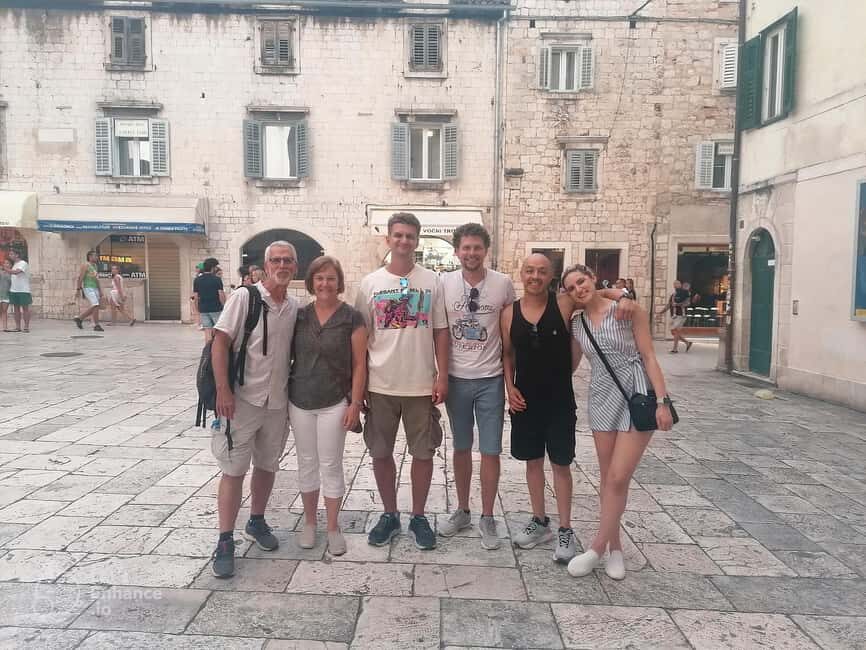
- Mario’s professor-style delivery: clear explanations, lots of engagement, and humor that keeps you from tuning out.
- Roman-to-modern route: you start inside the palace core, then move outward into later influences.
- Major landmarks in a tight loop: substructures, Peristyle, Vestibule, Cathedral of Saint Domnius, Golden Gate, and more.
- Clear stops with breathing room: several short pauses for context, then quick moves to the next photo-worthy spot.
- Admission handled in plain terms: cathedral and Temple of Jupiter are listed as stops, but admissions aren’t included.
Why this Split tour works so well
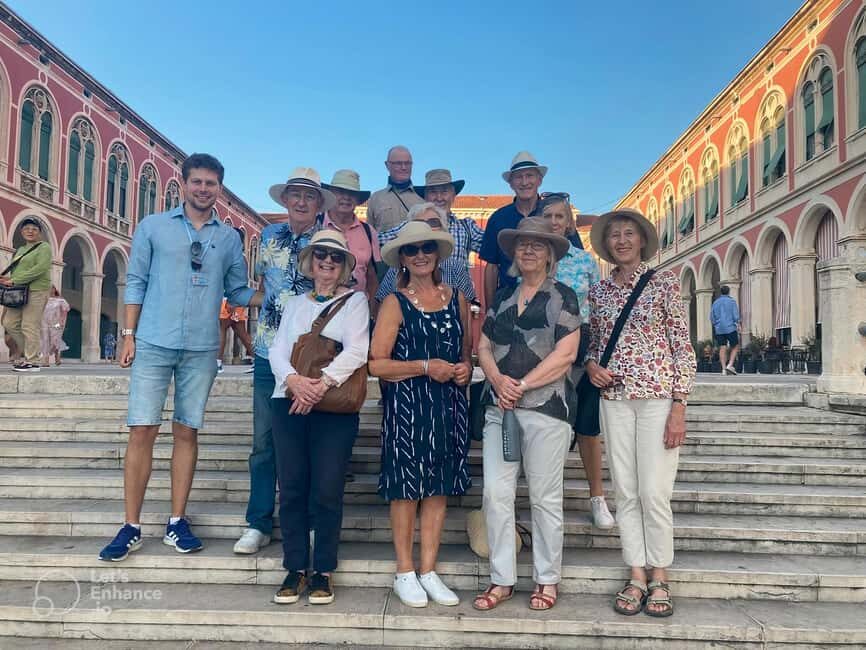
Split’s old town can feel like two places at once: you have the huge Roman shell of Diocletian’s Palace, and then you have the living city that grew around it. This tour is built to show you both without turning it into a lecture marathon.
The big win is the guide style. Mario doesn’t just point and date-stamp. He teaches by connecting ideas and asking you questions as you go, which keeps your attention locked in. The other win is pacing and group size: you get the feeling of a private conversation, not a herd moving from stop to stop.
At $23 per person for roughly 2 hours (plus extra time), you’re paying for guided time with access to context. If you’re the type who likes history but gets bored with pure facts, this is a good fit. If you’re expecting a stop-and-shop style tour with long sit-down breaks, you might want to look elsewhere.
You can also read our reviews of more walking tours in Split
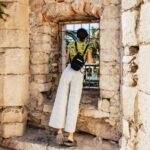

Meeting at the Brass Gate, starting at the palace-model view
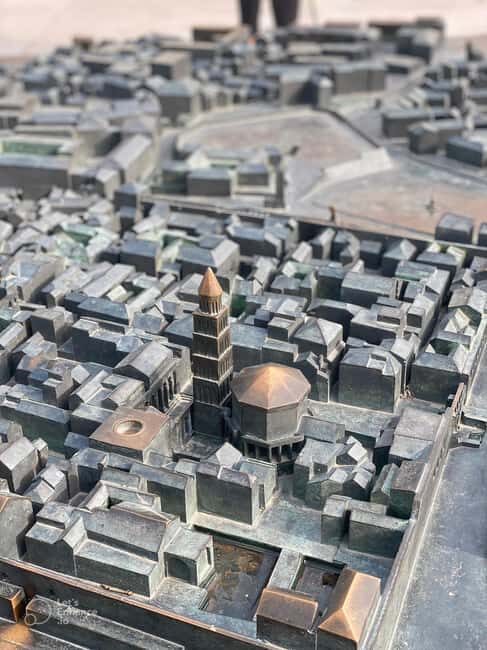
The guide waits next to the Brass Gate of Diocletian’s Palace. That’s a handy reference point because it anchors you right at the start of the story.
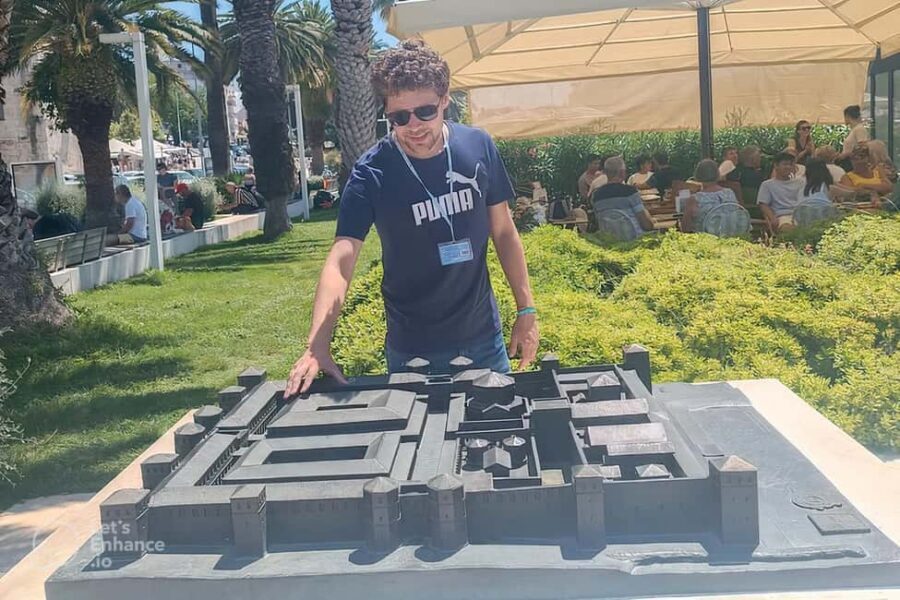
You then begin at a model of the historical core of the city at the Riva Harbor area. Even if you’ve never been to Split before, this kind of overview helps you understand what you’re about to walk through. It’s like getting a quick map of the past: where the palace fits, where the city grew, and how today’s streets relate to the older walls.
Practical tip: use this first segment to get your bearings. If you can mentally place the palace core early, the rest of the tour clicks faster—substructures start to make sense, and later streets feel like chapters rather than random turns.
Diocletian’s Palace substructures: the Roman layer you can feel
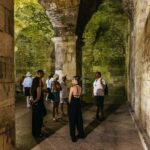
Your next stop is the Diocletian Palace Substructures, with about 10 minutes here. This is one of those places where you don’t need extra imagination. The stone and layout already suggest how protected, functional, and structured the palace world was.
What I like about starting with the substructures is that it gives you a physical baseline. Then when the tour moves upward into the more public spaces—like the Peristyle—you understand what changed and why the palace became part of daily life.
A small reality check: this stop is short. You’ll want to listen closely and look up often. The goal isn’t to exhaust every corner; it’s to show you the key ideas you’ll keep seeing throughout the walk.
Peristyle and Vestibule: when palace space turns into city space
Next you visit the Peristyle (about 10 minutes) and the Vestibul (about 10 minutes). These are the kinds of places where the architecture starts doing the explaining.
Peristyle is where you get the sense of ordered space—think open, controlled, and central. Then the Vestibule helps bridge the feeling between monumental palace parts and the more human scale of movement and entry.
This is also where the guide’s teaching style really helps. Mario frames what you’re seeing in a way that connects to later periods. You’re not just admiring old walls; you’re learning what those walls enabled as Split’s story moved forward.
If you’re a photo person: bring your camera ready, but don’t spend the whole stop photographing. You’ll get more out of this time if you’re watching and listening in equal measure.
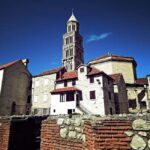
Cathedral of Saint Domnius: a landmark stop with watch-outs
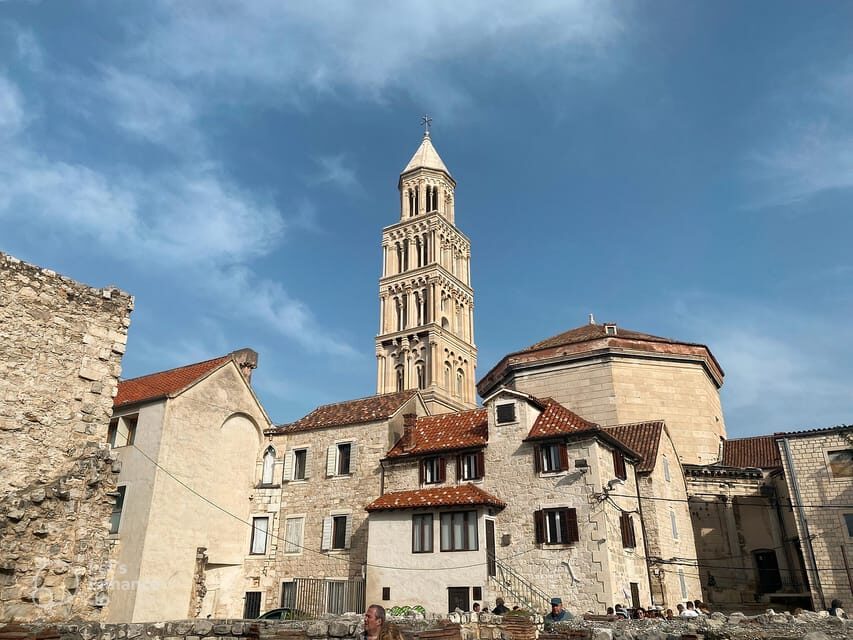
The Cathedral of Saint Domnius is your 20-minute stop, and it’s listed as an admission-excluded visit. That means you’ll get the time outside (and possibly views/overview) without the tour including entrance costs.
Even without paying for entry, this is a key stop because it ties the Roman palace story to later religious and civic importance in Split. It’s one of the landmarks that helps you understand why people kept living here rather than moving away.
Two practical considerations:
- Wear shoes with good grip. Old town surfaces can be uneven.
- If you want to go inside (if entry is available on the day), keep in mind the tour doesn’t include admission for this stop.
You can also read our reviews of more historical tours in Split




Temple of Jupiter, then Golden Gate: symbols, legends, and big-picture shifts
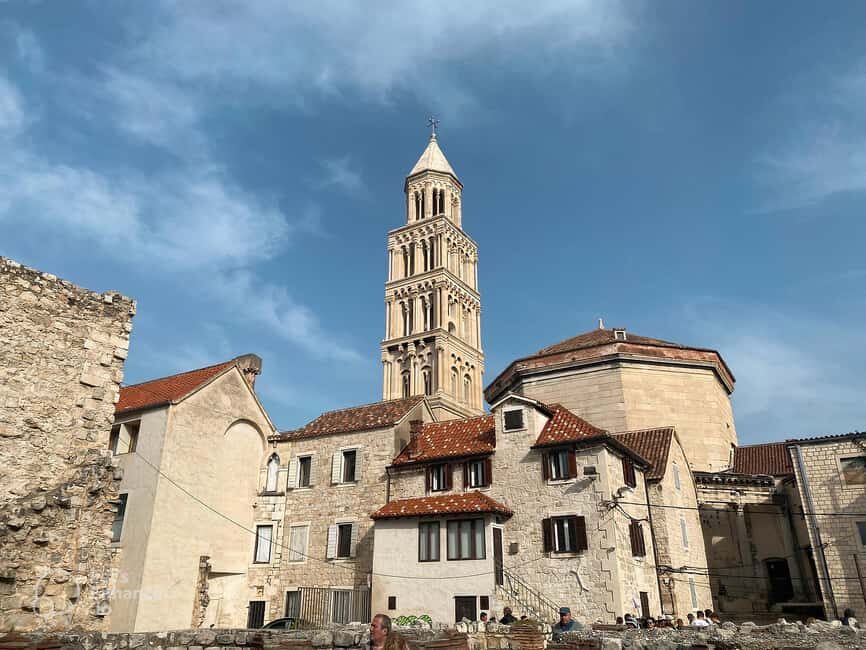
After the cathedral, you head to the Temple of Jupiter for about 10 minutes, again listed as admission excluded. This stop is quick, but it’s strategically placed. It reinforces that Split’s core wasn’t built for one era only. The palace complex and its structures kept influencing the city’s identity.
Then comes the Golden Gate (about 10 minutes). This is one of those spots where you can feel the historical weight immediately. Gates aren’t just entrances. They mark control, movement, and status. Here, the tour uses it to connect the Roman past to later layers of Split.
The tour also leans into legends and local life—not in a vague way, but with on-the-ground storytelling that makes the place feel used, not museum-quiet. If you enjoy hearing how locals interpret history, this is a good part of the loop.
Grgur Ninski and Marmontova Ulica: moving from monuments to streets
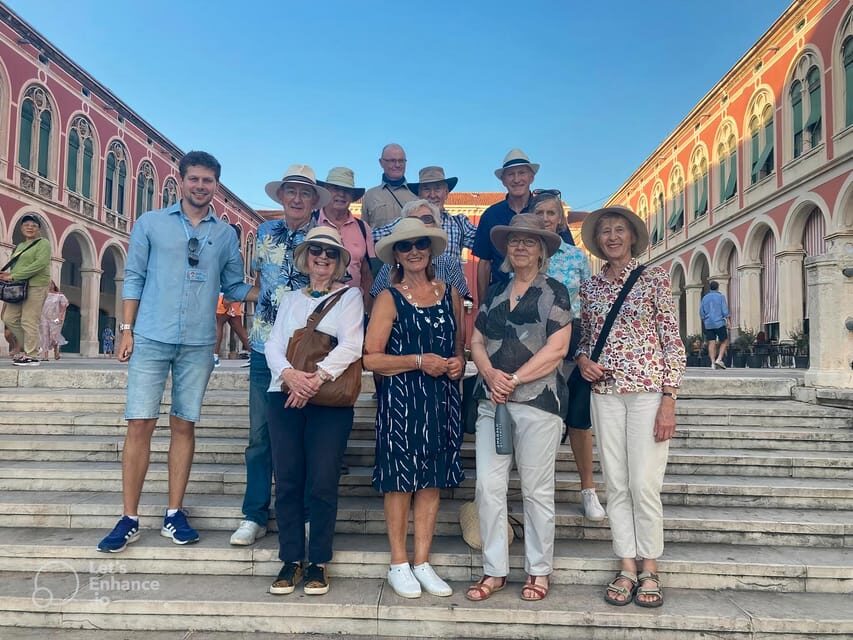
Next you visit the Grgur Ninski Statue for about 10 minutes. Statues can be either informative or just photo ops, depending on the guide. Mario treats it as a signpost in the broader story of how communities shaped the city and remembered it.
After that, you walk down Marmontova Ulica for about 10 minutes. Streets like this are where you really start feeling the idea of Split changing over time. The tour points you toward later influences shaping the center of the city, including the role of Venice, Ottomans, and Napoleon. You won’t get a textbook timeline, but you will get a street-level sense of how different eras left marks in layout, atmosphere, and local architecture.
If you tend to get bored on walking tours, this section is where the guide can pull you back in with the contrast: monuments give you the “wow,” and streets give you the “how it works.”
Prokurative and Fruit’s Square: where the tour lands in everyday Split
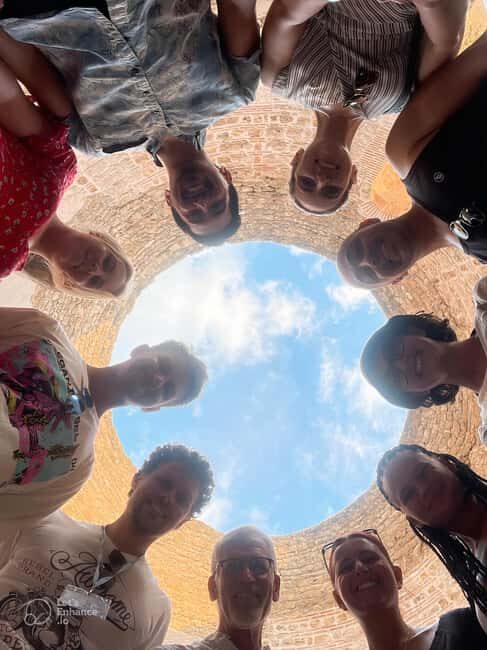
You finish with Prokurative (about 10 minutes) and then Fruit’s Square (Trg Brace Radic) for about 15 minutes.
This ending matters. A tour can stop at Roman walls and still be fun, but you’d miss the living city part. Fruit’s Square is a practical place to end because it’s the kind of area where you can transition from history mode into normal travel mode: snack, people-watch, and plan what you want to do next.
Prokurative helps bridge that shift. It gives you a feel for the city’s later urban identity, so the final square doesn’t feel random. Instead, it feels like the story finally meets daily life.
Price, timing, and what you get for $23
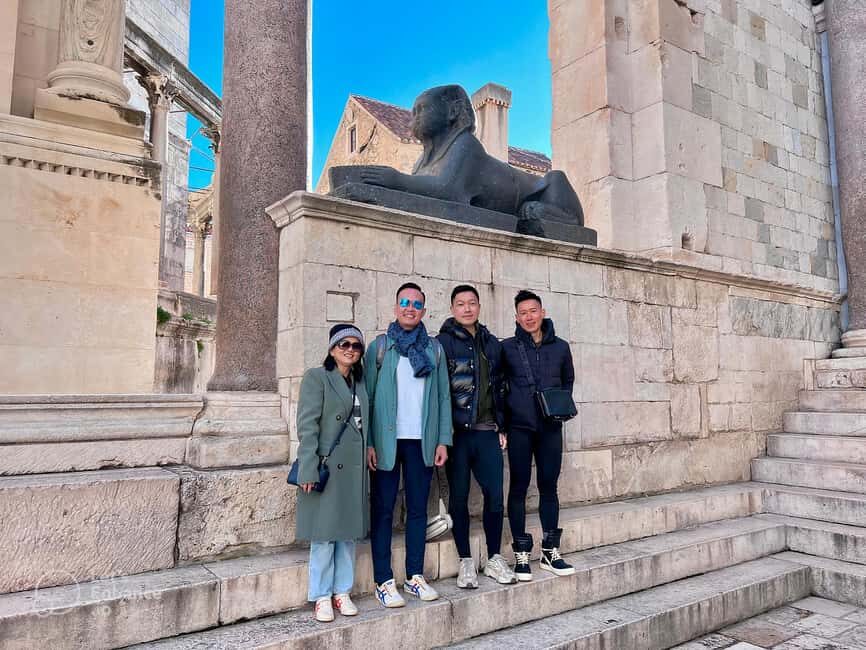
Let’s talk value honestly. At $23 per person, this isn’t a budget snack tour, and it isn’t priced like a high-end private guide either. For what you’re getting—about 2 hours to 2 hours 15 minutes, multiple major stops, and an English-speaking guide with professor-style storytelling—it’s strong value.
Here’s why it feels worth it:
- You’re covering key sights that many people hit on their own, but with context that makes them easier to remember.
- The stops are frequent enough to keep momentum without turning into nonstop rushing.
- Two admission-related landmarks are clearly marked as admission excluded, so you aren’t surprised by hidden entry costs.
Timing-wise, you should expect a tour that moves. You’ll have short stops for each location, not long sittings. If you prefer slow travel, consider pairing this with a lighter second activity afterward so you can digest what you learned at a calmer pace.
Who should book this and who might not
This tour is a great match if:
- You want history that’s explained in plain language.
- You enjoy interactive guides who ask you questions and keep things lively.
- You like seeing how one site (Diocletian’s Palace) connects to medieval and modern Split.
- You’re curious about Game of Thrones locations around the city and want a guide to point you toward the places tied to that interest.
You might want to choose something else if:
- You need wheelchair access on the route (this one isn’t suitable for wheelchair users).
- You hate walking and need a tour with lots of seating.
- You want long interior time inside buildings. The cathedral and Temple of Jupiter are listed as admission excluded, and the tour time per stop is short.
Also, if you travel as a small group and want something more tailored, the provider notes private tours are available on request at [email protected].
Should you book this Split walking tour?
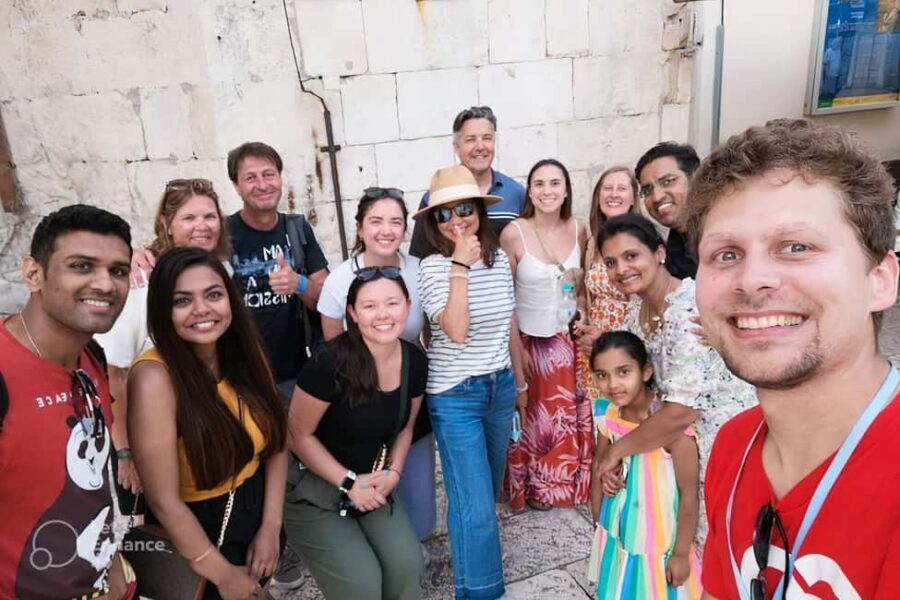
Yes—if you want a guided walk that actually teaches you how Split became Split. The best part isn’t any single landmark. It’s the way Mario stitches Roman palace spaces to medieval and modern street life, with humor and a teacher’s habit of checking that you’re following along.
Book it if you’re the type who remembers details better when someone explains them clearly, and if you’re comfortable walking for a bit in the old town. Skip it if you need step-free access or you only want long interior visits.
If you’re arriving in Split and you want one smart first tour to set your mental map, this is a solid choice—simple, focused, and the kind of tour you’ll keep talking about long after you’ve moved on.
FAQ
Where does the tour start?
The guide waits next to the Brass Gate of Diocletian’s Palace. The tour then begins with a stop at the model of the historical core of the city of Split at Riva Harbor.
How long is the walking tour?
It runs about 2 hours. The highlights also describe it as around 2 hours and 15 minutes.
What is the tour price?
The price is $23 per person.
Is admission included for the cathedral and the Temple of Jupiter?
No. The Cathedral of Saint Domnius and the Temple of Jupiter are listed as stops where admission is excluded.
Is the tour suitable for wheelchair users?
No. It is not suitable for wheelchair users.
What is the cancellation policy?
You can cancel up to 24 hours in advance for a full refund.